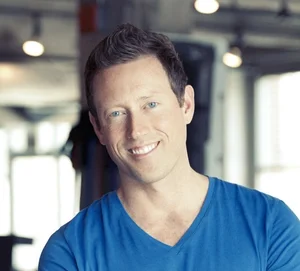
9 Questions About Transitioning into a New Career After 15 Years from Entrepreneur John Brand
Introduction
Recently, I interviewed finance wizard and brewery owner, John Brand, for my podcast “The Elements of Being.” Here are his nine thought-provoking answers to my questions about transitioning from a 15-year career in finance to opening his brewery, Open Outcry, in Chicago. Take a read…It may finally inspire you to leave your job and pursue your dreams.
Did you consider other businesses before opening a brewery?
John Brand: No. I wanted to make beer. If I were going to give up my career in finance, which I had put a tremendous amount of time and energy into, and for which I had good opportunities if I continued, I would give it up for something I really wanted to do. I homebrewed for 10 years…I just loved the process of making beer. I loved creating something with my hands, sharing it with people, and watching them enjoy it. Especially a beverage like beer or alcohol, which is a social lubricant that lets you sit down with someone and share. It fosters conversation and connections with people. And that idea of making something like beer and sharing that with my friends, family, and neighbors on the south side of Chicago was the only thing I was focused on. I didn't really think about anything else. The idea of starting a financial services firm or investing in futures……I'd never even considered it. I was-if I was going to do it, I was going to go in a different direction. It was going to pursue something that I wanted to do…really had a passion for. And that's what beer was.
You mentioned it took about four or five years before you actually made the jump… and I'm sure there was an internal debate during that time. I want to dig into that a little more to learn about what held you back from making the jump sooner. Were there any doubts or fears that you needed to overcome, and if there were, how did you do it?
John Brand: I was entrenched in that career, and it was a long process to convince myself that it was rational to give it up to start a business, especially a high-risk business like a bar, restaurant, or brewery. The success and failure of bars and restaurants are pretty well documented. It isn’t the most rational decision. It isn’t the most conservative decision to make if you're a somewhat conservative guy like I was. I don't consider myself risk-averse anymore. This whole experience has changed my relationship with risk and my relationship with money. It wasn't the rational decision to make. I also knew that if I didn't do it, I would probably regret it. I can choose a successful career path in corporate America to achieve financial security and all the things that come with it, but I didn't want to regret thinking about what would've happened if I had done it. I started hanging out with people who had done it before. I started reading a lot, too….I was introduced to writers like Tim Ferriss. He started his own business and became an entrepreneur. Ferriss wrote books that dissected the mindset and mentality of people…that entrepreneurship is in their DNA. Being exposed to guys like that started to really shift my perception of risk. It's risky, but you can do this if you're thoughtful. So that helped. This decision-making process took years for me.
Can you describe how you officially committed to this decision (whether that was your two-week notice or signing some legal document)? At what point did this thought actually become a real jump?
John Brand: I think it was maybe in 2012 or 2013 when I started thinking about whether or not I could execute on a vision of opening a brewery. I would come home from work, sit down at the computer, and start pounding it out. I would document the vision that I had in my head…I started putting it down on paper. I did this once or twice a week for a year or two. It was cathartic for me because I was getting a little frustrated and disillusioned with the traditional corporate career path. This was an outlet to pretend that I was actually going to open a brewery.
Over time, though, that idea became a real plan… fundamental good ideas were documented and fleshed out… and a game plan for how to deliver on what a brewery could look like. As the document grew and became more detailed, I had a little more confidence that I had an idea here and a path to execute it. I did that for two or three years, and it was the most extensive and well-written business plan you've ever seen. I had to write it down on paper to convince myself I could actually do this.
I still hadn't made up my mind that I was going to do it, but I occasionally started looking at listings of commercial properties nearby. And again, not convinced that I was going to do it. When the right property came up, it actually clicked. I had a plan that I had been working on for a couple of years. I had almost the perfect property that the plan sat on top of (two blocks from my house). I had a nice rapport with my wife the whole time and shared what I was thinking. She was supportive of it. I had to make a decision. It was either crap or get off the pot. This happened in late 2015 (after three or four years of writing a business plan). It was the first time I actually had to look at myself and say, “Okay, am I really going to do this or what?” I had done all the previous work for the last couple of years. I knew the economics of the business plan. I knew what it would cost. I knew how I wanted to execute the vision. I knew I wanted the space to work. Since I had done all that work, it gave me the confidence for the first time.Some people believe that most transitions extend from reaching a bottom, saying, “This is enough,” and then finally making a jump. It sounds like this is a little different story, right?
John Brand: I was never so miserable in a traditional corporate career…I never felt so desperate that I had to get out. I wasn't excited to get up and go to work every day, and I wasn't clinging to desperation either. I knew that there was probably a better path out there for me as I got older and developed self-awareness. I was fearful of regret. I didn't want to look back thirty or forty years from now and say, “Why didn't I do it?” I think that weighed on me the most. I convinced myself that if I did it, if I took the leap and suck…I just wasn't an entrepreneur. I wasn't somebody who could do it, and I failed. I was comfortable with that, too. That was a real…very real possibility. And if that happened, I also knew that I had worked hard enough in my previous life and had enough friends in that industry or space that I could have called someone up and gotten a job somewhere back on the streets.
It sounds like it was a fairly calculated risk. You still worked part-time for your former firm while opening the brewery, correct?
John Brand: I was very fortunate with my former employer. When I told them what I was doing, there was definitely some shock. They questioned me, “You sure you want to do this?” I explained the maturation process that I had gone through over the last couple of years and that I had done my homework. When you give a financial services firm two weeks’ notice, they get very protective of their information. A lot of times, even if it's a positive ending to that relationship, they still walk you back to your office after the notice, gather up your things, and then walk you out the door. I was fully prepared for that. It was the opposite, though. I was very fortunate. Not only did they support me through the process, but they also allowed me to modify my schedule. I worked in a part-time capacity for 6 months while I bootstrapped the business. Not a lot of people have that sort of support or opportunity that I did, and that certainly helped my transition. It allowed me to make a little money. I was still paying my mortgage while we were planning the brewery… and building it.
Let's jump a little more into that transition. I'm sure not everything went smoothly. Can you describe any moments of failure that made you question this new path? How did you overcome those moments?
John Brand: I learned quickly that part of owning a business is accepting that things go wrong. You have to be comfortable with that. You have to be able to let microfailures roll off. You can't dwell on them because it’ll distract you from executing the plan and mission. I’m a pretty methodical guy and somewhat of a type-A personality. Control has always been an issue for me in terms of my management style. That was a transition for me…to accept the fact that things won’t always go my way or the way things were planned. As I built out the brewery and worked part-time downtown Chicago, things went wrong. I learned quickly to let failures go and not dwell on them. You learn to love to eat crap. You need the capacity to eat crap if you're going to start a business.
Can you identify any specific lessons from the corporate world that made this transition easier?
John Brand: Oh, for sure. Yeah. We were talking about how I wish I had realized this earlier. Like you did… You had self-awareness in your twenties and just did it (started a personal training business). I didn't. Maybe that was a blessing. While working in companies for about 20 years, I learned best practices in accounting, planning, budgeting, HR-related issues, and how to deal with employees and hire and fire people, etc. These are all things that, if you pay attention to them, you can pick up on how to do (especially how to deal with present-day legal issues). If I had started a business in my twenties, I wouldn't have had the benefit of seeing all those things. In some ways, this delayed self-awareness and realization that I want to start a business are probably helping me now. Now, if I’m having a dispute with an employee, I know how to navigate that. I know how to document things. I know how to protect myself and mitigate risks. These are all things I learned throughout my career in finance. It also gave me confidence. I’ve seen the inner workings of companies, and now I'm trying to apply all those best practices to the startup.
I'm not the type of person who will retire, sit on the front porch, and drink my tea. I always feel that I’ll still be doing “something” when I retire…perhaps creating another business. Some people feel that may be unhealthy, but isn't that what we are….beings that need mental stimulation?
John Brand: I agree with you. I don't know if I'll ever retire either. I always want to do something. I think this idea of retirement… you're speaking directly to the narrative that we're spoon-fed in this country. You go to school….you learn just enough to be an obedient worker. You work in a career you don't particularly like or have a passion for, hoping to one day retire, live the golden years, and do whatever the hell you want to do. Right. I think that narrative is crap. I think you should find something you want to do and do it. Enjoy doing it… enjoy the journey and all the things that come with it—the failures…the successes…the distress…the fear.
What are your day-to-day habits (e.g., bookkeeping practices, etc.)?
John Brand: I try to be hands-on with everything in the brewery. I am there in the mornings, sweeping floors with the folks that are opening the place up…wiping tables down, cleaning, mopping. I try to spend an hour or two of that every day. I'm particular, and I want that place to look a certain way…there's a certain level of cleanliness and sanitation that I demand. Then, I'll spend a couple of hours in the office doing paperwork, accounting, responding to emails, and handling staff, HR, and payroll issues. I also try to spend an hour or two every day doing project work. I consider project work —making incremental improvements to the building's aesthetics, prepping for the next phase, and planning the next project I want to do. I ask myself, “How can I invest two hours today that will lend itself to incremental improvements to the aesthetics, the service, the food, and the quality of the beer?”
About the Author: Michael Moody, Wedding Officiant
Michael Moody—author of the self-improvement book Redefine Yourself: The Simple Guide to Happiness and host of the “The Elements of Being” podcast—is an ordained minister serving Denver and other towns across Colorado. He is a 2023 WeddingWire Couples’ Choice Award winner in both Denver and Chicago (his eighth consecutive year), was named “Best Business of 2024 and 2025” by Three Best Rated, and earned “The Best Wedding Officiant in Commerce City, Colorado for 2024” from Quality Business Awards USA. Since 2012, he has officiated more than 300 weddings.
Specifically, Michael officiates wedding ceremonies in the Denver neighborhoods of LoDo, River North, Washington Park, Cherry Creek, City Park, Central Park, Capitol Hill, Cheesman Park, Park Hill, Highland, Platt Park, Lower Highlands, Sloan Lake as well as the zip codes 80215, 80214, 80204, 80203, 80205, 80207, 80218, 80219, 80222, 80223, 80224, 80246, 80238, 80221, 80022, 80230, 80231, 80202, 80209, 80247, and 80210. Michael also serves as an ordained minister in Golden, Boulder, Breckenridge, Frisco, Aspen, Vail, Estes Park, and more.
If your Denver neighborhood or Colorado town isn’t listed here, no worries! Please contact Michael to propose a wedding ceremony location in a different area!