
Colorado Wedding Blog
Relationships | Marriage Wedding Planning
Start Planning Your Next Adventure
Create the wedding and marriage of your dreams with insights, tips, and little notes.
Colorado Fall Wedding Guide: Design, Weather & Ceremony Tips
Summary
A Colorado fall wedding works best when the design responds to the landscape rather than competes with it. The strongest celebrations use elevation to guide the date, a restrained seasonal palette, locally appropriate flowers, thoughtful ceremony timing, layered guest-comfort plans, and a weather backup that feels like part of the wedding—not an emergency substitute.
Is Colorado a good place for a fall elopement?
Yes. Colorado's mountain scenery and fall foliage can create exceptional intimate ceremonies, particularly in September. Couples should account for elevation, permits, trail access, changing weather, footwear, and the shorter period of useful evening light.
Frequently Asked Questions (FAQ)
What is the best month for a fall wedding in Colorado?
September is generally the strongest month for mountain fall color, although timing changes with elevation and weather. Higher areas typically change first, while Denver and lower Front Range locations may retain autumn color into October.
What are the best colors for a Colorado fall wedding?
Ivory, camel, forest green, tobacco, plum, navy, oxblood, stone, and muted gold work especially well because they complement Colorado's natural fall scenery. Choose two or three primary colors instead of using every traditional autumn shade.
Is October too cold for an outdoor wedding in Colorado?
Not necessarily, but couples need a serious backup plan. Denver's normal temperatures decline considerably through October, and snow is historically possible during the month. Mountain venues can be colder still.
What flowers are best for a Colorado fall wedding?
Dahlias and marigolds are strong September choices, while celosia, chrysanthemums, and asters are among the flowers commonly available in October. Ask a Colorado florist which varieties are locally available during your exact wedding week.
How should we decorate an outdoor Colorado fall wedding?
Use the landscape as the principal visual element. Low floral installations, seasonal foliage, textured linens, natural wood, candlelight, ceramics, and restrained jewel or earth tones generally complement mountain and Front Range settings better than oversized themed décor.
What time should a fall wedding ceremony start in Colorado?
Check the exact sunset for the venue and date, then consult your photographer about when direct light disappears behind surrounding mountains. Build enough time after the ceremony for family photographs and couple portraits before the preferred light is gone.
Do we need a weather backup for a September wedding in Colorado?
Yes. Even September weddings should have an indoor or covered alternative, along with a predetermined time when the planner and venue make the weather decision. Colorado's seasonal temperatures and conditions can change quickly
Key Topics
Colorado fall wedding, fall wedding Colorado, Colorado fall wedding ideas, Colorado fall wedding guide, Colorado autumn wedding, fall wedding ideas Colorado, Colorado wedding design, Colorado fall wedding colors, Colorado fall wedding flowers, September wedding Colorado, October wedding Colorado, Colorado mountain fall wedding, Colorado fall wedding ceremony, Colorado fall wedding venues, Denver fall wedding, Golden Colorado fall wedding, Colorado mountain wedding, Colorado elopement fall, fall wedding officiant Colorado
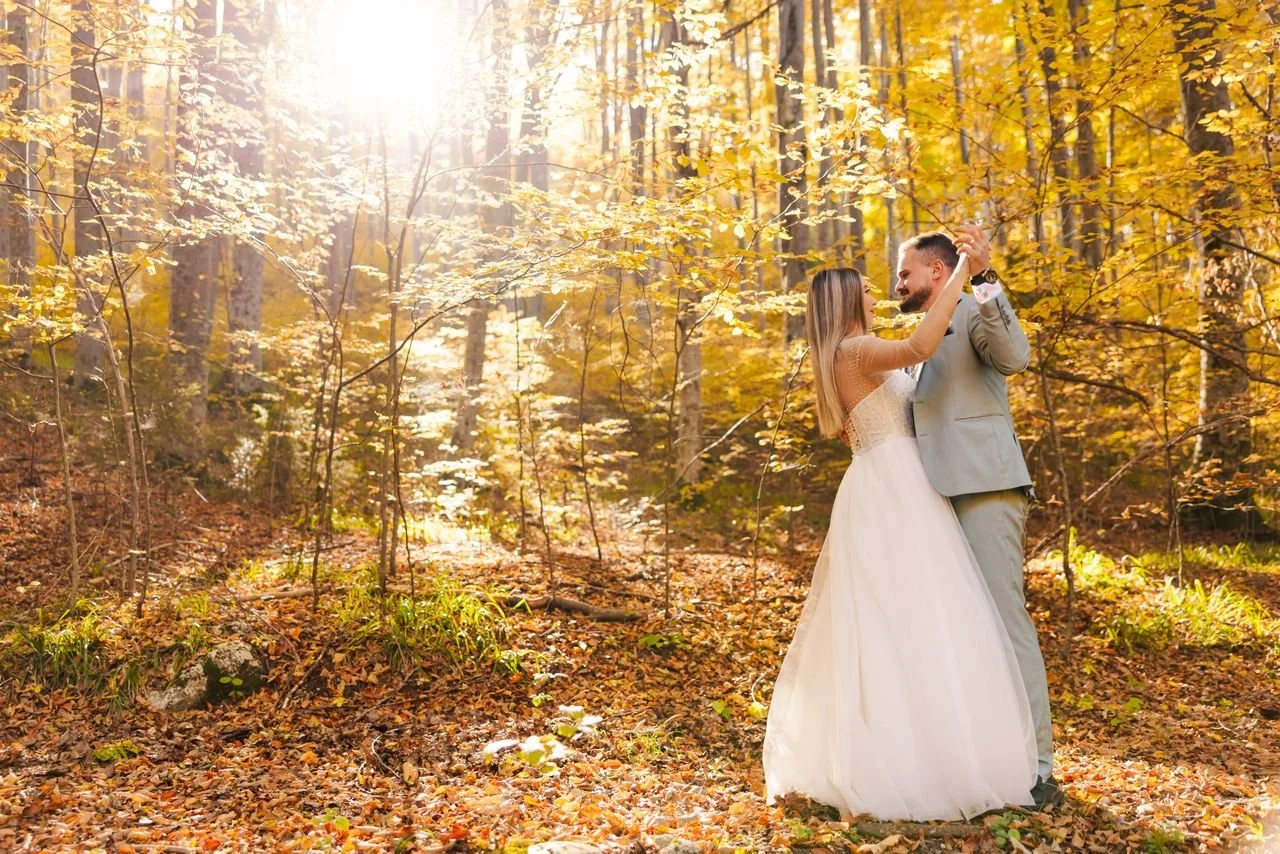
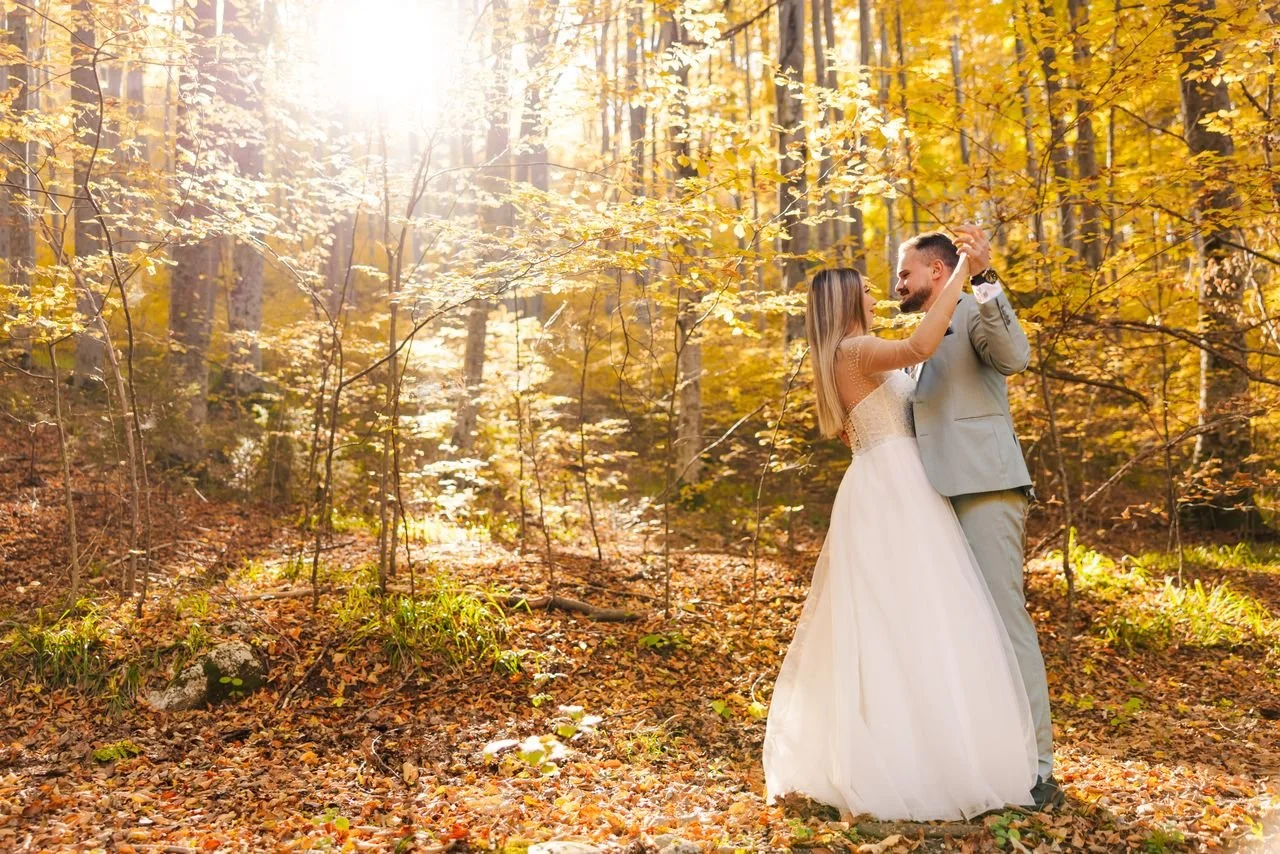
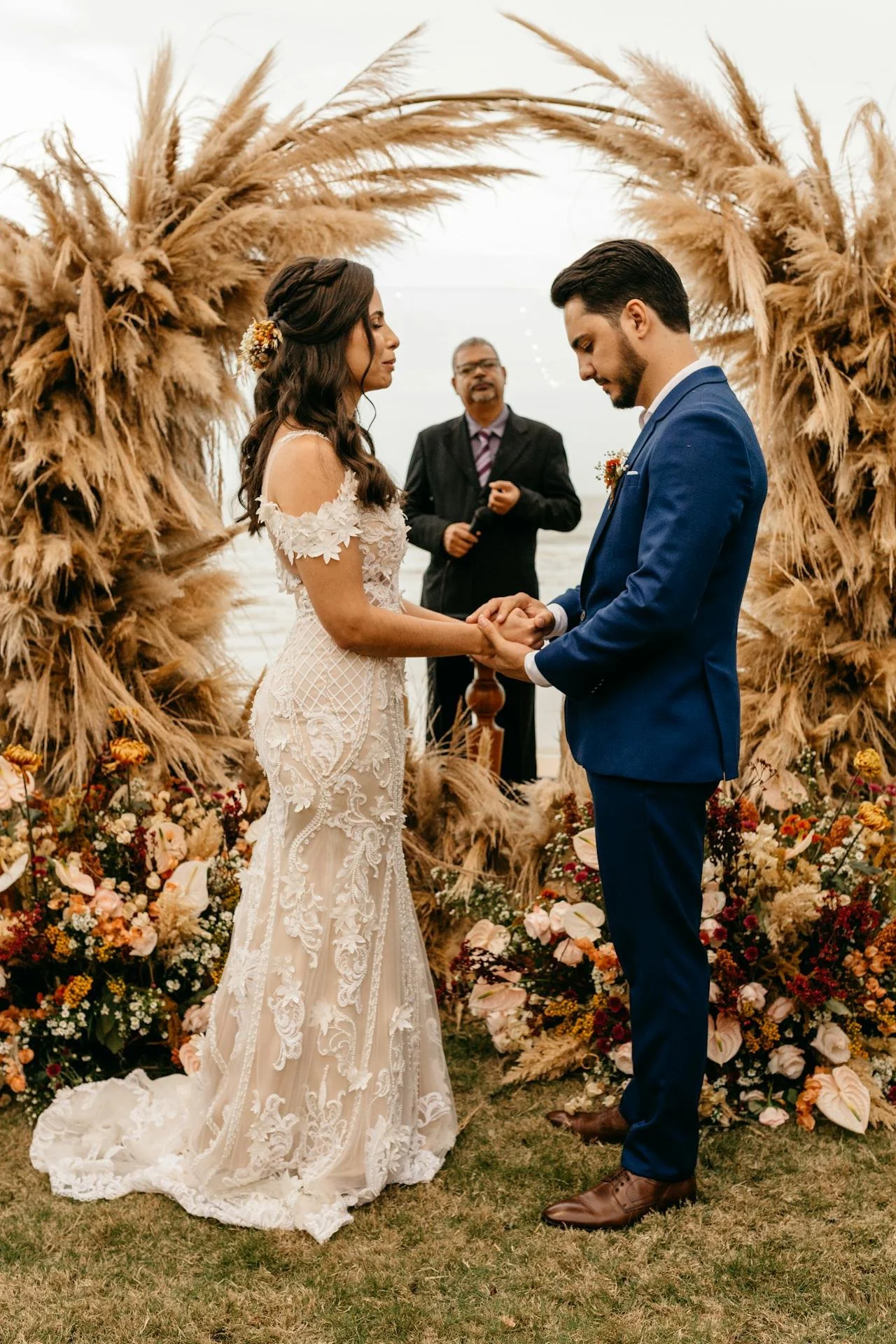
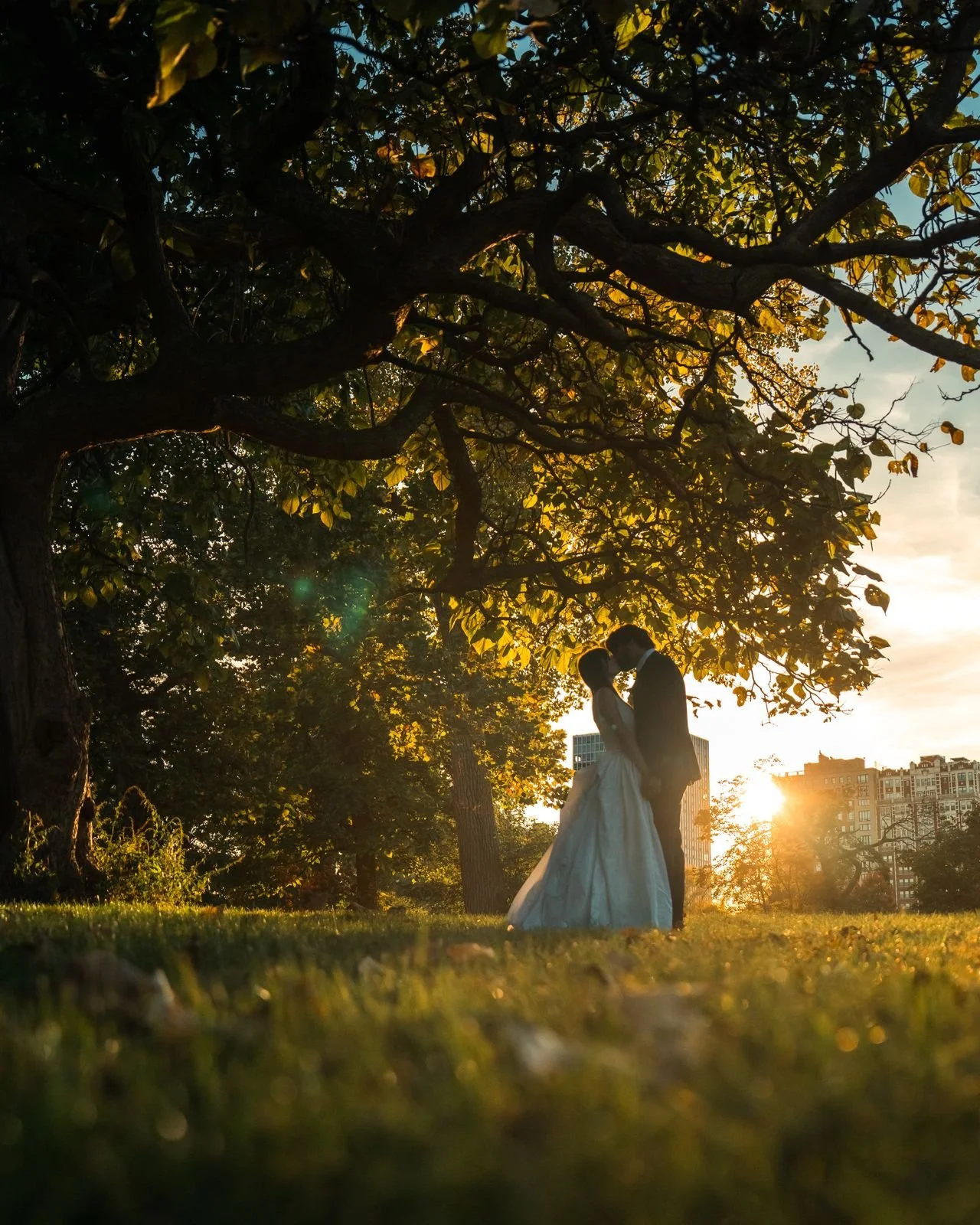
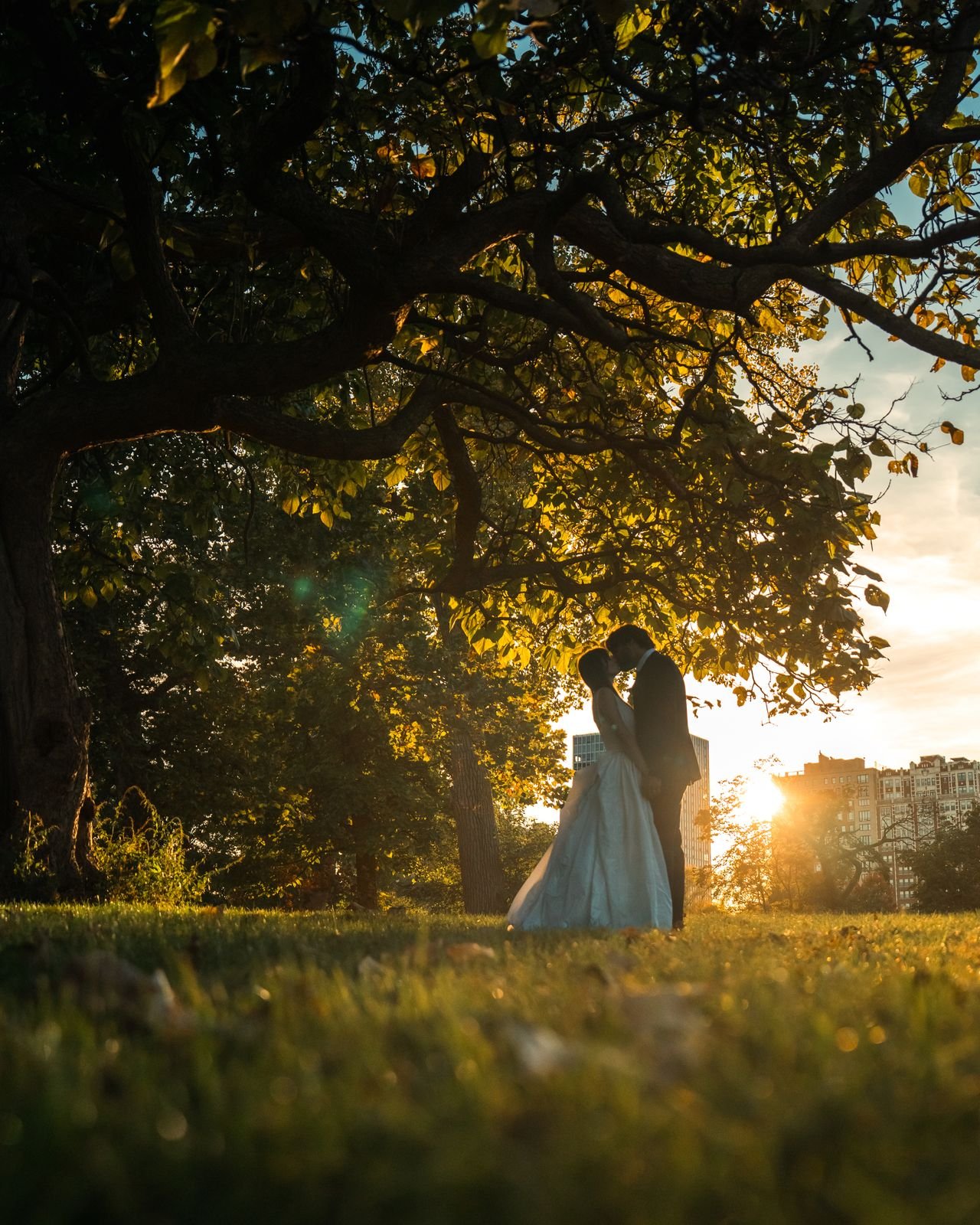
Fall Wedding Ceremonies in Colorado / Photo: Marius Pavel
What makes a fall wedding in Colorado especially beautiful?
A Colorado fall wedding pairs golden aspens, cooler temperatures, mountain light, and rich seasonal textures with a ceremony designed around the location. Choose the date by elevation, build around natural scenery, use seasonal flowers and layered colors, plan for changing weather, and schedule the ceremony with sunset and guest comfort in mind. Colorado has a way of making fall wedding design look deceptively easy. In September, entire mountain slopes can turn gold. A few weeks later, the color works its way into lower elevations and Front Range neighborhoods. The light softens. Even an ordinary wooden table can look unusually good beside amber foliage and a darkening blue sky.
The complication is that none of this follows a wedding planner's calendar with much discipline. Colorado's tourism office identifies September as the ideal month for viewing fall color statewide, but the change is brief and varies by elevation; higher areas generally turn before lower ones. Colorado's fall-color season can therefore stretch into October without guaranteeing that any particular grove of aspens will cooperate on a particular Saturday. This is why the best Colorado fall weddings are designed around the conditions that actually exist rather than an idealized photograph from Pinterest. They feel seasonal without becoming themed, comfortable without looking utilitarian, and polished without putting a floral arrangement in front of every available mountain.
Couples holding a city celebration can explore Denver wedding officiant services. For foothills celebrations, see Golden wedding officiant services, while couples planning near the Flatirons can explore Boulder wedding officiant services. Couples drawn farther into the mountains can also consider elopement ceremonies in Colorado.
Table of Contents
Choose your fall wedding date by elevation
Let Colorado establish the color palette
Choose a venue with two genuinely attractive options
Design the ceremony around the landscape
Time the ceremony around light—not dinner
Use flowers that belong to the season
Dress for the temperature you may actually get
Make guest comfort part of the design
Carry fall into the reception without creating a theme party
Build a weather decision into the schedule
Related Articles
1. Choose Your Fall Wedding Date by Elevation
Do not begin with the question, "When is peak fall color in Colorado?" Begin with, "What elevation is our ceremony?" Mountain towns and higher-elevation venues generally change first. Lower Front Range locations follow later. Colorado.com specifically notes that foliage timing moves according to elevation, with higher areas changing earlier and lower areas later. For a mountain wedding centered on aspens, mid-to-late September is often the first period worth investigating. For Denver, Golden, and lower Front Range settings, late September into October may provide more autumn character. Do not make foliage the single condition upon which the wedding succeeds. A warm week, windstorm, early freeze, or snow event can quickly rewrite the landscape. Choose a venue you would still want to marry in after the leaves have dropped.
2. Let Colorado Establish the Color Palette
Fall wedding design has spent years cycling through burgundy, burnt orange, mustard, rust, and forest green. Those colors can still work, but covering a Colorado wedding in all five at once can make the setting feel strangely artificial. Instead, take two colors from the landscape and introduce one contrasting shade. A mountain ceremony surrounded by yellow aspens might use ivory, camel, dark green, and a small amount of oxblood. A Denver wedding could pair tobacco brown and warm cream with midnight blue. Boulder can handle moss, champagne, stone, and plum beautifully. Zola's recent fall-design guidance similarly recommends building a palette around the venue, style, and atmosphere rather than automatically selecting conventional autumn colors. Its recent examples combine warmer shades with unexpected blues, lavender, teal, and jewel tones.
3. Choose a Venue With Two Genuinely Attractive Options
For an outdoor Colorado wedding, an indoor backup should not be a storage room with chairs brought in during a storm. Ask to see both ceremony configurations before signing the contract. Photograph them. Consider where the officiant stands, where guests enter, how the couple is lit, what appears behind the ceremony, and whether the indoor space can accommodate the same floral installation without last-minute redesign. Weather variability increases as fall progresses. Denver's 1991–2020 climate normals illustrate how quickly the season changes: normal temperatures around October 1 are approximately 72°F during the day and 44°F overnight; by October 31, those normals fall to roughly 59°F and 31°F. Denver has also recorded measurable October snow. Your backup plan is therefore part of the venue, not an insurance policy tucked into the contract.
4. Design the Ceremony Around the Landscape
Colorado provides enough scenery on its own. If the ceremony faces a mountain range, a grove of aspens, a red-rock formation, or an architectural view, avoid erecting a large installation that blocks the very reason you chose the location. A low floral arrangement, asymmetrical ground flowers, or a restrained arbor can frame the scene without claiming it. The same restraint should carry into the ceremony itself. A fall wedding already has atmosphere. There is no need to load the ceremony with six readings, several rituals, elaborate introductions, and a long account of the relationship. Recent wedding research supports that direction. The Knot's 2026 reporting found that personalization and authenticity remain significant priorities, with 58% of couples saying they planned to look beyond traditional wedding conventions for details that better reflect them. Personal does not have to mean elaborate. Often it means precise.
5. Time the Ceremony Around Light—Not Dinner
"Five o'clock ceremony" sounds convenient until sunset arrives halfway through portraits. Once you select the date and venue, determine the exact local sunset and discuss it with your photographer. Then work backward. Depending on the site, surrounding mountains can remove direct sunlight well before the published sunset time. For outdoor ceremonies, I would generally build enough margin for the ceremony, congratulations, immediate family photographs, and at least a portion of couple portraits before the preferred light disappears. Mountain horizons complicate this further because the sun can abruptly vanish behind a ridge. Your photographer's familiarity with the venue is more useful here than a generic timeline downloaded from the internet.
Quick Summary
Choose your wedding date according to elevation rather than assuming October equals peak foliage.
Let the landscape supply most of the seasonal color.
Limit the palette to a few sophisticated shades.
Book a venue with an indoor ceremony option you genuinely like.
Confirm sunset and mountain-shadow timing with your photographer.
Use September and October flowers that are naturally in season.
Build attractive layers into wedding-party attire.
Treat blankets, water, transportation, heaters, and footwear guidance as design decisions.
Use autumn through texture, food, flowers, and candlelight rather than obvious themed décor.
Establish a specific weather-decision deadline before the wedding day.
6. Use Flowers That Belong to the Season
Rather than handing a florist a photograph of a spring arrangement and asking for an October recreation, begin with what is naturally strong in September and October. The Knot's updated seasonal-flower guide lists dahlias and marigolds among September options, while October brings flowers such as celosia, chrysanthemums, and asters. Seasonal sourcing can also produce fresher flowers and expose couples to regional varieties they might otherwise overlook. Then add texture. Branches, berries, grasses, seed heads, foliage, and restrained dried elements can add depth to a fall arrangement without requiring large flower counts. For a luxury aesthetic, resist the urge to put miniature pumpkins into every available gap.
7. Dress for the Temperature You May Actually Get
Colorado fall attire should have a second act. A sleeveless dress may be comfortable during a sunny September ceremony and miserable an hour later once the sun drops behind the foothills. A groom wearing a heavy wool suit may have the opposite problem during an 80-degree afternoon. Build layers into the wardrobe from the beginning: a tailored dinner jacket, cape, shawl, structured overcoat, velvet jacket, heavier second look, or elegant wrap. For mountain ceremonies, shoes should be chosen based on the actual terrain rather than the photographs you hope to take there. Fall styling looks far better when people are comfortable enough to stop thinking about what they are wearing.
8. Make Guest Comfort Part of the Design
The most sophisticated guest experience is often logistical. Tell guests whether the ceremony is on grass, gravel, stone, or trail. Explain if they will walk from parking. Include the elevation when appropriate. Provide blankets or wraps before guests become cold rather than after. If temperatures may fall sharply, place portable heaters where people will actually gather. For mountain weddings, add water stations and make transportation clear. For urban celebrations, consider an indoor cocktail hour immediately after an outdoor ceremony so guests have somewhere warm to go. These details rarely appear in the wedding album. They are nevertheless among the things guests remember.
9. Carry Fall Into the Reception Without Creating a Theme Party
Autumn works particularly well through texture. Consider walnut or oak, linen, ceramic place settings, smoked glass, wool, velvet, candlelight, leather details, antique brass, dark fruit, pears, figs, apples, herbs, and seasonal foliage. Food can make the transition even more naturally: roasted squash, mushrooms, Colorado beef, root vegetables, late-season salads, apple desserts, spiced cake, espresso, hot cider, or a small late-night soup course. The Knot's recent fall-wedding guidance likewise emphasizes seasonal food, flowers, color, and atmosphere rather than reducing autumn design to one decorative motif. Let the season appear in several quiet places instead of shouting from one centerpiece.
10. Build a Weather Decision Into the Schedule
Decide in advance who moves the ceremony indoors and when. A useful plan might read:
11:00 a.m.: Planner reviews forecast and wind.
1:00 p.m.: Venue, planner, florist, photographer, and officiant confer.
2:00 p.m.: Final outdoor/indoor decision.
2:15 p.m.: Vendor team begins the appropriate setup.
Do not leave the decision to the couple thirty minutes before the processional. If you are planning specifically around Boulder, the existing Boulder Fall Wedding Guide: Venues, Permits, License, and Tips goes into greater detail on location and permit logistics. Keeping that page focused on Boulder, and this article focused on statewide fall design also creates cleaner search intent between the two pages.
Related Articles
From the Michael Moody Officiant wedding blog directory:
Boulder Fall Wedding Guide: Venues, Permits, License, and Tips
Preparing for Your Wedding Ceremony in Colorado: A Couple’s Guide
How to Personalize Your Wedding Ceremony Without Making It Awkward or Overlong
Common Wedding Ceremony Planning Challenges and How to Overcome Them
How to Get Married in Colorado: Marriage License Guide for 2026
Colorado Front Range Elopement Guide: Hiking-In Wedding Ceremonies and Scenic Trails
The directory includes ceremony planning articles, wedding-specific planning guidance, Front Range elopement content, and relationship-focused resources for couples planning meaningful Colorado ceremonies.
About the Author: Michael Moody, Wedding Officiant
Michael Moody is a Colorado wedding officiant serving Denver, Boulder, Golden, Larkspur, and mountain communities throughout the state. Since 2012, he has officiated more than 300 weddings, bringing a calm presence, thoughtful guidance, and emotionally grounded ceremony writing to couples seeking a meaningful experience. He also offers Colorado elopement ceremonies for couples who want something intimate, intentional, and beyond the boundaries of a traditional wedding day. His work is shaped by a lifelong interest in connection, reflection, and personal growth. Michael is the author of the self-improvement book Redefine Yourself: The Simple Guide to Happiness and host of The Elements of Being podcast. As a wedding officiant, he draws from that same foundation: the belief that our relationships, words, and everyday interactions help shape a life rooted in love, empathy, and purpose. Michael’s ceremony work has been recognized across Colorado. He is a 2023 WeddingWire Couples’ Choice Award winner in Denver, marking his eighth consecutive year receiving the honor. He was also named “Best Business of 2024, 2025, and 2026” by Three Best Rated and earned “The Best Wedding Officiant in Commerce City, Colorado for 2024” from Quality Business Awards USA.
Beyond weddings, Michael and his wife, Sammy, have sponsored an annual student scholarship for more than 10 years. They also founded Civic Growth Alliance, a 501(c)(4) nonprofit dedicated to strengthening communities through civic advocacy, resident engagement, strategic partnerships, public safety initiatives, neighborhood vitality, and community well-being.
Wedding locations: Michael officiates wedding ceremonies in the Denver neighborhoods of LoDo, River North, Washington Park, Cherry Creek, City Park, Central Park, Capitol Hill, Cheesman Park, Park Hill, Lower Highlands, and Sloan Lake. Michael also serves as an ordained minister in Larkspur, Littleton, Golden, Boulder, Breckenridge, Frisco, Aspen, Vail, Estes Park, and more. If your Denver neighborhood or Colorado town isn’t listed here, no worries! Please contact Michael to propose a wedding ceremony location in a different area!
Wedding Planning Tips



Michael Moody is a Colorado wedding officiant who has officiated more than 300 weddings since 2012, including personalized ceremonies throughout Denver, Golden, Boulder, and Colorado's mountain communities. His Denver wedding officiant services, Golden wedding officiant services, Boulder wedding officiant services, and Colorado elopement ceremonies draw on firsthand experience with ceremony writing, rehearsals, outdoor logistics, changing weather, vendor coordination, mountain settings, and the small adjustments that help a wedding ceremony feel composed on the day.
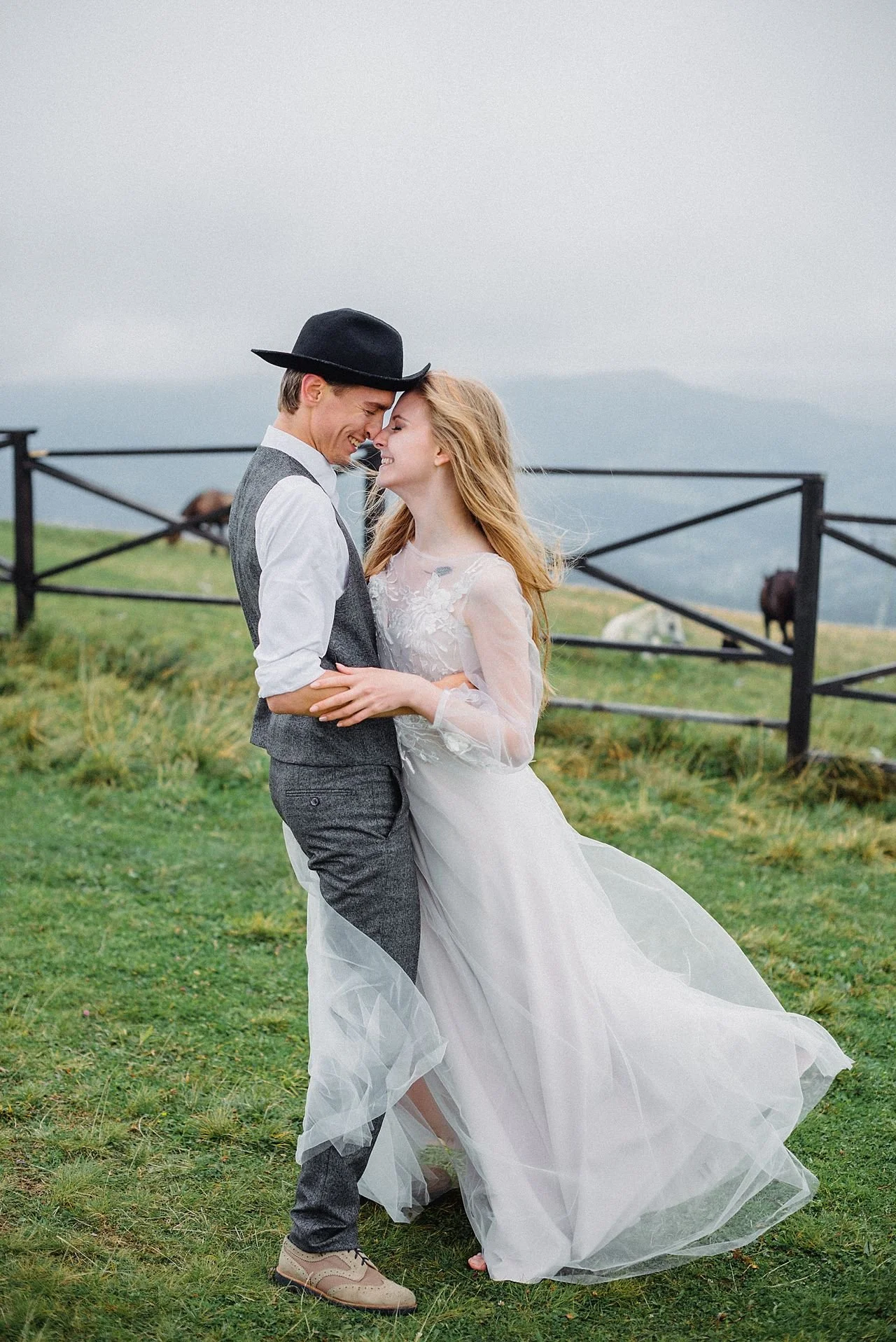
Top Styling Tips for Grooms in Denver | Groom Style Guide
Summary
A groom's wedding clothes have a difficult assignment: they should look exceptional in photographs without looking as though they were assembled for the photographs. For Denver weddings, the strongest approach begins with fit, then accounts for the ceremony's formality, the season, the venue, Colorado weather, and the groom's personality. A good suit can do a great deal. A good suit that fits correctly, works with the setting, and lets you forget about it for six hours does considerably more.
What are the best styling tips for grooms in Denver?
The best styling advice for Denver grooms is to start with fit, then choose formality, fabric, and color around the venue and season. Use accessories sparingly, wear shoes you have already broken in, and schedule grooming early enough to avoid last-minute experiments. Colorado weddings reward clothes that look polished and still let you move.
Frequently Asked Questions
What should a bride do first when planning a wedding?
Before choosing colors, dresses, flowers, or décor, decide with your partner what you want the wedding to feel like and identify the three parts of the celebration you value most. Those priorities become a filter for later decisions.
How can a bride make wedding planning less stressful?
Reduce the number of decisions that reach you. Divide planning responsibilities with your partner, assign clear jobs to vendors and family members, create deadlines for major choices, and stop revisiting decisions once they have been reasonably settled.
When should you start planning the wedding ceremony?
Begin discussing the ceremony several months before the wedding rather than leaving it for the final weeks. Decide on the tone, officiant, readings, vows, processional, cultural or family traditions, and basic ceremony structure before the final planning rush.
What should a bride delegate on her wedding day?
Vendor questions, transportation updates, late guests, décor issues, marriage-license logistics, rings, personal belongings, and timeline changes should all have assigned owners. The bride should not be the wedding-day information desk.
How can you stay present on your wedding day?
Build breathing room into the schedule, put your phone away, eat and drink normally, designate someone else to handle logistical questions, and set aside a few private minutes with your partner. Presence usually requires removing responsibilities rather than adding another activity.
Key Topics
groom styling tips Denver, Denver groom style, Denver wedding groom attire, groom wedding suit Denver, wedding suits for grooms Denver
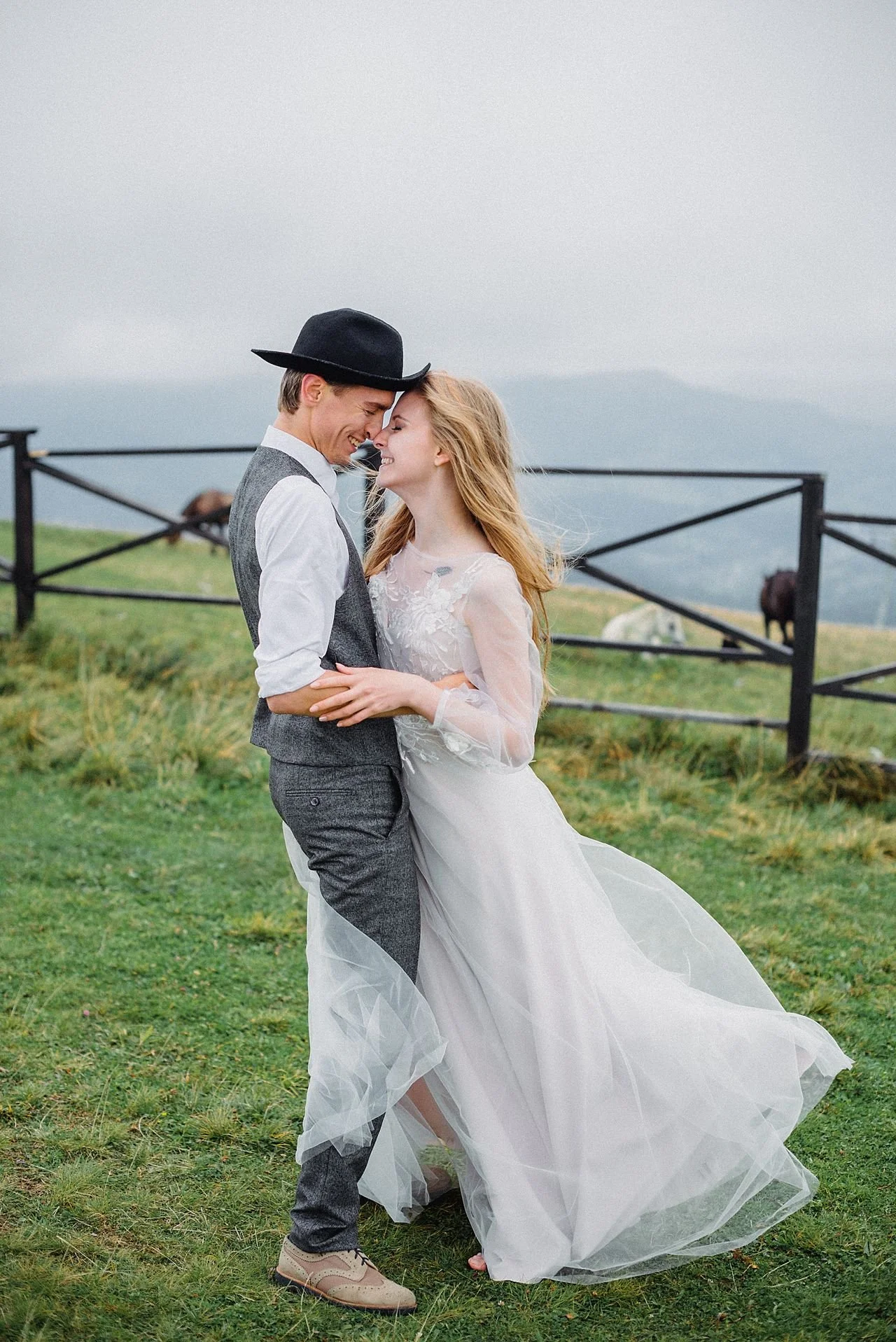
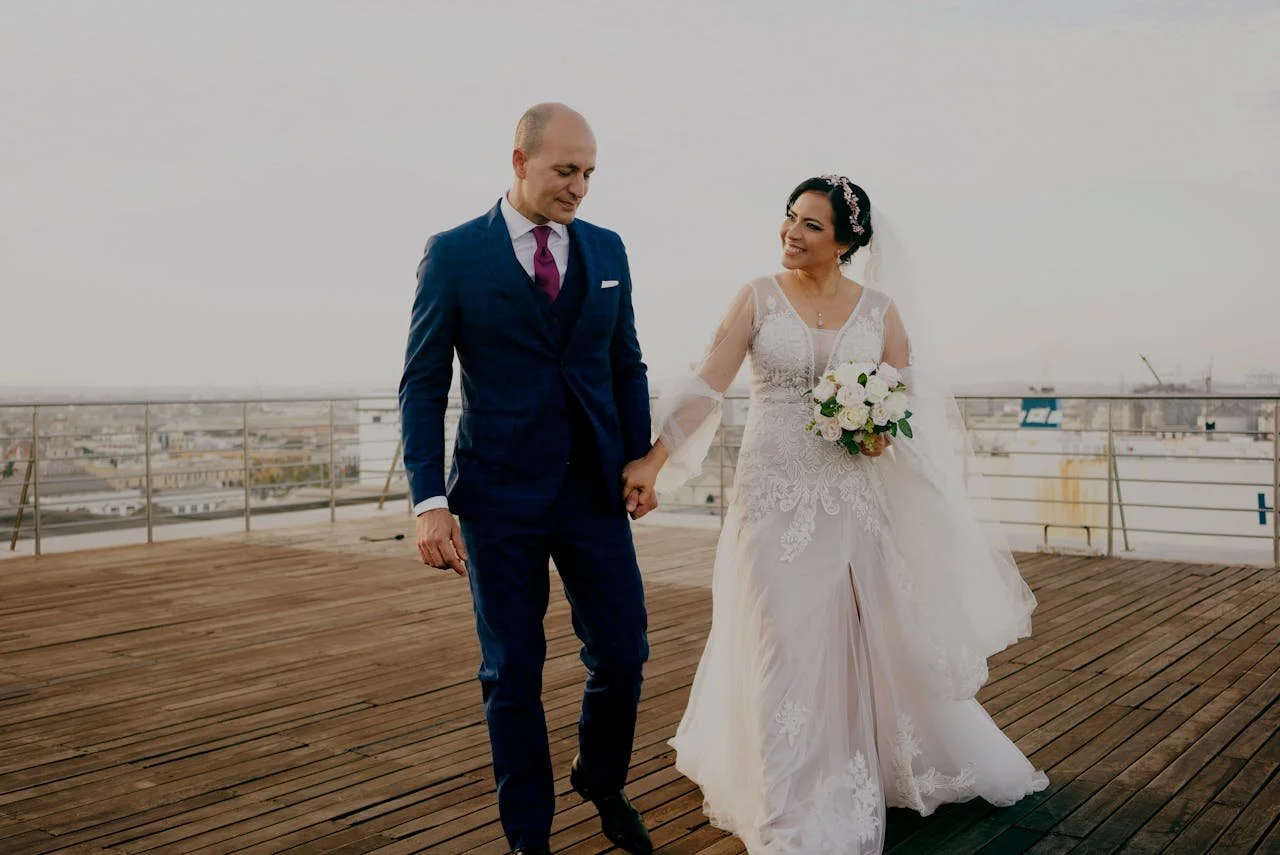
Groom Style / Photo: Anastasiya Vragova
Why Denver Grooms Should Dress for the Actual Wedding
A wedding suit should belong to the room—or the mountain, courtyard, rooftop, garden, trail, hotel, gallery, ranch, or restaurant—in which it will be worn. That distinction is especially useful in Colorado. Denver's wedding landscape can shift quickly from a black-tie ballroom downtown to a garden ceremony in the city, a foothill celebration outside Golden, or an intimate ceremony reached on foot. The same tuxedo is not automatically the right answer for all four.
Climate belongs in the conversation, too. Denver sits at 5,280 feet, with a dry climate and considerable seasonal variation. Visit Denver lists average July and August highs of approximately 88°F and 86°F, respectively, while evenings are generally cooler. A groom standing outside at 3:30 p.m. in July experiences his clothing differently than someone walking into an evening hotel reception in November. For a city ceremony, Denver wedding officiant services often take place in settings where a dark tailored suit, tuxedo, or sophisticated seasonal color works naturally. The larger point is simple: begin with the wedding you are actually having, not an image saved from someone else's.
Table of Contents
Why Denver grooms should dress for the actual wedding
Styling Tip #1: Get the fit right before worrying about fashion
Styling Tip #2: Let the venue determine the level of formality
Styling Tip #3: Choose fabric for Colorado's season and setting
Styling Tip #4: Use color with restraint
Styling Tip #5: Keep accessories selective
Styling Tip #6: Treat grooming as part of the wardrobe
A practical groom-style timeline
Related articles
Styling Tip #1: Get the Fit Right Before Worrying About Fashion
The most expensive suit in the room can still look wrong if the shoulders collapse, the trousers pool over the shoes, or the jacket strains when buttoned. Zola's updated groom-attire guidance recommends beginning with professional measurements, while The Knot's 2025 menswear reporting reflects a broader shift away from ultra-skinny silhouettes toward tailored fits that provide cleaner lines without restricting movement.
The useful checkpoints are surprisingly concrete. The jacket shoulder should end where your shoulder meets your arm. Lapels should lie flat rather than bow away from the chest. Roughly one-quarter to one-half inch of shirt cuff can show beneath the jacket sleeve. For a contemporary trouser length, the fabric can lightly meet the shoe rather than collapsing into several folds.
Then move in it.
Sit. Walk. Raise your arms. Hug someone. Bend down. Put your phone in a pocket. Pretend you are dancing badly at 10:45 p.m.
A wedding outfit should survive all of those things.
Recommendation: Schedule your principal fitting several weeks before the wedding and complete a final try-on wearing the actual shirt, shoes, belt or suspenders, and undergarments. Do not evaluate the jacket in isolation.
Styling Tip #2: Let the Venue Determine the Level of Formality
"Tuxedo or suit?" becomes easier once you stop treating it as a question of personal preference alone. The Black Tux's 2025 dress code guidance keeps the distinction fairly traditional: black tie calls for a tuxedo, typically in black or midnight blue, with a white shirt, bow tie, and formal shoes. Formal or black-tie optional permits more latitude, including a dark, well-cut suit. Cocktail and semi-formal weddings allow considerably more flexibility.
For an evening hotel wedding in downtown Denver, a tuxedo can look entirely at home. For a brewery courtyard, art space, garden, or daytime restaurant ceremony, navy, charcoal, brown, or another tailored suit may feel more natural. Move west and the visual language changes again. Couples using Golden wedding officiant services often incorporate foothills, stone, greenery, historic architecture, or outdoor ceremony spaces. Texture and earthier colors can work beautifully there without turning the groom into scenery.
Recommendation: Match the groom's clothing to the wedding's stated dress code first, the venue second, and current fashion trends third.
Styling Tip #3: Choose Fabric for Colorado's Season and Setting
A groom should not spend his ceremony silently negotiating with his jacket. For warm-weather Denver weddings, consider lighter-weight wool, wool blends, linen blends, or other breathable constructions. The Black Tux's current wedding-suit guidance specifically favors lighter colors and fabrics, such as tan for spring and summer, and notes the practical heat disadvantage of dark suiting in direct sunlight.
For fall and winter, deeper wool textures, darker greens, charcoal, navy, brown, or a tuxedo can carry more visual weight without feeling heavy-handed. Colorado outdoor weddings introduce another consideration: temperature can change as the day progresses. A ceremony may begin in direct afternoon sun and end with dinner after the temperature has dropped considerably. Couples planning near the Flatirons through Boulder wedding officiant services, for example, may want the elegance of full suiting without choosing fabric better suited to an air-conditioned ballroom.
Recommendation: Ask the clothier for the fabric weight and construction rather than judging only by color. For an outdoor ceremony, wear the complete outfit outside for 15 or 20 minutes before the wedding. Comfort is easier to evaluate before the photographer arrives.
Quick Summary
Start with tailoring; fit has more visual impact than price or trend.
Match the outfit to the ceremony's dress code and venue.
Choose breathable fabrics for warm Denver and outdoor weddings.
Use stronger colors deliberately rather than stacking competing details.
Coordinate with the wedding party without dressing identically.
Break in shoes and plan footwear around the actual terrain.
Schedule the final haircut before wedding week rather than the morning before.
Avoid unfamiliar grooming products or dramatic style changes close to the ceremony.
Styling Tip #4: Use Color With Restraint
Current groom fashion is much broader than black, gray, and navy. The Knot's 2025 menswear reporting highlighted sage and other greens, chocolate brown, richer textures, double-breasted jackets, and more expressive suits. That freedom is useful. It is not an instruction to use all of it.
A deep olive or forest-green suit can look extraordinary against Colorado stone and autumn foliage. Brown and tobacco tones can work in historic, rustic, or foothill settings. Midnight blue remains an excellent alternative to black for evening ceremonies. Navy remains difficult to misuse. The test I would apply is photographic longevity: Will the color still look like you in ten years? If the answer is uncertain, put the stronger color in a smaller place—a tie, pocket square, boutonniere, socks, dinner jacket, or rehearsal-dinner outfit.
Recommendation: Choose one visual idea for the groom. Do not make the suit color, patterned shirt, tie, socks, boutonniere, pocket square, lapel pin, and shoes compete for attention simultaneously.
Styling Tip #5: Keep Accessories Selective Menswear can become cluttered very quickly because the pieces are small.
A pocket square does not need to match the tie exactly. The boutonniere does not need to reproduce the entire floral arrangement. A watch can be beautiful, but an enormous sports watch beneath a formal cuff may dominate photographs. Novelty socks are harmless, although they generally work better as a private joke than as the organizing principle of the outfit. Shoes deserve more attention than they receive. Black leather remains the safest companion for a tuxedo. Dark brown can work beautifully with navy, blue, brown, tan, and some gray suits. For mountain and outdoor weddings, consider the actual surface underfoot before choosing a slick leather sole. This becomes particularly important for Colorado elopement ceremonies. A groom walking to an overlook does not need to hike in polished dress shoes simply because he intends to wear them during the ceremony. Carry them, change near the site, and keep the photograph rather than the blister.
Recommendation: Break in wedding shoes indoors before the wedding. Pack a small cloth or brush, backup socks, stain remover, and adhesive bandages. This is not glamorous advice. It is useful advice.
Styling Tip #6: Treat Grooming as Part of the Wardrobe
The haircut, beard, skin, nails, and clothing appear in the same photographs. They should be planned with roughly the same degree of restraint. The Knot's groom-grooming guidance recommends scheduling the final haircut roughly one to two weeks before the wedding and testing a substantially different hairstyle months earlier rather than unveiling an experiment during wedding week. The same principle applies to unfamiliar skincare products and major grooming treatments. If you normally have a beard, the wedding is probably not the morning to discover your chin. If you are normally clean-shaven, practice whatever shaving routine produces the least irritation. Have facial hair shaped rather than aggressively redesigned. Clean nails and moisturized hands deserve attention because ring photographs are, unsurprisingly, photographs of hands.
Recommendation: Aim to look like the best-rested, best-tailored version of yourself—not a newly invented person hired to portray you at the wedding.
A Practical Groom-Style Timeline
4–6 Months Before
Decide whether you are buying, renting, or commissioning the suit or tuxedo. Set the wedding's level of formality and coordinate the broad direction with your partner and wedding party. Zola recommends giving grooms at least a few months to choose clothing and allow time for tailoring.
8–10 Weeks Before
Confirm shoes, shirt, tie or bow tie, belt or suspenders, pocket square, cufflinks, and any watch or jewelry. Schedule alterations if necessary.
3–4 Weeks Before
Try on the entire outfit at once. Photograph yourself from the front, side, and back. Sit down. Walk. Check trouser length with the wedding shoes. Confirm boutonniere placement.
1–2 Weeks Before
Get your final haircut if that timing matches your usual routine. Shape facial hair. Break in shoes. Stop introducing new grooming products.
48 Hours Before
Steam or press the clothing. Check every button. Remove retail stitching and tags. Pack accessories together. Empty unnecessary items from trouser pockets.
Wedding Day
Put on the trousers before the shoes. Keep phones, keys, wallets, and bulky cases out of visible pockets during photographs and the ceremony. Button a two-button suit jacket only at the top while standing, then unbutton it when seated. And then stop examining yourself. At some point, clothes have finished their work.
Related Articles
From the Michael Moody Officiant wedding blog directory:
Preparing for Your Wedding Ceremony in Colorado: A Couple's Guide
How to Personalize Your Wedding Ceremony Without Making It Awkward or Overlong
Common Wedding Ceremony Planning Challenges and How to Overcome Them
Denver Rehearsal Dinner Venues: Elegant and Upscale Restaurant Options for Your Wedding Weekend
Colorado Front Range Elopement Guide: Hiking-In Wedding Ceremonies and Scenic Trails
The directory includes ceremony planning articles, wedding-specific planning guidance, Front Range elopement content, and relationship-focused resources for couples planning meaningful Colorado ceremonies.
About the Author: Michael Moody, Wedding Officiant
Michael Moody is a Colorado wedding officiant serving Denver, Boulder, Golden, Larkspur, and mountain communities throughout the state. Since 2012, he has officiated more than 300 weddings, bringing a calm presence, thoughtful guidance, and emotionally grounded ceremony writing to couples seeking a meaningful experience. He also offers Colorado elopement ceremonies for couples who want something intimate, intentional, and beyond the boundaries of a traditional wedding day. His work is shaped by a lifelong interest in connection, reflection, and personal growth. Michael is the author of the self-improvement book Redefine Yourself: The Simple Guide to Happiness and host of The Elements of Being podcast. As a wedding officiant, he draws from that same foundation: the belief that our relationships, words, and everyday interactions help shape a life rooted in love, empathy, and purpose. Michael’s ceremony work has been recognized across Colorado. He is a 2023 WeddingWire Couples’ Choice Award winner in Denver, marking his eighth consecutive year receiving the honor. He was also named “Best Business of 2024, 2025, and 2026” by Three Best Rated and earned “The Best Wedding Officiant in Commerce City, Colorado for 2024” from Quality Business Awards USA.
Beyond weddings, Michael and his wife, Sammy, have sponsored an annual student scholarship for more than 10 years. They also founded Civic Growth Alliance, a 501(c)(4) nonprofit dedicated to strengthening communities through civic advocacy, resident engagement, strategic partnerships, public safety initiatives, neighborhood vitality, and community well-being.
Wedding locations: Michael officiates wedding ceremonies in the Denver neighborhoods of LoDo, River North, Washington Park, Cherry Creek, City Park, Central Park, Capitol Hill, Cheesman Park, Park Hill, Lower Highlands, and Sloan Lake. Michael also serves as an ordained minister in Larkspur, Littleton, Golden, Boulder, Breckenridge, Frisco, Aspen, Vail, Estes Park, and more. If your Denver neighborhood or Colorado town isn’t listed here, no worries! Please contact Michael to propose a wedding ceremony location in a different area!
Wedding Planning Tips
Michael Moody is a Colorado wedding officiant serving ceremonies throughout Denver, Golden, Boulder, and mountain communities across the state. His work includes refined city weddings, foothill celebrations, personalized outdoor ceremonies, and intimate Colorado elopements. That variety provides a practical view of how attire functions beyond the fitting room—from formal Denver venues to wind, sun, uneven terrain, and changing temperatures at outdoor Colorado ceremonies. Explore Denver wedding officiant services, Golden wedding ceremonies, Boulder wedding officiant services, and Colorado elopement ceremonies.
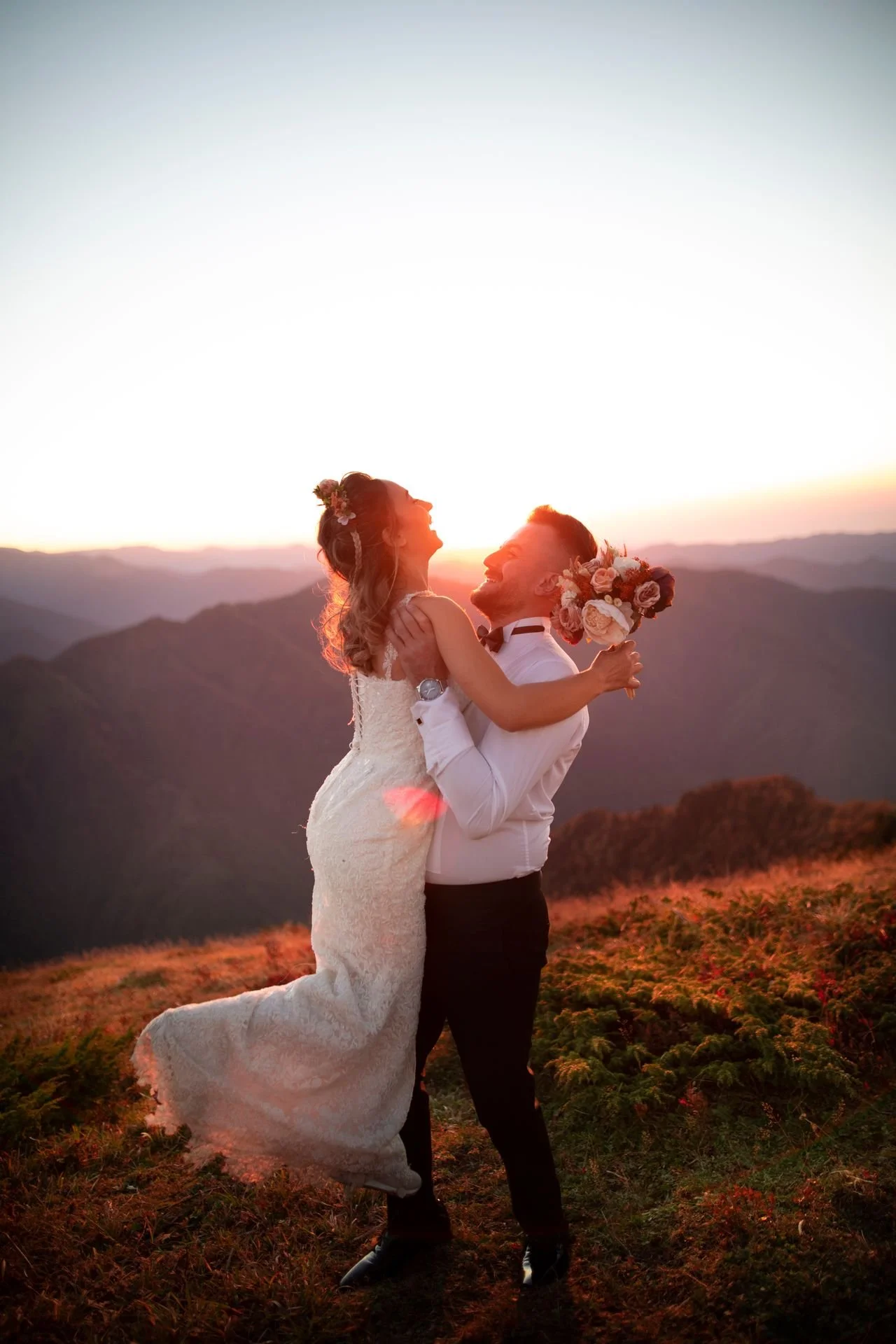
Top 5 Wedding Tips for Brides | Colorado Wedding Guide
Summary
The best wedding advice for brides has less to do with chasing perfection and more to do with deciding what deserves your attention. Define your priorities before social media defines them for you, divide the planning workload, prepare the ceremony early, choose comfort over unnecessary pressure, and hand off logistics before the wedding begins.
What are the top five wedding tips for brides?
What are the top five wedding tips for brides? Start by defining three priorities with your partner, divide planning responsibilities clearly, protect the ceremony early, choose clothing and routines that keep you physically comfortable, and hand wedding-day logistics to trusted professionals. The goal is not perfection; it is enough structure to remain present.
Frequently Asked Questions
What should a bride do first when planning a wedding?
Before choosing colors, dresses, flowers, or décor, decide with your partner what you want the wedding to feel like and identify the three parts of the celebration you value most. Those priorities become a filter for later decisions.
How can a bride make wedding planning less stressful?
Reduce the number of decisions that reach you. Divide planning responsibilities with your partner, assign clear jobs to vendors and family members, create deadlines for major choices, and stop revisiting decisions once they have been reasonably settled.
When should you start planning the wedding ceremony?
Begin discussing the ceremony several months before the wedding rather than leaving it for the final weeks. Decide on the tone, officiant, readings, vows, processional, cultural or family traditions, and basic ceremony structure before the final planning rush.
What should a bride delegate on her wedding day?
Vendor questions, transportation updates, late guests, décor issues, marriage-license logistics, rings, personal belongings, and timeline changes should all have assigned owners. The bride should not be the wedding-day information desk.
How can you stay present on your wedding day?
Build breathing room into the schedule, put your phone away, eat and drink normally, designate someone else to handle logistical questions, and set aside a few private minutes with your partner. Presence usually requires removing responsibilities rather than adding another activity.
Key Topics
top 5 tips for brides, wedding tips for brides, wedding planning tips for brides, best wedding advice for brides, bride wedding planning tips, wedding day tips for brides, wedding planning advice
Colorado wedding planning tips, Colorado wedding advice, Denver wedding officiant, Colorado wedding officiant, Colorado wedding ceremony, wedding ceremony planning tips, how to reduce wedding planning stress, wedding day checklist for brides
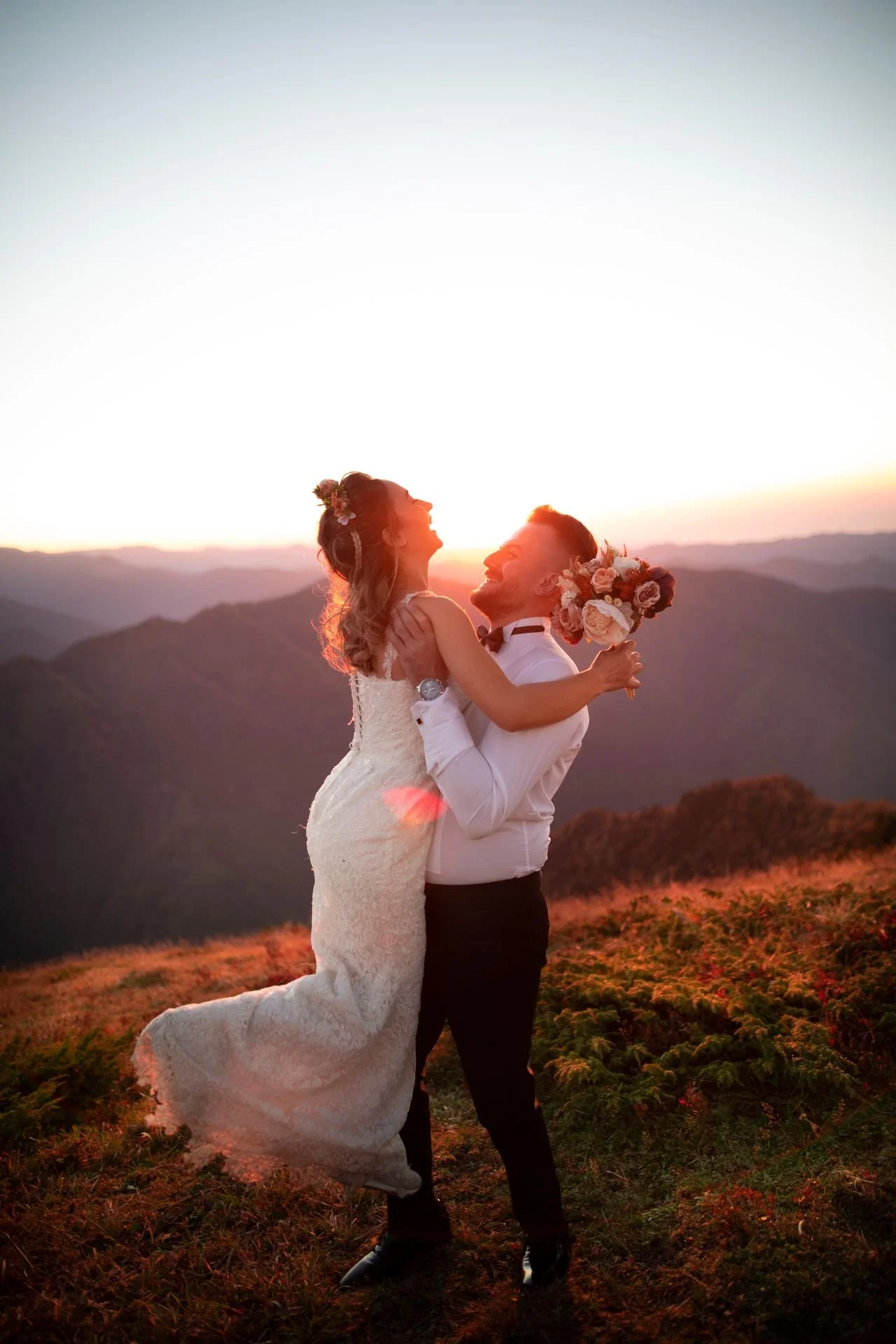
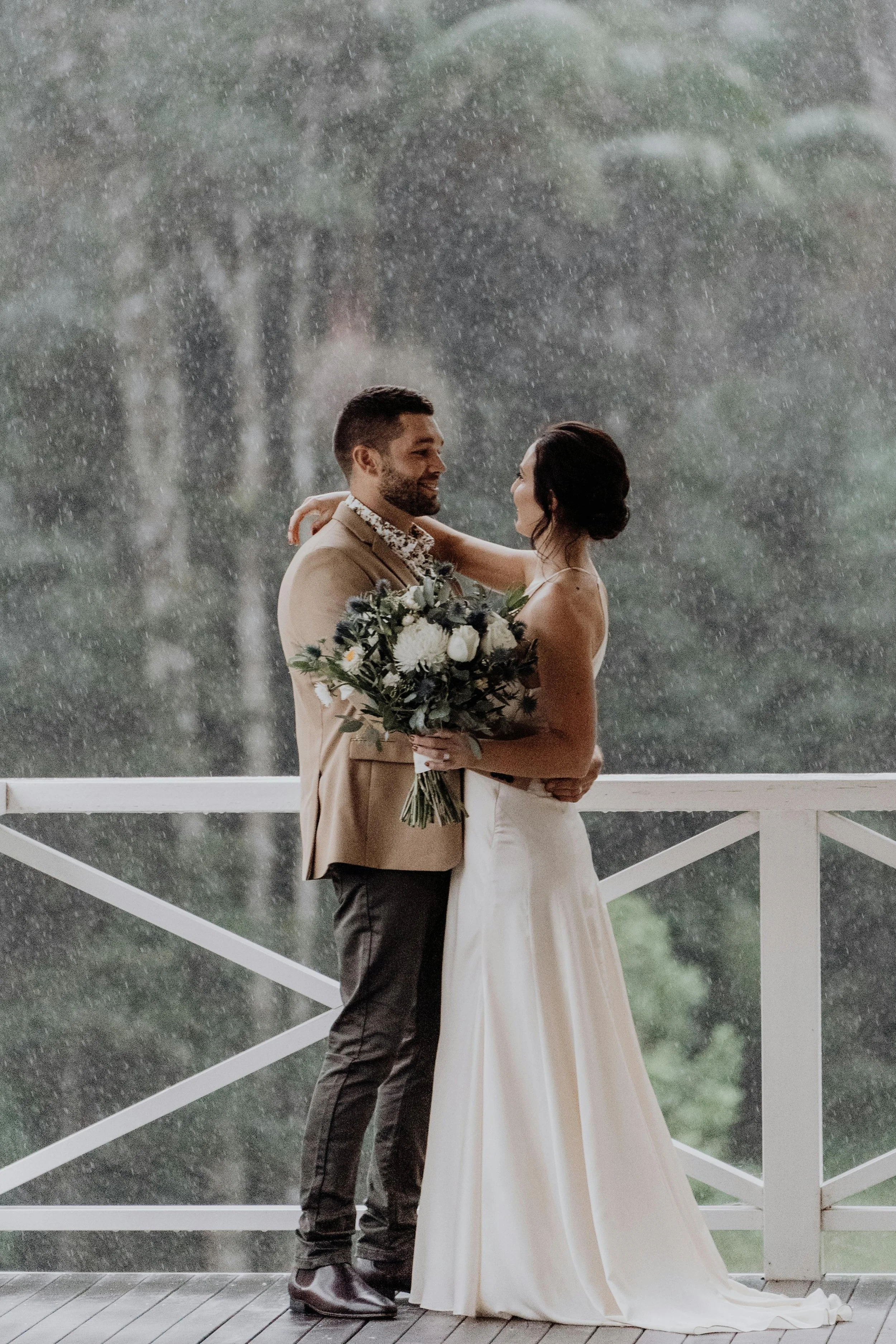
Colorado Brides / Photo: Orhan Namlı
Why the Best Wedding Advice Is Increasingly About Restraint
There has never been more wedding inspiration within reach. That is not entirely a gift. A bride can wake up intending to select napkins and, forty-five minutes later, be comparing her wedding to a Lake Como celebration with a floral budget that could purchase a small car. Pinterest, Instagram, TikTok, wedding blogs, vendor feeds, celebrity weddings, and algorithmically perfect photographs have made inspiration nearly limitless while doing very little to expand budgets, weekends, or human attention.
Zola’s 2026 First Look Report, based on more than 11,500 engaged couples, found that 87% had made a wedding-planning decision based on something seen on social media. Sixty percent said reconciling their actual budget with online inspiration was their number-one planning stressor, and 48% had increased or rearranged spending to reproduce something they encountered online. That is useful context because some of the best advice I can offer after officiating hundreds of weddings is surprisingly unglamorous: remove noise before adding another idea.
Couples planning city celebrations can explore Denver wedding officiant services; foothills weddings can be approached through Golden wedding officiant services; couples marrying near the Flatirons can explore Boulder wedding officiant services; and couples who prefer a smaller mountain experience may find that Colorado elopement ceremonies better fit the way they actually want to spend the day.
Table of Contents
Why the best wedding advice is increasingly about restraint
Tip #1: Decide what your wedding is before the internet does
Tip #2: Do not quietly become the project manager for two people
Tip #3: Give the ceremony attention before the final month
Tip #4: Plan for the body you actually live in
Tip #5: Create a wedding-day firewall
Related articles
Tip #1: Decide What Your Wedding Is Before the Internet Does
Before creating another inspiration board, sit down together without phones and finish three sentences:
We want our guests to feel:
The three things we care most about are:
We are willing to spend less on:
Keep the answers short. Perhaps you want guests to feel relaxed and well fed. Perhaps your priorities are an extraordinary ceremony, photography, and dinner. Maybe elaborate florals interest you far less than music and a beautiful venue. That small exercise creates a decision filter. When someone later suggests specialty linens, a second dress, custom signage, another floral installation, a champagne wall, drone footage, or a three-hour welcome party, you no longer need to determine whether the idea is objectively good. You only need to decide whether it belongs at your wedding.
The Knot’s recent research reaches a similar conclusion. Its 2026 Real Weddings Study found that personalization and authenticity remain central priorities for couples, with 58% looking beyond standard traditions for choices that better reflect them. A practical rule: limit each major vendor to three reference images that truly represent your taste. A folder containing 146 photographs is no longer a point of view. It is an archive.
Tip #2: Do Not Quietly Become the Project Manager for Two People
One of the stranger traditions surrounding weddings is the assumption that the bride should somehow acquire expertise in contracts, catering counts, stationery etiquette, transportation, floral design, hotel blocks, photography schedules, family diplomacy, ceremony construction, and the migratory habits of missing RSVPs. Do not accept the job by default.
Create a simple ownership system with your partner. Every major task receives one primary owner, a deadline, and a budget. One person can research photographers while the other handles transportation. One can coordinate invitations while the other manages hotel arrangements. Decisions affecting the wedding as a whole remain shared, but administrative work does not require two people to hover over every email. This becomes even more important once vendors enter the picture. The Knot reports that couples now hire an average of 13 wedding vendors. Its research also found that personality is among the leading selection factors for planners, photographers, and DJs, which is a useful reminder that competence and trust are more valuable than a flawless Instagram grid. Hire professionals whom you are comfortable allowing to do their jobs. If every vendor decision must return to you for approval on the wedding morning, you have hired assistance without actually surrendering responsibility.
Tip #3: Give the Ceremony Attention Before the Final Month
The ceremony occupies a relatively small portion of the wedding schedule, yet it is the point at which the wedding actually becomes a wedding. Flowers will be photographed. Dinner will be remembered. The dance floor may become legendary within your family. But the ceremony is the only part of the day built specifically around the commitment the entire gathering came to witness. Treat it accordingly. Choose your officiant early enough to think about tone rather than simply availability. Decide whether the ceremony should feel intimate, lighthearted, traditional, secular, spiritual, literary, or spare. Determine whether you want personal vows, readings, family acknowledgments, cultural traditions, or a remembrance of someone who is absent.
Then write vows before the last-minute administrative avalanche begins. The Knot’s 2026 data found that 61% of couples write their own vows, while roughly half incorporate a first look before the ceremony. Both choices point toward the same appetite: couples increasingly want private and public moments that create genuine connection rather than simply satisfy convention.
A week or two before the wedding, your officiant, planner, photographer, and DJ should understand the processional order, music cues, readings, rings, vows, microphone plan, recessional, and marriage-license procedure. Once those mechanics are settled, the ceremony can feel spontaneous without being disorganized. The distinction is subtle but important. You are not rehearsing emotion. You are removing obstacles around it.
Quick Summary
Choose three wedding priorities before collecting more inspiration.
Give every planning task a clear owner instead of allowing it to drift toward the bride
Finish the ceremony structure and vows before the final planning rush.
Select attire, shoes, meals, and outdoor plans for real physical comfort.
Designate someone else to handle questions and small emergencies on the wedding day.
Tip #4: Plan for the Body You Actually Live In
Wedding culture has spent decades encouraging women to regard their bodies as another item requiring renovation before the wedding. That idea deserves retirement. In Zola’s 2025 survey of more than 6,000 couples, 34% said wedding diet culture was something they wished they could change about the planning experience. Its 2026 report also found considerable spending on pre-wedding beauty, physical health, and mental well-being. Feeling good on the wedding day should not require spending the preceding months treating yourself as a problem.
At your final dress fitting, do more than stand in front of the mirror. Sit. Walk quickly. Climb a few steps. Raise your arms. Turn. Hug someone. Make certain you can breathe comfortably and use the restroom without having to assemble a committee. Break in your shoes and have a second pair available. Eat breakfast or lunch even if the schedule becomes busy. Decide who carries your personal items. Pack the small things that are difficult to improvise later: tissues, your usual medications, stain remover, fashion tape, comfortable shoes, and weather-appropriate layers.
Colorado weddings add another variable: landscape. A rooftop ceremony in Denver, a foothills celebration in Golden, a lawn beneath the Flatirons, and a mountain elopement all make different demands on footwear, fabric, temperature, transportation, and timing. A wedding dress should serve the woman wearing it. The woman should not spend eight hours serving the dress.
Tip #5: Create a Wedding-Day Firewall
By the morning of the wedding, the bride should gradually become harder to reach. That sentence sounds slightly antisocial. It is actually practical. Choose a point person—usually a planner, coordinator, trusted member of the wedding party, or another organized adult—and make that person the first contact for questions. Vendors should know whom to call if transportation is delayed. Family members should know whom to ask about seating. Someone other than you should know where the marriage license is. Someone should be responsible for the rings. Someone should collect personal belongings after the ceremony.
Build modest buffers into the schedule as well. Hair and makeup sometimes run late. Elevators take longer than expected. A parent disappears to find reading glasses. A photographer wants three more minutes of light. Five small delays can consume the twenty minutes you thought you had to yourself. The Knot’s 2026 study found that the guest experience remains a top planning priority, but the best hosts are not necessarily the people personally solving every problem. They create systems that allow capable professionals to handle the mechanics. My preferred rule is simple: once final preparations begin, questions should move away from the couple whenever possible. You have already planned the wedding. You do not need to operate it.
One Last Thought Before the Processional
A wedding asks a strange thing of a bride. For months, she may be rewarded for noticing every detail. Then, suddenly, the day arrives and the better skill is letting those details go. By the time you reach the ceremony, the place cards have been printed. The flowers are whatever the flowers are. The weather has made its decision. A guest may be late. Someone may have forgotten something. None of these deserves the same attention as the person standing across from you. The best planning eventually makes itself almost invisible.
Look at your partner. Listen to the words being spoken. Hold hands. Take the extra second before answering. Notice the faces in front of you. There are very few days in life when nearly everyone you love gathers in one place because something joyful has happened. Do not spend that day managing it.
Related Articles
From the Michael Moody Officiant wedding blog directory:
Preparing for Your Wedding Ceremony in Colorado: A Couple’s Guide
How to Personalize Your Wedding Ceremony Without Making It Awkward or Overlong
Common Wedding Ceremony Planning Challenges and How to Overcome Them
How to Get Married in Colorado: Marriage License Guide for 2026
Colorado Front Range Elopement Guide: Hiking-In Wedding Ceremonies and Scenic Trails
The directory includes ceremony planning articles, wedding-specific planning guidance, Front Range elopement content, and relationship-focused resources for couples planning meaningful Colorado ceremonies.
About the Author: Michael Moody, Wedding Officiant
Michael Moody is a Colorado wedding officiant serving Denver, Boulder, Golden, Larkspur, and mountain communities throughout the state. Since 2012, he has officiated more than 300 weddings, bringing a calm presence, thoughtful guidance, and emotionally grounded ceremony writing to couples seeking a meaningful experience. He also offers Colorado elopement ceremonies for couples who want something intimate, intentional, and beyond the boundaries of a traditional wedding day. His work is shaped by a lifelong interest in connection, reflection, and personal growth. Michael is the author of the self-improvement book Redefine Yourself: The Simple Guide to Happiness and host of The Elements of Being podcast. As a wedding officiant, he draws from that same foundation: the belief that our relationships, words, and everyday interactions help shape a life rooted in love, empathy, and purpose. Michael’s ceremony work has been recognized across Colorado. He is a 2023 WeddingWire Couples’ Choice Award winner in Denver, marking his eighth consecutive year receiving the honor. He was also named “Best Business of 2024, 2025, and 2026” by Three Best Rated and earned “The Best Wedding Officiant in Commerce City, Colorado for 2024” from Quality Business Awards USA.
Beyond weddings, Michael and his wife, Sammy, have sponsored an annual student scholarship for more than 10 years. They also founded Civic Growth Alliance, a 501(c)(4) nonprofit dedicated to strengthening communities through civic advocacy, resident engagement, strategic partnerships, public safety initiatives, neighborhood vitality, and community well-being.
Wedding locations: Michael officiates wedding ceremonies in the Denver neighborhoods of LoDo, River North, Washington Park, Cherry Creek, City Park, Central Park, Capitol Hill, Cheesman Park, Park Hill, Lower Highlands, and Sloan Lake. Michael also serves as an ordained minister in Larkspur, Littleton, Golden, Boulder, Breckenridge, Frisco, Aspen, Vail, Estes Park, and more. If your Denver neighborhood or Colorado town isn’t listed here, no worries! Please contact Michael to propose a wedding ceremony location in a different area!
Wedding Planning Tips
Michael Moody is a Colorado wedding officiant who has officiated more than 300 weddings since 2012, including personalized ceremonies throughout Denver, Golden, Boulder, and Colorado’s mountain communities. His Denver wedding officiant services, Golden wedding officiant services, Boulder wedding officiant services, and Colorado elopement ceremonies are shaped by years of experience with ceremony writing, vows, rehearsals, vendor coordination, outdoor logistics, family dynamics, and the small adjustments that help a wedding ceremony feel calm and natural when the day arrives.
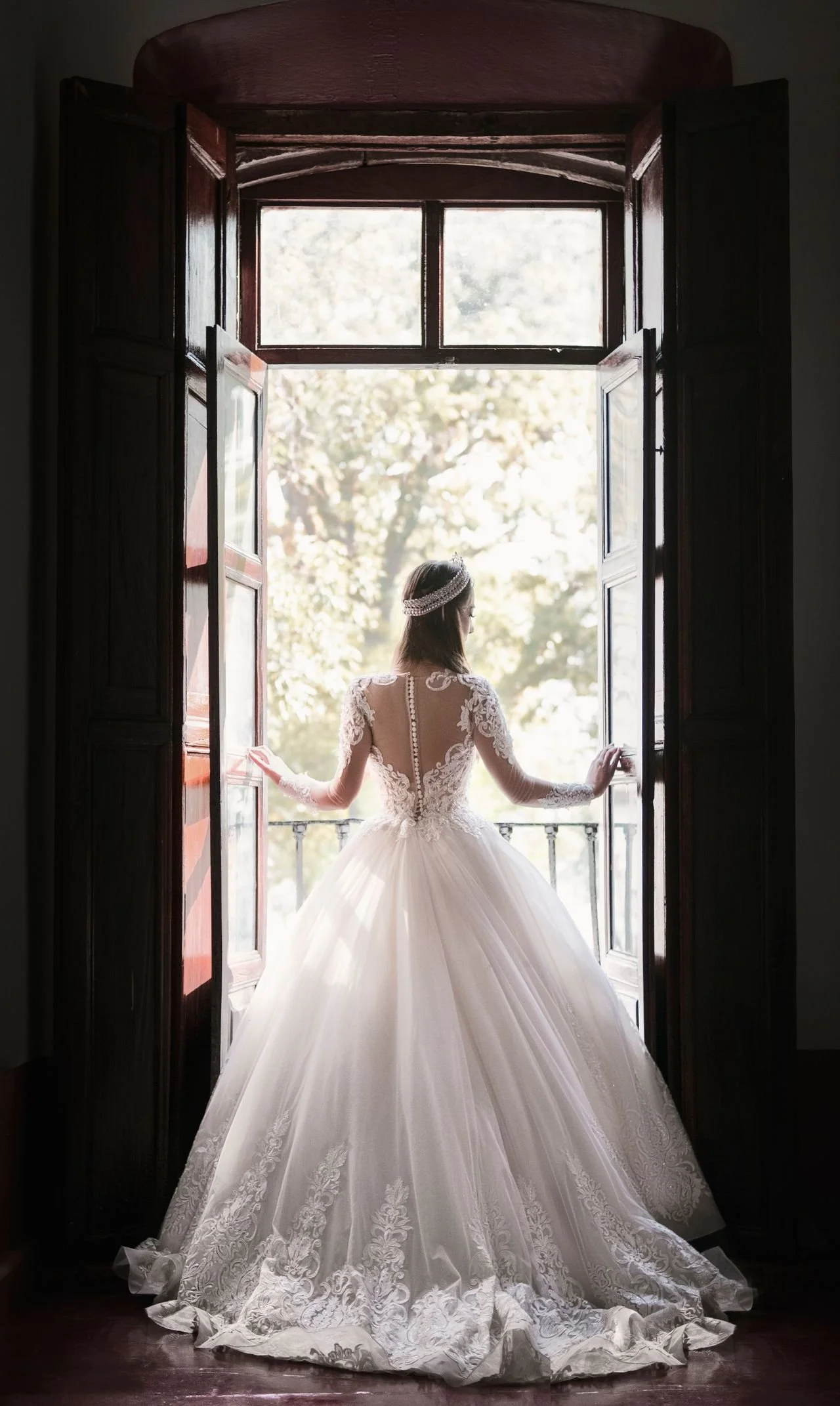
How to Choose the Perfect Wedding Dress for Your Venue and Ceremony
Summary
Choosing a wedding dress is less about discovering a universally flattering silhouette than finding a gown that belongs to the wedding you are actually planning. Start with your venue, season, budget, movement needs, and personal style. Then consider construction, fabric, alterations, photographs, and how the dress will behave during the ceremony—not simply how it looks on a pedestal in a bridal salon.
How do you choose the perfect wedding dress?
The best wedding dress fits your personal style, venue, season, budget, and the way you want to move through the wedding day. Choose your venue first, shop roughly 9–12 months ahead when possible, budget for alterations, test several silhouettes, and prioritize a gown you can comfortably walk, sit, breathe, hug, and dance in.
Frequently Asked Questions (FAQ)
When should I start shopping for my wedding dress?
Begin researching after your venue and date are selected. For a traditional made-to-order gown, shopping approximately 9–12 months before the wedding provides a comfortable window for ordering and alterations. Shorter timelines can still work with ready-to-wear, off-the-rack, sample, or expedited options.
How do I know which wedding dress silhouette is right for me?
Try several silhouettes rather than relying exclusively on body-shape charts. Compare proportion, waist placement, structure, fabric, comfort, and movement. The best silhouette is the one that creates the visual effect you enjoy and remains comfortable during the actual wedding.
Should my wedding dress match my venue?
It does not need to match literally, but the venue should influence fabric, formality, train length, footwear, warmth, movement, and durability. A gown should work physically and visually within the setting.
How much should I budget for wedding dress alterations?
Alteration costs vary significantly depending on the construction and the work required. Beading, lace, structural changes, hems, custom sleeves, bustles, and major resizing can increase cost, so ask about likely alterations before purchasing the gown.
How many people should I bring wedding dress shopping?
A small group usually produces clearer feedback. Kleinfeld recommends keeping the shopping party to roughly three supportive people, while recent Brides guidance makes a similar recommendation.
What wedding dress works best for an outdoor Colorado wedding?
Look for a gown whose weight, train, fabric, shoes, and layers suit the site. For trails or mountain settings, easier movement and a manageable train can be especially useful. For cold-weather ceremonies, removable sleeves, wraps, or other layering options can preserve the design without compromising comfort.
What should I test before buying a wedding dress?
Walk, sit, breathe deeply, raise your arms, turn, hug someone, climb a step if possible, and simulate dancing. If the dress has a train, ask how the bustle works and who will need to learn it.
Key Topics
how to choose a wedding dress, how to choose the perfect wedding dress, wedding dress shopping, wedding dress shopping tips, wedding dress guide, how to find a wedding dress, wedding dress styles
wedding dress shopping timeline, when to buy a wedding dress, how to pick a wedding dress, wedding dress silhouettes, wedding dress alterations timeline, how to choose wedding dress for venue, comfortable wedding dress, wedding dress fitting tips, wedding dress for outdoor wedding, what to look for in a wedding dress
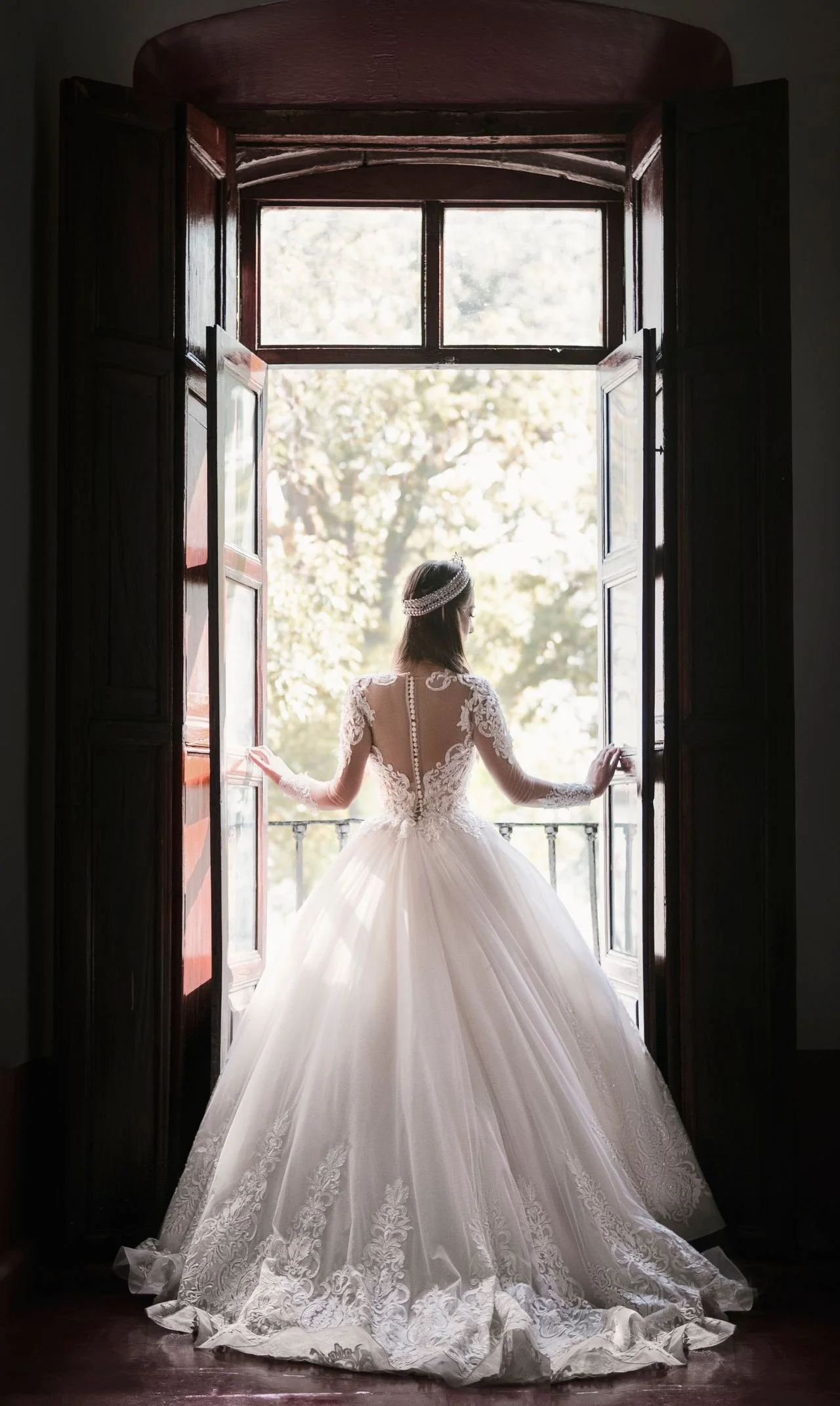
Wedding Dress / Photo: Asdrubal Luna
Start With the Wedding, Not the Dress
Wedding dress shopping has acquired its own mythology: champagne, mirrors, a semicircle of relatives waiting for tears, and the conviction that somewhere inside a garment bag is a dress capable of producing instant certainty. A more useful starting point is decidedly less cinematic. Where are you getting married? Recent guidance from Kleinfeld Bridal recommends choosing the venue before committing to a gown and, when possible, purchasing the dress approximately 9–12 months before the wedding. Brides has offered similar advice, noting that venue, date, production time, and alterations should be considered before the final purchase. The venue gives the dress context.
A structured silk ball gown can be extraordinary in a formal hotel or historic ballroom. The same gown may become an elaborate piece of luggage during a mile-long hike to an alpine ceremony. A diaphanous sheath may look effortless at an intimate summer celebration and feel considerably less romantic during a windy November ceremony at elevation. This is not an argument for rigid rules. It is an argument for seeing the dress as part of a physical place. Before opening Pinterest, know:
where the ceremony will occur;
whether you will be mostly indoors or outside;
the season and approximate temperature;
how far you will walk;
the surface beneath your feet;
the degree of formality you actually want.
The dress should participate in the setting rather than fight it.
Table of Contents
Start With the Wedding, Not the Dress
Decide What You Can Actually Spend
Give the Dress Enough Time
Forget the Old “Dress for Your Body Type” Rules
Test the Dress Like You Will Actually Wear It
Think About the Ceremony, Not Just the Portraits
Choosing a Wedding Dress for a Colorado Wedding
Use Bridal Trends as Inspiration, Not Instructions
Quick Summary: How to Choose a Wedding Dress
The Five-Question Test Before You Say Yes
Related Articles
Decide What You Can Actually Spend
A wedding-dress budget should include more than the number printed on the gown's tag. There may also be alterations, shoes, undergarments, a veil, jewelry, steaming, cleaning, storage, delivery, custom changes, and—depending upon the dress—a bustle substantial enough to deserve its own engineering diagram. Zola recommends accounting for alterations from the beginning because intricate lace, beading, structural changes, hems, and custom work can alter both cost and timing. A sensible question for a bridal salon is therefore not simply:
“Which dresses are under my budget?”
Ask:
“Which dresses leave room in my total budget for the alterations this particular gown is likely to need?”
That distinction can prevent a $4,000 gown from quietly turning into a $5,500 decision.
Give the Dress Enough Time
For a traditionally made-to-order gown, start earlier than you think you need to. Kleinfeld currently advises shopping after the venue is selected and ideally saying yes 9–12 months before the wedding. Its suggested timeline allows several months for the gown to arrive, followed by fittings beginning roughly six to eight weeks before the ceremony. Brides likewise recommends purchasing no later than about nine months ahead when circumstances allow. That does not mean a shorter engagement eliminates good options.
Ready-to-wear, sample gowns, off-the-rack dresses, expedited orders, and certain designers can accommodate shorter timelines. The mistake is hiding your deadline from the salon. Tell the consultant the real wedding date immediately. And remember: if bridal portraits or travel require the dress before the wedding, that earlier date is your practical deadline.
Forget the Old “Dress for Your Body Type” Rules
For years, bridal advice was organized around a peculiar taxonomy: pear, apple, rectangle, hourglass. It often turned a pleasurable question—What do I love wearing?—into a corrective one—What am I supposed to disguise? A better approach is to try different architectures. Try an A-line. Try a column. Try something fitted. Try something with volume. Try structure and softness. Notice what each shape does when you stand naturally rather than posing for the mirror. Pay attention to:
Proportion. Where does the waist actually sit on you?
Structure. Do you enjoy the secure feeling of corsetry, or does it make you conscious of the dress every second?
Fabric. Does silk skim in a way you like? Does Mikado provide the architecture you want? Does lace feel romantic or simply busy?
Movement. Does the skirt follow you gracefully, or do you feel as though you are transporting it?
Recognition. When you see yourself, do you still look like yourself—only unusually well dressed?
The goal is not to make your body conform to a category. The garment can do the adapting. That includes alterations. Zola explicitly cautions against tailoring a gown for an imagined future body rather than the body being fitted.
Test the Dress Like You Will Actually Wear It
The most revealing part of a bridal appointment may come after the consultant clips the gown into place.
Move.
Sit down.
Take a long stride.
Raise both arms.
Turn quickly.
Bend slightly.
Take a deep breath.
Pretend to hug someone.
If the dress has a train, walk while someone follows behind you. Zola's recent wedding-dress guidance similarly recommends considering whether a gown is comfortable enough to sit in and how its fabric, weight, train, and silhouette affect movement. A wedding dress is not worn for twenty seconds at a mirror. It may be worn through photographs, a processional, vows, embraces, dinner, and several hours of dancing. Beauty that requires continuous physical negotiation becomes exhausting surprisingly quickly.
Quick Summary: How to Choose a Wedding Dress
Choose the venue and date before committing to the gown.
Establish a total attire budget that includes alterations.
Shop roughly 9–12 months ahead when possible.
Try different silhouettes instead of shopping by body-type rules.
Test walking, sitting, breathing, hugging, stairs, and dancing.
Consider fabric weight, train length, bustle design, and weather.
Think about how the dress functions during the ceremony itself.
Use trends as references rather than requirements.
Choose the dress that feels most convincing on your actual body and at your actual wedding.
Think About the Ceremony, Not Just the Portraits
This is where dress advice and ceremony planning intersect. Ask yourself what happens when you reach the front of the aisle.
Can you turn easily toward your partner?
Can you hold both hands without a sleeve, bouquet, train, or veil demanding constant attention?
Can you walk naturally beside another person?
If you have stairs at the ceremony site, can you climb them safely?
If you are exchanging personal vows outdoors, will a cathedral-length veil become a sail in the wind?
And if you choose an elaborate train, who knows how to straighten it before the ceremony begins?
These small physical details can shape the rhythm of the ceremony. For a refined city celebration, couples exploring Denver wedding officiant services may be working with hotels, museums, restaurants, rooftops, or architectural venues where a more formal gown can move easily. A Golden wedding officiant ceremony may place you closer to foothills, grass, gravel, wind, or mountain-adjacent terrain. Couples planning with a Boulder wedding officiant may encounter gardens, open space, mountain views, trails, and rapidly changing outdoor conditions. And a Colorado elopement ceremony can introduce an entirely different calculation: how far are you carrying the dress before you wear it? The answer should influence the design.
Choosing a Wedding Dress for a Colorado Wedding
Colorado rewards a little realism. An outdoor ceremony can move through intense sun, wind, shade, cool air, and dramatically different temperatures in a single afternoon. At mountain or trail-accessed ceremonies, there may also be dirt, stone, snow, stairs, narrow paths, or a long walk from the car. This does not prohibit drama. It changes how drama is engineered. For outdoor Colorado weddings, consider:
detachable trains or overskirts;
a manageable bustle;
veils that can be removed easily;
sleeves or wraps for rapidly cooling evenings;
shoes selected for the actual surface;
fabrics you are comfortable lifting while walking;
a second pair of shoes for longer outdoor movement.
For a hiking-in elopement, some couples carry the gown and change near the ceremony location. Others select a dress light enough to travel in from the beginning. Neither is inherently more elegant. One simply needs to work on the day you have planned.
Use Bridal Trends as Inspiration, Not Instructions
Recent bridal collections have brought renewed attention to basque and drop waists, corsetry, dramatic volume, textural fabrics, and convertible details such as detachable sleeves. Kleinfeld's 2025 bridal-fashion coverage highlighted many of these elements, while Vogue's 2026 wedding-dress coverage continues to show substantial variety across silhouettes rather than a single dominant bridal uniform. Trends can give you vocabulary. They should not give you orders. If you love a basque waist because the long line feels graceful on you, wonderful. If you are choosing it because your social feed has repeated it often enough that every natural waist suddenly looks dated, keep trying dresses. Wedding photographs have a long afterlife. Choose something you enjoy seeing now without requiring it to announce the precise year in which you bought it.
The Five-Question Test Before You Say Yes
When you are standing in the dress you think might be the one, ignore the room for a moment. Ask yourself:
1. Would I still choose this if no one else saw it today?
2. Can I comfortably wear it for the ceremony I have planned?
3. Does it fit the wedding I actually want rather than the wedding I think I am supposed to want?
4. Can I afford the finished version—including alterations and accessories—without resentment?
5. When I look at myself, am I admiring the dress, or do I like the way I exist inside it?
The fifth question is usually the interesting one. The perfect wedding dress is not the gown that receives the loudest reaction in a bridal salon. It is the one that stops demanding attention once the wedding begins. You should eventually be able to forget about it. There is a person standing across from you, after all.
Related Articles
From the Michael Moody Officiant wedding blog directory:
Preparing for Your Wedding Ceremony in Colorado: A Couple’s Guide
How to Personalize Your Wedding Ceremony Without Making It Awkward or Overlong
Common Wedding Ceremony Planning Challenges and How to Overcome Them
How to Get Married in Colorado: Marriage License Guide for 2026
Colorado Front Range Elopement Guide: Hiking-In Wedding Ceremonies and Scenic Trails
The directory includes ceremony planning articles, wedding-specific planning guidance, Front Range elopement content, and relationship-focused resources for couples planning meaningful Colorado ceremonies.
About the Author: Michael Moody, Wedding Officiant
Michael Moody is a Colorado wedding officiant serving Denver, Boulder, Golden, Larkspur, and mountain communities throughout the state. Since 2012, he has officiated more than 300 weddings, bringing a calm presence, thoughtful guidance, and emotionally grounded ceremony writing to couples seeking a meaningful experience. He also offers Colorado elopement ceremonies for couples who want something intimate, intentional, and beyond the boundaries of a traditional wedding day. His work is shaped by a lifelong interest in connection, reflection, and personal growth. Michael is the author of the self-improvement book Redefine Yourself: The Simple Guide to Happiness and host of The Elements of Being podcast. As a wedding officiant, he draws from that same foundation: the belief that our relationships, words, and everyday interactions help shape a life rooted in love, empathy, and purpose. Michael’s ceremony work has been recognized across Colorado. He is a 2023 WeddingWire Couples’ Choice Award winner in Denver, marking his eighth consecutive year receiving the honor. He was also named “Best Business of 2024, 2025, and 2026” by Three Best Rated and earned “The Best Wedding Officiant in Commerce City, Colorado for 2024” from Quality Business Awards USA.
Beyond weddings, Michael and his wife, Sammy, have sponsored an annual student scholarship for more than 10 years. They also founded Civic Growth Alliance, a 501(c)(4) nonprofit dedicated to strengthening communities through civic advocacy, resident engagement, strategic partnerships, public safety initiatives, neighborhood vitality, and community well-being.
Wedding locations: Michael officiates wedding ceremonies in the Denver neighborhoods of LoDo, River North, Washington Park, Cherry Creek, City Park, Central Park, Capitol Hill, Cheesman Park, Park Hill, Lower Highlands, and Sloan Lake. Michael also serves as an ordained minister in Larkspur, Littleton, Golden, Boulder, Breckenridge, Frisco, Aspen, Vail, Estes Park, and more. If your Denver neighborhood or Colorado town isn’t listed here, no worries! Please contact Michael to propose a wedding ceremony location in a different area!
Wedding Planning Tips
Michael Moody is a Colorado wedding officiant serving couples throughout Denver, Boulder, Golden, and mountain communities across the state. His work includes refined personalized ceremonies, intimate Colorado elopements, LGBTQ wedding ceremonies, and simple legal ceremonies. From formal Denver venues to foothill weddings and hiking-in elopements, his ceremony planning experience offers a practical view of how clothing, terrain, weather, movement, photography, and ceremony logistics come together on the wedding day.
Best Neighborhoods in Denver for Intimate Wedding Ceremonies
Summary
Denver’s strongest neighborhoods for an intimate wedding ceremony include RiNo, Highland and LoHi, Cheesman Park, Capitol Hill and the Golden Triangle, Washington Park, Cherry Creek, the Art District on Santa Fe, and LoDo. Each offers a distinct combination of ceremony venues, architecture, restaurants, lodging, photography settings, and guest logistics.
What are the best neighborhoods in Denver for an intimate wedding ceremony?
RiNo is ideal for artful industrial weddings; LoHi and Highland offer historic character and skyline views; Cheesman Park feels garden-centered; Capitol Hill suits mansion weddings; Washington Park offers relaxed greenery; Cherry Creek provides polished hospitality; Santa Fe favors gallery-style celebrations; and LoDo simplifies lodging and transportation.
Frequently Asked Questions (FAQ)
1. What is considered an intimate wedding in Denver?
There is no universal definition, but an intimate wedding generally includes fewer than 60 guests. A micro wedding commonly includes 10–30 people, while an elopement may include only the couple, an officiant, a photographer, and a few family members or friends.
2. What is the best Denver neighborhood for an urban wedding?
RiNo is one of the best choices for an urban ceremony because of its converted warehouses, murals, galleries, restaurants, and industrial event spaces. LoDo and the Art District on Santa Fe offer additional city-centered options.
3. Where can we have a small outdoor wedding in Denver?
Washington Park, Cheesman Park, City Park, and the Denver Botanic Gardens are among the strongest possibilities. Public park ceremonies may require reservations, permits, insurance, or compliance with site-specific rules, so couples should confirm requirements before sending invitations.
4. Which Denver neighborhood is best for a luxury micro wedding?
Cherry Creek is especially well suited to a refined micro wedding because it combines boutique hotels, private dining spaces, upscale hospitality, shopping, and comfortable accommodations within a compact district.
5. Is RiNo good for an intimate wedding?
Yes. RiNo works particularly well for couples who prefer exposed brick, contemporary art, courtyard ceremonies, creative restaurants, and a less traditional atmosphere. Couples should examine street noise, parking, construction, and concurrent events before selecting a venue.
6. Can we hold our ceremony and dinner in different places?
Yes. A smaller guest list makes it easier to hold a ceremony in a park, gallery, mansion, hotel, or private residence and continue to a nearby restaurant. Keep the two locations close enough that guests do not need a complicated transportation plan.
7. Do we need a wedding officiant for a Denver micro wedding?
Colorado permits couples to solemnize their own marriage, but many still hire a professional officiant to write the ceremony, direct the processional, coordinate readings and vows, manage pacing, and give the gathering a clear emotional center.
Key Topics
Best neighborhoods in Denver for weddings, Intimate wedding venues in Denver, Denver micro-wedding locations, Small wedding ceremony venues in Denver, Denver wedding officiant, RiNo wedding venues, LoHi wedding ceremony, Washington Park wedding, Cheesman Park wedding ceremony, Cherry Creek micro wedding, Capitol Hill wedding venues, Art District on Santa Fe weddings, LoDo wedding venues, Outdoor wedding ceremony Denver
City Wedding Ceremony / Photo: Sarthak Banga
Why the Neighborhood Is Part of the Wedding
An intimate wedding places the setting under a brighter light. In a ballroom filled with 180 guests, the room can recede behind flowers, music, dinner service, and sheer human volume. At a ceremony for 24 people, every detail becomes legible: the sound of traffic beyond the courtyard, the distance between the vows and dinner, the quality of the afternoon light, even the ease with which an older relative can step from the car to a chair. The Knot Worldwide’s 2025 Global Wedding Report found that 68% of respondents wanted guests to feel that they had never attended another wedding quite like theirs. Personalized details were also identified as the leading contributor to a memorable celebration. Zola’s 2026 research describes a similar shift toward hyper-personalization, selective use of tradition, visual storytelling, and decisions reflecting the couple’s personal values. A neighborhood can do some of that work before the officiant speaks. RiNo carries the texture of studios and old warehouses. Capitol Hill gives a ceremony the formality of another Denver era. Washington Park quiets the day with trees and water. Cherry Creek makes a compact wedding weekend feel effortless.
Couples planning a neighborhood celebration can explore Michael Moody’s Denver wedding officiant services. Those considering a foothills alternative may prefer his Golden wedding officiant services, while couples drawn to the Flatirons can review his Boulder wedding officiant services. For a private mountain experience beyond the city, explore his Colorado elopement ceremonies.
Table of Contents
RiNo: Best for Artful, Industrial Ceremonies
Highland and LoHi: Best for Historic Character and Skyline Views
Cheesman Park and Congress Park: Best for Garden Ceremonies
Capitol Hill and the Golden Triangle: Best for Historic Elegance
Washington Park and South Pearl Street: Best for a Relaxed Green Setting
Cherry Creek: Best for a Refined Wedding Weekend
Art District on Santa Fe: Best for Gallery-Inspired Weddings
LoDo and Union Station: Best for Out-of-Town Guest Logistics
How to Choose the Right Denver Neighborhood
Related Articles
1. RiNo: Best for Artful, Industrial Ceremonies
Best for: Modern couples, contemporary florals, courtyard ceremonies, documentary-style photography, and restaurant-centered receptions.
RiNo offers one of Denver’s clearest visual identities. Former warehouses and factories now hold galleries, studios, restaurants, breweries, hotels, and creative businesses. Blanc provides an indoor-outdoor venue with an urban courtyard, while nearby hotels and restaurants can support rehearsal dinners, guest accommodations, and after-parties. The neighborhood needs little decorative explanation: brick, murals, steel, market lights, and changing street scenes already give it a point of view. The tradeoff is activity. Trains, nightlife, construction, festivals, and street traffic can intrude upon a quiet ceremony. Visit at the same hour and weekday as the proposed wedding, stand where the vows will occur, and listen for five full minutes before signing a contract.
2. Highlands and LoHi: Best for Historic Character and Skyline Views
Best for: Mansion micro weddings, private dinners, residential ceremonies, and couples who want urban energy without a downtown setting.
Highland and LoHi combine Victorian architecture, mature residential blocks, restaurants, green spaces, and elevated views toward downtown. The Lumber Baron Inn, an 1890 mansion, specifically accommodates weddings, elopements, micro weddings, private dinners, and garden celebrations. Its parlors and residential scale can feel more natural for a smaller guest list than a large event hall. LoHi also lends itself to a progressive wedding format: ceremony at a mansion or private residence, photographs near the pedestrian bridges and skyline, then dinner in a private restaurant room. Build transportation into the plan, since hillside streets and uneven parking availability can complicate arrival for guests with limited mobility.
3. Cheesman Park and Congress Park: Best for Garden Ceremonies
Best for: Botanical settings, elegant daytime ceremonies, seasonal flowers, and couples who want nature without leaving central Denver.
The Denver Botanic Gardens gives this part of the city its strongest wedding identity. Its York Street property hosts ceremony-only events as well as ceremonies with receptions, cocktail hours, or rehearsal dinners. The official wedding program includes multiple garden settings, while the surrounding neighborhood offers historic homes, restaurants, and relatively short travel times from central hotels. Cheesman Park itself can work for small gatherings, but a public park is not automatically a private venue. Ask about the correct permit category, chairs, amplified sound, photography, access, weather shelter, and public activity around the selected site. A garden ceremony also needs a rain plan with equal dignity—not a last-minute cluster beneath umbrellas.
4. Capitol Hill and the Golden Triangle: Best for Historic Elegance
Best for: Mansion weddings, formal attire, cultural settings, classic portraiture, and ceremonies with architectural weight.
Capitol Hill and the Golden Triangle hold an unusually concentrated mix of Denver history, museums, civic architecture, galleries, and turn-of-the-century residences. The Grant-Humphreys Mansion has hosted weddings since the early 1900s and offers the formality of a historic estate without requiring guests to travel outside the city. This area suits couples who want a ceremony to feel composed rather than casual. A short processional, live strings, personal vows, and a restrained floral design can sit comfortably against substantial architecture. Review parking and accessibility carefully; older buildings often require a more deliberate arrival plan than a contemporary hotel.
5. Washington Park and South Pearl Street: Best for a Relaxed Green Setting
Best for: Lakeside ceremonies, brunch weddings, summer gatherings, family-friendly celebrations, and couples who prefer quiet elegance.
Washington Park has two lakes, formal gardens, tree-lined paths, and broad lawns. Its historic boathouse is a city-managed event facility that operates seasonally, while South Pearl Street and South Gaylord Street provide nearby restaurants for a rehearsal dinner or smaller reception. The area feels distinctly residential, which helps an intimate wedding avoid the sensation of being swallowed by downtown. It is especially effective for a morning ceremony followed by lunch or a late-afternoon ceremony followed by a private dinner. Confirm reservation dates early; city facilities have defined application, deposit, insurance, walkthrough, and alcohol-service requirements.
Quick Summary: Which Denver Neighborhood Fits Your Wedding?
RiNo: Contemporary art, brick courtyards, and industrial character
Highland and LoHi: Victorian architecture, skyline photographs, and intimate dining
Cheesman Park: Gardens, greenery, and elegant outdoor ceremonies
Capitol Hill: Historic mansions and formal city architecture
Washington Park: Lakeside scenery and a relaxed residential atmosphere
Cherry Creek: Boutique hotels, private dining, and polished guest service
Santa Fe Arts District: Galleries, flexible venues, and creative installations
LoDo: Historic hotels, rail access, and an easy wedding-weekend itinerary
6. Cherry Creek: Best for a Refined Wedding Weekend
Best for: Luxury micro weddings, boutique-hotel ceremonies, private dining, fashion-forward celebrations, and guests who value convenience.
Cherry Creek is the most hospitality-centered choice on this list. Hotels, restaurants, salons, shops, and private event rooms sit within a walkable district, allowing the ceremony, dinner, lodging, brunch, and personal appointments to remain close together. Clayton Hotel & Members Club promotes intimate wedding spaces, private dining, guest suites, and wedding-weekend events, while Halcyon provides contemporary event rooms and hotel accommodations. Rather than filling a ballroom built for hundreds, ask about libraries, terraces, private dining rooms, lounges, and spaces designed for 20–50 guests. A smaller room with excellent service usually feels more luxurious than an oversized room divided with curtains.
7. Art District on Santa Fe: Best for Gallery-Inspired Weddings
Best for: Creative couples, flexible floor plans, bold installations, multicultural celebrations, and ceremony-reception combinations.
The Art District on Santa Fe contains galleries, studios, restaurants, and industrial buildings with a strong creative identity. Moss occupies a former factory with exposed rafters, polished concrete, and large windows. SKYLIGHT offers a flexible open-plan venue in the same district, including ceremony-and-reception configurations. Although these venues can accommodate larger celebrations, their visual character also supports intimate layouts when the room is deliberately scaled. Seat guests in a semicircle, bring the ceremony forward rather than placing it against a distant wall, and use lounge groupings or one long dinner table to keep the gathering connected.
8. LoDo and Union Station: Best for Out-of-Town Guest Logistics
Best for: Destination-style city weddings, historic hotels, car-free weekends, winter ceremonies, and guests arriving through Denver International Airport.
LoDo provides an efficient answer to a common wedding problem: how to create a memorable weekend without repeatedly moving guests across the city. Denver Union Station hosts private events and weddings, while The Crawford Hotel provides accommodations inside the landmark. Restaurants, cocktail rooms, hotels, and rail connections are clustered nearby. The complication is public energy. Union Station and LoDo are active urban environments, particularly on baseball dates and weekend evenings. Couples seeking privacy should favor enclosed event rooms and check the Colorado Rockies schedule, downtown event calendar, valet arrangements, and noise restrictions before committing.
How to Choose the Right Denver Neighborhood
Begin with the ceremony rather than the photographs. Decide how many guests will attend, how private the vows should feel, whether anyone has mobility limitations, and what should happen during the 90 minutes after the recessional. Then examine each neighborhood through five practical filters:
Acoustics and privacy: Can guests hear the vows without competing with trains, traffic, restaurant service, or another event?
Weather protection: Is the indoor alternative a genuine ceremony space or merely an emergency holding room?
Guest movement: Can people move from ceremony to cocktails, dinner, and lodging without confusion?
Scale: Does the room feel complete with your expected guest count?
Personal connection: Does the neighborhood say something recognizable about how you live, travel, entertain, or spend time together?
Zola advises couples planning intimate weddings to consider restaurants, hotels, parks, museums, clubs, and unconventional venues, while also asking whether another event will occur at the same time. That final question is easily overlooked and can determine whether a small ceremony feels secluded or incidental. The best neighborhood is not necessarily the most photographed one. It is the place where the logistics become quiet enough for the people and words to come forward.
Related Articles
From the Michael Moody Officiant wedding blog directory:
Denver Rehearsal Dinner Venues: Elegant and Upscale Restaurant Options
How to Personalize Your Wedding Ceremony Without Making It Awkward or Overlong
Common Wedding Ceremony Planning Challenges and How to Overcome Them
How to Get Married in Colorado: Marriage License Guide for 2026
Golden Wedding Ceremony Venues and Outdoor Locations Near Denver
Boulder Wedding Ceremony Venues for Intimate and Scenic Weddings
How to Elope in Colorado: Ceremony Guide for Intimate Mountain Weddings
The directory includes ceremony planning articles, wedding-specific planning guidance, Front Range elopement content, and relationship-focused resources for couples planning meaningful Colorado ceremonies.
About the Author: Michael Moody, Wedding Officiant
Michael Moody is a Colorado wedding officiant serving Denver, Boulder, Golden, Larkspur, and mountain communities throughout the state. Since 2012, he has officiated more than 300 weddings, bringing a calm presence, thoughtful guidance, and emotionally grounded ceremony writing to couples seeking a meaningful experience. He also offers Colorado elopement ceremonies for couples who want something intimate, intentional, and beyond the boundaries of a traditional wedding day. His work is shaped by a lifelong interest in connection, reflection, and personal growth. Michael is the author of the self-improvement book Redefine Yourself: The Simple Guide to Happiness and host of The Elements of Being podcast. As a wedding officiant, he draws from that same foundation: the belief that our relationships, words, and everyday interactions help shape a life rooted in love, empathy, and purpose. Michael’s ceremony work has been recognized across Colorado. He is a 2023 WeddingWire Couples’ Choice Award winner in Denver, marking his eighth consecutive year receiving the honor. He was also named “Best Business of 2024, 2025, and 2026” by Three Best Rated and earned “The Best Wedding Officiant in Commerce City, Colorado for 2024” from Quality Business Awards USA.
Beyond weddings, Michael and his wife, Sammy, have sponsored an annual student scholarship for more than 10 years. They also founded Civic Growth Alliance, a 501(c)(4) nonprofit dedicated to strengthening communities through civic advocacy, resident engagement, strategic partnerships, public safety initiatives, neighborhood vitality, and community well-being.
Wedding locations: Michael officiates wedding ceremonies in the Denver neighborhoods of LoDo, River North, Washington Park, Cherry Creek, City Park, Central Park, Capitol Hill, Cheesman Park, Park Hill, Lower Highlands, and Sloan Lake. Michael also serves as an ordained minister in Larkspur, Littleton, Golden, Boulder, Breckenridge, Frisco, Aspen, Vail, Estes Park, and more. If your Denver neighborhood or Colorado town isn’t listed here, no worries! Please contact Michael to propose a wedding ceremony location in a different area!
Wedding Planning Tips
Michael Moody is a Denver wedding officiant serving couples throughout RiNo, LoDo, Highland, LoHi, Washington Park, Cherry Creek, City Park, Capitol Hill, Cheesman Park, Park Hill, Central Park, and Sloan’s Lake. Since 2012, he has officiated more than 300 weddings, from intimate neighborhood ceremonies and private-home celebrations to refined Denver venues, Golden foothills weddings, Boulder ceremonies, and Colorado mountain elopements. His work combines personal ceremony writing, calm direction, vow guidance, vendor coordination, and an experienced understanding of how setting, sound, pacing, and guest movement shape the ceremony itself.
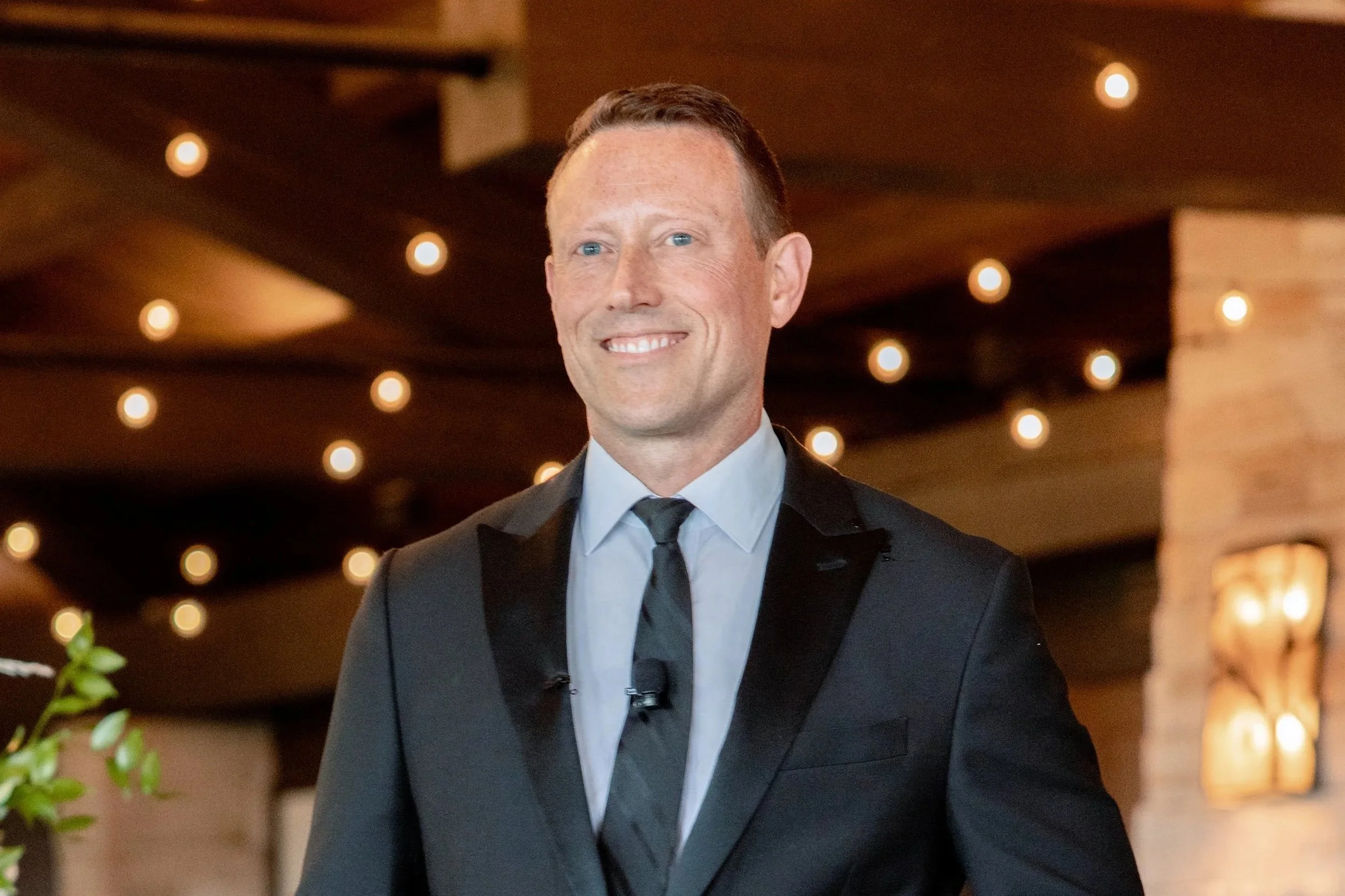
When Should You Book a Wedding Officiant? A Colorado Timeline
Summary
When should you book a wedding officiant? Most couples should reserve one 8–12 months ahead—and earlier for peak Colorado dates, custom ceremonies, and mountain elopements. Compare timelines, booking advice, questions to ask, and tips for hiring an elopement wedding officiant in Denver, Boulder, Golden, or Colorado.
How far in advance should you book a wedding officiant?
Book your wedding officiant 8–12 months before the ceremony. Reserve 12–18 months ahead for a popular Saturday, Colorado’s peak wedding season, a destination celebration, or a highly personalized ceremony. If your wedding is fewer than six months away, begin contacting qualified officiants immediately and remain flexible about timing.
Frequently Asked Questions (FAQ)
1. When should you book a wedding officiant?
Most couples should book a wedding officiant 8–12 months before the wedding. Begin 12–18 months ahead for a popular Saturday, peak-season Colorado wedding, destination celebration, or particular officiant.
2. Is nine months early enough to book an officiant?
Yes. Nine months falls within the standard booking window recommended by major wedding-industry planning resources. Contact candidates promptly if your date is during Colorado’s May–October wedding season.
3. Should you book the venue or officiant first?
Book the venue first in most cases because the officiant needs a confirmed date, location, and ceremony time. If a specific officiant or clergy member is essential, compare their availability while considering venue dates.
4. Can you book a wedding officiant three months before the wedding?
Yes, although your choices may be narrower. Contact several qualified officiants, remain flexible about ceremony timing, and confirm that the full preparation process can be completed before the wedding.
5. When should you book an officiant for a Colorado elopement?
Book a Colorado elopement officiant 9–12 months ahead when the ceremony involves mountain travel, permits, trail access, or a peak-season weekend. A simpler weekday elopement may require less lead time.
6. What information does an officiant need before booking?
Provide the date, ceremony time, venue, city, guest count, ceremony style, personalization preferences, rehearsal needs, and any cultural or religious elements. These details help the officiant confirm availability and provide accurate pricing.
7. How long does it take to plan a personalized wedding ceremony?
The active writing process may occur during the final two or three months, but booking earlier allows time for interviews, questionnaires, vow guidance, revisions, and vendor coordination.
8. What if our preferred wedding officiant is already booked?
Ask whether the officiant maintains a trusted referral list, then contact the alternatives promptly. You may also gain options by moving the ceremony time or choosing a Friday, Sunday, or weekday date.
9. Do Colorado couples legally need a wedding officiant?
Colorado permits self-solemnization, so an officiant is not legally required. Many couples still hire one to write and lead the ceremony, manage pacing, support vows, coordinate cues, and give the occasion a clear emotional shape.
10. Does booking an officiant reserve the wedding date?
Usually, the date is reserved only after the contract is signed and the required retainer is paid. A consultation, verbal agreement, or unanswered proposal does not necessarily place the date on hold.
Key Topics
when should you book a wedding officiant, how far in advance to book a wedding officiant, when to hire a wedding officiant, wedding officiant booking timeline, Colorado wedding officiant
how early should you book a wedding officiant, wedding officiant planning timeline, when to book wedding vendors, Denver wedding officiant, Boulder wedding officiant, Golden wedding officiant, Colorado elopement officiant, book a wedding officiant in Colorado, last-minute wedding officiant, questions to ask a wedding officiant, peak wedding season Colorado, mountain elopement officiant
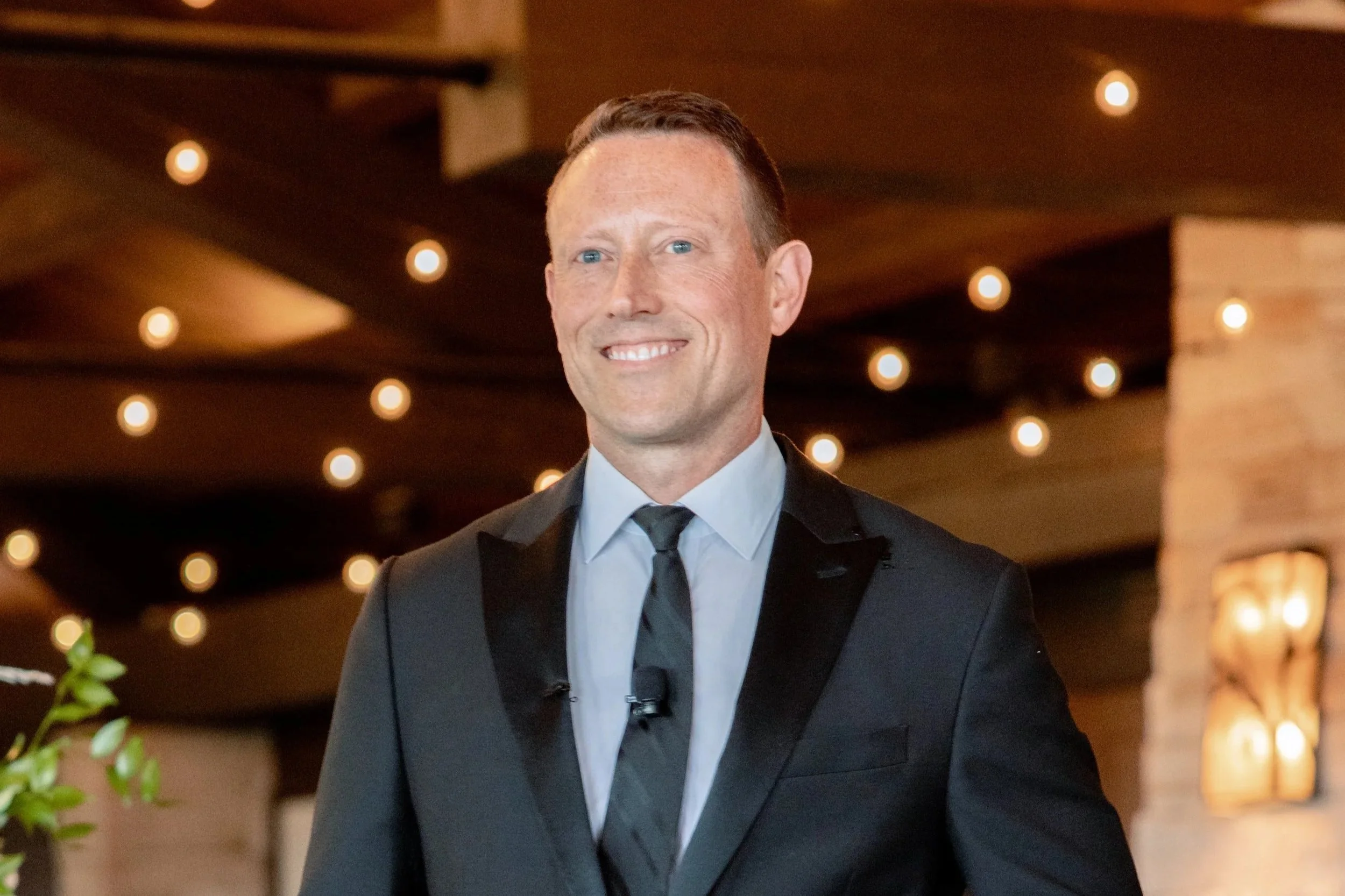
Wedding Officiant Denver
Why the Wedding Officiant Belongs Near the Beginning of the Vendor Timeline
The wedding officiant is sometimes treated as a late-stage hire, tucked somewhere between ordering place cards and confirming the cake delivery. That order misunderstands the job. The officiant does not merely arrive, recite a passage, and pronounce a marriage. This person helps decide how the ceremony will sound, how it will move, what traditions it will include, and how the legal paperwork will be handled. A strong officiant may spend months learning a couple’s story, shaping the script, helping with vows, clarifying processional cues, coordinating with other vendors, and preparing for the small disruptions that occur whenever people, weather, and emotion share the same twenty minutes. Recent industry guidance reflects that larger role. Zola’s vendor-booking timeline, updated in 2024, recommends reserving an officiant approximately eight to ten months before the wedding. A 2025 guide from The Knot goes further, reporting that many officiants advise booking about a year in advance to allow time for consultation and personalization. (Zola, The Knot)
For a city ceremony, couples can explore Denver wedding officiant services. Those planning near the foothills may consider Golden wedding officiant services, while couples drawn to the Flatirons can review Boulder wedding officiant services. Mountain celebrations require their own timetable, particularly when travel, public-land rules, and uncertain weather come into play.
Table of Contents
Why the wedding officiant belongs near the beginning of the vendor timeline
The best booking window for most weddings
When to book 12–18 months ahead
When an 8–12-month timeline works well
Can you book a wedding officiant 3–6 months before the wedding?
What to do when the wedding is less than three months away
When to book an officiant for a Colorado elopement
Book the wedding officiant before—or after—the venue?
What to confirm before signing a contract
What happens after the officiant is booked
A practical wedding-officiant booking timeline
The Best Booking Window for Most Weddings
For most couples, 8–12 months before the wedding is the useful middle ground. At that point, the date and venue are usually confirmed, the ceremony style is becoming clearer, and experienced officiants are more likely to have availability. This window gives you time to compare candidates without making a decision under pressure. You can read full reviews, watch ceremony footage if available, schedule consultations, study service agreements, and determine whether an officiant’s speaking style feels right for the room you are creating.
The calendar, however, is not evenly distributed. A Saturday afternoon in September is not equivalent to a Thursday morning in February. Colorado’s warmer months draw weddings to Denver rooftops, Boulder venues, Golden overlooks, foothill estates, and mountain destinations. The most desirable dates may disappear well before the average date does. A practical rule: once your venue and ceremony time are secure, move the officiant into the next group of vendors you contact.
When to Book 12–18 Months Ahead
An earlier reservation is sensible when the date or ceremony carries additional constraints. Consider booking 12–18 months in advance if:
Your wedding falls on a Saturday from May through October.
You have chosen a memorable date or holiday weekend.
You want a particular officiant rather than whoever remains available.
Your ceremony will include an extensively written relationship story.
You want vow coaching, marriage-preparation sessions, or rehearsal leadership.
Your wedding involves interfaith, cultural, or family traditions requiring careful discussion.
The officiant must travel to Aspen, Telluride, Vail, Breckenridge, Estes Park, Crested Butte, or another mountain destination.
Your venue limits access to the ceremony or offers a narrow rehearsal schedule.
Early booking does not mean writing the complete ceremony a year in advance. It secures the relationship. The detailed work can unfold later, when you know more about the wedding party, readings, music, family participation, and vows. This is particularly valuable when you want the ceremony to sound composed rather than assembled. Good writing needs information, revision, and distance. A couple’s best stories rarely emerge from a questionnaire completed at midnight during the final week before the wedding.
When an 8–12-Month Timeline Works Well
The standard window is usually sufficient for a local wedding with a confirmed venue and a flexible ceremony plan. Begin by identifying three to five officiants whose tone, experience, service area, and approach fit the celebration. Zola recommends meeting several potential officiants and assessing more than credentials alone. Couples should consider the ceremony style, public-speaking ability, personalization, experience, availability, and comfort with the officiant for both partners. (Zola). Listen closely during each consultation. Does the officiant ask precise questions, or mostly speak about their own process? Can they explain how they handle vows, readings, rituals, rehearsals, microphones, late arrivals, family sensitivities, and the marriage license? Do their answers feel settled without sounding rehearsed? The best consultation should leave you with a clearer picture of the ceremony—not simply a price.
Can You Book a Wedding Officiant 3–6 Months Before the Wedding?
Yes. Three to six months can be enough, especially for a weekday, a Sunday, an off-season date, an intimate wedding, or a simple ceremony. You will need to move quickly, but you should not discard your standards. Contact several wedding officiants at once and provide the details needed to determine availability:
Wedding date
Ceremony start time
Venue and city
Estimated guest count
Religious, spiritual, secular, or blended preference
Desired ceremony length
Rehearsal needs
Degree of personalization
Any cultural rituals or family participation
Whether you are writing personal vows
A concise inquiry receives a more useful response than “What are your prices?” The date may technically be open, but the travel time, rehearsal, or scope of the ceremony makes the booking impractical. At this stage, ask for a consultation within several days and review the agreement promptly. A professional should give you enough time to read the contract, but an unsigned proposal does not normally reserve a popular date.
What to Do When the Wedding Is Less Than Three Months Away
A short engagement, a changed plan, a cancellation, or a family wedding officiant's withdrawal can leave a couple searching late. Do not assume that all experienced officiants are unavailable. Calendars change, and weekday or nontraditional ceremony times often remain open. Begin the search immediately. Broaden the radius around the venue, consider adjusting the ceremony time, and decide which services are indispensable. A fully developed relationship narrative may require more lead time than a polished, lightly personalized ceremony. Ask direct questions:
Can you complete your normal preparation process within our timeline?
How many meetings will we have?
Will we review the ceremony before the wedding?
Can you help with personal vows?
Are rehearsal services available?
Who handles the marriage license after the ceremony?
What happens if you become ill or face an emergency?
Do not let urgency erase due diligence. Confirm the wedding officiant’s legal authority, experience, cancellation terms, fees, arrival time, attire, sound requirements, and backup policy before paying.
Quick Summary List:
Book most wedding officiants 8–12 months before the ceremony.
Reserve 12–18 months ahead for peak Saturdays or a particular officiant.
Confirm the venue, date, and ceremony time before signing.
Begin earlier for mountain elopements, travel, permits, or extensive customization.
A 3–6-month timeline can work if you act promptly.
Ask about writing, vows, rehearsals, travel, legal paperwork, and backup coverage.
Treat the consultation as an assessment of voice, judgment, and composure—not only price.
When to Book a Wedding Officiant for a Colorado Elopement
For a simple elopement at an accessible private venue, six to nine months may be sufficient. For a destination or hiking-in ceremony, 9–12 months is safer, with more time advisable for a peak-season weekend or a location requiring permits and travel reservations. An elopement may have fewer guests, but it is not necessarily simpler. The officiant may need to assess trail access, elevation, parking, sunrise timing, weather exposure, ceremony privacy, seasonal closures, footwear, and the safe transport of the marriage license. Public lands may impose permit rules or group-size restrictions. Couples considering a mountain ceremony can review Colorado elopement ceremony services. Reserve the officiant after confirming that the proposed setting is legally accessible and workable, but before finalizing a schedule built around assumptions about travel time or trail conditions.
Book the Wedding Officiant Before—or After—the Venue?
In most cases, book the venue first. The wedding officiant needs a confirmed date, location, and approximate ceremony time to determine availability and travel requirements. Zola’s 2024 vendor timeline likewise places the venue first, as the date must be set before most other vendors can commit. (Zola). There are two exceptions. If a particular officiant is central to the ceremony, ask about their availability when comparing venue dates. The same approach applies to a religious ceremony in which a clergy member or place of worship imposes scheduling requirements. Otherwise, the clean sequence is:
Choose the general location and budget.
Reserve the venue and ceremony time.
Contact officiants immediately.
Confirm the officiant before turning to lower-priority ceremony details.
What to Confirm Before Signing a Contract
The Knot describes a wedding officiant’s general duties as preparing and leading the ceremony, completing the legal paperwork, and, when that service is included, returning it to the appropriate office. The exact scope still varies, which is why the agreement deserves a careful reading. (The Knot) Confirm the following:
Ceremony-writing and personalization process
Number and format of planning meetings
Vow-writing or review assistance
Rehearsal availability and cost
Travel charges
Arrival and departure times
Coordination with the planner, photographer, and DJ
Marriage-license responsibilities
Ceremony-script review policy
Deposit, balance, cancellation, and rescheduling terms
Emergency backup plan
Permission for photography, video, or ceremony audio
Style should also be discussed plainly. “Warm,” “modern,” and “personal” can mean almost anything. Ask how the wedding officiant balances humor and gravity, handles religious references, incorporates family stories, and prevents a personalized ceremony from becoming overlong.
What Happens After the Wedding Officiant Is Booked?
Booking secures the date; it does not require the couple to make every ceremonial decision immediately. A well-paced process often includes an initial consultation, questionnaires or interviews, a planning meeting, vow guidance, ceremony drafting, vendor coordination, and a final confirmation. WeddingWire notes that couples commonly meet with their officiant roughly three months before the wedding to plan the ceremony in detail. The precise schedule depends on the service, but the final month should be used for refinement—not for discovering the ceremony’s basic shape. (WeddingWire). By the final week, the officiant should know the processional, readings, vows, ring plan, rituals, name pronunciations, the pronouncement, the recessional cue, and the license-signing arrangements. The ceremony can still breathe. It simply should not be improvising its own skeleton.
A Practical Wedding-Officiant Booking Timeline
12–18 Months Before
Reserve a wedding officiant for a peak Saturday, a destination wedding, a mountain ceremony, a distinctive date, or a deeply customized service.
8–12 Months Before
The preferred booking period for most Colorado weddings. Compare experience, style, packages, reviews, availability, and contract terms.
3–6 Months Before
Book promptly. Prioritize qualified candidates who can complete a thoughtful preparation process within the remaining time.
1–3 Months Before
Expand your search, remain flexible about ceremony time, and distinguish essential services from optional additions.
Fewer Than 30 Days Before
Look for a wedding officiant who specifically accepts short-notice ceremonies. Confirm legal authority, availability, ceremony scope, payment terms, and marriage-license duties in writing.
Related Articles
From the Michael Moody Officiant wedding blog directory:
Preparing for Your Wedding Ceremony in Colorado: A Couple’s Guide
How to Personalize Your Wedding Ceremony Without Making It Awkward or Overlong
Common Wedding Ceremony Planning Challenges and How to Overcome Them
How to Get Married in Colorado: Marriage License Guide for 2026
The directory includes ceremony planning articles, wedding-specific planning guidance, Front Range elopement content, and relationship-focused resources for couples planning meaningful Colorado ceremonies.
About the Author: Michael Moody, Wedding Officiant
Michael Moody is a Colorado wedding officiant serving Denver, Boulder, Golden, Larkspur, and mountain communities throughout the state. Since 2012, he has officiated more than 300 weddings, bringing a calm presence, thoughtful guidance, and emotionally grounded ceremony writing to couples seeking a meaningful experience. He also offers Colorado elopement ceremonies for couples who want something intimate, intentional, and beyond the boundaries of a traditional wedding day. His work is shaped by a lifelong interest in connection, reflection, and personal growth. Michael is the author of the self-improvement book Redefine Yourself: The Simple Guide to Happiness and host of The Elements of Being podcast. As a wedding officiant, he draws from that same foundation: the belief that our relationships, words, and everyday interactions help shape a life rooted in love, empathy, and purpose. Michael’s ceremony work has been recognized across Colorado. He is a 2023 WeddingWire Couples’ Choice Award winner in Denver, marking his eighth consecutive year receiving the honor. He was also named “Best Business of 2024, 2025, and 2026” by Three Best Rated and earned “The Best Wedding Officiant in Commerce City, Colorado for 2024” from Quality Business Awards USA.
Beyond weddings, Michael and his wife, Sammy, have sponsored an annual student scholarship for more than 10 years. They also founded Civic Growth Alliance, a 501(c)(4) nonprofit dedicated to strengthening communities through civic advocacy, resident engagement, strategic partnerships, public safety initiatives, neighborhood vitality, and community well-being.
Wedding locations: Michael officiates wedding ceremonies in the Denver neighborhoods of LoDo, River North, Washington Park, Cherry Creek, City Park, Central Park, Capitol Hill, Cheesman Park, Park Hill, Lower Highlands, and Sloan Lake. Michael also serves as an ordained minister in Larkspur, Littleton, Golden, Boulder, Breckenridge, Frisco, Aspen, Vail, Estes Park, and more. If your Denver neighborhood or Colorado town isn’t listed here, no worries! Please contact Michael to propose a wedding ceremony location in a different area!
Wedding Planning Tips
Michael Moody has officiated more than 300 weddings since 2012, serving couples through personalized Denver wedding ceremonies, Boulder wedding ceremonies, Golden wedding ceremonies, and intimate Colorado elopement ceremonies. His work includes non-religious, LGBTQ-inclusive, culturally attentive, and story-centered ceremonies shaped around the couple, the setting, and the emotional pace of the day.
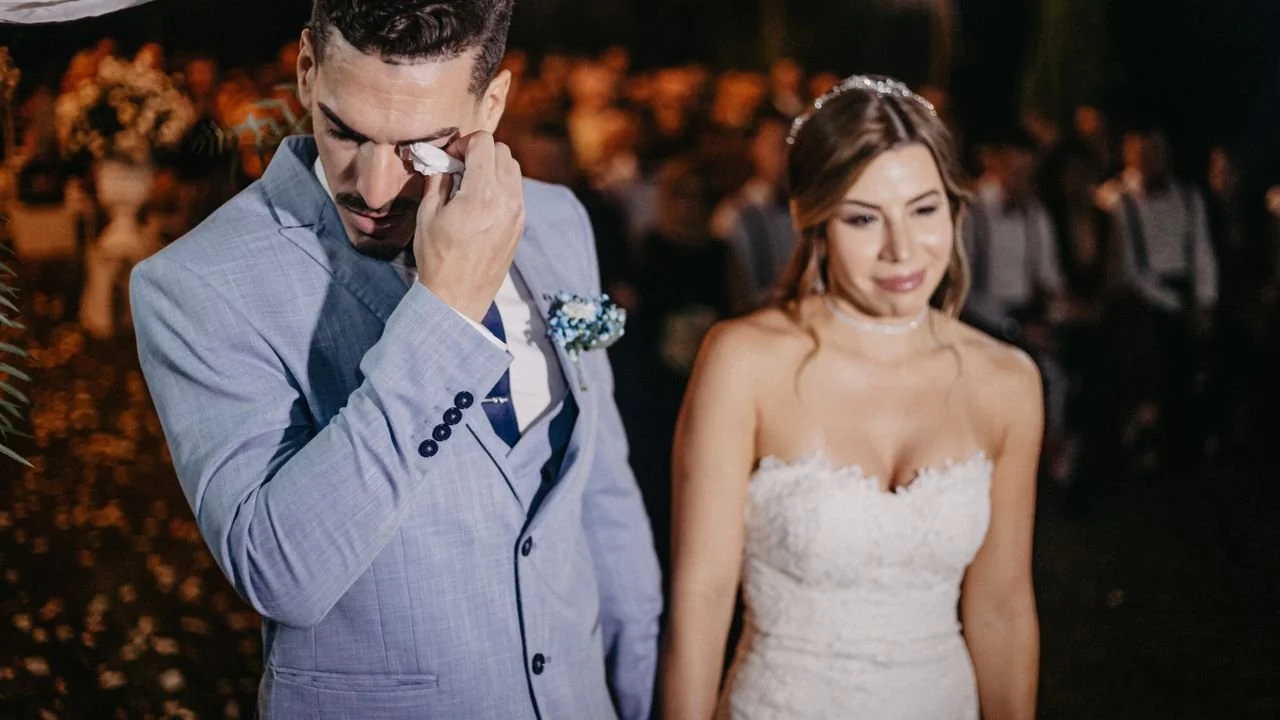
An Action Plan to Overcome Wedding Ceremony Fears | Colorado Wedding Officiant
Summary
Nervous about vows, tears, family pressure, weather, or ceremony mistakes? This Colorado wedding officiant guide offers a calm action plan to overcome common wedding ceremony fears and feel prepared for your Denver, Boulder, Golden, or Colorado elopement ceremony.
What are the most common wedding ceremony fears?
The most common wedding ceremony fears include crying during vows, sounding awkward, forgetting words, family tension, bad weather, and the ceremony feeling too impersonal. Couples can reduce anxiety by rehearsing key cues, writing vows early, choosing an experienced officiant, preparing backup plans, and keeping the ceremony emotionally honest.
Frequently Asked Questions (FAQ)
How do I stop being nervous before my wedding ceremony?
You may not completely eliminate feeling nervous, but you can reduce panic by rehearsing the ceremony cues, writing vows early, practicing aloud, confirming the run-of-show, and choosing an officiant who can calmly guide the room.What should I do if I cry during my wedding vows?
Pause, breathe, look at your partner, and continue when ready. Tears are not a ceremonial mistake. Printed vow cards, a supportive officiant, and permission to pause can make the moment feel grounded instead of overwhelming.How early should I write my wedding vows?
Begin drafting vows at least one month before the wedding. Finalize them about one week out, then stop revising unless a detail is wrong. Practice aloud so the vows sound natural when spoken.Is a wedding ceremony rehearsal necessary?
A rehearsal is especially helpful for weddings with a wedding party, family processional, readings, live music, uneven outdoor terrain, or multiple cues. It removes confusion so the ceremony can feel more relaxed.How can a wedding officiant help with ceremony anxiety?
A skilled officiant clarifies the ceremony structure, manages pacing, supports vow delivery, coordinates cues with vendors, handles small disruptions, and creates a tone that helps the couple feel less exposed.What is the best way to personalize a wedding ceremony without making it too long?
Use a few precise details: how the couple met or grew together, what they admire in each other, and what kind of marriage they are choosing. Specificity is stronger than length.What should couples plan for during an outdoor Colorado ceremony?
Couples should prepare for wind, sun, altitude, changing weather, trail conditions, sound needs, guest footwear, parking, permits, and a backup plan for unsafe conditions.
Key Topics
wedding ceremony fears, wedding ceremony anxiety, wedding ceremony nerves, wedding vows anxiety, wedding ceremony planning tips, Colorado wedding officiant, Denver wedding officiant
how to calm wedding day nerves, fear of crying during wedding vows, wedding ceremony rehearsal tips, how to write wedding vows, outdoor wedding ceremony planning Colorado, Boulder wedding officiant, Golden wedding officiant, Colorado elopement officiant
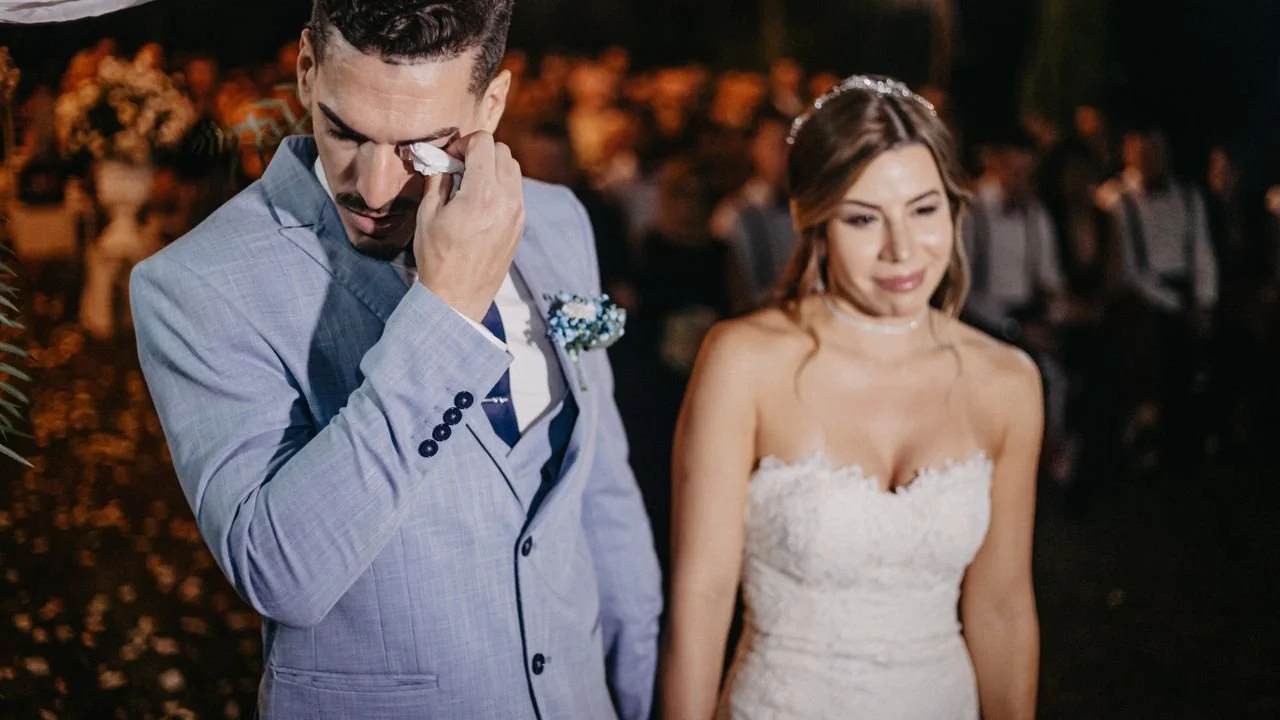
Wedding Ceremony Fears / Photo: Jonathan Nenemann
Why Wedding Ceremony Fears Are So Common
Most couples do not fear the wedding ceremony because they are unsure about getting married. They fear it because the ceremony is the one part of the day where emotion, performance, family history, public attention, legal ritual, and memory all gather in one place. A reception can absorb a small flaw. A late dinner, an imperfect centerpiece, a crooked boutonniere—these things usually dissolve into the music and movement of the evening. The ceremony feels different. It is brief, exposed, and symbolic. Everyone is watching. The people you love most are seated in rows. A few words suddenly carry the weight of years.
Recent research on weddings helps explain why couples feel this pressure. The Knot’s 2025 Real Weddings Study included nearly 17,000 U.S. couples married in 2024 and found that couples spent an average of six hours per week reviewing, organizing, and finalizing wedding details; 90% of planning took place online, and 80% of planning was handled by the couple themselves. That is not a light emotional workload. It is a second job with flowers. Zola’s 2024 First Look Report, based on data from nearly 7,000 couples who got married in 2024, found that many couples were actively questioning inherited wedding expectations, with 83% saying at least one societal expectation around wedding planning was due for change. The ceremony often becomes the place where that tension is felt most clearly: What do we keep? What do we remove? What will our families expect? What will feel true to us? A thoughtful ceremony plan does not eliminate nerves. It gives them somewhere to go.
For couples planning a city celebration, Denver wedding officiant services can help shape a ceremony that feels calm, personal, and polished. Couples planning against foothills, red rocks, or historic streets may prefer Golden wedding officiant services, while those drawn to the Flatirons and outdoor ceremony settings can explore Boulder wedding officiant services. For intimate mountain settings, Colorado elopement ceremonies offer a quieter way to hold the moment.
Table of Contents
Why wedding ceremony fears are so common
Featured Snippet Answer
Fear #1: “I’ll cry and won’t be able to speak”
Fear #2: “My vows will sound awkward”
Fear #3: “Something will go wrong in front of everyone”
Fear #4: “The ceremony will feel too generic”
Fear #5: “Family expectations will take over”
Fear #6: “I don’t know where to stand, walk, or look”
Fear #7: “The weather, altitude, or setting will interrupt the moment”
A simple 30-day ceremony confidence plan
Related articles
Fear #1: “I’ll Cry and Won’t Be Able to Speak”
This is one of the most common ceremony fears, and also one of the least dangerous. Tears rarely ruin a ceremony. In many cases, they become the part everyone remembers most fondly. The real issue is not crying. The issue is panic: the sudden thought that emotion means loss of control. Couples can prepare for this in three practical ways.
First, print vows in a large, readable font on vow books or cards. Do not rely on your phone. A screen introduces glare, notifications, battery anxiety, and the faintly strange visual of reading your vows from the same object that holds your parking app.
Second, build in permission to pause. A pause during vows feels much longer to the speaker than it does to guests. Three silent seconds can feel like a small lifetime when you are holding paper with shaking hands, but to everyone else, it reads as sincerity.
Third, ask your wedding officiant to hold the moment without rushing it. A skilled wedding officiant knows when to step in, when to soften the room, and when to simply let emotion breathe. The ceremony is the “quiet center of the day,” shaped by language, atmosphere, and presence rather than performance.
Action step: Add a line to your wedding ceremony plan: “If either partner becomes emotional during vows, pause, breathe, and continue when ready.” It sounds small. On the day itself, it feels like a handrail.
Fear #2: “My Vows Will Sound Awkward”
Vow anxiety usually begins with a false premise: that vows need to sound literary, dramatic, or dazzling. They do not. They need to sound like you at your most awake. Vogue’s recent vow-writing guidance recommends beginning months ahead, reflecting on shared memories, naming specific promises, and practicing aloud without trying to memorize every word. That advice is useful because vows are not merely written. They are spoken. A sentence that looks beautiful on the page may feel impossible in your mouth. A simpler sentence may land with more force. A strong vow has four parts:
A brief recognition of the relationship
One or two specific memories or qualities
Promises that can be lived, not just admired
A closing line that feels clear and complete
Avoid private jokes that require footnotes. Avoid promises so grand they sound borrowed. “I promise to make coffee when you have the early flight” may reveal more love than “I promise to be your eternal compass.”
Action step: Write a poor first draft on purpose. Then read it aloud. Circle the sentences that sound like speech. Cut the rest.
Fear #3: “Something Will Go Wrong in Front of Everyone”
Something may. A ring may resist. A flower girl may sit down halfway up the aisle. A microphone may crackle. A gust of Colorado wind may lift a veil at the exact wrong second. These are not failures. They are evidence that the ceremony is happening in real life. The Knot’s 2025 data show that couples continue to lean heavily on vendor expertise, especially when budgets, logistics, and planning pressures become challenging. That reliance is justified. A professional team does not guarantee perfection; it creates the capacity for recovery. Your action plan should include three backup systems:
A ring plan: Who has the rings? Where are they kept? Who checks before the processional begins?
A sound plan: Who holds the microphone? Is there a handheld backup? Who cues music?
A document plan: Who has the vows, readings, license, and ceremony script?
A calm ceremony is rarely accidental. It comes from unglamorous preparation.
Action step: One week before the wedding, send a ceremony run-of-show to the wedding officiant, planner, photographer, DJ or musician, and venue contact. Include processional order, music cues, readings, ring exchange, kiss, recessional, and license-signing plan.
Fear #4: “The Ceremony Will Feel Too Generic”
This fear is well founded. Many couples have attended ceremonies that sounded as if the names could be swapped in five minutes before the processional. No one wants to be reduced to a template. Personalization, however, does not mean turning the ceremony into a twenty-minute inside joke. It means choosing details that give the ceremony emotional evidence. Use the “three textures” test:
Place: Why this venue, city, mountain view, backyard, chapel, overlook, or restaurant?
People: Who helped shape your relationship, and how should they be acknowledged?
Promise: What kind of marriage are you trying to build?
The Knot Worldwide’s 2024 Global Wedding Report found that weddings are being reshaped by modernized relationship dynamics, evolving priorities, and technology, with couples across countries adjusting traditions rather than simply inheriting them. In other words, couples are no longer asking only, “What are we supposed to do?” They are asking, “What should this feel like for us?” That question belongs at the center of ceremony planning.
Action step: Choose three personal details for the ceremony: one about how you met or grew together, one about what you admire in each other, and one about the life you are building.
Quick Summary List:
Write vows before the final planning rush begins.
Practice out loud, but do not memorize every word.
Build a clear ceremony run-of-show with your officiant, planner, DJ, and photographer.
Name family sensitivities before the wedding day.
Prepare for tears, weather, nerves, and timing shifts as normal human possibilities.
Choose a ceremony structure that gives the moment shape without making it stiff.
Fear #5: “Family Expectations Will Take Over”
Ceremonies can carry family pressure because they are public, symbolic, and sometimes religious or cultural. Parents may expect a prayer. Grandparents may expect traditional language. A divorced family may need careful seating. A couple may want a secular ceremony while relatives expect something else entirely. This is where avoidance becomes expensive. If a family issue is likely to surface, discuss it before the wedding week.
A useful approach is to separate honor from control. You may honor a family tradition without surrendering the entire ceremony to it. You may include a reading, a blessing, a remembrance, or a cultural ritual while keeping the ceremony aligned with your values. For couples who want a ceremony that is inclusive and culturally attuned, Michael Moody’s service language emphasizes same-sex marriages, cultural and ethnic traditions, and ceremonies centered on the people at the heart of the day.
Action step: Make a short “ceremony boundaries” list with your partner. Decide what is welcome, what is optional, and what does not belong in the ceremony.
Fear #6: “I Don’t Know Where to Stand, Walk, or Look”
This fear is mechanical, not emotional. It can be solved. Most ceremony awkwardness comes from missing cues: walking too quickly, not knowing where to place hands, facing the officiant instead of each other during vows, forgetting where the bouquet goes, or turning the wrong direction after the kiss. A rehearsal is not about draining the ceremony of spontaneity. It is about removing unnecessary confusion so the real emotion can surface. Rehearse these moments:
Processional pace
Where each person stands
Who takes the bouquet
How vows are handed over
Ring exchange hand position
Kiss and recessional direction
Family photo transition
License-signing location
Action step: Ask your wedding officiant or planner to call out physical cues in plain language: “Face each other,” “Take both hands,” “Pass bouquet to maid of honor,” “Pause for the photographer,” “Turn toward your guests.”
Fear #7: “The Weather, Altitude, or Setting Will Interrupt the Moment”
Colorado ceremonies ask couples to think beyond the script. Wind, sun, altitude, afternoon storms, trail access, uneven ground, wildfire smoke, and sudden temperature swings can all influence the ceremony.
This is especially true for foothill, mountain, and hiking-in ceremonies. The beauty is real. So are the logistics.
Couples planning outdoor ceremonies should prepare for:
Wind-safe vow books and readings
Microphones that can handle open-air sound
Water before the ceremony, especially at elevation
A shoe plan for grass, gravel, snow, or trail surfaces
Backup timing for afternoon weather
Guest communication about terrain and temperature
Permit requirements for public lands
Colorado elopements and outdoor ceremonies often feel powerful because the setting does part of the emotional work, but the setting still needs a plan. Michael Moody’s Colorado elopement ceremony page emphasizes intimate, intentional ceremonies shaped by place, pace, and feeling, while the Front Range elopement guide focuses on scenic trails, permits, and hiking-in ceremony planning.
Action step: Create a “ceremony conditions note” for guests: footwear, arrival timing, parking, weather, elevation, and whether seating is limited.
A Simple 30-Day Ceremony Confidence Plan
30 Days Out: Decide the Emotional Shape
Choose the ceremony tone: elegant, intimate, warm, humorous, spiritual, secular, poetic, minimalist, family-centered, or private. Do not try to be everything. A ceremony with a clear tone feels more composed.
21 Days Out: Finish the Ceremony Structure
Confirm processional order, readings, vows, unity rituals, music cues, family acknowledgments, and any remembrance language. Decide who has the rings and who holds the marriage license.
14 Days Out: Practice Vows Aloud
Read vows out loud at least three times. Time them. Smooth the sentences that feel tangled. Replace any phrase that sounds impressive but unnatural.
7 Days Out: Confirm the Run-of-Show
Send the ceremony outline to the vendor team. Confirm names, pronunciations, music cues, microphone needs, and backup plans.
48 Hours Out: Stop Rewriting
Unless something is factually wrong, stop editing. Last-minute vow revisions often come from nerves, not clarity.
Ceremony Day: Let It Be Alive
Look at your partner. Breathe before speaking. Hold hands. Pause when emotion rises. Let the ceremony be elegant without trying to make it flawless.
A wedding ceremony is not a theater audition. It is a threshold. The best ones feel human: composed, yes, but not sealed in glass.
Related Articles
From the Michael Moody Officiant wedding blog directory:
How to Get Married in Colorado: Marriage License Guide for 2026
Preparing for Your Wedding Ceremony in Colorado: A Couple’s Guide
How to Personalize Your Wedding Ceremony Without Making It Awkward or Overlong
Common Wedding Ceremony Planning Challenges and How to Overcome Them
Spring Wedding Guide for Golden, Colorado: Venues, Permits, and Planning Tips
Boulder Fall Wedding Guide: Venues, Permits, License, and Tips
Colorado Front Range Elopement Guide: Hiking-In Wedding Ceremonies and Scenic Trails
The directory includes ceremony planning articles, wedding-specific planning guidance, Front Range elopement content, and relationship-focused resources for couples planning meaningful Colorado ceremonies.
About the Author: Michael Moody, Wedding Officiant
Michael Moody is a Colorado wedding officiant serving Denver, Boulder, Golden, Larkspur, and mountain communities throughout the state. Since 2012, he has officiated more than 300 weddings, bringing a calm presence, thoughtful guidance, and emotionally grounded ceremony writing to couples seeking a meaningful experience. He also offers Colorado elopement ceremonies for couples who want something intimate, intentional, and beyond the boundaries of a traditional wedding day. His work is shaped by a lifelong interest in connection, reflection, and personal growth. Michael is the author of the self-improvement book Redefine Yourself: The Simple Guide to Happiness and host of The Elements of Being podcast. As a wedding officiant, he draws from that same foundation: the belief that our relationships, words, and everyday interactions help shape a life rooted in love, empathy, and purpose. Michael’s ceremony work has been recognized across Colorado. He is a 2023 WeddingWire Couples’ Choice Award winner in Denver, marking his eighth consecutive year receiving the honor. He was also named “Best Business of 2024, 2025, and 2026” by Three Best Rated and earned “The Best Wedding Officiant in Commerce City, Colorado for 2024” from Quality Business Awards USA.
Beyond weddings, Michael and his wife, Sammy, have sponsored an annual student scholarship for more than 10 years. They also founded Civic Growth Alliance, a 501(c)(4) nonprofit dedicated to strengthening communities through civic advocacy, resident engagement, strategic partnerships, public safety initiatives, neighborhood vitality, and community well-being.
Wedding locations: Michael officiates wedding ceremonies in the Denver neighborhoods of LoDo, River North, Washington Park, Cherry Creek, City Park, Central Park, Capitol Hill, Cheesman Park, Park Hill, Lower Highlands, and Sloan Lake. Michael also serves as an ordained minister in Larkspur, Littleton, Golden, Boulder, Breckenridge, Frisco, Aspen, Vail, Estes Park, and more. If your Denver neighborhood or Colorado town isn’t listed here, no worries! Please contact Michael to propose a wedding ceremony location in a different area!
Wedding Planning Tips
Michael Moody is a Colorado wedding officiant serving couples in Denver, Boulder, Golden, and mountain communities throughout the state with refined, personalized ceremonies, intimate elopements, LGBTQ wedding ceremonies, and simple legal ceremonies. From urban Denver venues to Golden foothill celebrations, Boulder outdoor ceremonies, and private Colorado elopements, his work centers on calm guidance, emotionally grounded ceremony writing, and a polished presence that helps couples feel steady before, during, and after the ceremony.
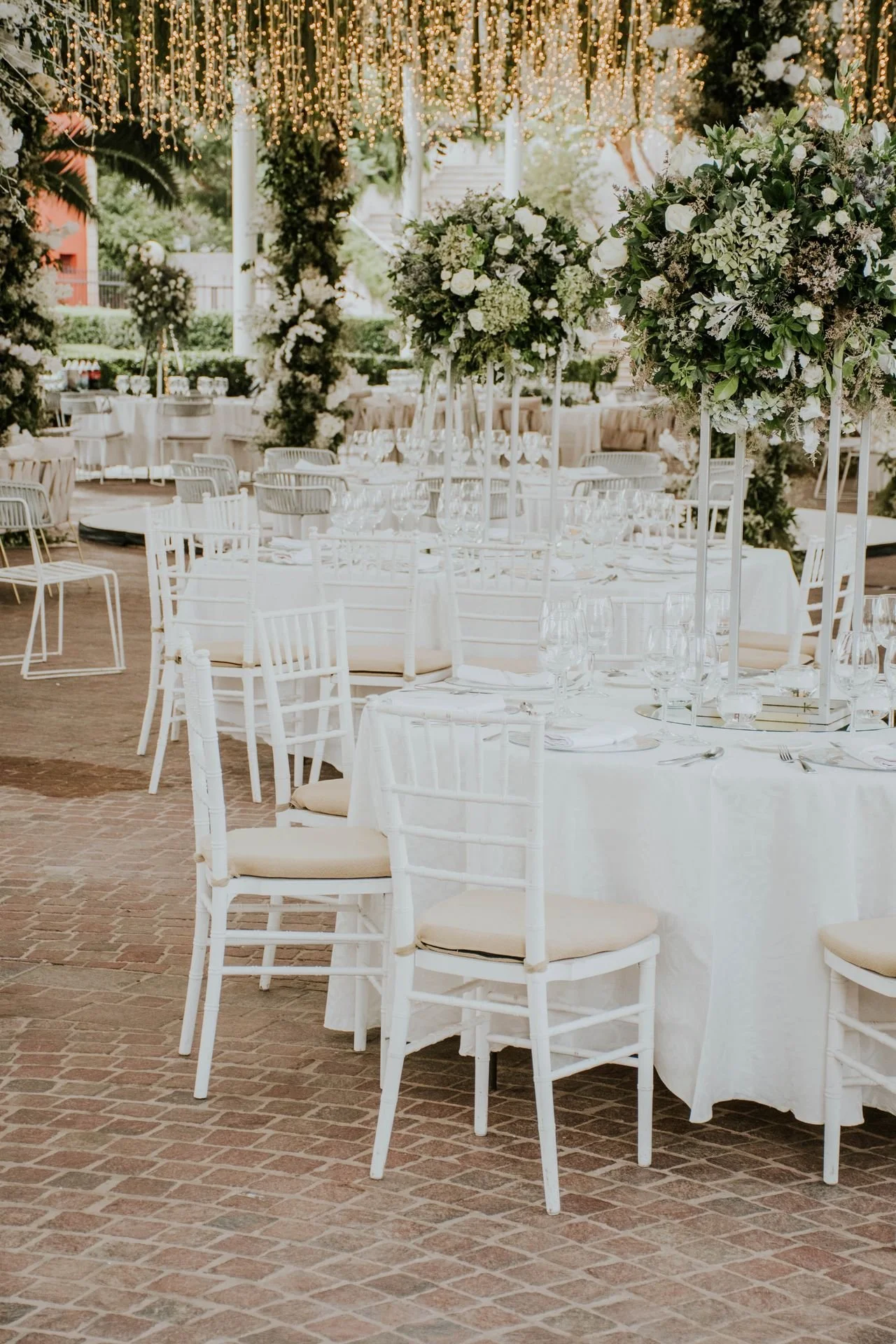
Best Wedding Planners in Denver: Refined Colorado Wedding Planning Guide
Summary
Find the best wedding planners in Denver for luxury, mountain, urban, and intimate Colorado weddings. Compare planner styles, hiring tips, and how your planner and officiant work together.
Who are the best wedding planners in Denver?
The best Denver wedding planners combine design judgment, vendor fluency, budget discipline, and calm event-day leadership. Strong options include Cloud 9 Weddings and Papers, Banks and Leaf, Moss and Maeve, Table 6 Productions, byBello Events, Bella Notte Colorado, and Celebrations Event Planning.
Frequently Asked Questions (FAQ)
Who are the best wedding planners in Denver?
Some of the best Denver wedding planners to research include Cloud 9 Weddings and Papers, Banks and Leaf, Moss and Maeve, Table 6 Productions, byBello Events, Bella Notte Colorado, and Celebrations Event Planning. The right choice depends on your budget, venue, design expectations, guest count, and planning needs.
How much does a wedding planner cost in Denver?
Denver wedding planner pricing varies widely based on experience, service level, guest count, event complexity, and whether the planner provides full planning, partial planning, design, or wedding-day management. Couples should ask for a clear proposal that shows what is included, what is extra, and how many meetings or planning hours are covered.
Do I need a wedding planner for a Denver wedding?
You may not need a full-service planner for a small or simple wedding, but most couples benefit from at least wedding management or coordination. Denver and Colorado weddings often involve weather plans, venue rules, vendor timing, transportation, and ceremony logistics that are easier with professional oversight.
What is the difference between a wedding planner and a wedding coordinator?
A wedding planner usually helps with the broader planning process, including vendor selection, design, budget, contracts, and timelines. A coordinator or wedding manager typically steps in closer to the wedding to organize logistics, confirm vendors, manage the rehearsal, and run the wedding day.
Should I hire a planner for a Colorado mountain wedding?
Yes, especially if the wedding involves guest transportation, rentals, private property, remote access, altitude, outdoor ceremony plans, weather exposure, or multiple weekend events. Mountain weddings can be stunning, but they are logistically more demanding than many city weddings.
When should I book a Denver wedding planner?
For full-service planning, book as soon as possible after engagement or before choosing the venue. For partial planning or wedding management, book at least several months in advance of the wedding. Popular Denver and Colorado planners may reserve prime summer and fall dates far in advance.
How should my planner and wedding officiant work together?
Your planner should coordinate with the officiant on the ceremony timeline, processional order, microphone setup, family seating, vow logistics, rehearsal flow, and post-ceremony transition. When the planner and officiant communicate early, the ceremony feels more composed and connected to the rest of the wedding day.
What should I ask a Denver wedding planner before hiring them?
Ask about service scope, planning style, venue experience, wedding-day staffing, rehearsal support, vendor communication, emergency plans, pricing structure, cancellation terms, and how many weddings they take each weekend. The best planners answer with specifics, not vague reassurance.
Key Topics
best wedding planners in Denver, Denver wedding planners, wedding planner Denver Colorado, luxury wedding planner Denver, Colorado wedding planner, Denver wedding coordinator, best Denver wedding vendors, Denver wedding planning guide, Colorado mountain wedding planner, Denver wedding officiant, Boulder wedding officiant, Golden wedding officiant, Colorado elopement officiant
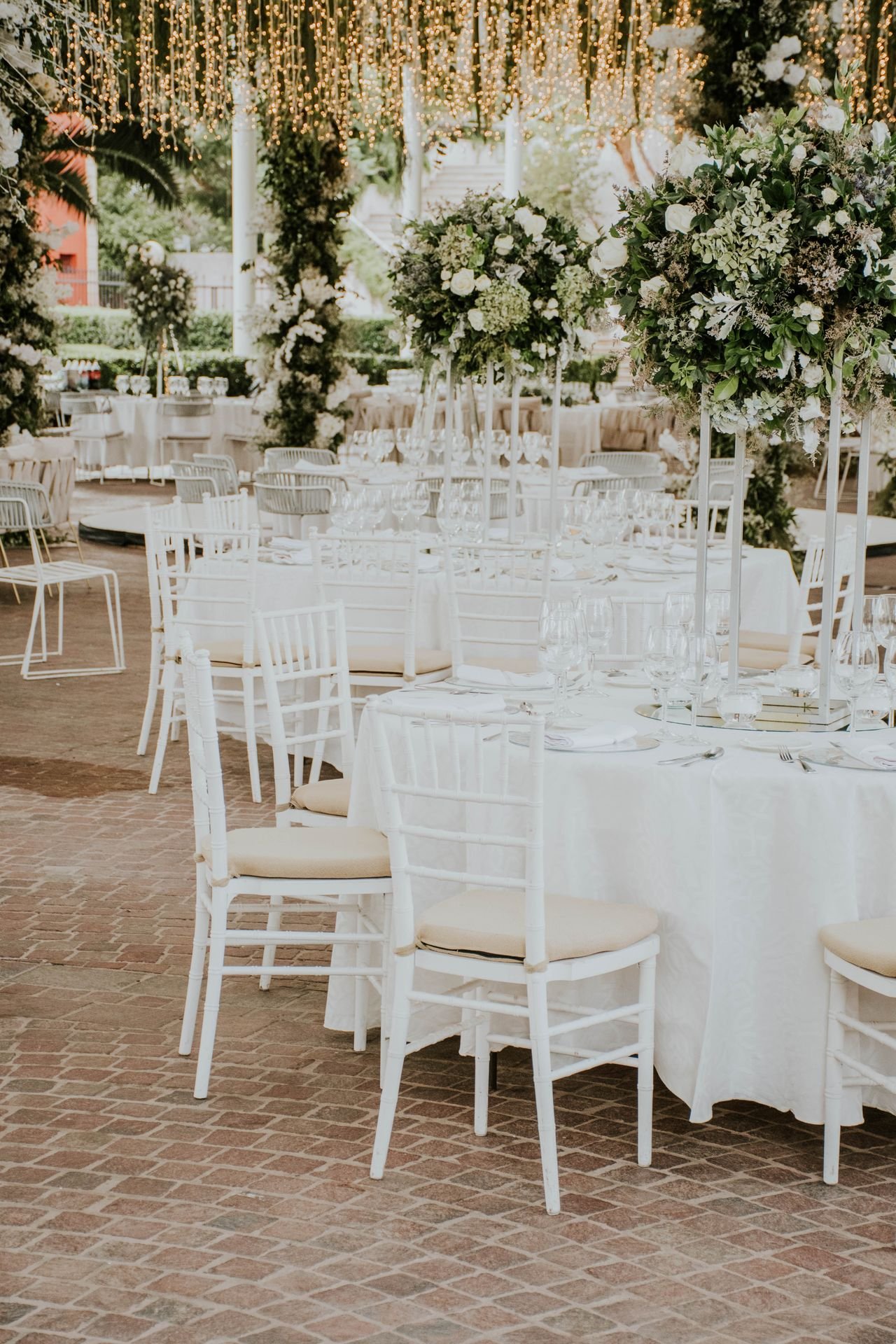
Wedding Planner Denver / Photo: Amar Preciado
Why the Right Denver Wedding Planner Changes the Whole Experience
Denver weddings ask more of a planner than many couples realize. A planner here is not simply arranging menus, linens, and seating charts. They may be managing a city ceremony in LoDo, a tented private-estate reception outside Boulder, a Golden foothills celebration with unpredictable wind, or a mountain wedding weekend where transportation, weather, altitude, rentals, and vendor access all matter. That is why the best wedding planners in Denver tend to share a particular temperament. They are creative, yes, but not theatrical for its own sake. They understand that elegance is often restraint, that a good timeline has breathing room, and that the couple should never feel as though they are hosting a production they can barely recognize. A good Denver planner helps sort all of that noise. They know which ideas are worth the investment, which ones will photograph well but frustrate guests, and which ones will quietly strain the budget without adding much meaning. Just as important, they know when to protect the couple from too many opinions.
If you are still shaping the ceremony side of the celebration, you may also want to explore Denver wedding officiant services, Boulder wedding officiant services, Golden wedding officiant services, or Colorado elopement wedding officiant services.
Table of Contents
Why the Right Denver Wedding Planner Changes the Whole Experience
How to Choose a Wedding Planner in Denver
Best Wedding Planners in Denver and the Colorado Front Range
What to Ask Before You Hire a Planner
How Your Planner, Officiant, and Venue Work Together
Related Articles
How to Choose a Wedding Planner in Denver
Before looking at names, decide what kind of planning help you actually need.
Full-service planning is best for couples who want a professional partner from the beginning. This usually includes venue search, vendor selection, budget management, design, guest-flow strategy, timeline creation, rental coordination, and event-day execution.
Partial planning works well if you have already booked the venue or a few major vendors but need help refining the event, filling gaps, and keeping the remaining decisions coherent.
Wedding management or day-of coordination is the lightest level of support. Despite the phrase “day-of,” good coordinators begin weeks or months before the wedding so they can review contracts, build timelines, communicate with vendors, and run the rehearsal or wedding day.
Design-forward planning is different from logistics-only support. If you care deeply about florals, paper goods, tablescapes, lighting, fashion references, guest experience, and spatial flow, hire a planner whose portfolio shows design fluency—not merely organization.
Mountain and destination planning is its own category in Colorado. Transportation, vendor travel fees, rental load-in, weather plans, ceremony permits, guest hydration, and altitude can all affect the day. For elopements and smaller mountain ceremonies, planner support may be lighter, but local knowledge still carries real value.to review contracts, build timelines, communicate with vendors, and run the rehearsal and
Best Wedding Planners in Denver and the Colorado Front Range
The following planners are not listed as paid rankings. Think of this as a curated shortlist for couples who want a refined, well-run Colorado wedding and need a useful starting point.
1. Cloud 9 Weddings and Papers
Cloud 9 Weddings and Papers is one of Denver’s more established planning and design firms, with a long history in Colorado weddings and a particularly strong fit for couples who want planning, design, and paper goods to feel connected from the beginning. The firm describes itself as a boutique Denver wedding planning and design company and notes that it has experience with more than 400 weddings. That depth matters. A planner who has seen hundreds of weddings unfold has usually learned to read the room, anticipate vendor bottlenecks, and protect a timeline when the inevitable surprise arises. Cloud 9 is a strong candidate for couples planning an elegant Denver wedding, a Colorado mountain wedding, a ranch celebration, or a polished full-service event with many moving pieces. Their services include site selection assistance, vendor referrals, budget tracking, contract navigation, timeline creation, rehearsal and ceremony logistics, guest activities, and wedding-day management.
Best fit: Couples who want an experienced Denver planning firm with full-service support, design sensibility, and paper-goods continuity.
2. Banks and Leaf
Banks and Leaf is a planning and design firm for couples who care about story, atmosphere, and editorial specificity. Their work is especially well suited to outdoor weddings, tented events, private-property celebrations, ranch weddings, estates, and design-forward Colorado weekends. The firm’s own language leans into storytelling, fashion, travel, art, food, memory, and interiors. That is a useful signal. Some planners are strongest at logistics; others are strongest at design. Banks and Leaf appear built for couples who want both, particularly if the wedding concept has a clear visual identity or a setting that needs to be transformed rather than merely decorated. They are also a strong match for couples who want Colorado to feel elevated rather than rustic by default. A mountain wedding can be black-tie. A ranch wedding can be architectural. A Denver wedding can be fashion-forward. Banks and Leaf seem comfortable in that territory.
Best fit: Couples planning a luxury, editorial, tented, outdoor, estate, ranch, or private-property wedding with a strong design point of view.
3. Moss and Maeve
Moss and Maeve is a Denver-based planning and styling company offering coordination, partial planning, and full planning. Their positioning is approachable yet polished, making them a strong option for couples who want a wedding that feels beautiful without becoming stiff. For many couples, the appeal of Moss and Maeve is the range. Not every wedding needs a high-concept design studio. Some couples need a capable, calm, design-aware planner who can take a good idea and make it feel cohesive. Their service tiers are helpful for couples who want professional support but may not need every decision managed from day one. They are worth considering for Denver weddings, Colorado destination weddings, and couples who want a planner to “control the chaos” while still preserving the couple’s own taste.
Best fit: Couples who want a stylish Denver planner with flexible planning tiers, event styling, and practical coordination support.
4. Table 6 Productions
Table 6 Productions is a luxury wedding planning and event design company with Colorado roots and destination reach. Their team model can be particularly useful for couples planning larger weddings, multi-event weekends, or celebrations with a sophisticated vendor roster. A full-service planning company with broad event experience can bring structure to complex weddings: welcome parties, rehearsal dinners, transportation schedules, family logistics, production teams, floral installations, room flips, and late-night experiences. In Colorado, that experience is especially valuable when a wedding moves between locations or when a destination feel is being created for guests traveling into Denver. Table 6 is a strong fit for couples who want the confidence that comes with a larger planning operation rather than a solo planner.
Best fit: Couples planning a luxury Denver, Colorado, or destination-style wedding with multiple events, a larger guest count, or a high-touch design process.
5. byBello Events
byBello Events is a full-service planning and design studio with a strong Mountain West identity. Their public positioning emphasizes natural beauty, singular design, sophisticated leanings, and comprehensive service. This makes byBello especially appealing for couples who want the landscape to influence the wedding without letting the event become predictable. Colorado weddings can easily fall into a familiar visual script: mountains, greenery, wood, neutrals, and wildflowers. In the right hands, those elements can be beautiful. In less skilled hands, they can become generic. byBello’s language suggests a more individualized approach. byBello may be an excellent fit for couples who want a full-service production studio, a thoughtful tabletop or rental direction, and a wedding that feels rooted in Colorado but not limited by cliché.
Best fit: Couples who want a sophisticated full-service planner with strong design direction and deep Colorado sensibility.
6. Bella Notte Colorado
Bella Notte Weddings and Events is based in Denver and offers full wedding planning, partial planning, wedding-day management, and destination wedding support. The company presents itself as a practical, experienced planning partner for couples who want to enjoy the process rather than be consumed by it. Bella Notte is a strong option for couples who want someone steady, organized, and familiar with Front Range logistics. Their services speak directly to the unglamorous but essential parts of wedding planning: schedules, venues, décor, catering, rehearsal coordination, budget management, vendor communication, and keeping family members from becoming unpaid staff. That last point is underrated. Many couples try to save money by having relatives handle setup, timing, or vendor questions. It often backfires. A professional planner lets parents, siblings, and friends be guests.
Best fit: Couples who want an experienced Denver planner for full planning, partial planning, wedding-day management, or Front Range celebration support.
7. Celebrations Event Planning
Celebrations Event Planning is another Denver-area name worth researching, especially for couples who want an experienced coordinator or planner with a long track record. WeddingWire lists the company in the Denver market and references owner Pam Donaldson’s more than 20 years of experience. For couples interviewing planners, longevity is not everything, but it does count. A planner with decades in the field has likely navigated weather, delayed shuttles, missing rentals, complicated family dynamics, late vendor arrivals, and ceremonies that needed quick adaptation. Celebrations may be a good candidate for couples who want someone seasoned, practical, and comfortable handling the full arc of wedding logistics.
Best fit: Couples who prioritize experience, coordination, and steady wedding-day execution.
Quick Summary List:
Hire a full-service planner for complex weddings, multi-event weekends, and design-heavy celebrations.
Consider partial planning if you have booked major vendors but need professional structure.
Choose wedding management if you need a timeline, rehearsal, and event-day execution support.
Ask Denver planners about mountain logistics, wind, transportation, rentals, permits, and vendor access.
Match the planner’s portfolio to your wedding style: editorial, classic, mountain, urban, intimate, or destination.
Connect the planner and officiant early, so the ceremony feels integrated into the whole day.
What to Ask Before You Hire a Planner
A beautiful portfolio is useful, but the interview should go deeper. Ask each planner:
How many weddings do you personally take each year?
Will you be the lead planner on our wedding day?
What types of Colorado venues do you know best?
How do you manage weather plans for outdoor ceremonies?
Do you handle vendor communication directly?
How do you build and enforce the wedding-day timeline?
Do you attend or run the ceremony rehearsal?
How do you manage family dynamics and decision overload?
What is not included in your planning fee?
How do you collaborate with the wedding officiant, photographer, venue manager, and DJ or band?
The best answers will be specific. A planner should be able to explain how they work—not merely reassure you that everything will be fine.
How Your Planner, Officiant, and Venue Work Together
For a polished wedding, the planner, officiant, venue, photographer, and entertainment team should not operate in isolation. The ceremony affects the entire day: guest arrival, music cues, processional order, microphone placement, vow timing, family seating, photo transitions, cocktail-hour start time, and weather contingencies. A strong planner can manage the day's architecture. A strong officiant protects its emotional center. That is why couples should connect the planner and officiant early, especially for personalized ceremonies, private vows, blended families, LGBTQ ceremonies, cultural elements, or outdoor Colorado settings where sound, wind, sun direction, and guest comfort can shape the experience.
For couples still deciding where to hold the ceremony, these service pages may help clarify the setting and style: Denver wedding officiant services, Golden wedding officiant services, Boulder wedding officiant services, and Colorado elopement wedding officiant services.
Related Articles
From the Michael Moody Officiant wedding blog directory:
How to Get Married in Colorado: Marriage License Guide for 2026
Preparing for Your Wedding Ceremony in Colorado: A Couple’s Guide
How to Personalize Your Wedding Ceremony Without Making It Awkward or Overlong
Denver Rehearsal Dinner Venues: Elegant and Upscale Restaurant Options for Your Wedding Weekend
Common Wedding Ceremony Planning Challenges and How to Overcome Them
Colorado Front Range Elopement Guide: Hiking-In Wedding Ceremonies and Scenic Trails
Spring Wedding Guide for Golden, Colorado: Venues, Permits, and Planning Tips
Boulder Fall Wedding Guide: Venues, Permits, License, and Tips
Summer Wedding Guide for Evergreen, Colorado: Venues, Travel, and Planning Tips
How to Include Family and Cultural Traditions in a Modern Wedding Ceremony
The directory includes ceremony planning articles, wedding-specific planning guidance, Front Range elopement content, and relationship-focused resources for couples planning meaningful Colorado ceremonies.
About the Author: Michael Moody, Wedding Officiant
Michael Moody is a Colorado wedding officiant serving Denver, Boulder, Golden, Larkspur, and mountain communities throughout the state. Since 2012, he has officiated more than 300 weddings, bringing a calm presence, thoughtful guidance, and emotionally grounded ceremony writing to couples seeking a meaningful experience. He also offers Colorado elopement ceremonies for couples who want something intimate, intentional, and beyond the boundaries of a traditional wedding day. His work is shaped by a lifelong interest in connection, reflection, and personal growth. Michael is the author of the self-improvement book Redefine Yourself: The Simple Guide to Happiness and host of The Elements of Being podcast. As a wedding officiant, he draws from that same foundation: the belief that our relationships, words, and everyday interactions help shape a life rooted in love, empathy, and purpose. Michael’s ceremony work has been recognized across Colorado. He is a 2023 WeddingWire Couples’ Choice Award winner in Denver, marking his eighth consecutive year receiving the honor. He was also named “Best Business of 2024, 2025, and 2026” by Three Best Rated and earned “The Best Wedding Officiant in Commerce City, Colorado for 2024” from Quality Business Awards USA.
Beyond weddings, Michael and his wife, Sammy, have sponsored an annual student scholarship for more than 10 years. They also founded Civic Growth Alliance, a 501(c)(4) nonprofit dedicated to strengthening communities through civic advocacy, resident engagement, strategic partnerships, public safety initiatives, neighborhood vitality, and community well-being.
Wedding locations: Michael officiates wedding ceremonies in the Denver neighborhoods of LoDo, River North, Washington Park, Cherry Creek, City Park, Central Park, Capitol Hill, Cheesman Park, Park Hill, Lower Highlands, and Sloan Lake. Michael also serves as an ordained minister in Larkspur, Littleton, Golden, Boulder, Breckenridge, Frisco, Aspen, Vail, Estes Park, and more. If your Denver neighborhood or Colorado town isn’t listed here, no worries! Please contact Michael to propose a wedding ceremony location in a different area!
Wedding Planning Tips
Michael Moody is a Colorado wedding officiant serving couples in Denver, Golden, Boulder, and nearby mountain communities with refined, personalized wedding ceremonies, intimate elopements, LGBTQ wedding ceremonies, and ceremony planning support. His work pairs especially well with couples who value a thoughtful ceremony, polished vendor collaboration, and a wedding experience that feels elegant, personal, and true to the relationship at the center of the day.
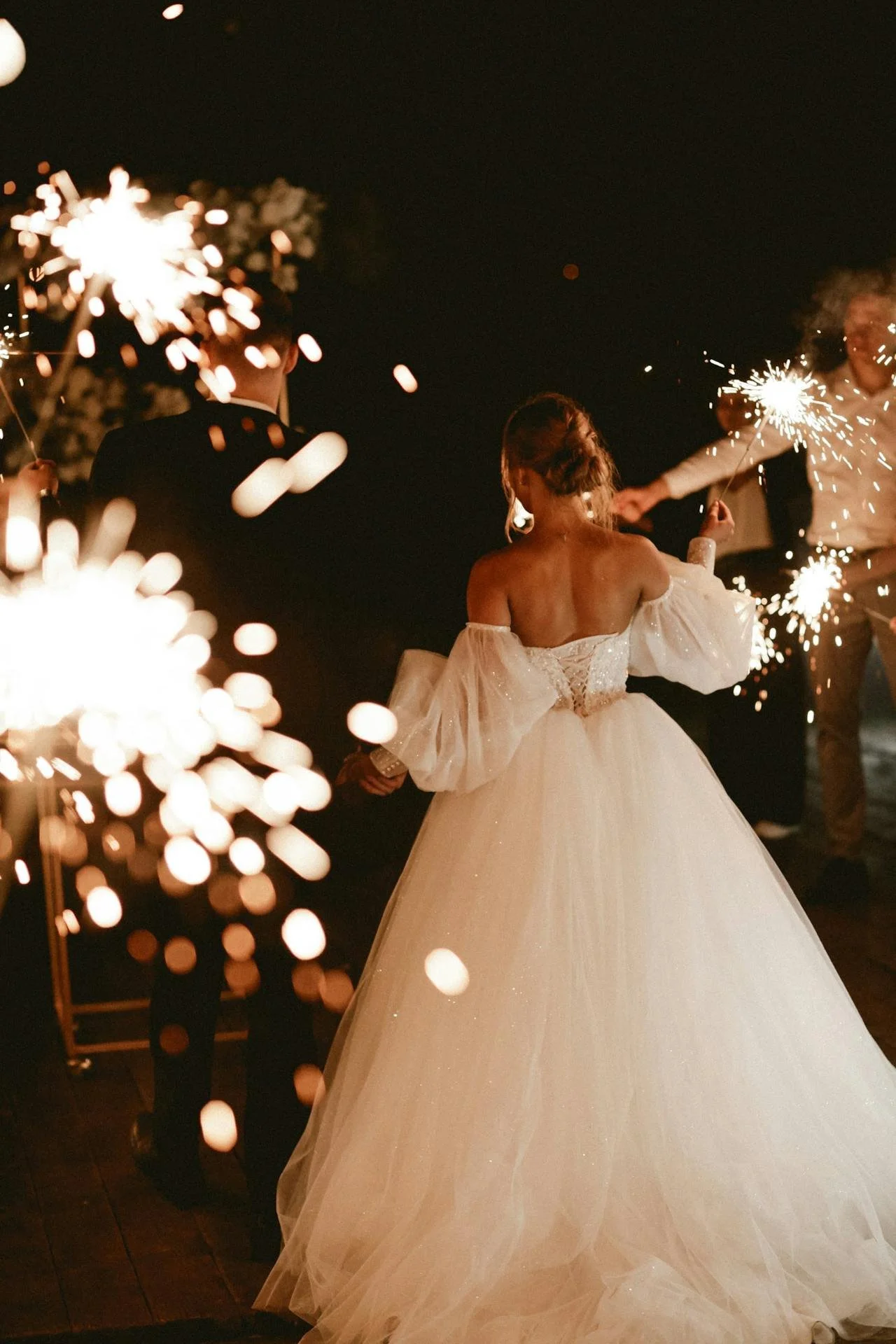
Best Outdoor Wedding Ceremony Locations in Boulder | Boulder Wedding Officiant Guide
Summary
Explore the best outdoor wedding ceremony locations in Boulder, including Sunrise Amphitheater, Chautauqua Lawn, Flagstaff Mountain shelters, and hike-in ceremony sites. Local Boulder wedding officiant guidance on permits, guest count, accessibility, and planning.
What are the best outdoor wedding ceremony locations in Boulder?
The best outdoor wedding ceremony locations in Boulder include Sunrise Amphitheater, Chautauqua Lawn, Halfway House, Stone Shelter, Wood Shelter, Bluebell Shelter, and Green Mountain Lodge. Couples should choose based on guest count, accessibility, permit requirements, parking, weather backup needs, and how much privacy they want.
Frequently Asked Questions (FAQ)
What are the best outdoor wedding ceremony locations in Boulder?
The best outdoor wedding ceremony locations in Boulder include Sunrise Amphitheater, Chautauqua Lawn, Halfway House, Stone Shelter, Wood Shelter, Bluebell Shelter, and Green Mountain Lodge. The right choice depends on guest count, accessibility, scenery, permit rules, parking, and whether the couple wants a structured venue or a more adventurous outdoor setting.
Do you need a permit for an outdoor wedding ceremony in Boulder?
Often, yes. Permit and reservation requirements depend on the exact location, managing agency, guest count, and vendor involvement. Boulder Open Space and Mountain Parks, Boulder Parks and Recreation, and Boulder County Parks and Open Space each have their own rules. Couples should confirm requirements before inviting guests or booking vendors.
Can you get married at Chautauqua in Boulder?
Yes, but couples should distinguish between Chautauqua Lawn, Chautauqua Park, and surrounding OSMP trails. The lawn may be reservable through Boulder Parks and Recreation, while ceremonies on OSMP lands are restricted to designated shelters and facilities. Couples should confirm the correct process for the exact ceremony location.
What is the most scenic wedding ceremony location in Boulder?
Sunrise Amphitheater is often the strongest scenic choice because it combines mountain views, built-in seating, and a defined ceremony space. Chautauqua Lawn is the most recognizable Flatirons backdrop. Halfway House offers a more intimate foothills setting with historic stone character.
What is the best location for a Boulder ceremony for a small elopement?
For a small Boulder elopement, consider Sunrise Amphitheater for structure, Chautauqua Lawn for iconic views, Halfway House for intimacy, or Bluebell Shelter and Green Mountain Lodge for a more adventurous hike-in feel. The best choice depends on mobility, privacy expectations, season, and permit requirements.
What should couples consider before choosing an outdoor ceremony site in Boulder?
Couples should consider guest count, accessibility, parking, restroom access, weather exposure, sound, vendor permits, reservation rules, and whether the site allows the desired ceremony setup. The most beautiful location is not always the best fit if it creates stress for guests or limits the ceremony flow.
Is Boulder good for micro weddings?
Yes. Boulder is one of Colorado’s strongest micro wedding destinations because it offers scenic outdoor ceremony sites, plus restaurants, lodging, photography locations, and reception options. It works especially well for couples who want a meaningful ceremony with a smaller guest list and a strong sense of place.
When is the best time of day for an outdoor wedding ceremony in Boulder?
Sunrise and early evening are often best for outdoor Boulder ceremonies because the light is softer, temperatures are usually more comfortable, and popular locations may be less crowded. Midday can bring harsh light, heat, wind, and heavier public use.
Should we hire a Boulder wedding officiant for an outdoor ceremony?
A local Boulder wedding officiant can help shape the ceremony around the setting, timing, acoustics, guest flow, and the day's emotional tone. Outdoor ceremonies require more than a script; they require calm pacing, clear cues, weather awareness, and language that fits the landscape without overwhelming the moment.
Key Topics
best outdoor wedding ceremony locations in Boulder, Boulder outdoor wedding ceremony locations, Boulder wedding ceremony locations, outdoor wedding venues Boulder Colorado, Boulder wedding officiant, Boulder elopement locations, Sunrise Amphitheater wedding, Chautauqua wedding ceremony
Flagstaff Mountain wedding Boulder, Boulder micro wedding locations, Boulder mountain wedding ceremony, Boulder Colorado elopement ceremony, Boulder wedding permits, Boulder wedding venues with mountain views, outdoor ceremony locations near Boulder, Colorado elopement officiant, Denver Boulder Golden wedding officiant, Intimate wedding ceremony Boulder, Flatirons wedding ceremony, Boulder wedding planning guide
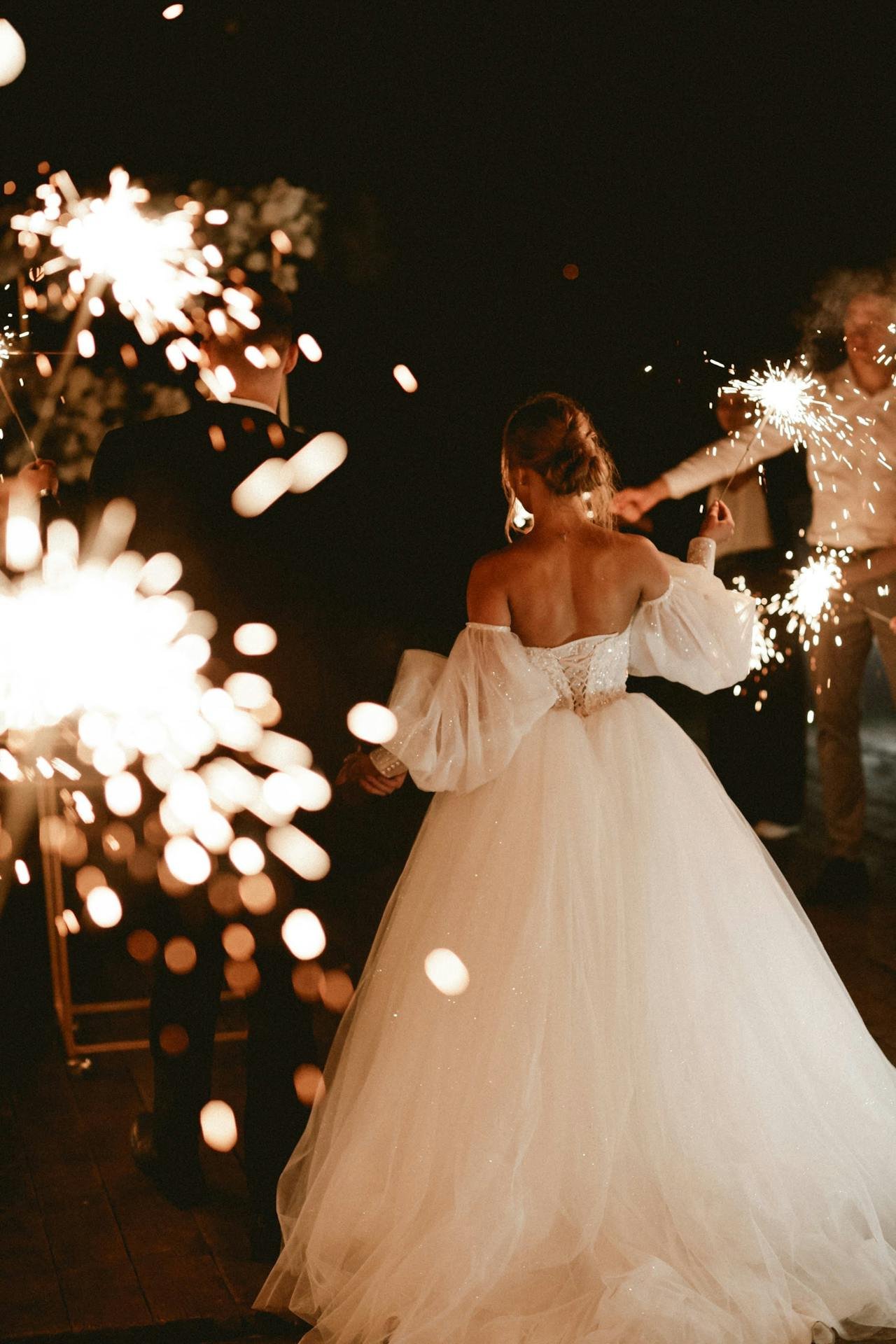
Ordained Minister / Photo: Vika Kirillova
Why Boulder Works So Well for Outdoor Wedding Ceremonies
Boulder has a rare kind of ceremony beauty. It is not simply mountain scenery. It is mountain scenery pressed close to town: sandstone slabs rising above neighborhoods, ponderosa pines above stone shelters, winding roads that climb quickly from café-lined streets to quiet overlooks, and light that changes the whole mood of a ceremony in a matter of minutes. That is what makes Boulder such a strong outdoor wedding location. A couple can exchange vows with the Flatirons behind them, sign the marriage license at a picnic table, and still be close enough to downtown for dinner, photographs, or a reception. It suits intimate weddings, small family ceremonies, elopements, and carefully planned celebrations that want natural drama without turning the day into a logistical expedition.
The best Boulder ceremony locations are not interchangeable, though. Some are better for a polished mountain ceremony with seated guests. Some are better for a small group that wants to walk lightly into the foothills. Some offer practical structure; others offer atmosphere with tradeoffs. Parking, accessibility, seasonality, reservation rules, and public-space limitations matter. Boulder rewards couples who plan with precision. The right outdoor location will not just look good in photos. It will support the pace, privacy, sound, movement, and emotional tone of the ceremony itself.
For couples still shaping the broader ceremony experience, working with a local Boulder wedding officiant can help translate a scenic setting into a ceremony that feels personal, composed, and easy to follow.
A Note on Boulder Permits Before You Choose a Location
Before choosing a Boulder outdoor wedding ceremony location, start with the rules. Many of Boulder’s most beloved landscapes are managed by the City of Boulder Open Space and Mountain Parks, Boulder Parks and Recreation, or Boulder County Parks and Open Space. These agencies have different reservation systems, permit requirements, guest limits, and restrictions. The most important planning distinction is this: a scenic trail or overlook is not automatically a legal or appropriate site for a ceremony. On Boulder OSMP land, weddings, ceremonies, elopements, and other stationary events are generally limited to designated shelters and facilities. A photographer, planner, officiant, or other paid vendor may also need a commercial-use permit depending on the activity and location. Couples should verify:
Whether the site can be reserved
Whether a special-use or commercial-use permit is required
Whether the site allows the intended guest count
Whether the reservation provides any exclusive use
Whether alcohol, amplified sound, chairs, arches, florals, pets, or décor are allowed
Whether the site is accessible for guests with mobility needs
Whether parking can realistically support the group
The best outdoor wedding ceremony locations in Boulder are beautiful, but they are still public, regulated, and exposed to the weather. The goal is not to make the day feel complicated. The goal is to avoid preventable surprises.
Sunrise Amphitheater
Sunrise Amphitheater is the Boulder outdoor ceremony location couples often imagine before they know its name. Set on Flagstaff Mountain, it has built-in stone seating, a defined ceremony space, elevated views, and the kind of natural architecture that makes extensive décor unnecessary. For many couples, this is Boulder’s strongest option when they want the feeling of a mountain ceremony without asking guests to stand on uneven trail edges or improvise around a crowded overlook. The amphitheater gives the ceremony a real shape. Guests know where to sit. The couple has a natural focal point. The officiant can stand in a clear position. Photographers can work from multiple angles without needing to choreograph the whole setting from scratch.
Best for: couples who want a scenic, structured outdoor ceremony with room for guests.
Why it works well:
Iconic mountain setting
Built-in seating
Strong ceremony flow
Better structure than an informal trail ceremony
Good fit for elopements, micro weddings, and larger intimate ceremonies
Planning considerations:
Sunrise Amphitheater is seasonal by vehicle access and requires advance planning. Parking is limited, and Flagstaff Road has its own practical constraints. Couples should be realistic about transportation, shuttles, elderly guests, and time blocks. Even when the scenery feels wild, this is still a managed public facility with reservation rules.
Ceremony style recommendation:
Keep the ceremony elegant and spare. Sunrise Amphitheater does not need a heavy floral arch or a theatrical setup. A well-written ceremony, clean processional cues, and a thoughtful sound plan will carry more weight than décor. Let the stone, sky, and foothills do their part.
For couples planning a mountain-forward ceremony beyond Boulder, the Colorado elopement ceremony page is a useful next step.
Chautauqua Lawn and Chautauqua Park
Chautauqua is one of Boulder’s defining landscapes. The Flatirons rise in the background with an immediacy that can make a ceremony feel both grand and grounded. For couples coming from out of state, it is often the Boulder image they recognize first. For local couples, it can feel like a familiar place suddenly made ceremonial. The Chautauqua Lawn is the more practical option for many wedding ceremonies because it is managed separately from OSMP trail areas and can be reserved through Boulder Parks and Recreation. That distinction matters. Couples should not assume that a ceremony can simply be held anywhere on the surrounding trails or open space. A lawful, guest-friendly ceremony needs to respect the management rules of the exact location.
Best for: couples who want the classic Boulder Flatirons backdrop without a remote mountain-road experience.
Why it works well:
Iconic Flatirons views
Strong Boulder identity
Convenient for guests staying in town
Good pairing with downtown Boulder receptions
Excellent for morning or weekday ceremonies
Planning considerations:
Chautauqua is popular. It is not a secret location, and privacy should not be expected. Parking can be difficult during peak times, especially weekends and warm-season afternoons. Couples should think carefully about guest count, arrival instructions, footwear, sun exposure, and backup plans.
Ceremony style recommendation:
A Chautauqua ceremony should feel unforced. The setting already carries visual weight. The strongest ceremonies here tend to be warm, personal, and concise, with language that acknowledges the landscape without turning it into a brochure. A short welcome, a few vivid details about the couple, intentional vows, and a clear pronouncement can feel deeply satisfying.
Couples comparing Boulder with other Front Range locations may also find value in a Denver wedding officiant ceremony if the celebration leans more urban, architectural, or reception-focused.
Table of Contents
Why Boulder Works So Well for Outdoor Wedding Ceremonies
A Note on Boulder Permits Before You Choose a Location
Sunrise Amphitheater
Chautauqua Lawn and Chautauqua Park
Halfway House on Flagstaff Mountain
Stone Shelter and Wood Shelter
Bluebell Shelter
Green Mountain Lodge
Boulder County Open Space Options
How to Choose the Right Boulder Ceremony Location
Outdoor Ceremony Planning Tips for Boulder
Related Articles
Halfway House on Flagstaff Mountain
Halfway House is one of Boulder’s most appealing outdoor ceremony options for couples who want a more intimate, old-stone, foothills atmosphere. It sits partway up Flagstaff Mountain and feels less exposed than Sunrise Amphitheater while still offering a strong sense of place. The facility has a historic, grounded quality. It feels like a place made for gathering: not too polished, not too rustic, and not so large that a small ceremony disappears inside it. For couples with a moderate guest count, it can strike a graceful balance between scenic and manageable.
Best for: intimate weddings, family-centered ceremonies, and couples who want mountain atmosphere without a large amphitheater.
Why it works well:
Historic stone character
Beautiful foothills setting
Strong fit for smaller groups
More contained than many open-view locations
Good visual texture for photography
Planning considerations:
Capacity, parking, and accessibility should be reviewed carefully. Halfway House can work beautifully, but it is not the same as a full-service venue. Couples are still responsible for practical details: timing, guest directions, setup, cleanup, weather, and any vendor needs.
Ceremony style recommendation:
Halfway House suits ceremonies with warmth and texture. It is a good setting for personal storytelling, a short family blessing, a reading, or a quiet ritual such as a ring warming or handfasting. It does not need to be overly formal; it should feel gathered, attentive, and human.
Stone Shelter and Wood Shelter
Stone Shelter and Wood Shelter are strong options for couples seeking a Boulder outdoor ceremony with practical infrastructure. They are less iconic than Sunrise Amphitheater, but that may be an advantage. They feel more like tucked-away gathering places than postcard stages. These shelters can work especially well for couples who want a ceremony followed by a simple toast, picnic-style gathering, or relaxed transition into portraits. The shelter structure gives guests a point of orientation, and the surrounding mountain environment still feels distinctly Boulder.
Best for: relaxed micro weddings, semi-casual ceremonies, and couples who value function as much as scenery.
Why they work well:
Reservable facility feel
Rustic mountain character
Useful shelter structure
Good fit for small-to-medium groups
Less visually expected than Chautauqua or Sunrise
Planning considerations:
The covered capacity may be less than the site's total capacity. Couples should not plan only around the maximum number listed; they should ask what the ceremony will actually feel like with that number of bodies, chairs, bags, bouquets, family members, and photographers. A site that technically holds a group may still feel crowded or awkward if the ceremony layout is not considered.
Ceremony style recommendation:
Use the shelter as a quiet anchor. Keep the processional simple. Avoid complicated seating plans unless a planner is managing the setup. This is a good setting for a ceremony that feels intimate, sincere, and lightly structured rather than heavily produced.
Bluebell Shelter
Bluebell Shelter is a hike-in option near Chautauqua that appeals to couples who want the wedding day to feel a little more adventurous. It is not the right fit for every guest list. That is precisely why it can be so memorable for the right one. A hike-in ceremony changes the day's energy. Guests are no longer just arriving; they are participating. Shoes matter. Timing matters. Weather matters. The group needs to be small enough, mobile enough, and flexible enough to enjoy the experience rather than endure it.
Best for: small ceremonies, active couples, and Boulder elopements with guests who are comfortable walking.
Why it works well:
Strong sense of place
More immersive than a drive-up location
Works well for nature-centered ceremonies
Good fit for couples who want a less conventional wedding rhythm
Planning considerations:
Accessibility is the central question. A hike-in site can exclude guests with mobility limitations, older family members, young children, or anyone not prepared for uneven ground. Couples should be honest about who they are inviting and what experience they want those people to have.
Ceremony style recommendation:
Keep it light and intentional. A Bluebell Shelter ceremony should not feel like a ballroom script dropped into the woods. Shorter readings, personal vows, and a grounded officiant presence will fit the landscape better than a heavily staged program. For couples considering hiking-in ceremonies elsewhere along the Front Range, a Colorado elopement officiant can help shape the ceremony to suit the terrain, timing, and guest comfort.
Green Mountain Lodge
Green Mountain Lodge is another hike-in Boulder ceremony option, with a historic mountain feel and a quieter atmosphere than the more recognizable Boulder sites. It suits couples who want a ceremony that feels almost hidden, as though the wedding has stepped slightly outside ordinary time. This is not a convenience-first location. That should be understood from the beginning. The couple, guests, and vendors need to be comfortable with the walk, the logistics, and the lack of typical venue amenities. But for the right couple, those tradeoffs are not drawbacks. They are part of the meaning.
Best for: adventurous elopements and small ceremonies with a deeply outdoors-oriented guest list.
Why it works well:
Historic lodge character
Quiet mountain atmosphere
Less conventional ceremony experience
Strong fit for couples who want privacy in feeling, even if not legal exclusivity
Planning considerations:
No couple should choose Green Mountain Lodge based only on photographs. Walk the route first if possible. Consider altitude, weather, guest mobility, restroom access, trash rules, vendor permits, and whether the site supports the desired tone of the ceremony.
Ceremony style recommendation:
This location calls for restraint. The ceremony can be personal, literary, and emotionally direct. The setting already creates the frame; the words should create the intimacy.
Quick Summary List:
Best iconic Boulder view: Sunrise Amphitheater
Best classic Flatirons setting: Chautauqua Lawn
Best intimate mountain feel: Halfway House
Best rustic shelter option: Stone Shelter or Wood Shelter
Best hike-in ceremony atmosphere: Bluebell Shelter or Green Mountain Lodge
Best practical rule: Confirm the permit, guest count, parking, and accessibility before falling in love with the view.
Boulder County Open Space Options
Some couples broaden their search beyond City of Boulder-managed spaces and consider Boulder County open-space properties. This can be a good strategy, especially for couples considering nearby areas such as Lyons, Nederland, Niwot, Longmont, Superior, or foothills locations outside the city center. Boulder County Parks and Open Space has its own rules, shelters, and permit thresholds. Some picnic shelters are first-come, first-served, while others are reservable. Certain activities, group sizes, or uses may require a special-use permit. Because Boulder County properties vary widely, couples should verify the requirements for the specific property, rather than simply assuming the same rules apply everywhere.
Best for: couples willing to explore beyond central Boulder for a quieter or more flexible setting.
Why it works well:
Broader range of landscapes
Possible shelter options
Strong fit for small ceremonies and picnic-style gatherings
Good alternative when central Boulder locations are booked or too busy
Planning considerations:
Rules can differ by property. Always verify group size, reservation status, parking, restroom access, alcohol rules, photography rules, and whether outside vendors are allowed. For couples drawn toward the foothills south of Boulder, nearby Golden may also be worth exploring through a Golden wedding officiant, especially if the ceremony vision includes Clear Creek, Lookout Mountain, or the Table Mountain area.
How to Choose the Right Boulder Ceremony Location
The best Boulder wedding ceremony location is not always the most dramatic one. It is the one that supports the people, the vows, and the day's pace. Start with these questions:
How many guests are actually attending?
A location that feels perfect for 12 people may feel strained with 45. Do not plan from the fantasy guest count. Plan from the real one.
Does anyone need accessible terrain?
If grandparents, parents, children, or guests with mobility needs are attending, accessibility should be part of the first conversation, not the last.
Do you want privacy, or do you want scenery?
Public lands rarely provide both. A famous view often brings other hikers, tourists, dogs, cyclists, and parking pressure. A quieter site may require sacrificing the most recognizable backdrop.
What happens if the weather changes?
Boulder weather can shift quickly. Wind, heat, afternoon storms, smoke, snow, and muddy trails can affect the ceremony. Have a Plan B that is more specific than “we’ll figure it out.”
Will the ceremony be heard?
Outdoor ceremonies need sound planning. Wind, distance, road noise, and guest spacing can make a beautiful script vanish. For larger groups, ask whether amplification is allowed and practical.
Does the location match the tone of the ceremony?
A formal, black-tie ceremony may feel mismatched at a hike-in shelter. A barefoot, intimate elopement may feel too exposed in a large amphitheater. The location should reinforce the day's emotional architecture.
Outdoor Ceremony Planning Tips for Boulder
Choose sunrise or early evening when possible.
Midday light can be harsh, and popular areas become busier as the day unfolds. Sunrise often offers quieter conditions, softer light, and a more intimate atmosphere, though it requires disciplined timing.
Keep décor minimal.
Outdoor Boulder ceremonies usually need less visual material, not more. Flowers, if used, should be wind-aware and easy to remove. Avoid anything that can blow away, damage vegetation, or create cleanup problems.
Give guests exact instructions.
Do not simply say “meet at Chautauqua” or “go to Flagstaff.” Include parking notes, walking distance, shoe recommendations, restroom availability, weather advice, and a precise arrival time.
Prepare for wind.
Wind affects hair, veils, microphones, vow books, arches, loose papers, and candles. Printed vows should be secured. Decorative structures should be avoided unless explicitly allowed and professionally managed.
Respect the land.
Stay on designated trails and durable surfaces. Pack out trash. Do not block public access. Do not attach items to trees or structures unless the rules specifically allow it. The ceremony should leave the place as beautiful as it was found.
Hire vendors who understand public-land ceremonies.
A Boulder outdoor wedding is not the same as a hotel ballroom ceremony. The officiant, photographer, planner, florist, and musicians should understand timing, permits, public use, sound, movement, and weather exposure.
Final Recommendation
For most couples, Sunrise Amphitheater is the best all-around outdoor wedding ceremony location in Boulder because it combines scenery, structure, guest seating, and a clear focal point for the ceremony. Chautauqua Lawn is the best choice for couples who want the unmistakable Flatirons backdrop with easy proximity to town. Halfway House is ideal for a more intimate foothills ceremony. Stone Shelter, Wood Shelter, Bluebell Shelter, and Green Mountain Lodge work best for couples who want a quieter, more rustic, or more adventurous atmosphere. The ceremony is the pause before the celebration accelerates. It is the moment when the day gathers itself. Boulder gives couples extraordinary places for that moment, but the location should be chosen with care: legally, logistically, aesthetically, and emotionally. A well-chosen outdoor ceremony location does not just frame the vows. It helps the vows land.
Related Articles
From the Michael Moody Officiant wedding blog directory:
Boulder Wedding Ceremony Venues for Intimate and Scenic Weddings
Boulder Fall Wedding Guide: Venues, Permits, License, and Tips
Colorado Front Range Elopement Guide: Hiking-In Wedding Ceremonies and Scenic Trails
How to Elope in Colorado: Ceremony Guide for Intimate Mountain Weddings
Golden Wedding Ceremony Venues and Outdoor Ceremony Locations
How to Get Married in Colorado: Marriage License Guide for 2026
How to Personalize Your Wedding Ceremony Without Making It Awkward or Overlong
How to Include Family and Cultural Traditions in a Modern Wedding Ceremony
The directory includes ceremony planning articles, wedding-specific planning guidance, Front Range elopement content, and relationship-focused resources for couples planning meaningful Colorado ceremonies.
About the Author: Michael Moody, Wedding Officiant
Michael Moody is a Colorado wedding officiant serving Denver, Boulder, Golden, Larkspur, and mountain communities throughout the state. Since 2012, he has officiated more than 300 weddings, bringing a calm presence, thoughtful guidance, and emotionally grounded ceremony writing to couples seeking a meaningful experience. He also offers Colorado elopement ceremonies for couples who want something intimate, intentional, and beyond the boundaries of a traditional wedding day. His work is shaped by a lifelong interest in connection, reflection, and personal growth. Michael is the author of the self-improvement book Redefine Yourself: The Simple Guide to Happiness and host of The Elements of Being podcast. As a wedding officiant, he draws from that same foundation: the belief that our relationships, words, and everyday interactions help shape a life rooted in love, empathy, and purpose. Michael’s ceremony work has been recognized across Colorado. He is a 2023 WeddingWire Couples’ Choice Award winner in Denver, marking his eighth consecutive year receiving the honor. He was also named “Best Business of 2024, 2025, and 2026” by Three Best Rated and earned “The Best Wedding Officiant in Commerce City, Colorado for 2024” from Quality Business Awards USA.
Beyond weddings, Michael and his wife, Sammy, have sponsored an annual student scholarship for more than 10 years. They also founded Civic Growth Alliance, a 501(c)(4) nonprofit dedicated to strengthening communities through civic advocacy, resident engagement, strategic partnerships, public safety initiatives, neighborhood vitality, and community well-being.
Wedding locations: Michael officiates wedding ceremonies in the Denver neighborhoods of LoDo, River North, Washington Park, Cherry Creek, City Park, Central Park, Capitol Hill, Cheesman Park, Park Hill, Lower Highlands, and Sloan Lake. Michael also serves as an ordained minister in Larkspur, Littleton, Golden, Boulder, Breckenridge, Frisco, Aspen, Vail, Estes Park, and more. If your Denver neighborhood or Colorado town isn’t listed here, no worries! Please contact Michael to propose a wedding ceremony location in a different area!
Wedding Planning Tips
Michael Moody is a Colorado wedding officiant serving couples in Boulder, Denver, Golden, and throughout the Front Range with personal wedding ceremonies, intimate mountain elopements, and thoughtfully led non-religious ceremonies. His work as a Boulder wedding officiant, Denver wedding officiant, Golden wedding officiant, and Colorado elopement officiant is shaped by clear ceremony structure, meaningful language, local landscape awareness, and a calm presence on the wedding day.
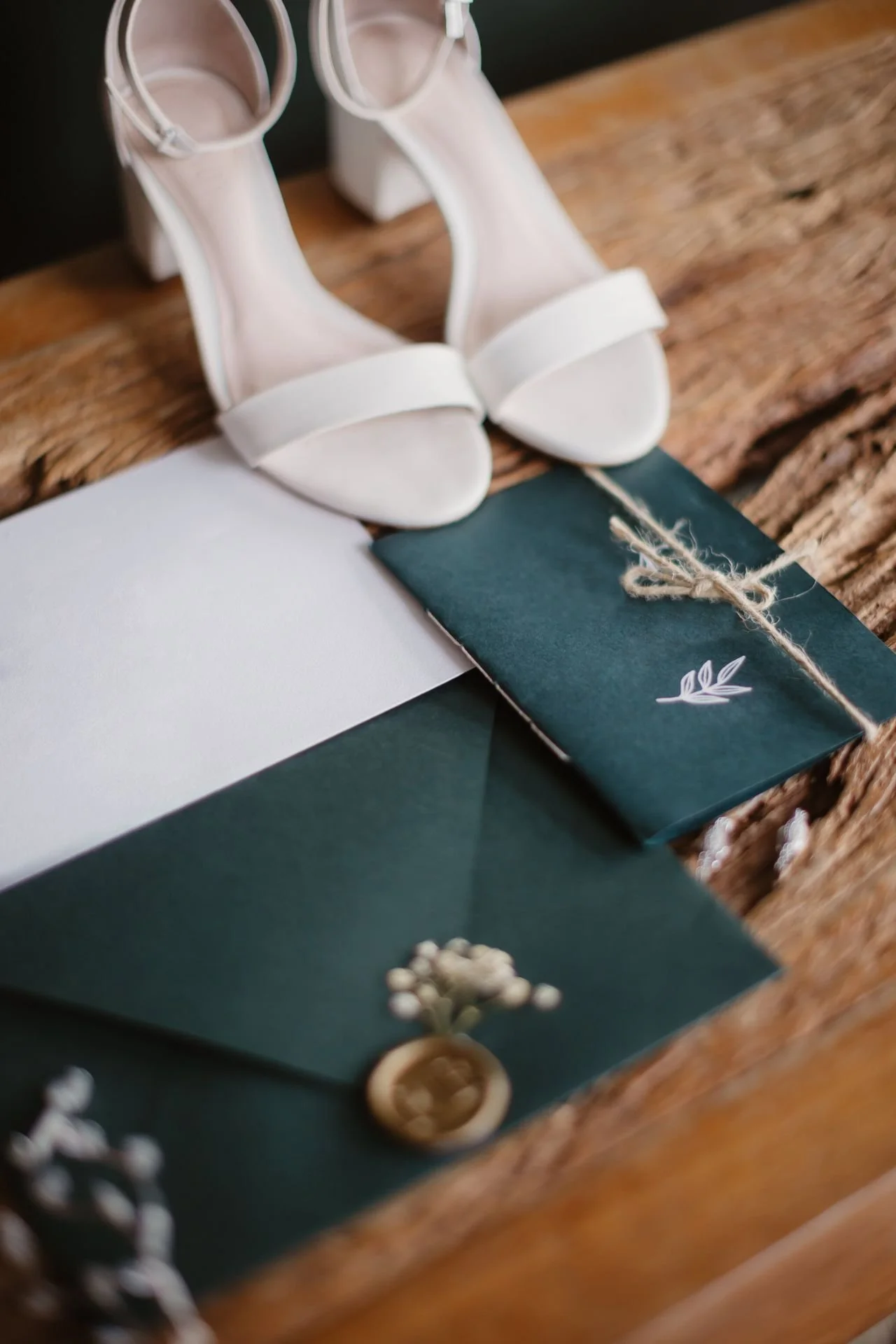
Questions to Ask Before Hiring a Wedding Officiant in Colorado
Summary
Hiring a wedding officiant? Ask these essential questions about ceremony style, personalization, vows, legal duties, rehearsal support, pricing, backup plans, and Colorado wedding logistics before you book.
What questions should you ask before hiring a wedding officiant?
Before hiring a wedding officiant, ask about their ceremony style, personalization process, legal responsibilities, rehearsal availability, backup plan, pricing, travel fees, communication rhythm, inclusivity, attire, and how they handle unexpected moments. The right officiant should feel calm, experienced, responsive, and genuinely interested in your relationship.
Frequently Asked Questions (FAQ)
What should we ask a wedding officiant before booking?
Ask about availability, legal authority, ceremony style, personalization, script review, vow support, rehearsal attendance, arrival time, pricing, travel fees, backup plans, and how the officiant handles unexpected wedding-day issues.
How do we know if a wedding officiant is a good fit?
A good wedding officiant should make you feel heard, not processed. Look for someone who asks thoughtful questions, explains their writing process clearly, respects your preferences, communicates well, and has the presence to guide the ceremony calmly.
Should a wedding officiant write a custom ceremony?
If you want the ceremony to feel personal, ask for a custom or highly personalized ceremony. A strong officiant should explain how they learn your story, shape the tone, include meaningful details, and avoid generic language
Does a wedding officiant attend the rehearsal?
Some officiants attend rehearsals, and others offer it as an additional service. A rehearsal is especially helpful when there is a wedding party, family processional, children involved, readings, rituals, or a more complex ceremony layout.
What should a wedding officiant do with the marriage license?
The officiant should explain who signs the marriage license, when it is signed, and how it is returned or filed according to local requirements. Couples should never assume this process without discussing it before the wedding.
How far in advance should we hire a wedding officiant?
Many couples hire a wedding officiant several months to a year before the wedding, especially for popular dates, mountain weddings, and custom ceremonies. Smaller legal ceremonies or elopements may have more flexibility, but earlier is safer.
What makes a Colorado wedding officiant different?
A Colorado wedding officiant should understand outdoor ceremony conditions, mountain weather, local venues, travel timing, permit-sensitive locations, altitude considerations, and the tone of ceremonies in places like Denver, Boulder, Golden, and the mountains.
Can a wedding officiant help with personal vows?
Many professional officiants help with vow structure, tone, length, and balance. This guidance can prevent one partner’s vows from feeling much longer, more formal, or more revealing than the other’s.
What are red flags when hiring a wedding officiant?
Red flags include vague pricing, no contract, unclear legal knowledge, poor communication, unwillingness to personalize the ceremony, dismissive responses to your preferences, no backup plan, or a style that feels performative rather than grounded.
Key Topics
questions to ask before hiring a wedding officiant, questions to ask wedding officiant, hiring a wedding officiant, wedding officiant questions, what to ask a wedding officiant, how to choose a wedding officiant, wedding officiant interview questions, questions to ask officiant before booking
what questions should we ask a wedding officiant before booking, how to know if a wedding officiant is a good fit, should a wedding officiant write a custom ceremony, does a wedding officiant attend the rehearsal, what does a wedding officiant do with the marriage license, how far in advance should we hire a wedding officiant, what should be included in a wedding officiant contract, how to hire a wedding officiant for a Colorado elopement
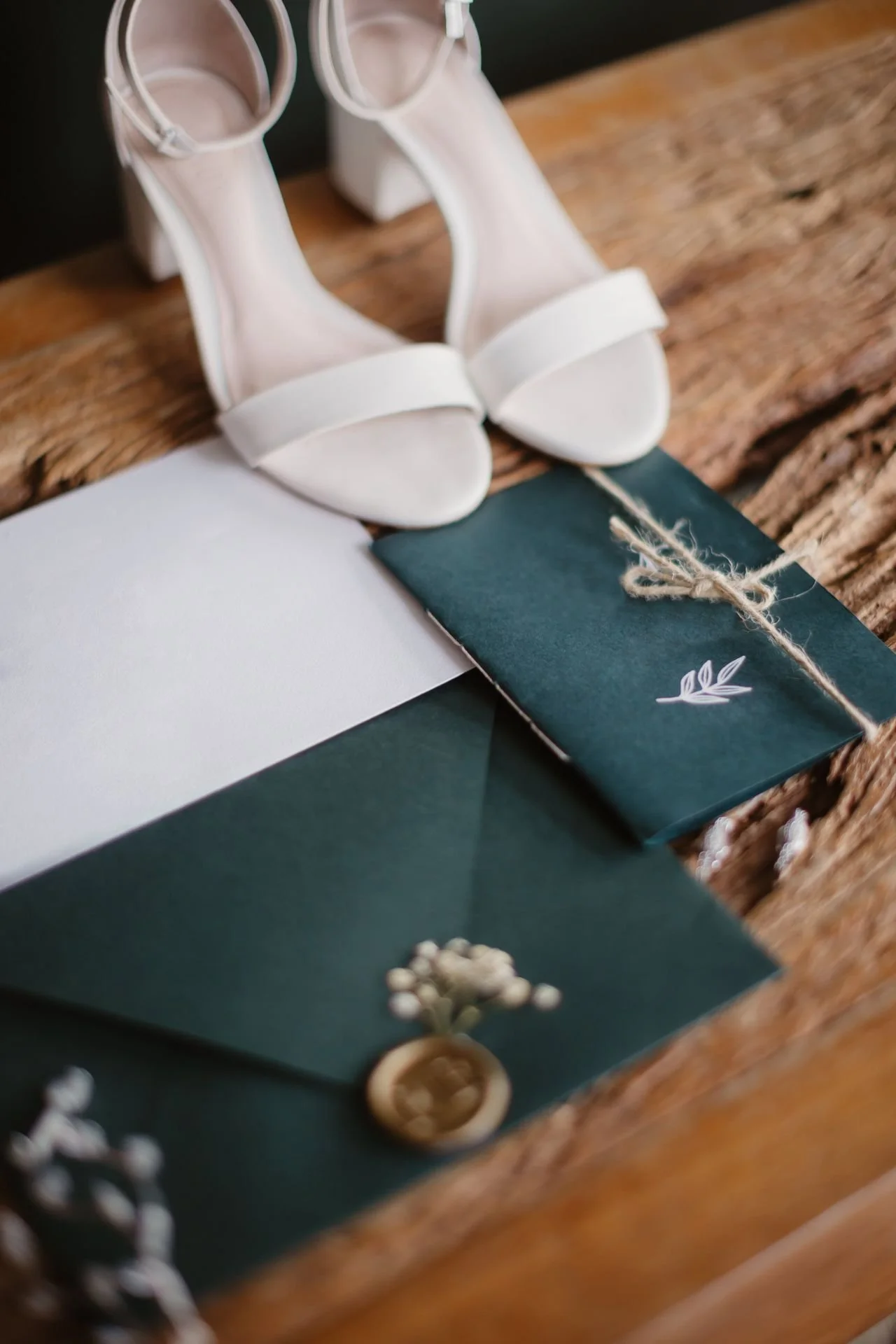
Questions for a Wedding Officiant / Photo: Jonathan Borba
Why the Wedding Officiant Interview Matters More Than Couples Realize
Couples often interview the venue, planner, photographer, florist, caterer, DJ, and hair-and-makeup team with a kind of practical vigilance. They ask about timelines, deposits, galleries, contingency plans, preferred vendors, rain options, lighting, and setup windows. Then, somewhere in the middle of the planning fog, they look for a wedding officiant and ask one question too quickly: “Are you available?” Availability matters, of course. So does price. But the officiant is not merely another vendor arriving with a task list and a black folder. The officiant is the person who stands with you at the threshold of the marriage itself. They shape the first words your guests hear. They hold the pause before the vows. They decide whether the ceremony feels like a legal appointment, a sentimental performance, a generic script, or a living moment that belongs to the two of you.
That is why the questions you ask before hiring a wedding officiant should move beyond “How much do you charge?” and “How long is the ceremony?” Those questions are necessary, but they are not enough. A couple should understand the officiant’s writing process, legal role, public presence, flexibility, values, communication style, and ability to steady the room when weather, nerves, family dynamics, or timing issues begin to intrude. A good officiant does not make the ceremony about themselves. A good officiant also does not disappear into a bland template. The best presence is harder to name: composed, warm, prepared, attentive, and deeply aware that the ceremony has its own architecture. It needs shape. It needs breath. It needs restraint.
For couples planning a refined, intimate, or deeply personal ceremony in Colorado, the right officiant can help the day feel less assembled and more held. Whether you are planning a city ceremony with a Denver wedding officiant, a foothills celebration with a Golden wedding officiant, a scenic ceremony with a Boulder wedding officiant, or a mountain ceremony through Colorado elopement ceremonies, the officiant conversation should help you feel more certain—not more managed.
Start With the Question Beneath the Question
Before you ask an officiant anything, ask yourselves this:
What do we want the ceremony to feel like?
Not how it should look. Not how many minutes it should last. Not what the photos will show. What should it feel like?
Some couples want the ceremony to feel elegant and quiet. Others want warmth, humor, a little looseness, and a sense of familiar ease. Some want a modern non-religious ceremony that still carries emotional weight. Others want to honor family, culture, faith, grief, children, or a long road to commitment. Some want a ceremony that feels intimate even with 150 guests watching. The answer does not have to be poetic. It only has to be honest.
Try finishing these sentences before your first officiant consultation:
“Our ceremony should feel…”
“We do not want it to feel…”
“We want guests to understand…”
“We are nervous about…”
“The most important part is…”
“The one thing that would make the ceremony feel fake is…”
These answers will help you hear an officiant more clearly. A strong officiant will respond with curiosity. A weaker fit may rush toward a package, a script, or a performance style without asking why.
Table of Contents
Why the Officiant Interview Matters More Than Couples Realize
Start With the Question Beneath the Question
Availability, Location, and Legal Authority
Ceremony Style and Emotional Tone
Personalization: How the Ceremony Actually Gets Written
Vows, Readings, Rituals, and Family Traditions
Logistics: Rehearsal, Arrival Time, Sound, and Coordination
Pricing, Contract Terms, Travel, and What Is Included
Backup Plans and Wedding-Day Composure
Inclusivity, Language, and Respect for Your Relationship
Questions for Colorado Couples
Red Flags When Interviewing a Wedding Officiant
The Final Question: Do We Trust This Person With the Room
Related Articles
Availability, Location, and Legal Authority
Begin with the practical questions. They create the frame for everything else. Ask:
Are you available on our wedding date and time?
This seems obvious, but be specific. If the ceremony begins at 4:30 p.m., ask whether they reserve enough time before and after your ceremony or whether they may be coming from another wedding. A composed ceremony begins before the officiant starts speaking. It begins with not being rushed.Are you legally authorized to perform marriages in our state?
Every couple should confirm that the officiant is legally authorized to solemnize the marriage at the ceremony location. This is especially important for destination weddings, mountain elopements, private-estate ceremonies, and ceremonies where a friend or family member is considering becoming ordained online. Michael has already officiated weddings in Colorado, Illinois, Missouri, Louisiana, and Florida, and the requirements differed in each state.Do you handle the marriage license after the ceremony?
Ask who signs it, where it goes, when it must be returned, and whether the officiant mails or files it. A beautiful ceremony still needs clean legal follow-through.Have you officiated weddings at our location or in this type of setting?
An officiant does not need to have worked at your exact venue to be qualified. But they should understand the demands of the setting. A hotel ballroom, garden ceremony, foothills overlook, trail elopement, courthouse-style legal ceremony, and private backyard wedding each call for a different kind of presence.How far do you travel, and are there travel fees?
Travel should be discussed early, particularly for mountain towns, sunrise elopements, winter weather, remote trailheads, or venues outside the officiant’s usual service area.
For Colorado couples, this is where local experience matters. A ceremony in Denver may require comfort with urban venues, parking realities, venue timelines, and planner coordination. A Golden ceremony may involve foothills light, wind, uneven outdoor surfaces, and guest movement between town and venue. A Boulder ceremony may require attention to trail access, park rules, weather shifts, and the ceremony’s relationship to the landscape. A mountain elopement requires even more planning around privacy, permits, timing, accessibility, footwear, weather, and guest limitations.
Ceremony Style and Emotional Tone
Once the logistics make sense, move into the ceremony itself. Ask:
How would you describe your ceremony style?
Listen for more than adjectives. Many officiants say they are “personal,” “warm,” or “custom.” Ask what those words mean in practice. Do they write every ceremony from scratch? Do they use a base script? Do they include humor? Do they speak in a formal tone? Do they sound conversational? Do they build ceremonies around the couple’s story, shared values, or a traditional structure?Can we see a sample ceremony or watch a video of you officiating?
Reading a script can show writing style. Watching video can show something else: timing, voice, posture, pacing, and whether the officiant knows how to let silence do its work. A wedding ceremony is not only written. It is performed, but it should not feel theatrical in the wrong way.How do you balance meaning and brevity?
Most ceremonies do not need to be long to be memorable. But short does not have to mean thin. A skilled officiant knows how to create a ceremony that feels complete without drifting. Ask how they decide what belongs in the ceremony and what should be left out.Do you include religion, spirituality, or secular language?
Couples should be direct about beliefs, non-beliefs, family expectations, and the language they do or do not want used. If you want a non-religious ceremony that still feels meaningful, ask how the officiant creates depth without relying on inherited religious phrasing. If you want a spiritual or interfaith ceremony, ask how they handle that with respect and accuracy.How do you handle humor?
Humor can make a ceremony feel alive. It can also puncture the moment if it is used carelessly. The best humor usually comes from recognition rather than jokes: a small detail, a shared habit, a loving contrast between personalities. Ask whether humor is optional and how the officiant keeps it from becoming a toast.
Personalization: How the Ceremony Actually Gets Written
“Personalized ceremony” has become one of the most common phrases in the wedding world. It can mean almost anything. You need to know what it means to the person you are hiring. Ask:
What is your process for getting to know us?
A custom ceremony cannot be written from a two-line questionnaire. Ask whether the officiant meets with you, sends prompts, asks for individual responses, interviews you together, or gathers stories from family and friends. The process should feel thoughtful but not burdensome.Do you write the ceremony yourself?
Some officiants rely heavily on templates. Some use script libraries. Some write every ceremony independently. There is nothing wrong with structure; ceremonies need structure. But the words should not feel pulled from a drawer.Will our ceremony include our story?
Not every couple wants a long narrative of how they met. Some prefer a lighter touch. Still, the officiant should understand your relationship well enough to make the ceremony feel specific. Specificity is what keeps a ceremony from becoming wedding wallpaper.Can we review the script before the wedding?
Some couples want to see every word. Others prefer to leave room for surprise. Ask what the officiant allows. A useful middle ground is reviewing the structure, major language, readings, rituals, and tone while preserving a few carefully chosen details for the day itself.Can we request edits?
You should know how revisions work. Ask when the draft is delivered, how many rounds of edits are included, and what happens if the ceremony does not sound like you.What do you need from us, and when?
A good officiant process has deadlines. Vow submissions, questionnaires, ceremony approvals, license details, and rehearsal information should not be floating in the week before the wedding.
A useful test: after the officiant explains their process, you should feel more relaxed. If the process sounds vague, improvised, or overly dependent on your doing all the emotional labor, keep asking questions.
Vows, Readings, Rituals, and Family Traditions
The ceremony is not only the officiant’s script. It may include vows, readings, music, unity rituals, family blessings, cultural traditions, remembrances, or children from prior relationships. These elements need thoughtful placement. Ask:
Do you help couples write personal vows?
Some officiants simply say, “Write whatever you want.” Better officiants can offer structure: approximate length, tone, opening lines, promises, personal details, and guidance on what to avoid. Vows should sound like the person speaking them, not like a public audition for emotional fluency.Can we keep our vows private until the ceremony?
If yes, ask whether the officiant will review both vows for balance. It can be uncomfortable if one partner writes 90 seconds and the other writes six minutes. A light editorial review can protect both people.Can we include readings?
Ask whether the officiant helps select readings and whether they guide placement. A reading should deepen the ceremony, not interrupt it. The right reading can create a moment of stillness. The wrong one can feel like an assignment from someone else’s wedding.Can we include family, children, or friends?
If you want parents, grandparents, siblings, children, or close friends involved, ask how the officiant would include them without turning the ceremony into a variety show. Participation should have purpose. Sometimes one sentence, one blessing, one reading, or one symbolic gesture is enough.Can we include cultural or family traditions?
Traditions should be handled with care. Ask whether the officiant has experience explaining rituals briefly and respectfully, especially when guests may not understand the meaning. The officiant does not need to be an expert in every tradition, but they should be humble, prepared, and willing to learn from you or your family.How do you honor loved ones who have died?
This is one of the most delicate questions in the ceremony. Some couples want a spoken remembrance. Some prefer a reserved seat, a flower, a private note, or no public mention at all. Ask how the officiant handles grief without making the ceremony feel heavy or performative.
Quick Summary List:
Before booking a wedding officiant, ask…
Are you available on our wedding date?
Are you legally able to officiate in our state?
How do you personalize the ceremony?
Will we review the ceremony script beforehand?
Do you help with vows?
How long is the ceremony?
Do you attend rehearsals?
What happens if you are sick or delayed?
What do you wear during the ceremony?
What is included in your fee?
Logistics: Rehearsal, Arrival Time, Sound, and Coordination
Ceremony logistics are often invisible when they go well and painfully obvious when they do not. Ask:
Do you attend the rehearsal?
Not every ceremony requires a rehearsal, but many benefit from one. If you have a wedding party, processional order, family seating complexities, children participating, multiple readings, a unity ritual, or a larger venue, a rehearsal can reduce confusion.What do you cover at rehearsal?
A rehearsal is usually not a full performance of the ceremony. It is a movement and timing practice: who walks, where they stand, how vows and rings are handled, where readers come from, when music changes, and how the recessional happens.When do you arrive on the wedding day?
Ask for a specific arrival window. The officiant should arrive early enough to check in with the couple, planner, DJ or musicians, photographer, and venue contact. They should confirm the license, microphone, ceremony location, and any last-minute changes.Do you use a microphone?
Even a short outdoor ceremony can be difficult to hear without sound support. Wind, fountains, traffic, rivers, guests shifting in chairs, and open-air acoustics can swallow words. Ask whether the officiant coordinates with the DJ or venue on lapel microphones, handheld microphones, or a small speaker system for elopements.How do you work with planners, photographers, and venue staff?
The officiant should understand that the ceremony is part of a larger event ecosystem. A photographer may need the officiant to step aside for the first kiss. A planner may need help cueing the processional. A DJ may need the exact script cue for music. A venue may need the ceremony to begin on time due to lighting, catering, or room turnover.Where do you stand during the first kiss?
This sounds small until you see the photograph. Many experienced officiants step subtly aside before pronouncing the couple or before the kiss, depending on the ceremony layout, so the couple’s photograph does not feature the officiant’s face centered between them.
Pricing, Contract Terms, Travel, and What Is Included
The fee matters. So does clarity. Ask:
What is your total fee, and what is included?
Request the full scope: consultation, ceremony writing, personalization process, vow support, rehearsal, travel, filing of the license, ceremony length, early arrival, and edits.Is the rehearsal included or separate?
Some officiants include rehearsals; others charge separately. Neither is inherently wrong, but you should know before signing.Are there any travel, parking, lodging, or holiday fees?
This is especially relevant for Colorado mountain weddings, winter weddings, holiday weekends, sunrise ceremonies, or locations more than an hour or two from the officiant’s office.What deposit is required?
Ask when the date is secured. A consultation alone usually does not hold the date. Confirm payment schedule, final due date, accepted payment methods, and cancellation terms.Do you have a written agreement?
A professional agreement protects both sides. It should define services, fees, timing, cancellation policy, postponement policy, travel terms, rehearsal details, and the officiant’s responsibilities.What happens if our ceremony starts late?
Wedding days shift. Ask whether there is a grace period and whether additional fees apply if the ceremony is significantly delayed.
Backup Plans and Wedding-Day Composure
Every couple hopes nothing goes wrong. Experienced wedding professionals know something almost always changes: a family member is late, the wind rises, a flower girl refuses to walk, a microphone fails, a groomsman forgets the rings, a parent becomes emotional, a storm appears over the foothills, or traffic delays guests. Ask:
What is your backup plan if you are sick or unable to attend?
This is not a romantic question, but it is an important one. The officiant should have a plan, whether through a trusted colleague, professional network, or coordination with your planner.How do you handle weather changes?
For outdoor ceremonies, especially in Colorado, ask how the officiant adapts to wind, cold, heat, rain, snow, bright sun, and sudden relocation. The ceremony may need to become shorter, more direct, or moved under cover.How do you handle nerves or emotional moments?
A couple may cry during vows. A reader may lose their place. A parent may become overwhelmed. A skilled officiant does not panic or overtalk. They create a little room, then continue.Have you ever had something unexpected happen during a ceremony? What did you do?
The answer will tell you a lot. You are listening for judgment, calm, humility, and practical intelligence.
Inclusivity, Language, and Respect for Your Relationship
The officiant’s language should reflect the couple in front of them. Ask:
Do you officiate LGBTQ weddings?
The answer should be simple, affirming, and grounded in real experience—not awkwardly qualified. Inclusive ceremony work is not only about legality. It is about language, assumptions, pronouns, family structures, and the ability to make the couple feel fully seen.Do you use gender-neutral ceremony language when requested?
Terms like “bride and groom,” “husband and wife,” “ladies and gentlemen,” and “father giving away the bride” may or may not fit. Ask how the officiant adapts language.Can we avoid certain phrases or traditions?
Some couples dislike “obey,” “giving away,” “two become one,” “better half,” or language that implies incompleteness before marriage. Others love traditional phrasing. The officiant should not impose either direction.How do you handle complicated family dynamics?
This matters when parents are divorced, estranged, deceased, remarried, or unevenly involved. It also matters when there are cultural expectations regarding the order of processions, blessings, or family recognition. Ask how the officiant helps couples avoid unnecessary pain.Will the ceremony sound like us?
This may be the simplest and most important question in the entire interview.
Questions for Colorado Couples
Colorado weddings have their own rhythm. The light changes quickly. Weather can be dramatic. Guests may travel from sea level to altitude. Ceremony locations range from downtown venues to mountain passes, gardens, foothills, private homes, ski towns, trailheads, and overlooks. Ask:
Have you officiated outdoor ceremonies in Colorado?
Outdoor experience matters here. Wind alone can change the ceremony. So can altitude, sun exposure, trail access, wildfire smoke, mud season, and afternoon storms.How do you adapt a ceremony for a mountain elopement?
A mountain ceremony usually needs different pacing than a ballroom ceremony. The language may be more intimate. The logistics may be more precise. The guest list may be tiny. The officiant may need to think about where everyone stands, whether older guests can access the site, how vows will be heard, and how to protect the ceremony from feeling swallowed by the scenery.Do you help with ceremony flow for intimate weddings?
Small weddings often reveal everything. There is nowhere for awkward wording, rushed pacing, or uncertainty to hide. A strong officiant understands that intimacy requires confidence and restraint.Can you coordinate with our photographer around light and location?
This is especially useful for Boulder, Golden, and mountain elopements, where ceremony timing may be shaped by sunset, trail shadows, overlook angles, or seasonal access.Do you understand local ceremony settings?
A Denver wedding may feel polished and metropolitan. A Golden wedding may feel relaxed, scenic, and connected to the foothills. A Boulder wedding may feel open-air, textured, and close to the Flatirons. A Colorado elopement may feel private, elemental, and deeply tied to place. The officiant should not deliver the same ceremony in every setting.
Red Flags When Interviewing a Wedding Officiant
Not every officiant will be the right fit. Watch for these signs:
They cannot clearly explain their process.
If the officiant says the ceremony will be “totally custom” but cannot explain how they learn your story, write the script, handle edits, or prepare for the day, keep asking.They talk more about themselves than your ceremony.
Confidence is good. Centering themselves is not. The officiant should be interested in your relationship, not only their performance.They dismiss your preferences.
If you say you want a non-religious ceremony and they keep suggesting religious language, or if you request simplicity and they keep pushing elaborate rituals, listen to the mismatch.They are vague about legal responsibilities.
The marriage license is not a detail to be handled casually.They have no contract.
A professional ceremony deserves professional terms.They make every ceremony sound the same.
Some structure is useful. Sameness is different.They do not ask you meaningful questions.
A strong officiant interview should not feel like a sales call alone. It should feel like the beginning of a careful exchange.
The Final Question: Do We Trust This Person With the Room?
After every practical question has been answered, sit with the quieter one. Do you trust this person with the room? Do you trust them to stand near you when you are nervous? To speak with warmth without becoming sentimental? To guide your families without taking over? To recover gracefully if something small goes wrong? To understand when to speak and when to pause? To make the ceremony feel like yours, not like a script with your names inserted?
The right officiant should leave you feeling steadier. Not dazzled. Not pressured. Steadier. A wedding ceremony is brief compared with the rest of the day, but it is not small. It is the hinge. Everything before it is anticipation. Everything after it is celebration. The officiant stands at that hinge and gives it language. Choose the person who understands that.
Related Articles
From the Michael Moody Officiant wedding blog directory:
How to Get Married in Colorado: Marriage License Guide for 2026
Preparing for Your Wedding Ceremony in Colorado: A Couple’s Guide
How to Personalize Your Wedding Ceremony Without Making It Awkward or Overlong
Common Wedding Ceremony Planning Challenges and How to Overcome Them
How to Include Family and Cultural Traditions in a Modern Wedding Ceremony
Boulder Wedding Ceremony Venues for Intimate and Scenic Weddings
Golden Wedding Ceremony Venues and Outdoor Ceremony Locations
Colorado Front Range Elopement Guide: Hiking-In Wedding Ceremonies and Scenic Trails
The directory includes ceremony planning articles, wedding-specific planning guidance, Front Range elopement content, and relationship-focused resources for couples planning meaningful Colorado ceremonies.
About the Author: Michael Moody, Wedding Officiant
Michael Moody is a Colorado wedding officiant serving Denver, Boulder, Golden, Larkspur, and mountain communities throughout the state. Since 2012, he has officiated more than 300 weddings, bringing a calm presence, thoughtful guidance, and emotionally grounded ceremony writing to couples seeking a meaningful experience. He also offers Colorado elopement ceremonies for couples who want something intimate, intentional, and beyond the boundaries of a traditional wedding day. His work is shaped by a lifelong interest in connection, reflection, and personal growth. Michael is the author of the self-improvement book Redefine Yourself: The Simple Guide to Happiness and host of The Elements of Being podcast. As a wedding officiant, he draws from that same foundation: the belief that our relationships, words, and everyday interactions help shape a life rooted in love, empathy, and purpose. Michael’s ceremony work has been recognized across Colorado. He is a 2023 WeddingWire Couples’ Choice Award winner in Denver, marking his eighth consecutive year receiving the honor. He was also named “Best Business of 2024, 2025, and 2026” by Three Best Rated and earned “The Best Wedding Officiant in Commerce City, Colorado for 2024” from Quality Business Awards USA.
Beyond weddings, Michael and his wife, Sammy, have sponsored an annual student scholarship for more than 10 years. They also founded Civic Growth Alliance, a 501(c)(4) nonprofit dedicated to strengthening communities through civic advocacy, resident engagement, strategic partnerships, public safety initiatives, neighborhood vitality, and community well-being.
Wedding locations: Michael officiates wedding ceremonies in the Denver neighborhoods of LoDo, River North, Washington Park, Cherry Creek, City Park, Central Park, Capitol Hill, Cheesman Park, Park Hill, Lower Highlands, and Sloan Lake. Michael also serves as an ordained minister in Larkspur, Littleton, Golden, Boulder, Breckenridge, Frisco, Aspen, Vail, Estes Park, and more. If your Denver neighborhood or Colorado town isn’t listed here, no worries! Please contact Michael to propose a wedding ceremony location in a different area!
Wedding Planning Tips
For couples planning a ceremony along Colorado’s Front Range or in the mountains, Michael Moody creates personal, non-religious wedding ceremonies shaped around story, tone, and setting. His services include Denver wedding officiant, Golden wedding officiant, and Boulder wedding officiant ceremonies, as well as intimate Colorado elopement ceremonies for couples who want a calm, meaningful experience in the open air. Each ceremony is written with attention to language, pacing, and the emotional center of the couple’s relationship.
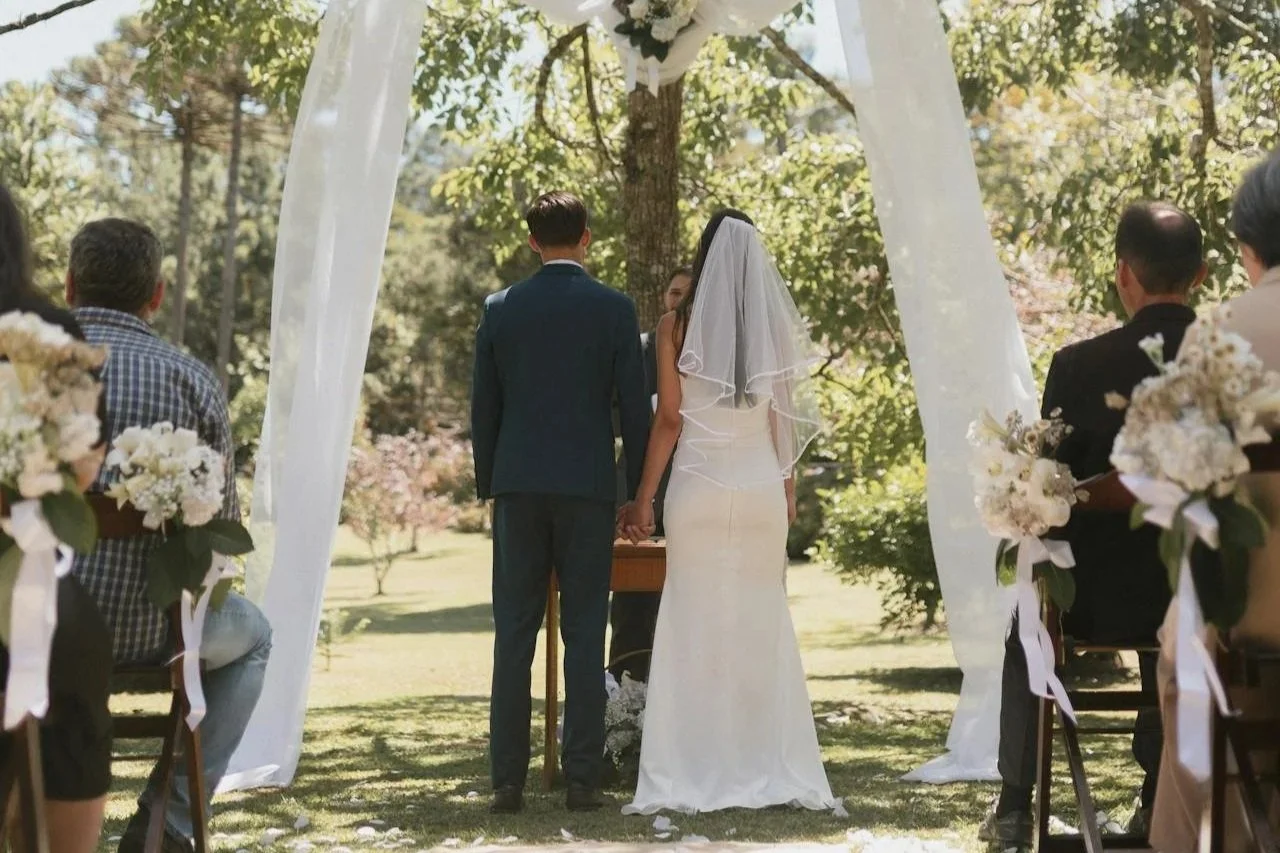
How to Include Family and Cultural Traditions in a Modern Wedding Ceremony
Summary
Learn how to include family, culture, and traditions in a modern wedding ceremony with meaningful ideas for readings, rituals, heirlooms, blended families, cultural customs, and Colorado weddings.
How do you include family, culture, or traditions in a modern wedding ceremony?
Include family, culture, or traditions by choosing rituals that feel emotionally honest, briefly explaining their meaning, assigning thoughtful roles to loved ones, and adapting inherited customs so they match your values. The strongest modern ceremonies honor where you come from without letting tradition overwhelm the couple’s story.
Frequently Asked Questions (FAQ)
How can we include family traditions in a wedding ceremony without making it too long?
Choose one or two traditions with the strongest emotional meaning, keep each moment brief, and ask the officiant to explain the ritual in a sentence or two. Family traditions work best when they support the ceremony rather than interrupt its rhythm.
What are meaningful ways to honor culture in a modern wedding ceremony?
Meaningful options include a cultural blessing, bilingual reading, family heirloom, music selection, tea ceremony, handfasting, chuppah, lasso ritual, ancestral acknowledgment, traditional garment, or a family member’s spoken blessing. The right choice depends on what the tradition means to the couple and their families.
Can a wedding ceremony include traditions from two cultures?
Yes. A wedding ceremony can include traditions from two cultures when each element has a clear purpose and enough room to be understood. Many couples use one tradition near the opening and another near the vows or ring exchange so the ceremony feels balanced.
How do you modernize old wedding traditions?
Modernize old wedding traditions by preserving the emotional meaning while changing outdated language or structure. For example, instead of “giving away” a bride, both families can offer a blessing of support for the couple’s marriage.
Should family members speak during the wedding ceremony?
Family members can speak during the ceremony if the role feels natural and the reading or blessing is concise. A ceremony usually feels stronger with one or two carefully chosen family voices rather than many speakers.
How do you include a deceased loved one in a wedding ceremony?
A deceased loved one can be honored through a brief remembrance, reserved seat, heirloom, flower, piece of music, candle, program note, or private family moment. The ceremony mention should be tender but not so long that it changes the emotional center of the day.
Can cultural wedding traditions be included in a non-religious ceremony?
Yes. Many cultural traditions can be included in a non-religious ceremony, especially when the couple understands the tradition’s meaning and adapts it respectfully. Some rituals are cultural, some are religious, and some are both, so it is wise to ask family members or cultural leaders for guidance.
What should we do if our families disagree about wedding traditions?
Listen to the meaning behind each request, then decide as a couple which traditions fit your ceremony. You can honor some family customs at the rehearsal dinner, reception, or private family gathering if they do not belong in the ceremony itself.
Key Topics
how to include family in wedding ceremony
cultural wedding ceremony ideas
modern wedding ceremony traditions
family traditions wedding ceremony
how to honor culture in wedding ceremony
multicultural wedding ceremony ideas
blended family wedding ceremony ideas
non religious wedding ceremony traditions
wedding ceremony rituals
meaningful wedding ceremony ideas
Colorado wedding officiant
Denver wedding officiant
Boulder wedding officiant
Golden wedding officiant
Colorado elopement ceremony
personal wedding ceremony ideas
wedding ceremony readings family
wedding ceremony unity rituals
how to personalize a wedding ceremony
family blessing wedding ceremony
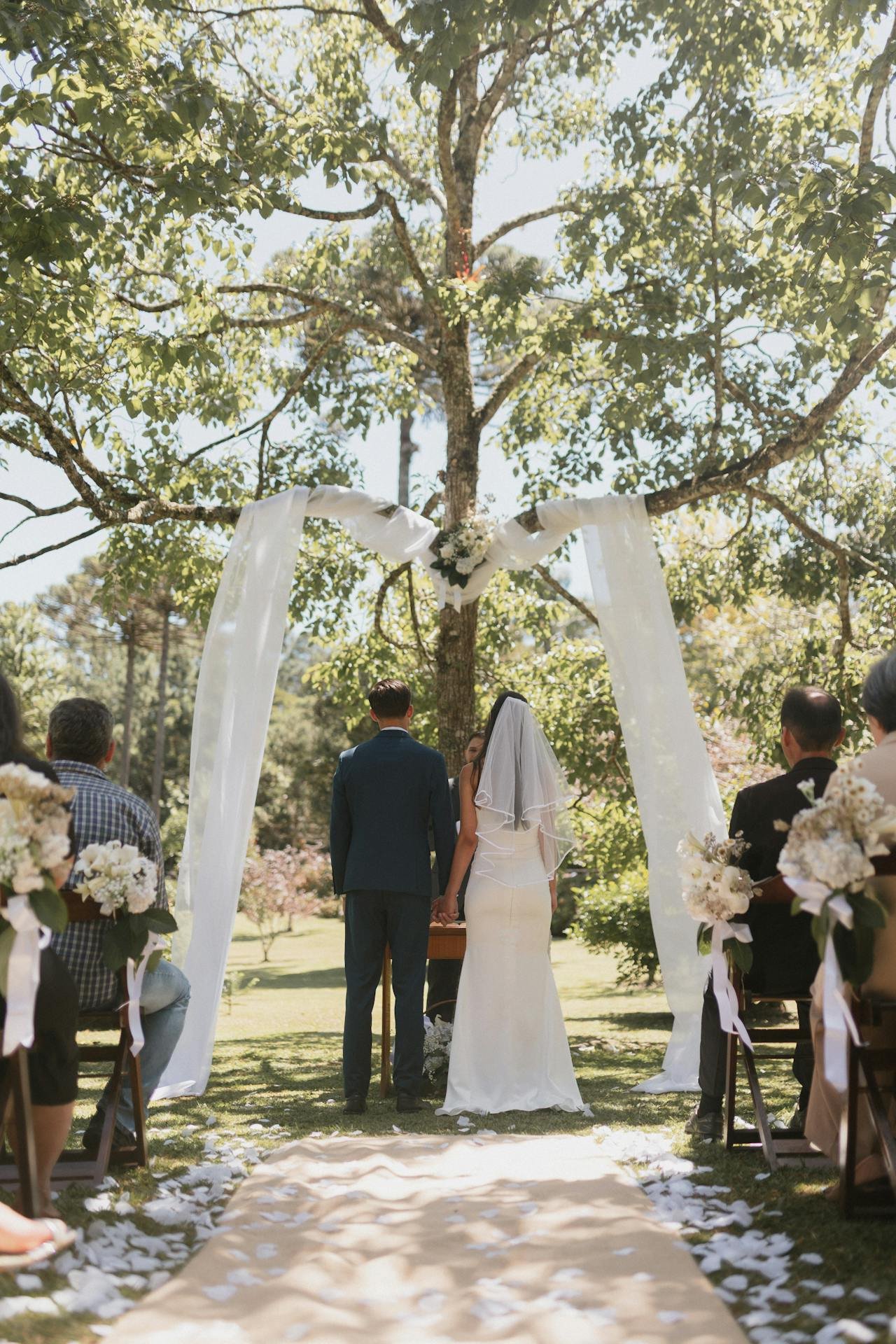
Denver Wedding Officiant / Photo: Alexander Mass
How Modern Weddings Are Reshaping Traditions
A modern wedding ceremony does not have to be stripped bare to feel current. In fact, the most memorable ceremonies often do the opposite. They keep the room simple enough for the couple to be seen, then allow a few carefully chosen traditions to bring the past into the present. For many couples, the old template no longer works. The father does not always “give away” the bride. The ceremony may be non-religious, interfaith, spiritual but not doctrinal, bilingual, same-sex, blended-family-centered, or intentionally small. A couple may want their grandmother’s blessing but not the full church service. They may want a tea ceremony, a chuppah, a lasso, a handfasting cord, a jump-the-broom ritual, a reading from a poet, or a quiet moment of remembrance for someone who is missing.
The question is no longer, “Which traditions are required?” The better question is, “Which traditions still carry truth?”
That distinction matters. A wedding ceremony should not become a museum of inherited gestures. It should not feel like an obligation quietly dressed as reverence. The right tradition has breath in it. It tells the guests something about the couple, their families, their history, or the promises being made. For couples planning a ceremony with a Denver wedding officiant, a Golden wedding officiant, a Boulder wedding officiant, or a more intimate Colorado elopement ceremony, the goal is not to make the ceremony more complicated. The goal is to make it more legible: to yourselves, to your families, and to the people who have gathered to witness you.
Table of Contents
Why modern weddings are returning to meaning
Start with the question beneath the tradition
How to include family without handing over the ceremony
Cultural traditions: honor without performance
Blending two families, faiths, or backgrounds
Modern ceremony ideas that feel natural
What to say when families disagree
Colorado ceremony considerations
How an officiant helps hold it all together
Related articles
How to Include Family Without Handing Over the Ceremony
Family involvement is one of the easiest ways to make a wedding ceremony feel warm. It is also one of the easiest ways to lose the shape of the ceremony if every loved one needs a visible role. Not every family member needs a microphone. Some roles are spoken; others are symbolic, logistical, or private.
Processional Roles
The processional is often the cleanest place to honor family structure. A parent, sibling, grandparent, child, close friend, or chosen-family member can escort one or both partners. In blended families, it can be moving to include a step-parent or to split the aisle into two meaningful segments. Modern options include:
Both partners walking in with both parents.
Each partner walking alone, then meeting halfway.
The couple entering together.
Children leading the processional.
Grandparents entering just before the wedding party.
A chosen-family member escorting a partner when biological family is absent or complicated.
The key is to choose an entrance that reflects reality, not etiquette theater.
Readings and Blessings
A family reading can work beautifully when it is short and specific. Avoid assigning a reading simply because someone “should” be included. Choose someone who can hold the moment without rushing, improvising, apologizing, or turning the reading into a toast. Good reading choices include:
A poem connected to place, memory, or family history.
A short passage from a spiritual or philosophical text.
A blessing from a parent or grandparent.
A few lines from a letter, song, or book that has meaning for the couple.
A bilingual reading with one section in each language.
If the family member is nervous, the officiant can introduce the reading with enough context that the person does not feel responsible for explaining everything.
Family Vows or Community Promises
A family vow can be especially meaningful when children are involved or when the couple wants the room to feel like an active witness rather than a passive audience. For example, the wedding officiant might ask the families: “Will you support this marriage with patience, generosity, and care, not only today, but in the ordinary days that follow?” The families respond: “We will.” This works because it is brief. It gives the room a role without making the ceremony feel forced or participatory.
Heirlooms and Objects
Objects can carry family meaning without adding time to the ceremony. A ring box, handkerchief, pin, veil, watch, cufflinks, prayer book, rosary, tallit, piece of fabric, or family letter can be present without being heavily explained. If an heirloom has a strong story, the officiant can name it in one sentence. That is usually enough. The object does not need a biography. Its presence is the point.
Cultural Traditions: Honor Without Performance
Cultural traditions deserve more than decorative use. They carry history, language, memory, and sometimes religious or communal responsibility. When couples include them well, the ceremony gains depth. When they include them carelessly, the moment can feel borrowed rather than lived. The first rule is simple: do not include a tradition only because it photographs well. A ritual should relate to the couple, their families, their heritage, or the life they are building. It does not have to be practiced perfectly in its most formal form, but it should be treated seriously.
Ask the Elders, Then Edit for the Ceremony
Family members can be invaluable sources of context. Ask parents, grandparents, aunts, uncles, clergy, cultural leaders, or family friends:
What does this tradition mean?
Who usually participates?
Is there language that should be used?
Is there anything we should avoid changing?
Can this be adapted for a shorter or non-religious ceremony?
Would it be better suited for the reception, rehearsal dinner, or private family gathering?
The answers may surprise you. A ritual you thought was mandatory may be flexible. Another may have a sacred structure that should not be casually rearranged.
Explain Just Enough
Guests do not need a lecture, but they do need a doorway. If a ceremony includes a cultural ritual unfamiliar to some guests, the officiant can offer a brief explanation before it begins. For example:
“In a moment, their families will offer a blessing that has been part of family celebrations for generations. Today, it serves as both a welcome and a promise: that this marriage is held not only by two people, but by the community around them.”
That is enough. The explanation should illuminate the moment without flattening it.
Protect the Ritual from Becoming a Prop
Some traditions need space. A tea ceremony, for example, may not fit neatly inside a 20-minute Western-style ceremony unless it is intentionally adapted. The same is true for rituals involving multiple family members, repeated blessings, music, circling, candles, cords, coins, garments, or shared food and drink. A thoughtful wedding officiant will ask practical questions:
Where will people stand?
Who brings the objects forward?
Does the photographer know when the ritual is happening?
Does the venue allow candles, incense, alcohol, glass, rice, petals, or open flame?
Is amplification needed?
Will wind, altitude, cold, or uneven ground affect the ritual?
Does the ritual require a table, chair, covering, or private preparation?
Meaning is emotional, but ceremony is physical. The body has to know where to go.
Quick Summary List: What Couples Should Remember
Choose traditions that still feel meaningful, not merely expected.
Ask family members what a custom means before including it.
Keep ceremony rituals brief, visible, and easy for guests to understand.
Use readings, music, language, heirlooms, blessings, or procession choices to honor heritage.
Blend two cultures by giving each tradition space instead of forcing them into one generic ritual.
Work with a wedding officiant who can explain the moment with care and restraint.
Let the ceremony sound like you, even when it includes something old.
Blending Two Families, Faiths, or Backgrounds
Many couples are not choosing between tradition and modernity. They are choosing how to hold multiple inheritances at the same time. A wedding might include Jewish and Mexican traditions, Catholic family expectations, and a secular ceremony; Indian and Western attire; Filipino sponsors; Persian poetry; Chinese tea; Celtic handfasting; African American ancestral customs; or a simple mountain elopement followed by a large family celebration later. The mistake is trying to make every tradition equivalent in length, tone, and placement. Equal respect does not always mean equal minutes. A better approach is to give each tradition a clear purpose. One family tradition might belong at the beginning as a welcome. Another might belong near the vows as a symbol of commitment. A third might be better at the reception, where food, music, dance, and family storytelling have more room.
A Balanced Modern Ceremony Structure
Here is one possible structure for a multicultural or family-rich ceremony:
Processional with family roles
Opening words from the wedding officiant
Brief acknowledgment of families, ancestors, or place
Reading or blessing from one tradition
Couple’s story
Cultural ritual or unity moment
Vows
Ring exchange
Second brief blessing, poem, or family response
Pronouncement and recessional
This structure allows the ceremony to feel layered without becoming crowded.
When One Partner Has More Visible Traditions
Sometimes one partner comes from a background with many wedding customs, while the other comes from a family or culture with fewer formal rituals. That imbalance does not have to be a problem. The couple can balance the ceremony through tone rather than quantity. One partner’s culture may be represented through a ritual. The other’s may be represented through a reading, a family heirloom, music, vows, or the location itself. In Colorado, place often becomes part of the ceremony language. A foothills ceremony in Golden, a refined city ceremony in Denver, a mountain-view ceremony in Boulder, or a private elopement on a trail can carry meaning without competing with family tradition. Landscape can be part of the inheritance too: the place where the marriage begins.
Modern Ceremony Ideas That Feel Natural
The best modern traditions are not always new. Often, they are old ideas with the pressure removed.
A Family Blessing Without “Giving Away”
Instead of asking who gives someone away, the wedding officiant can ask: “Do your families offer their blessing and support as you enter this marriage freely and together?” This preserves the beauty of family blessing while removing the language of transfer.
A Moment of Remembrance
A remembrance can be spoken or silent. It should be brief and carefully placed. Too much detail can shift the emotional center of the ceremony away from the couple. A single sentence can be more powerful than a long memorial paragraph. Example: “We also hold close those who are not physically with us today, especially the loved ones whose presence is felt in the stories, gestures, and family resemblances gathered here.”
A Bilingual Welcome
A bilingual ceremony does not require translating every word. In fact, full translation can make a ceremony feel doubled rather than woven. Consider a bilingual welcome, a family blessing in one language, vows in two languages, or a short explanation printed in the program.
A Unity Ritual That Is Not Generic
Unity rituals work when they are specific. Instead of choosing a candle or sand ceremony because it is familiar, ask which image best represents your relationship. For Colorado couples, possibilities might include:
Blending soil from meaningful places.
Sharing water from a family home, mountain stream, or ceremonial vessel.
Tying a handfasting cord made from family fabric.
Signing a private letter to open on an anniversary.
Placing rings in an heirloom dish or box.
Inviting parents to warm the rings before the exchange.
The ritual should be simple enough that guests understand it as it happens.
Music as Family Memory
Music can carry culture without explanation. A processional song from a parent’s home country, a recessional song from a family celebration, a hymn played instrumentally, or a reception transition into a traditional dance can be more evocative than a long spoken section.
Food and Drink Outside the Ceremony
Some customs belong better at the reception. Bread, wine, tea, sweets, dessert tables, family recipes, late-night snacks, or ceremonial meals often need more space than the ceremony can give them. Moving a tradition out of the ceremony is not demoting it. Sometimes it allows the tradition to be experienced more fully.
What to Say When Families Disagree
Family disagreement often appears as etiquette advice, but underneath it is usually emotion. A parent may say, “This is how it is done,” when they mean, “I want our family to still matter.” A grandparent may resist a modern ceremony because the old structure helped them understand what was happening. The couple’s job is not to satisfy every expectation. It is to listen carefully, decide clearly, and communicate with kindness.
A useful script:
“We want the ceremony to honor our families, but we also need it to feel true to us. We are choosing a few traditions that carry the most meaning and adapting them so they fit the kind of ceremony we are creating.”
Another:
“We understand why that tradition matters. We are not including it in the ceremony, but we would like to honor that part of the family in another way.”
And when needed:
“We are keeping the ceremony simple. That will help the traditions we do include feel more intentional.”
Boundaries do not have to sound cold. They can sound composed.
Colorado Ceremony Considerations
Colorado gives couples unusual freedom in how they design a ceremony. That flexibility is one reason the state works so well for modern weddings, intimate ceremonies, and elopements. But freedom does not remove logistics. A cultural ritual that works beautifully in a ballroom may need to be adjusted on a windy overlook. A candle may not work outdoors. A long family processional may be difficult on a narrow trail. A fragile heirloom may not belong on a mountain pass. A bilingual ceremony may require stronger sound support than expected, especially outside.
For Denver weddings, the ceremony may need to fit the tempo of a polished venue, rooftop, private club, hotel, restaurant, art space, or urban garden. For Golden weddings, the foothills, Clear Creek, historic spaces, and mountain light can influence the ceremony’s tone. For Boulder weddings, couples often balance natural scenery with a refined, intimate guest experience. For Colorado elopements, the ceremony may be just the couple, the officiant, the photographer, and the weather. The place should shape the ritual. Not dominate it, not dilute it—shape it.
How a Wedding Officiant Helps Hold It All Together
A well-written wedding ceremony is not a pile of meaningful parts. It is a sequence. The wedding officiant’s job is to make that sequence feel natural. That means knowing when to explain, when to be quiet, when to slow the room down, and when to move the ceremony forward. It also means protecting the couple from two common extremes: a ceremony so minimal it feels thin, or one so full of additions that the couple disappears inside it. For couples including family, culture, or traditions, the wedding officiant should help with:
Ceremony structure and timing.
Tone and language.
Family-role decisions.
Ritual placement.
Transitions between traditions.
Inclusive wording.
Non-religious or interfaith adaptations.
Vow and reading placement.
Practical staging.
The emotional arc of the ceremony.
A modern ceremony can include old things. It can include sacred things. It can include humor, memory, family complexity, cultural specificity, and quiet elegance. What it cannot include is everything. The art is choosing.
Related Articles
From the Michael Moody Officiant wedding blog directory:
How to Personalize Your Wedding Ceremony Without Making It Awkward or Overlong
Preparing for Your Wedding Ceremony in Colorado: A Couple’s Guide
Common Wedding Ceremony Planning Challenges and How to Overcome Them
How to Get Married in Colorado: Marriage License Guide for 2026
Colorado Front Range Elopement Guide: Hiking-In Wedding Ceremonies and Scenic Trails
The directory includes ceremony planning articles, wedding-specific planning guidance, Front Range elopement content, and relationship-focused resources for couples planning meaningful Colorado ceremonies.
About the Author: Michael Moody, Wedding Officiant
Michael Moody is a Colorado wedding officiant serving Denver, Boulder, Golden, Larkspur, and mountain communities throughout the state. Since 2012, he has officiated more than 300 weddings, bringing a calm presence, thoughtful guidance, and emotionally grounded ceremony writing to couples seeking a meaningful experience. He also offers Colorado elopement ceremonies for couples who want something intimate, intentional, and beyond the boundaries of a traditional wedding day. His work is shaped by a lifelong interest in connection, reflection, and personal growth. Michael is the author of the self-improvement book Redefine Yourself: The Simple Guide to Happiness and host of The Elements of Being podcast. As a wedding officiant, he draws from that same foundation: the belief that our relationships, words, and everyday interactions help shape a life rooted in love, empathy, and purpose. Michael’s ceremony work has been recognized across Colorado. He is a 2023 WeddingWire Couples’ Choice Award winner in Denver, marking his eighth consecutive year receiving the honor. He was also named “Best Business of 2024, 2025, and 2026” by Three Best Rated and earned “The Best Wedding Officiant in Commerce City, Colorado for 2024” from Quality Business Awards USA.
Beyond weddings, Michael and his wife, Sammy, have sponsored an annual student scholarship for more than 10 years. They also founded Civic Growth Alliance, a 501(c)(4) nonprofit dedicated to strengthening communities through civic advocacy, resident engagement, strategic partnerships, public safety initiatives, neighborhood vitality, and community well-being.
Wedding locations: Michael officiates wedding ceremonies in the Denver neighborhoods of LoDo, River North, Washington Park, Cherry Creek, City Park, Central Park, Capitol Hill, Cheesman Park, Park Hill, Lower Highlands, and Sloan Lake. Michael also serves as an ordained minister in Larkspur, Littleton, Golden, Boulder, Breckenridge, Frisco, Aspen, Vail, Estes Park, and more. If your Denver neighborhood or Colorado town isn’t listed here, no worries! Please contact Michael to propose a wedding ceremony location in a different area!
Wedding Planning Tips
Michael Moody is a Colorado wedding officiant serving couples in Denver, Boulder, Golden, and scenic elopement locations throughout the Front Range and beyond. His ceremonies are written with care for the couple’s story, family context, cultural traditions, and emotional tone of the day—whether the setting is a refined Denver venue, a foothills ceremony in Golden, a Boulder celebration with mountain views, or an intimate Colorado elopement ceremony shaped by place, privacy, and meaning.
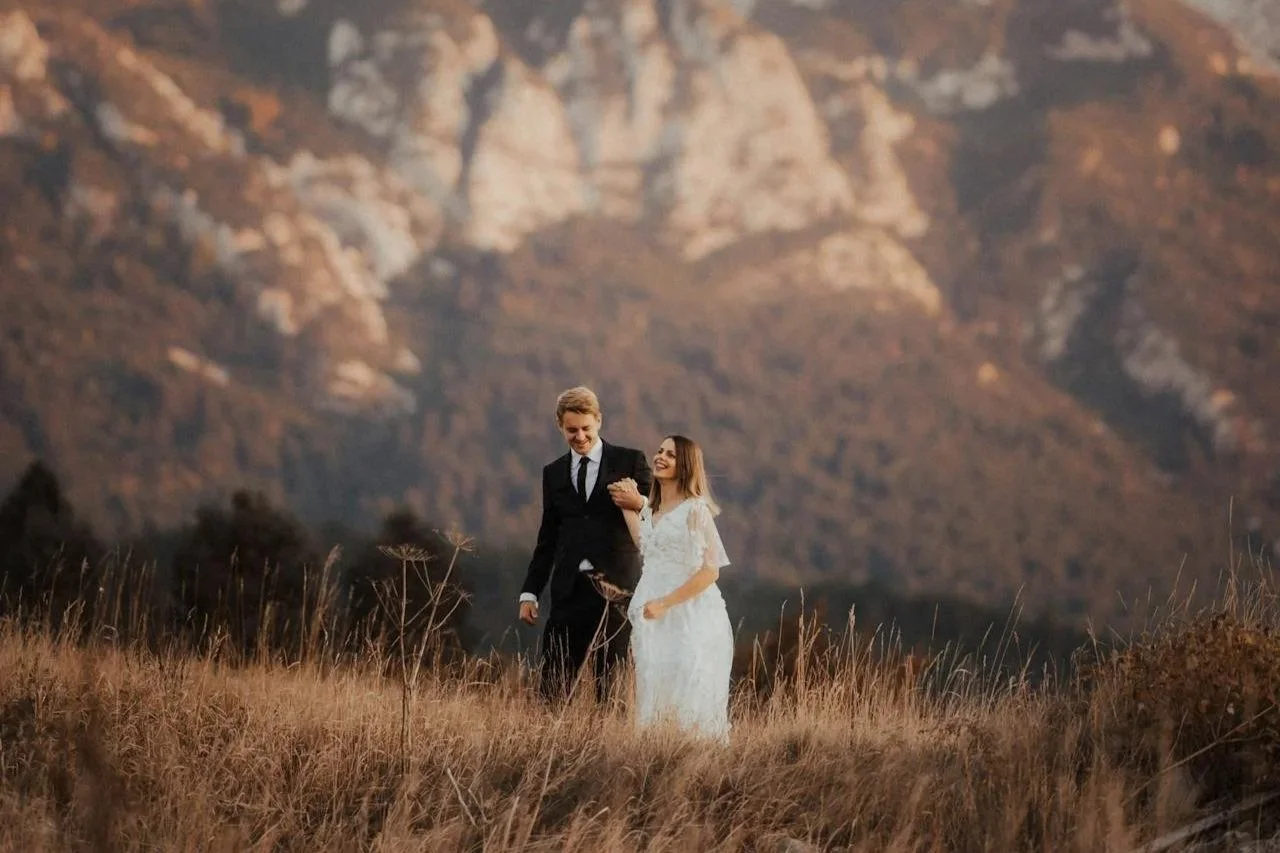
How to Elope in Colorado: Ceremony Guide for Intimate Mountain Weddings
Summary
Plan a Colorado elopement ceremony with confidence. Learn about marriage licenses, self-solemnization, permits, locations, weather, guests, vows, and wedding officiant support in Denver, Golden, Boulder, and across Colorado.
What do couples need to know before planning a Colorado elopement ceremony?
Couples planning a Colorado elopement need to confirm marriage license timing, ceremony location rules, permits, weather, access, guest count, photography logistics, and Leave No Trace expectations. Colorado also allows self-solemnization, but many couples still hire an officiant to create a personal, polished ceremony.
Frequently Asked Questions (FAQ)
Can you legally elope in Colorado?
Yes. Couples can legally elope in Colorado after obtaining a Colorado marriage license, signing it within the valid 35-day window, and returning it for recording. Colorado also allows self-solemnization, meaning couples may solemnize their own marriage.
Do we need witnesses for a Colorado elopement?
Colorado does not require witnesses as many other states do. Couples can self-solemnize or have an authorized wedding officiant perform the ceremony. Always follow the instructions from the county clerk who issues your license.
Do we need a wedding officiant if Colorado allows self-solemnization?
Not legally in every case, but many couples still hire a wedding officiant because they want a guided, meaningful, well-paced ceremony. Self-solemnization handles the legal side. A thoughtful officiant helps create the emotional architecture of the moment.
Do Colorado elopements require permits?
Sometimes. It depends on the location, land manager, guest count, setup, and whether professional vendors are involved. Rocky Mountain National Park requires a Special Use Permit for ceremonies, while Colorado state parks may require a special activity agreement or photography permit, depending on the park.
Where are the best places to elope near Denver?
Strong options near Denver include foothill overlooks, Golden-area trails, Boulder open space, private venues, gardens, and mountain towns within a one- to two-hour drive. The best location depends on privacy, access, season, guest count, and permit rules.
Is Boulder good for an elopement ceremony?
Yes. Boulder is one of Colorado’s strongest elopement areas for couples who want mountain views, trails, and easy access to restaurants and lodging. Couples should check open space rules, parking, trail conditions, and ceremony restrictions before choosing a specific site.
Is Golden good for an elopement ceremony?
Yes. Golden works well for couples who want foothill scenery, Clear Creek, Lookout Mountain, mesa views, and a town setting that feels rural but is still close to Denver. It is especially useful for couples hosting a small dinner afterward.
What should we include in our elopement ceremony?
Include a welcome, a brief reflection on your relationship, vows, rings, any reading or ritual that genuinely fits, and a closing pronouncement or self-solemnization. Keep the structure simple, but make the language personal.
What is the best season for a Colorado elopement?
Late spring through fall is popular, but each season has its own trade-offs. Summer offers access to higher elevations but can bring crowds and storms. Fall brings color and cooler weather. Winter can be quiet and beautiful, but requires serious planning for snow, wind, road conditions, and warmth.
How many guests should we invite to a Colorado elopement?
Many Colorado elopements work best with no guests or a very small group of 2–10 loved ones. Larger groups may require more formal planning, safer access, more parking, and additional permits.
Key Topics
Colorado elopement ceremony guide
Colorado elopement ceremony
Colorado elopement officiant
Colorado elopement wedding
how to elope in Colorado
Colorado elopement packages
Denver elopement officiant
Boulder elopement officiant
Golden Colorado elopement
Colorado mountain elopement ceremony
Colorado self solemnization
Colorado marriage license elopement
Colorado elopement permits
Rocky Mountain National Park elopement permit
intimate Colorado wedding ceremony
Colorado micro wedding officiant
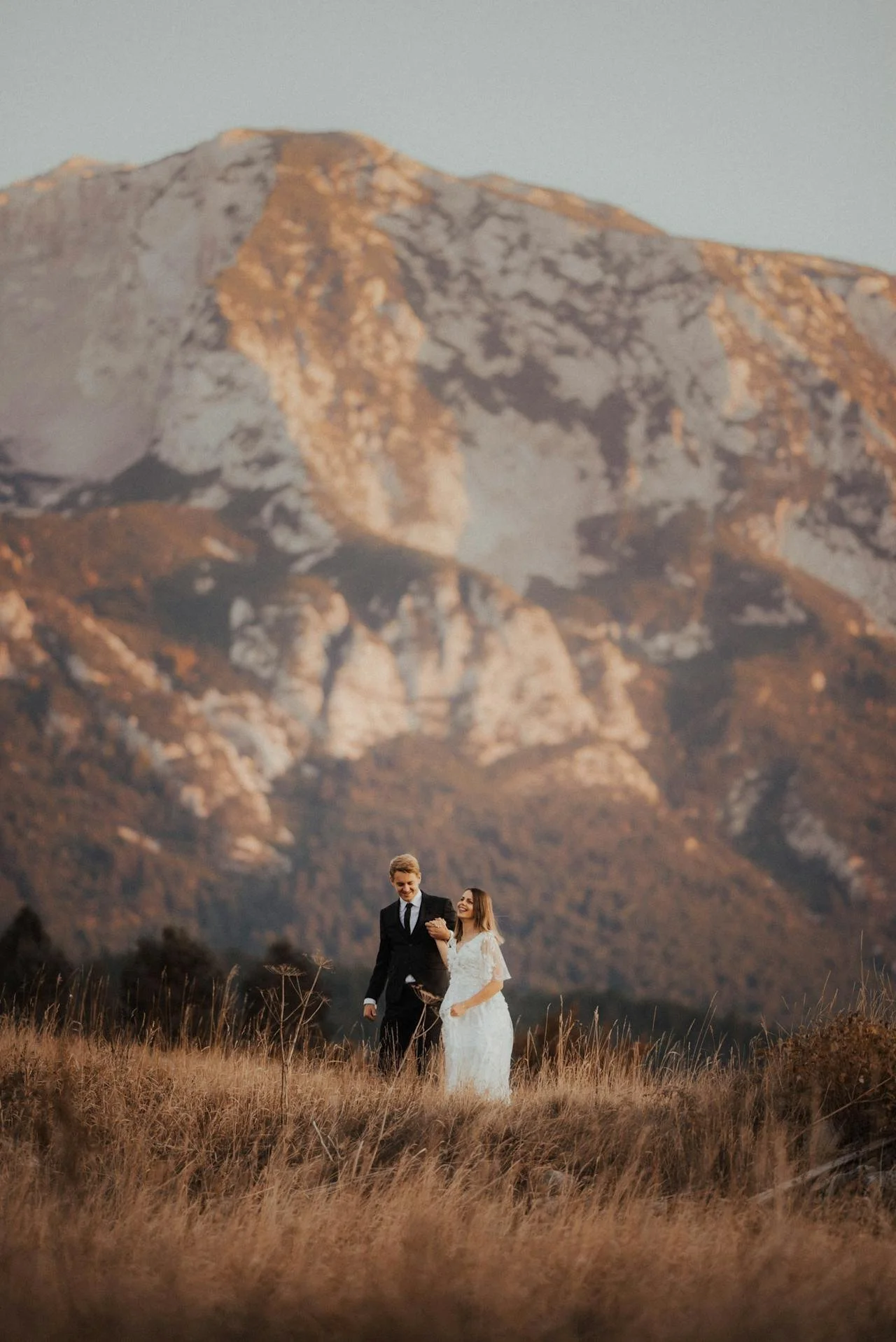
Elopement Ceremonies in Colorado / Photo: Sandro Crepulja
Why Colorado Elopements Feel Different
A Colorado elopement is not simply a smaller wedding. At its best, it is a ceremony with fewer distractions, more intention, and a setting that does part of the emotional work before a single word is spoken. That is why couples are drawn to the state’s mountain passes, red rock parks, alpine lakes, foothill trails, historic towns, and quiet overlooks. Colorado gives couples permission to strip away the parts of a wedding that never felt like them in the first place. There may be no aisle. There may be no seating chart. There may be no reception timeline built around other people’s expectations.
Instead, there is a place, a promise, and enough space to actually feel the moment.
Recent wedding research supports the shift toward more intentional celebrations. The Knot Worldwide’s 2025 Global Wedding Report found that couples are prioritizing personalization, purpose, and guest experience, based on insights from more than 33,000 couples married in 2024. Zola’s 2025 First Look Report, based on data from nearly 6,000 couples planning 2025 weddings, also points to wedding choices shaped by personal priorities rather than rigid tradition. For Colorado couples, that often means choosing a ceremony that feels intimate without feeling casual, scenic without feeling staged, and personal without becoming overly sentimental. That balance matters. A luxury elopement is not defined by how much you spend.
It is defined by how carefully the day is composed.
Table of Contents
Why Colorado Elopements Feel Different
What Counts as an Elopement in Colorado?
Colorado Marriage License Basics
Do You Need an Officiant for a Colorado Elopement?
How to Choose the Right Elopement Location
Permits, Public Lands, and Ceremony Rules
Best Colorado Elopement Ceremony Styles
What to Include in the Ceremony
Weather, Altitude, and Seasonal Planning
Guest Count: Just Us or a Few Loved Ones?
Photography, Timing, and the Feel of the Day
A Practical Colorado Elopement Planning Checklist
Local Ceremony Support in Denver, Golden, Boulder, and Beyond
Related Articles
What Counts as an Elopement in Colorado?
An elopement used to mean running away in secret. That definition is too narrow now. Today, a Colorado elopement can be:
A private vow exchange on a trail near Boulder.
A two-person ceremony at sunrise in Rocky Mountain National Park.
A small family gathering in Golden before dinner downtown.
A mountain ceremony near Breckenridge, Vail, Aspen, or Telluride.
A legal signing with meaningful vows and portraits afterward.
A planned micro-wedding with 6–20 guests and no formal reception.
The common thread is not secrecy. It is intimacy.
A Colorado elopement usually works best when the ceremony is the center of the day, not a formality squeezed between photography and dinner. That is especially important for couples hiring a professional officiant. The words spoken in that setting should feel worthy of the landscape, but still sound like the couple. For couples who want a ceremony crafted with that kind of attention, Michael Moody offers Colorado elopement ceremonies for those drawn to intimate, personal, outdoor celebrations across the state.
Colorado Marriage License Basics
Colorado is one of the most flexible states for getting legally married, which makes it especially attractive for elopements. A marriage license can be purchased through a Colorado county clerk and recorder. Jefferson County states that marriage and civil union licenses cost $30, may be used immediately within Colorado, and are valid for 35 days from the date of issue. Denver also notes that a license must be signed in Colorado within 35 days and returned for recording within 63 days of the marriage to avoid extra fees.
That timing matters for elopements because many couples travel to Colorado from another state. Do not get the license too early. Do not leave the return step as an afterthought. Build the legal paperwork into your itinerary with the same seriousness you give the ceremony location. Colorado law also allows couples to solemnize their own marriage. The statute states that a marriage may be solemnized by several authorized parties, including “the parties to the marriage.” In plain terms: you can marry yourselves in Colorado. That does not mean every couple should skip a wedding officiant. It only means Colorado gives you options.
Do You Need a Wedding Officiant for a Colorado Elopement?
Legally, not always. Emotionally and ceremonially, many couples still want one. Colorado self-solemnization is useful for couples who want a private vow exchange without anyone else present. It can be beautiful. It can also feel surprisingly abrupt if you are standing in an extraordinary place with no one to hold the moment's structure. A strong elopement wedding officiant does more than pronounce you married. The wedding officiant can:
Shape the ceremony around your relationship.
Give the moment a calm beginning, middle, and ending.
Help vows feel integrated rather than awkwardly inserted.
Create breathing room so the ceremony does not feel rushed.
Bring a polished presence to an outdoor setting.
Guide family or guests if a few people are attending.
Honor the tone you want: romantic, grounded, spiritual, secular, humorous, reflective, or understated.
Create an unforgettable, unique experience that takes all of the planning out of your hands.
This is especially important for couples who want an intimate ceremony but not an improvised one. A private ceremony can still feel refined. A mountain ceremony can still have elegance. A simple elopement can still carry emotional weight. Couples planning a Front Range ceremony can explore Denver wedding officiant services, Golden wedding officiant services, and Boulder wedding officiant services, depending on where the day begins.
Quick Summary List: What Couples Should Remember
Colorado allows self-solemnization, but an officiant can make the ceremony feel more personal and complete.
Marriage licenses are valid for 35 days and must be signed in Colorado.
Many public outdoor locations require permits or special activity agreements.
Rocky Mountain National Park requires a Special Use Permit for wedding and elopement ceremonies.
State park rules vary by park; check the specific location.
Guest count affects permits, parking, access, and privacy.
Weather, altitude, and road conditions should shape the timeline.
Keep the ceremony simple, specific, and emotionally grounded.
Follow Leave No Trace principles at every outdoor site.
Build the day around how it should feel, not just how it should photograph.
How to Choose the Right Elopement Location
Location is the decision that shapes almost every other decision. Do not start with the most photographed place on Instagram. Start with the experience you want to have. Ask these questions first:
Do we want mountains, red rocks, forest, water, city views, or foothills?
Are we comfortable hiking in wedding clothes?
Do we want privacy, or are we comfortable with people nearby?
Will guests attend?
Does anyone have mobility limitations?
Are we planning sunrise, sunset, midday, or winter conditions?
Do we need a backup location?
Is the location legal for a ceremony?
Will professional photography require a separate permit?
A scenic place is not always a good ceremony place. Some trails are too narrow. Some overlooks are too crowded. Some alpine spots are fragile. Some locations look peaceful in photos but feel chaotic in person because of parking, wind, road closures, tourists, or timed-entry rules. For couples who want beauty without unnecessary complications, the Front Range can be an excellent place to begin. Denver offers urban gardens, historic architecture, and nearby foothill access. Golden brings Clear Creek, Lookout Mountain, tablelands, and a warm small-town feel. Boulder offers iconic Flatirons views, Chautauqua access, and trail-based ceremony possibilities.
Permits, Public Lands, and Ceremony Rules
Permits are one of the easiest parts of elopement planning to underestimate. Public lands are not interchangeable. A city open space, state park, national park, county park, and national forest may all have different rules. Guest count, chairs, arches, amplified sound, photography, parking, flowers, pets, and commercial vendor activity may be regulated. Rocky Mountain National Park, for example, requires a Special Use Permit for weddings, elopements, vow renewals, and other ceremonies. The National Park Service states that permits are issued for designated ceremony locations, with limits on groups and vehicles. Colorado Parks and Wildlife also notes that weddings or events in state parks may require a special activity agreement and/or permit, and professional portrait photography may require a photography permit, depending on the specific park.
The safest approach is simple: decide who manages permit research before you fall in love with a location. That person may be your planner, photographer, officiant, or you as a couple. What matters is that someone checks the current rules directly with the managing agency. Do not rely on old blog posts, social media captions, or assumptions from another couple’s wedding. Permit rules change.
Best Colorado Elopement Ceremony Styles
The best ceremony style depends on the couple, the setting, and the emotional tone of the day.
The private vow ceremony
This is the most intimate option. It may be just the couple, an officiant, and a photographer. It works well for sunrise mountain settings, quiet overlooks, and couples who want the ceremony to feel protected from outside attention.
The family micro-ceremony
This format includes a small number of parents, siblings, or close friends. It works best when the location has easy access, predictable parking, and enough physical space for guests to stand comfortably.
The hiking elopement
A hiking elopement can be extraordinary, but it requires honesty. Wedding clothes, altitude, trail conditions, mud, wind, snow, and changing light can all affect the experience. Choose a trail because it matches your actual comfort level, not because it looks dramatic in a gallery.
The two-part ceremony day
Some couples exchange private vows in nature, then hold a short legal or family ceremony later. This works well when couples want privacy and family inclusion without forcing one moment to do everything.The city-to-mountain elopement
This is a strong option for couples in Denver, Golden, or Boulder. You can begin with getting ready photos at a boutique hotel, hold a ceremony near the foothills, and finish with dinner at a favorite restaurant. The day feels elevated without becoming overproduced.
What to Include in the Elopement Ceremony
An elopement ceremony should not feel like a shortened version of a traditional wedding script. It needs its own rhythm. A strong structure might include:
A brief welcome that names the place and the purpose of the day.
A few words about why this ceremony fits the couple.
A personal story or reflection.
A reading, if it genuinely belongs.
Private or public vows.
Ring exchange.
A closing reflection.
Pronouncement or self-solemnization language.
A quiet pause before portraits begin.
That pause is underrated.
Many couples move too quickly from the ceremony into the photography session. Give yourselves one minute after the final words. Stand there. Breathe. Look around. Let the place become part of the memory. For vows, keep them specific. “You are my best friend” is fine, but it will not carry the same force as naming the ordinary life you have built together: the Sunday coffee, the long drives, the way one of you steadies the other before hard conversations, the private jokes no one else will understand. Colorado elopements reward specificity. The landscape is already grand. The words do not need to compete with it.
Weather, Altitude, and Seasonal Planning
Colorado weather is not background detail. It is part of the plan. A bluebird morning can become a windy afternoon. Mountain storms can build quickly. Snow can linger on shaded trails long after Denver feels like spring. High-elevation roads may have seasonal closures. Wildfire smoke can affect views. Summer weekends can bring crowds. Winter can bring privacy, but also ice, road delays, and temperature swings.
Build a ceremony plan around the least glamorous details:
Where will you park?
Is there cell service?
Is there a restroom?
What happens if the trailhead is full?
What if it is too windy to hear vows?
Can older guests safely reach the location?
Is there a backup indoor or sheltered option?
Are dogs allowed?
Are flowers, confetti, rugs, arches, or chairs permitted?
Altitude deserves special attention for out-of-state couples. A ceremony at 9,000 or 10,000 feet can feel different from a ceremony in Denver. Drink water, eat real food, allow extra time, and avoid packing too many location changes into the day. The goal is not to control the outdoors. The goal is to plan with enough care that the outdoors does not control the entire experience.
Guest Count: Just Us or a Few Loved Ones?
Guest count is one of the most important elopement decisions. A “just us” ceremony gives you privacy and flexibility. You can move more easily, choose more remote locations, and keep the emotional focus completely on the two of you. A small guest ceremony gives you a shared memory. Parents, children, siblings, or closest friends can witness the moment. That can be deeply meaningful, especially if the ceremony is followed by dinner, champagne, cake, or a relaxed gathering nearby.
The tradeoff is logistics. Guests change the location requirements. You need more parking, clearer directions, safer terrain, and more predictable timing. You also need to consider whether the ceremony will feel intimate with people watching and determine if they have the fitness to complete the trek on a trail. For many couples, the sweet spot is 0–10 guests. That number keeps the day flexible while allowing the people closest to you to be present.
Photography, Timing, and the Feel of the Day
The best elopement days are planned around feeling first and photography second. That does not mean photography is unimportant. It means the images should document a day that actually felt good to live. Sunrise can offer privacy, softer light, and calmer public spaces. Sunset can feel romantic, but it may be busier in popular locations. Midday can work beautifully in winter or shaded areas, though summer sun may be harsh at exposed sites.
Talk with your photographer and wedding officiant about the ceremony timing together. A five-minute timing mismatch can matter if you are working around alpenglow, trail access, weather, or park rules. Also consider what happens after the ceremony. Many couples plan portraits, then dinner. Others include a picnic, private chef, first dance, letters from family, a short hike, or a toast back at their lodging. Luxury is often found in pacing. Do not cram the day so tightly that there is no room to feel it.
A Practical Colorado Elopement Planning Checklist
Use this as a working checklist, not a rigid template.
Three to nine months before
Choose your general Colorado region.
Decide whether guests will attend.
Hire your wedding officiant, photographer, and planner if using one.
Research permit requirements.
Choose lodging close to the ceremony area.
Build a weather-aware Plan B.
One to three months before
Confirm the ceremony location and access rules.
Apply for permits if required.
Finalize ceremony style and tone.
Begin writing vows.
Confirm travel, hair and makeup, attire, florals, and dinner plans.
Check whether professional photography permits are needed.
One to four weeks before
Get your Colorado marriage license within the valid timing window.
Confirm driving times and parking.
Review weather and trail conditions.
Print or save offline maps.
Pack layers, water, snacks, vow books, rings, marriage license, and comfortable shoes.
The day of
Leave earlier than you think you need to.
Keep the ceremony site simple.
Follow all permit and Leave No Trace rules.
Take a quiet moment after the ceremony.
Sign the license correctly.
Return the completed license within the required window.
Leave No Trace principles should guide every outdoor ceremony. The Colorado Leave No Trace state page highlights ongoing training, hot spots, and stewardship efforts in Colorado, serving as a reminder that popular outdoor places need care from everyone who uses them. For elopements, that means staying on durable surfaces, packing out everything, avoiding confetti, respecting wildlife, keeping guest counts appropriate, and choosing locations that can handle the impact of a ceremony.
Local Ceremony Support in Denver, Golden, Boulder, and Beyond
A Colorado elopement can happen almost anywhere, but local knowledge makes the day smoother. For couples beginning in the city, Denver wedding officiant services work well for ceremonies that blend refined urban settings with foothill access. Denver can be ideal for couples who want strong lodging, dining, transportation, and vendor options without giving up mountain views. For couples drawn to foothills, creeks, mesas, and small-town character, Golden wedding officiant services offer a natural fit. Golden can feel close to Denver while still giving couples a strong sense of place. For couples who want Flatirons views, open space, trails, and a relaxed but elevated ceremony atmosphere, Boulder wedding officiant services are a strong match.
For couples planning beyond the Front Range, Colorado elopement ceremonies can support intimate ceremonies in mountain towns and scenic destinations across the state. Michael Moody offers personal wedding ceremonies and Colorado elopement ceremonies for couples in Denver, Boulder, Golden, and throughout Colorado, with ceremonies shaped around warmth, composure, language, and genuine connection. That matters for elopements because the ceremony cannot hide behind a large production. The words, pacing, tone, and presence carry the moment.
Related Articles
From the Michael Moody Officiant wedding blog directory:
How to Get Married in Colorado: Marriage License Guide for 2026
Colorado Front Range Elopement Guide: Hiking-In Wedding Ceremonies and Scenic Trails
Colorado Elopement Hikes Near Denver: North Table Mountain West Loop
Spring Wedding Guide for Golden, Colorado: Venues, Permits, and Planning Tips
Boulder Wedding Ceremony Venues for Intimate and Scenic Weddings
The directory includes ceremony planning articles, wedding-specific planning guidance, Front Range elopement content, and relationship-focused resources for couples planning meaningful Colorado ceremonies.
About the Author: Michael Moody, Wedding Officiant
Michael Moody is a Colorado wedding officiant serving Denver, Boulder, Golden, Larkspur, and mountain communities throughout the state. Since 2012, he has officiated more than 300 weddings, bringing a calm presence, thoughtful guidance, and emotionally grounded ceremony writing to couples seeking a meaningful experience. He also offers Colorado elopement ceremonies for couples who want something intimate, intentional, and beyond the boundaries of a traditional wedding day. His work is shaped by a lifelong interest in connection, reflection, and personal growth. Michael is the author of the self-improvement book Redefine Yourself: The Simple Guide to Happiness and host of The Elements of Being podcast. As a wedding officiant, he draws from that same foundation: the belief that our relationships, words, and everyday interactions help shape a life rooted in love, empathy, and purpose. Michael’s ceremony work has been recognized across Colorado. He is a 2023 WeddingWire Couples’ Choice Award winner in Denver, marking his eighth consecutive year receiving the honor. He was also named “Best Business of 2024, 2025, and 2026” by Three Best Rated and earned “The Best Wedding Officiant in Commerce City, Colorado for 2024” from Quality Business Awards USA.
Beyond weddings, Michael and his wife, Sammy, have sponsored an annual student scholarship for more than 10 years. They also founded Civic Growth Alliance, a 501(c)(4) nonprofit dedicated to strengthening communities through civic advocacy, resident engagement, strategic partnerships, public safety initiatives, neighborhood vitality, and community well-being.
Wedding locations: Michael officiates wedding ceremonies in the Denver neighborhoods of LoDo, River North, Washington Park, Cherry Creek, City Park, Central Park, Capitol Hill, Cheesman Park, Park Hill, Lower Highlands, and Sloan Lake. Michael also serves as an ordained minister in Larkspur, Littleton, Golden, Boulder, Breckenridge, Frisco, Aspen, Vail, Estes Park, and more. If your Denver neighborhood or Colorado town isn’t listed here, no worries! Please contact Michael to propose a wedding ceremony location in a different area!
Wedding Planning Tips
Michael Moody creates personal wedding ceremonies and Colorado elopement ceremonies for couples in Denver, Boulder, Golden, Larkspur, and throughout the Front Range. His ceremony work is built around thoughtful language, calm presence, and a genuine understanding of how wedding vows, setting, and story shape the emotional center of the day. Whether a couple is exchanging wedding vows in a Denver venue, near the Flatirons in Boulder, in the foothills around Golden, or during an intimate Colorado elopement, the ceremony is designed to feel personal, grounded, and unmistakably their own.
Wedding Vow Examples That Actually Sound Real
Summary
Write wedding vows that sound personal, honest, and natural. Explore real wedding vow examples, short vows, funny vows, modern vows, editing tips, and guidance from a Colorado wedding officiant serving Denver, Boulder, Golden, and elopements.
What are wedding vows that actually sound real?
Real wedding vows are specific, spoken in your natural voice, and built around honest promises rather than perfect poetry. The best vows usually include one true story, two or three grounded promises, a little emotional contrast, and language you would actually say out loud to your partner.
Frequently Asked Questions (FAQ)
What are good examples of wedding vows?
Good wedding vows include one personal memory, a few sincere promises, and language that sounds natural when spoken. The strongest examples are specific rather than generic. Instead of saying only “I love your kindness,” describe how your partner shows kindness in everyday life.
How do I write wedding vows that sound real?
Write the way you actually speak. Start with a real moment, name what you admire about your partner, and make promises you can realistically keep. Then read the vows aloud and remove any sentence that sounds too formal, vague, or unlike you.
How long should wedding vows be?
Most wedding vows work best at about one to two minutes per person. That usually equals 150 to 300 spoken words. Longer vows can still work, but they should be carefully edited so the ceremony keeps its emotional rhythm.
Are funny wedding vows okay?
Yes, funny wedding vows can be meaningful when the humor is affectionate and balanced with sincere promises. Avoid embarrassing your partner, sharing private conflict, or turning the vows into a comedy routine. One or two personal jokes can make vows feel warm and real.
Should we exchange private vows?
Private vows are a good option if you want to say something deeply personal without sharing every detail in front of guests. Many couples exchange private vows during a first look and use shorter public vows during the ceremony.
Can a wedding officiant help with vows?
Yes. A wedding officiant can help you shape your vows, decide how long they should be, choose between private and public vows, and make sure the vow exchange fits naturally into the ceremony.
What should I avoid in wedding vows?
Avoid clichés, overly dramatic language, inside jokes guests cannot follow, promises no one can keep, and copied examples that do not sound like your relationship. The best vows are honest, specific, and spoken in your own voice.
Key Topics
wedding vow examples
wedding vows that sound real
real wedding vow examples
personal wedding vows
how to write wedding vows
short wedding vow examples
modern wedding vows
funny wedding vows
emotional wedding vows
non-religious wedding vows
private wedding vows
Colorado wedding officiant vows
Denver wedding officiant vows
Boulder wedding officiant vows
Golden wedding officiant vows
Colorado elopement vows
Wedding Vows / Photo: nourabiad
Why Real-Sounding Wedding Vows Matter
There is a particular kind of wedding vow that sounds beautiful on paper and strangely hollow when spoken out loud. You have probably heard it before: sweeping language, forever-and-always phrasing, a few dramatic adjectives, and a promise to love someone through every sunrise and every storm. There is nothing technically wrong with it. It may even be sincere. But it could belong to almost anyone.
The vows that stay with people are different.
They sound like a person speaking to the person they love. They have breath in them. They have the uneven texture of real life: the first apartment, the mountain drive that went sideways, the way one person makes coffee, the private joke that somehow becomes a lifelong language. They are not trying to win the ceremony. They are trying to tell the truth. That matters even more now because couples are surrounded by vow templates, AI-generated examples, social-media captions, and polished wedding content. Zola’s 2025 wedding trends report, based on data from nearly 6,000 couples getting married in 2025, points to a planning culture in which couples are balancing inspiration, personalization, budget pressures, and digital tools. The Knot Worldwide’s 2025 Global Wedding Report also describes a shift toward intentionality, personalization, and authenticity across modern weddings.
That is exactly where wedding vows should live: not in performance, but in intention.
Whether you are planning a full wedding ceremony in Denver, a quiet celebration in Golden, a Boulder ceremony near the foothills, or a Colorado elopement in the mountains, your vows do not need to sound literary. They need to sound like you. For couples who want the whole ceremony to feel personal and grounded, Michael Moody offers Denver wedding officiant services, Boulder wedding officiant services, Golden wedding officiant services, and Colorado elopement ceremonies shaped around the couple’s story, tone, and setting.
Table of Contents
Why “Real-Sounding” Wedding Vows Matter
What Makes Vows Feel Authentic Instead of Generic?
A Simple Wedding Vow Formula That Works
Wedding Vow Examples That Actually Sound Real
Short Wedding Vow Examples
Funny Wedding Vows That Still Feel Meaningful
Emotional Wedding Vows Without Sounding Overwritten
Modern Wedding Vows for Non-Religious Ceremonies
Private Vows Versus Ceremony Vows
How to Edit Your Vows So They Sound Like You
Common Vow Mistakes to Avoid
Working With a Wedding Officiant on Your Vows
Related Articles
What Makes Vows Feel Authentic Instead of Generic?
Authentic vows usually have four qualities: specificity, proportion, voice, and promise.
Specificity means you are not just saying “you are kind.” You are showing what that kindness looks like. Maybe your partner warms up the car before an early appointment. Maybe they know when to make you laugh and when to sit quietly beside you. Maybe they remember the small things other people miss.
Proportion means you do not try to fit your entire relationship into two minutes. The Knot’s vow guidance includes a reminder from a professional officiant that vows over two minutes often need editing, especially because nerves and emotion can make them take longer during the ceremony. That is practical advice. A wedding ceremony already carries emotional weight. Your vows do not need to explain every chapter.
Voice means the words should sound natural when you say them out loud. If you would never say “my beloved” in real life, you probably do not need to say it in your vows. If you are funny together, let a little humor in. If you are quiet and understated, do not force drama.
Promise is the part that makes vows different from a love letter. A love letter says what you feel. A vow says what you will practice.
The most grounded vows often move like this:
This is what I have seen in you.
This is how loving you has changed me.
This is what I promise to keep choosing.
This is the life I want to build with you.
A Simple Wedding Vow Formula That Works
Use this structure if you are staring at a blank page:
Opening truth:
“Before I met you, I thought love would feel like ______. With you, it feels like ______.”
One specific memory:
“I still think about ______ because it showed me ______.”
What you admire:
“I love the way you ______.”
Three promises:
“I promise to ______. I promise to ______. I promise to ______.”
Closing line:
“I choose you today, and I will keep choosing you ______.”
That is enough. You can make it romantic, funny, spiritual, practical, poetic, or simple. But the bones are strong because they prevent the vows from drifting into vague emotion. Zola’s vow-writing guide similarly recommends using a structured process, starting early, and shaping vows with intention rather than improvising the entire thing under wedding-week pressure.
Wedding Vow Examples That Actually Sound Real
Use these examples as starting points, not scripts to copy. The goal is to hear the difference between vows that sound like a real person and vows that sound like a greeting card.
Example 1: Warm and Grounded
I used to think love would feel like one big moment. Something obvious. Something cinematic.
But with you, love has felt quieter and stronger than that. It has felt like Sunday mornings, shared errands, long walks when neither of us knows exactly what to say, and the relief of coming home to someone who truly knows me.
I love your patience. I love your curiosity. I love the way you notice when I am carrying too much, even when I am trying to pretend I am fine.
I promise to keep paying attention. I promise to tell the truth kindly. I promise to make room for your dreams, not just the ones that are easy or convenient, but the ones that ask us both to grow.
I choose you today with a full heart and a clear mind. And I will keep choosing you on ordinary days, because those are the days that make a marriage.
Example 2: Light, Personal, and Honest
I love that you know exactly how I take my coffee, even though you still think my order is ridiculous.
I love that you can make a grocery store trip feel like a date. I love that you laugh at your own jokes before anyone else has a chance to. I love that when life gets complicated, you do not disappear. You stay. You talk. You try.
You have made my life funnier, steadier, and much more full.
I promise to be your teammate when things are easy and when they are not. I promise to listen before I start solving. I promise to keep building a home with you that feels safe, honest, and slightly overstocked with snacks.
You are my favorite person. You are my best decision. And yes, I promise to keep pretending I do not like the shows you made me watch, even though we both know I do.
Example 3: Romantic Without Being Overdone
You have taught me that love is not just something we feel. It is something we make.
We have made it in small ways: in late-night talks, in apologies, in road trips, in quiet mornings, in the way we have learned each other’s fears and stayed gentle with them.
I love the way you move through the world with care. I love your courage. I love your loyalty. I love the part of you that still believes good things are worth waiting for and working toward.
I promise to protect the trust between us. I promise to speak to you with respect, even in hard conversations. I promise to celebrate who you are now and make space for who you are still becoming.
I do not expect every day to be perfect. I do expect us to keep choosing honesty, humor, forgiveness, and each other.
Example 4: Simple and Direct
I love you for who you are and for how I feel when I am with you.
You make me feel known. You make me feel steady. You make ordinary life feel like something I do not want to miss.
I promise to be honest with you. I promise to support you. I promise to laugh with you, grow with you, and stand beside you through whatever comes next.
Today, I choose you as my partner, my family, and my home.
Start with one real memory, not a grand romantic statement.
Use your natural speaking voice.
Make promises you can actually keep.
Include one detail that only your partner would recognize.
Balance humor with sincerity.
Keep vows around one to two minutes.
Avoid copying examples word for word.
Read them aloud before the wedding day.
Short Wedding Vow Examples
Short vows can be powerful because they leave space around the words. They are especially effective for intimate ceremonies, elopements, private vow exchanges, or couples who know they will be emotional.
Short Vow Example 1
I promise to love you in the life we plan and in the life that surprises us. I promise to be honest, patient, and present. I promise to keep choosing you, not only in the big moments, but in the small daily ones that become our life.
Short Vow Example 2
You are my calm, my laughter, and my favorite place to return to. I promise to support your dreams, tell you the truth, and build a marriage with you that feels honest, joyful, and deeply ours.
Short Vow Example 3
I do not promise perfection. I promise effort. I promise care. I promise to listen, to grow, to forgive, and to keep finding my way back to you.
Short Vow Example 4
I choose you today because I love who you are, who we are together, and who we are becoming. I promise to stand with you, laugh with you, and build a life that feels like home.
Funny Wedding Vows That Still Feel Meaningful
Humor works best when it reveals affection. It should never humiliate your partner, expose private conflict, or turn your vows into a stand-up routine. The safest funny vows usually come from everyday life: chores, snacks, driving habits, pet voices, shared shows, travel quirks, or the small negotiations of living together.
Funny Vow Example 1
I promise to love you even when you ask me what I want for dinner and then reject my first five answers.
I promise to be your calm when life feels loud, your backup singer in the car, and your emergency contact for every strange plan that somehow becomes one of our best memories.
I promise to keep laughing with you, especially when the only other option is taking ourselves too seriously.
And most of all, I promise to build a life with you that feels honest, warm, and full of the kind of stories we will still be telling years from now.
Funny Vow Example 2
I promise to share the fries, or at least to order extra because we both know how this ends.
I promise to listen when you need comfort and not immediately turn every problem into a spreadsheet.
I promise to love you through the beautiful moments, the boring moments, the stressful moments, and the moments when one of us is definitely right but we are both pretending it is still up for debate.
You are my favorite person to do life with. I choose you today and every day after this.
Emotional Wedding Vows Without Sounding Overwritten
Emotional wedding vows do not need to be dramatic. In fact, the most moving lines are often the plainest. Try this: instead of saying, “You are the light of my life,” say what your partner actually did when you were in the dark. That might sound like:
“When I lost confidence in myself, you did not try to fix me. You reminded me who I was until I could remember it again.”
Or:
“You have seen me in seasons when I was not easy to love, and you never made me feel like I had to earn your patience.”
That kind of language lands because it has evidence behind it.
Emotional Vow Example
You have loved me in ways I did not know I needed.
You have given me patience when I was frustrated, courage when I was uncertain, and laughter when I was taking everything too seriously. You have made me feel safe without making my life smaller. You have made me braver without ever asking me to be someone else.
I promise to love you with that same care. I promise to protect your heart, not just in public ways, but in the quiet private ways that matter most. I promise to notice you, to listen to you, and to keep learning how to love you well.
I am grateful for the life that brought us here. I am even more grateful for the life we get to build from here.
Modern Wedding Vows for Non-Religious Ceremonies
Modern wedding vows often feel less formal, less hierarchical, and more partnership-based. They may still be deeply sacred to the couple, but they do not rely on traditional religious language. Many couples now want vows that speak to equality, emotional safety, shared responsibility, chosen family, humor, adventure, and growth. The Knot’s examples of modern vows highlight teamwork, respect, acceptance, gratitude, and partnership as common themes.
Modern Vow Example 1
I choose you as my partner, not because life will always be simple, but because I trust the way we face life together.
I promise to make decisions with you, not around you. I promise to respect your independence and nurture our connection. I promise to stay curious about who you are, even after years of knowing you.
I will celebrate your joy as if it is my own. I will stand with you in uncertainty. I will do my part to make our home a place of honesty, rest, laughter, and repair.
Today, I choose the life we are building and the person I get to build it with.
Modern Vow Example 2
I promise to love you as a whole person: your strengths, your questions, your changing dreams, your quiet days, and your bold ones.
I promise to keep growing beside you, not in the same direction every second, but with the same commitment to finding each other again and again.
I promise to make space for joy. I promise to practice forgiveness. I promise to build a marriage where both of us can feel known, respected, and free.
Private Vows Versus Ceremony Vows
Some couples now choose to exchange private vows before the ceremony and simpler vows in front of guests. This can be a beautiful option if you want to say something deeply personal but do not want to share every detail publicly.
Private vows are ideal for:
Emotional stories that feel too intimate for guests.
Personal promises involving grief, family, healing, or hardship.
Couples who want a first-look vow exchange.
Elopements with no guests or very few guests.
Anyone who feels nervous speaking vulnerable words into a microphone.
Ceremony vows are ideal for:
Promises you want witnessed by loved ones.
Short, polished vows that fit the flow of the ceremony.
A shared vow format where both partners make similar commitments.
A public expression of the marriage you are entering.
You can also do both. The private vows can hold the long-form emotion; the ceremony vows can hold the public promise.
How to Edit Your Vows So They Sound Like You
After you write your first draft, do not ask, “Is this good?” Ask better questions:
Would I actually say this sentence out loud?
If not, rewrite it in your speaking voice.
Could this line be said by almost anyone?
If yes, add a detail.Is this a vow or just a compliment?
Compliments are beautiful, but vows need promises.
Is this too private for the room?
Some stories belong in a letter, not at the microphone.Where do I naturally want to pause?
Add line breaks there. Vows are spoken, not submitted as an essay.Can I read this in under two minutes?
If not, trim the background story and keep the strongest promise.
A helpful editing trick: read your vows once while standing. Then read them once while imagining your partner in front of you. The second version will show you which lines are real and which lines are decoration.
Common Vow Mistakes to Avoid
Mistake 1: Trying to Sound Like a Poet
You do not need to become a different person to write meaningful vows. If your relationship is playful, grounded, dry, tender, quiet, or practical, your vows can be too.
Mistake 2: Telling the Whole Relationship Story
You are not writing the complete history of your relationship. Choose one moment that reveals the whole thing.
Mistake 3: Making Promises No Human Can Keep
Avoid promises like “I will never disappoint you” or “I will always know what you need.” Marriage is stronger when vows are honest. Try “I promise to keep learning how to support you” instead.
Mistake 4: Using Too Many Inside Jokes
One inside joke can be charming. Six can make your guests feel like they walked into the middle of a conversation.
Mistake 5: Waiting Until the Night Before
Wedding-week emotion can be beautiful, but wedding-week panic is not a writing strategy. Start with messy notes early, even if you polish them later.
Mistake 6: Letting AI Write the Whole Thing
AI can help you brainstorm structure, but it cannot know the exact look your partner gives you when they are trying not to laugh. It cannot know the ordinary moments that made you trust this person. For vows, the human material is the point. Given that couples and vendors are increasingly using digital tools in wedding planning, the better approach is not to reject tools entirely, but to use them carefully: outline with help if needed, then replace generic lines with your own memories, speech patterns, and promises. This approach also fits Google’s broader preference for original, useful, people-first content rather than generic scaled production.
Working With a Wedding Officiant on Your Vows
A good wedding officiant does more than stand at the front and read a ceremony script. The right wedding officiant helps shape the emotional architecture of the ceremony: where the vows belong, how long they should be, whether private vows make sense, how to transition into the ring exchange, and how to keep the moment intimate even when guests are present. Michael Moody’s approach to the ceremony emphasizes personal storytelling, thoughtful language, calm delivery, and vows that feel natural when spoken. It’s the language, rhythm, presence, and process that help the ceremony feel personal rather than generic. That kind of guidance matters because vows do not exist in isolation. They are part of the ceremony’s full emotional rhythm. For example:
A city wedding in Denver may call for vows that feel polished, intimate, and composed.
A Boulder ceremony near the Flatirons may invite something more spacious, natural, and reflective.
A Golden wedding may blend warmth, mountain-town ease, and personal storytelling.
A Colorado elopement may allow vows to feel quieter, more private, and shaped by the landscape.
Couples looking for support can explore Michael’s Denver wedding officiant services, Boulder wedding officiant services, Golden wedding officiant services, or Colorado elopement ceremony packages.
Final Thought: The Best Vows Are Not Perfect
The best vows usually have one sentence that trembles a little. They are not flawless. They are not overly rehearsed. They do not sound like they were approved by a committee of wedding blogs. They sound like someone brave enough to be specific.
So write the real thing.
Write the way your partner makes ordinary life better. Write the promise you can keep on a Tuesday. Write the line that would make them smile even if no one else understood it. That is what makes vows last.
Not perfection. Just you.
Related Articles
From the Michael Moody Officiant wedding blog directory:
How to Personalize Your Wedding Ceremony Without Making It Awkward or Overlong
Preparing for Your Wedding Ceremony in Colorado: A Couple’s Guide
Common Wedding Ceremony Planning Challenges and How to Overcome Them
Colorado Front Range Elopement Guide: Hiking-In Wedding Ceremonies and Scenic Trails
Boulder Wedding Ceremony Venues for Intimate and Scenic Weddings
How to Get Married in Colorado: Marriage License Guide for 2026
Colorado Elopement Hikes Near Denver: North Table Mountain West Loop
The directory includes ceremony planning articles, wedding-specific planning guidance, Front Range elopement content, and relationship-focused resources for couples planning meaningful Colorado ceremonies.
About the Author: Michael Moody, Wedding Officiant
Michael Moody is a Colorado wedding officiant serving Denver, Boulder, Golden, Larkspur, and mountain communities throughout the state. Since 2012, he has officiated more than 300 weddings, bringing a calm presence, thoughtful guidance, and emotionally grounded ceremony writing to couples seeking a meaningful experience. He also offers Colorado elopement ceremonies for couples who want something intimate, intentional, and beyond the boundaries of a traditional wedding day. His work is shaped by a lifelong interest in connection, reflection, and personal growth. Michael is the author of the self-improvement book Redefine Yourself: The Simple Guide to Happiness and host of The Elements of Being podcast. As a wedding officiant, he draws from that same foundation: the belief that our relationships, words, and everyday interactions help shape a life rooted in love, empathy, and purpose. Michael’s ceremony work has been recognized across Colorado. He is a 2023 WeddingWire Couples’ Choice Award winner in Denver, marking his eighth consecutive year receiving the honor. He was also named “Best Business of 2024, 2025, and 2026” by Three Best Rated and earned “The Best Wedding Officiant in Commerce City, Colorado for 2024” from Quality Business Awards USA.
Beyond weddings, Michael and his wife, Sammy, have sponsored an annual student scholarship for more than 10 years. They also founded Civic Growth Alliance, a 501(c)(4) nonprofit dedicated to strengthening communities through civic advocacy, resident engagement, strategic partnerships, public safety initiatives, neighborhood vitality, and community well-being.
Wedding locations: Michael officiates wedding ceremonies in the Denver neighborhoods of LoDo, River North, Washington Park, Cherry Creek, City Park, Central Park, Capitol Hill, Cheesman Park, Park Hill, Lower Highlands, and Sloan Lake. Michael also serves as an ordained minister in Larkspur, Littleton, Golden, Boulder, Breckenridge, Frisco, Aspen, Vail, Estes Park, and more. If your Denver neighborhood or Colorado town isn’t listed here, no worries! Please contact Michael to propose a wedding ceremony location in a different area!
Wedding Planning Tips
Michael Moody creates personal wedding ceremonies and Colorado elopement ceremonies for couples in Denver, Boulder, Golden, Larkspur, and throughout the Front Range. His ceremony work is built around thoughtful language, calm presence, and a genuine understanding of how wedding vows, setting, and story shape the emotional center of the day. Whether a couple is exchanging wedding vows in a Denver venue, near the Flatirons in Boulder, in the foothills around Golden, or during an intimate Colorado elopement, the ceremony is designed to feel personal, grounded, and unmistakably their own.
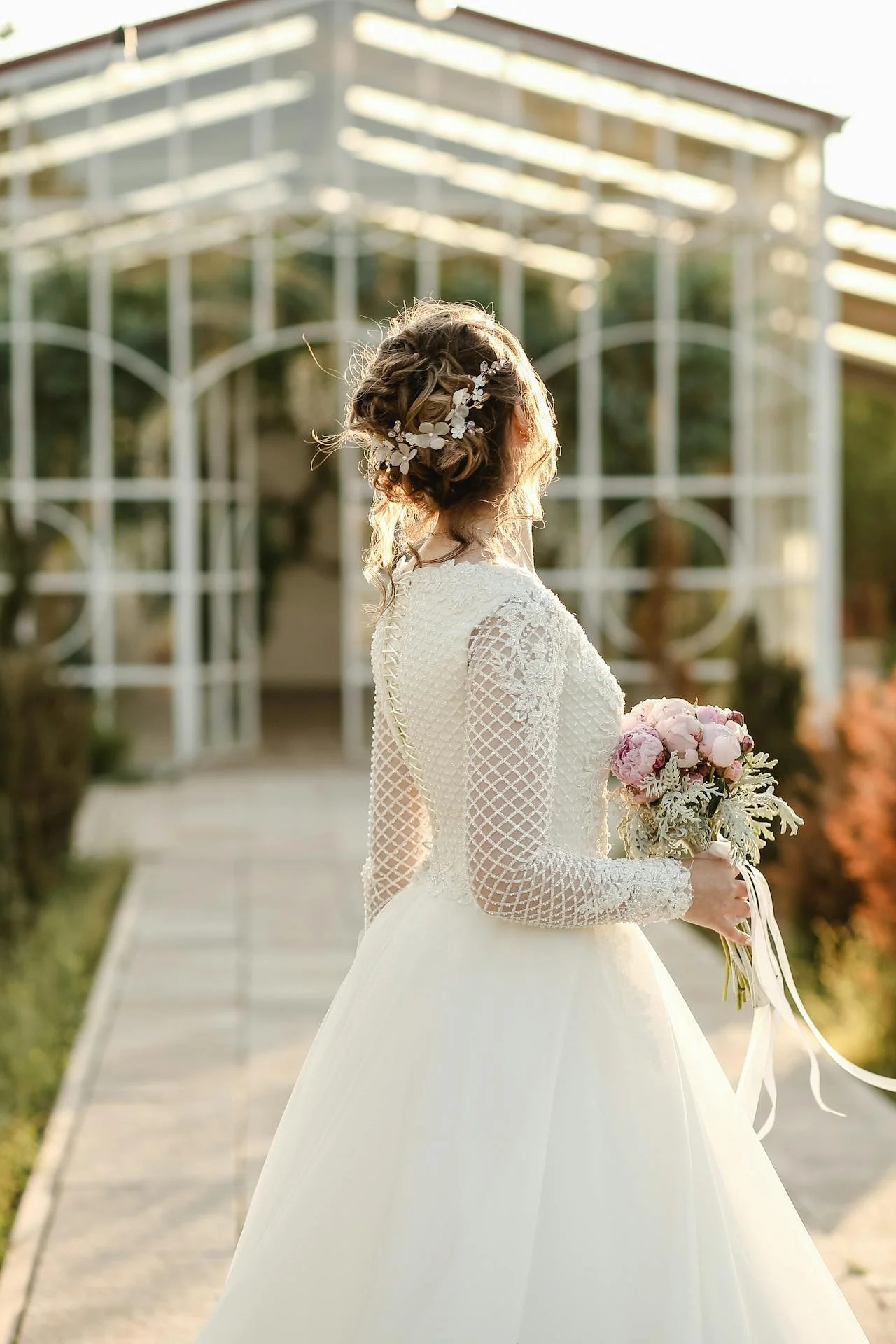
Golden Wedding Ceremony Venues and Outdoor Ceremony Locations
Summary
Explore Golden wedding ceremony venues and outdoor locations near Denver, including Lookout Mountain, Clear Creek, historic venues, intimate hotels, breweries, parks, permits, and planning tips for a personalized Colorado wedding.
What are the best Golden wedding ceremony venues and outdoor ceremony locations?
Golden offers mountain-view venues, historic mansions, creekside settings, parks, hotels, breweries, and intimate outdoor ceremony locations near Denver. Couples often choose Golden for Lookout Mountain views, Clear Creek access, foothills scenery, guest-friendly lodging, and flexible Colorado marriage rules that support personalized weddings and elopements.
Frequently Asked Questions (FAQ)
What are the best wedding ceremony venues in Golden, Colorado?
Some of the best Golden wedding ceremony venues include Boettcher Mansion, The Pines by Wedgewood Weddings, The Golden Hotel, Table Mountain Inn, The Eddy Taproom and Hotel, Golden History Museum and Park, and local restaurants, breweries, and taprooms.
Where can you have an outdoor wedding ceremony in Golden?
Couples often consider Lookout Mountain, Clear Creek-adjacent areas, Golden parks, park pavilions, private outdoor venues, and nearby foothills locations. Always confirm permits, reservations, photography rules, alcohol policies, and guest-count limits before planning an outdoor ceremony.
Do you need a permit for a Golden outdoor wedding ceremony?
You may need a permit if the ceremony uses public space, has 50 or more guests, includes alcohol, uses amplified sound, involves vendors, uses temporary structures, affects traffic, or impacts public use of a park or natural resource. Rules depend on whether the location is managed by the City of Golden, Jefferson County Open Space, Colorado Parks and Wildlife, or a private venue.
Is Golden a good place for an intimate wedding?
Yes. Golden is excellent for intimate weddings because it offers mountain scenery, creekside settings, boutique hotels, historic venues, restaurants, breweries, and easy access from Denver. It works especially well for micro weddings, elopements, and personalized ceremonies with close family and friends.
What is the best season for a Golden wedding?
Fall and summer are popular for outdoor ceremonies, while spring offers softer availability, and winter can be intimate and elegant. Each season requires a backup plan because Golden weather can shift quickly, especially in foothills and mountain-adjacent locations.
Is Golden better than Denver for a mountain-view wedding?
Golden is usually better than Denver for couples who want foothills scenery, mountain views, and a smaller-town Colorado feel. Denver is better for urban hotels, rooftops, museums, restaurants, and downtown guest logistics. Many couples combine both by hosting guests in Denver and holding the ceremony in Golden.
Can out-of-state couples get married in Golden, Colorado?
Yes. Out-of-state couples can get married in Colorado. A Colorado marriage license can generally be used anywhere in the state, but couples should confirm the current application process with the county clerk where they plan to apply.
Do you need a wedding officiant in Golden, Colorado?
Colorado allows self-solemnization, so couples can legally marry themselves. However, many couples still hire a wedding officiant to create a more personal, polished, emotionally grounded ceremony and to help guide the flow of the wedding day.
Key Topics
Golden wedding ceremony venues
Secondary KeGolden Colorado wedding venues
Golden wedding venues
Golden CO wedding venues
outdoor wedding locations Golden, Colorado
Golden outdoor wedding ceremony
Golden wedding officiant
wedding officiant Golden, CO
Golden Colorado elopement
intimate wedding venues Golden, CO
Lookout Mountain wedding ceremony
Boettcher Mansion wedding
Clear Creek wedding ceremony
Colorado foothills wedding venues
mountain wedding venues near Denver
Denver and Golden wedding officiant
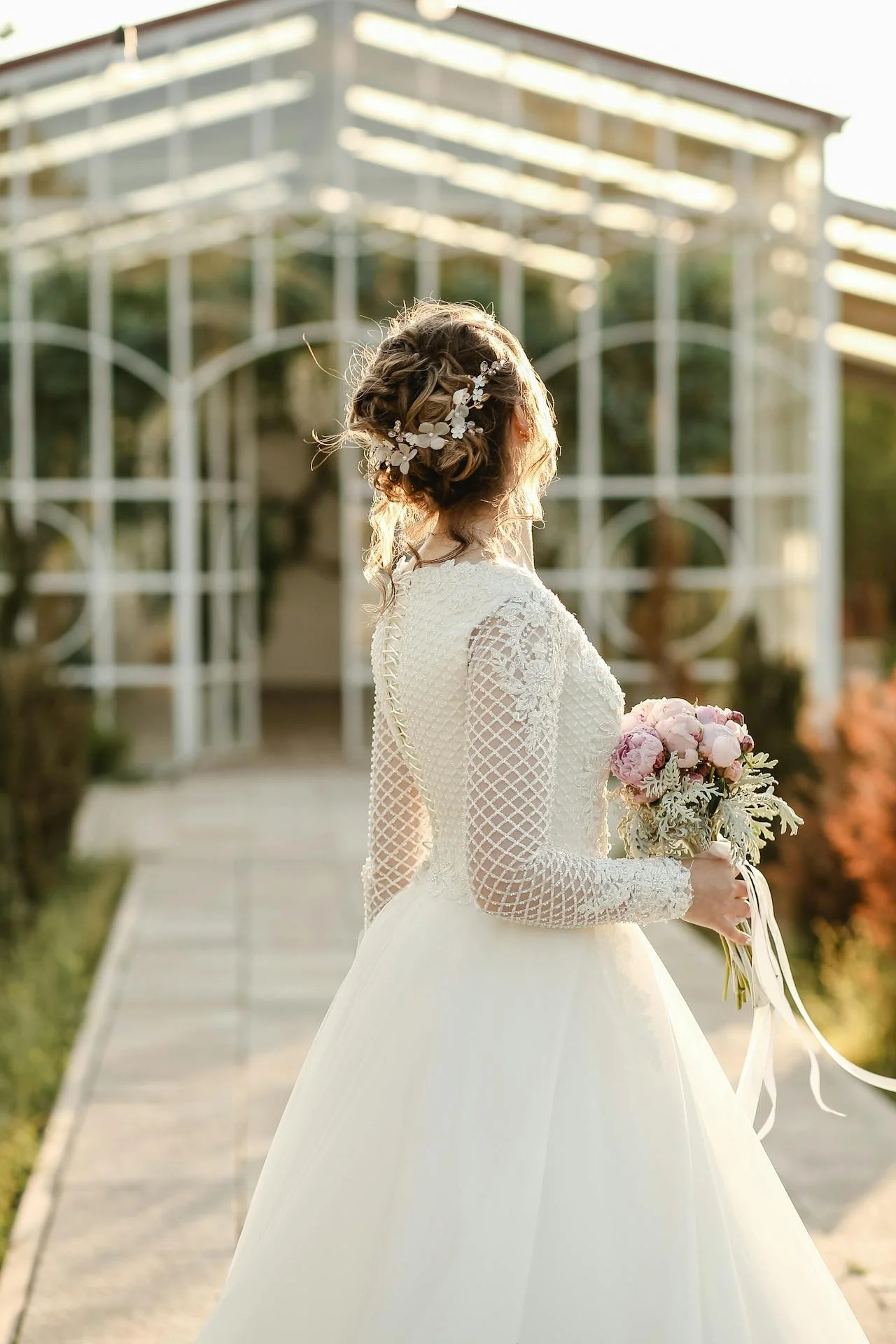
Golden Wedding Officiant / Photo: Melike B
Boulder Wedding Ceremony Venues for Intimate and Scenic Weddings
Boulder is one of Colorado’s most memorable places to hold a wedding ceremony because it gives couples something many destinations cannot: mountain scenery, urban convenience, and an intimate sense of place on the same day. You can exchange vows with the Flatirons behind you, gather your closest people in a refined garden setting, or choose a downtown venue where your ceremony flows naturally into dinner, cocktails, and a full wedding weekend.
For couples who want a ceremony that feels personal rather than overly produced, Boulder is especially compelling. The city’s best wedding ceremony venues are not limited to large ballrooms or traditional event halls. They include historic landmarks, stone amphitheaters, cultural institutions, restaurants, gardens, rooftops, and foothill spaces, helping the ceremony feel grounded in the landscape. That matters because the ceremony is not just a formality. It is the emotional center of the wedding day. The right venue should support the words being spoken, the guest experience, the photography, the weather plan, and the overall tone of the celebration.
Recent wedding research supports this shift toward more personal, place-based celebrations. The Knot’s 2025 Real Weddings Study analyzed responses from 16,956 U.S. couples who married in 2024, and its broader 2025 Global Wedding Report emphasized personalization and purpose as defining priorities for weddings. Zola’s 2025 First Look Report also found that couples are heavily influenced by visual inspiration, but many are balancing that inspiration with real-life budgets and meaningful choices. Boulder fits that moment well: it gives couples beauty, intimacy, and flexibility without needing to turn the day into an oversized production. For a ceremony designed around your relationship, your vows, and the feeling you want your guests to remember, consider working with a Boulder wedding officiant who understands both the emotional rhythm of the ceremony and the practical realities of Colorado venues.
Table of Contents
Why Golden Is One of Colorado’s Best Wedding Ceremony Locations
What Makes Golden Different From Denver, Boulder, and the High Country
Best Golden Wedding Ceremony Venues
Outdoor Ceremony Locations in and Around Golden
Golden Wedding Venues for Intimate Weddings and Elopements
Ceremony Planning Tips for Golden Couples
Permits, Park Rules, and Outdoor Ceremony Logistics
Golden Wedding Guest Experience: Hotels, Dining, and Weekend Flow
Best Seasons for a Golden Wedding Ceremony
Sample Golden Wedding Ceremony Timeline
How a Golden Wedding Officiant Helps Personalize the Ceremony
Final Planning Checklist
Related Articles
What Makes Golden Different From Denver, Boulder, and the High Country
Golden’s ceremony appeal starts with location. It sits at the edge of the mountains, close enough to Denver for convenience but close enough to the foothills to feel visually distinct. Couples can create a ceremony with natural Colorado texture—rock formations, creek paths, pine trees, mountain views, and historic architecture—without making guests navigate a long mountain pass or remote trailhead. Compared with Denver, Golden feels smaller, more outdoors-oriented, and more relaxed. Denver is ideal for modern hotels, art museums, restaurants, rooftops, and urban guest logistics. Golden is better for couples who want mountain-adjacent scenery but still need practical access to hotels, restaurants, parking, and rehearsal dinner options.
Compared with Boulder, Golden feels a little more compact and Western in personality. Boulder has iconic Flatirons views, Chautauqua, Pearl Street, and a larger university-town feel. Golden has Clear Creek, Lookout Mountain, historic downtown blocks, breweries, foothill trails, and a more intimate gateway-to-the-mountains character. Compared with the high country, Golden is usually easier for guests. Couples can still create a Colorado outdoor ceremony, but they avoid some of the logistical stress of altitude, mountain weather volatility, limited lodging, and long shuttles. That makes Golden especially strong for families with older relatives, out-of-town guests, and wedding parties who want a beautiful setting without turning the entire weekend into a transportation puzzle.
Best Golden Wedding Ceremony Venues
1. Boettcher Mansion
Boettcher Mansion is one of Golden’s signature wedding venues. Located on Lookout Mountain, it offers a historic estate setting with indoor and outdoor options, including the Mansion, Carriage House, and Gazebo. Jefferson County describes Boettcher Mansion as a historic event venue for weddings, receptions, rehearsal dinners, and social events, with dedicated event staff and multiple event spaces. Visit Golden also highlights Boettcher Mansion as a “vows with a view” location, noting its Lookout Mountain setting, indoor and outdoor venues, gazebo option, fireside room, patio, and historic house experience. Boettcher Mansion is a strong fit for couples who want:
A mountain setting without a long drive into the Rockies
A historic, refined atmosphere
Indoor and outdoor ceremony flexibility
A formal venue structure with planning support
A ceremony and reception in one location
Because mountain weather can shift quickly, Boettcher Mansion is especially useful for couples who love outdoor views but still want a credible indoor contingency.
2. The Pines by Wedgewood Weddings
The Pines is a good fit for couples who want a forested foothills ceremony with a more traditional full-service wedding venue experience. The venue describes itself as a Golden location in the Rocky Mountain foothills with forest ceremony spaces, modern wood arbors, evergreen and aspen scenery, meadow and mountain views, terraces, fireplaces, built-in bars, and grand halls with panoramic windows. This type of venue works well for couples who want natural scenery but do not want to manage every detail themselves. It can also be helpful for out-of-town couples who want a single central location for the ceremony, reception, vendor coordination, and guest flow.
3. The Golden Hotel and Downtown Golden Hotels
For couples who want a ceremony weekend centered around walkability, downtown Golden hotels can be an excellent base. The advantage is not just the ceremony space itself—it is the entire guest experience. Guests can stay near restaurants, coffee shops, Clear Creek, and downtown activities. That makes the weekend feel more relaxed, especially for guests who arrive without a car. Hotel-based ceremonies can be ideal for:
Smaller weddings
Welcome parties
Rehearsal dinners
Brunch weddings
Indoor/outdoor wedding weekends
Couples who want guests to stay close to the celebration
A downtown hotel can also serve as a practical backup if an outdoor ceremony is planned nearby, but the weather becomes an issue.
4. Table Mountain Inn
Table Mountain Inn is one of the most recognizable downtown Golden hospitality properties. It works well for couples who want a warm, Southwestern-inspired, guest-friendly setting near restaurants, bars, shops, and lodging. It can be especially appealing for couples planning a wedding weekend rather than a single ceremony. For ceremony planning, Table Mountain Inn and similar downtown venues are best positioned as intimate wedding, rehearsal dinner, welcome party, or reception-adjacent options. Couples should confirm current capacity, private event spaces, food and beverage minimums, ceremony rules, and noise policies directly with the venue.
5. The Eddy Taproom and Hotel
The Eddy Taproom and Hotel is a good option for couples who want a less conventional Golden wedding feel. The venue positions itself as an outdoor wedding venue in Golden with a mountain wedding experience and a more relaxed approach than a standard ballroom. This kind of venue can work well for couples who want:
A relaxed reception atmosphere
On-site lodging or nearby lodging
A taproom/hotel setting
Outdoor ceremony energy without a remote location
A Colorado weekend feel for guests
6. Golden History Museum and Park
Golden History Museum and Park can be appealing to couples seeking history, character, and a location close to downtown. The rental page notes that Golden History Park can accommodate private events and lists policies around alcohol permits, event duration, portable restroom requirements for events longer than 90 minutes, and rental rates. This is the type of location where details matter. Couples should confirm availability, rental rules, alcohol policies, restroom requirements, catering access, setup time, cleanup requirements, and whether the ceremony layout fits their guest count.
7. Breweries, Taprooms, and Restaurants
Golden’s brewery and restaurant scene is part of its appeal for weddings. Visit Golden specifically mentions local breweries and taprooms as options for intimate indoor-outdoor spaces and larger lawn or rooftop-style gatherings. These venues are best for couples who want the ceremony to feel casual, social, and celebratory rather than highly formal. A brewery or restaurant ceremony may be ideal for:
Micro weddings
Second weddings
Welcome-dinner-style ceremonies
Casual elopements with family
Couples who want a short ceremony followed immediately by food and drinks
The key is to clarify whether the location allows an actual ceremony, not just a reception or private dinner. Ask about chairs, microphones, music, rain plans, vendor access, photography timing, and privacy from the general public.
Outdoor Ceremony Locations in and Around Golden
Clear Creek and Downtown Golden
Clear Creek is one of Golden’s defining features. For couples imagining a simple outdoor ceremony, the creek corridor offers a natural sense of place. It is scenic, walkable, and close to downtown restaurants and hotels. However, a creekside ceremony requires careful planning. Public spaces are not the same as private venues. Couples need to think through guest count, accessibility, parking, sound, seating, weather, public foot traffic, and whether their event triggers a permit requirement. The City of Golden explains that some events need permits, including events involving alcohol, amplified sound, vendors, temporary structures, street impacts, or impacts on public use of a park or natural resource.
Lookout Mountain
Lookout Mountain is one of the most iconic areas near Golden for views and foothills scenery. It works especially well for couples who want the emotional experience of a mountain ceremony without having to drive hours from Denver. Lookout Mountain is also where planning discipline matters. Some locations are managed by Jefferson County Open Space or other agencies, and public land use may require permits depending on the activity. Jefferson County states that activities in Jeffco Parks and Open Space that conflict with park regulations require a permit, including events, organized activities, and commercial activities. The county also asks applicants to allow processing time. For couples, that means a simple “we will just meet there and get married” plan may not be enough. Confirm who manages the land, what rules apply, whether professional photography requires permission, and whether the location can legally and practically support the ceremony.
North Table Mountain and South Table Mountain
North Table Mountain and South Table Mountain give Golden some of its most recognizable terrain. These areas can be beautiful for portraits, hiking engagement sessions, and adventurous elopement-style imagery. For actual ceremonies, couples should be conservative. Trails, trailheads, and open space areas can be busy, windy, exposed, and regulated. They may not be ideal for larger guest counts, chairs, arches, amplified sound, florals, or elderly guests. For an elopement with only the couple, an officiant, and a photographer, they may be more realistic—but permission and land-management rules still need to be checked.
Golden Gate Canyon State Park
Golden Gate Canyon State Park is often considered by couples searching for mountain ceremony locations near Golden. It is not downtown Golden, but it is close enough to be relevant for couples planning a foothills or mountain wedding weekend. Colorado Parks and Wildlife maintains wedding and special event information for state parks, and couples should work directly with the park for current permit, reservation, and site rules. This type of location is best for couples who want a stronger nature-first experience and are willing to manage the additional logistics of park rules, travel time, weather, and guest comfort.
Park Pavilions and City-Managed Spaces
For smaller gatherings, Golden Park pavilions may be a practical option. The City of Golden notes that pavilion rentals are managed through Parks and Recreation, with rentals available mid-May through mid-September; outside that period, pavilions are generally first-come, first-served. A pavilion can be useful for a simple ceremony, a casual reception, a picnic-style celebration, or a post-elopement family gathering. Couples should confirm whether the specific pavilion allows weddings, decorations, music, food, alcohol, professional vendors, and reserved seating.
Quick Summary: Best Golden Ceremony Location Ideas
Best mountain-view venue: Boettcher Mansion on Lookout Mountain
Best forested venue feel: The Pines by Wedgewood Weddings
Best downtown Golden experience: Table Mountain Inn, The Golden Hotel, restaurants, breweries, and taprooms
Best creekside atmosphere: Clear Creek-adjacent parks, paths, hotels, and gathering spots
Best intimate wedding style: Restaurant, brewery, hotel patio, park pavilion, or simple outdoor ceremony
Best guest-friendly advantage: Easy access from Denver, Boulder, Lakewood, and the western suburbs
Best planning reminder: Confirm permits, pavilion rentals, alcohol rules, sound restrictions, photography permissions, and backup plans before choosing an outdoor location
Golden Wedding Venues for Intimate Weddings and Elopements
Golden is especially strong for intimate weddings. Not every couple wants a 150-person ballroom reception. Many couples want twenty people, a meaningful ceremony, a beautiful backdrop, excellent food, and a relaxed evening. For intimate weddings, the best Golden ceremony options usually fall into five categories:
Historic venue: Boettcher Mansion or Golden History Museum and Park.
Hotel-based celebration: The Golden Hotel, Table Mountain Inn, The Eddy, or another downtown property.
Restaurant ceremony: A private dining room, patio, or buyout.
Brewery or taproom: A social, informal setting with Colorado character.
Outdoor ceremony: A park, creekside area, pavilion, or open-space-adjacent location with proper permission.
The smaller the guest count, the more flexible the ceremony can feel. A small wedding also allows the ceremony itself to become more personal. Couples can include a short welcome, a story about how they met, family acknowledgments, personalized vows, a ring exchange, a unity ritual, or a closing toast without the event feeling overproduced. For couples who want help shaping that kind of experience, a Golden wedding officiant can adapt the ceremony to the location, guest count, sound conditions, and the day's emotional tone.
Ceremony Planning Tips for Golden Couples
Match the Location to the Ceremony Tone
Golden can support many different ceremony styles, but not every location fits every tone. A formal black-tie ceremony may feel right at a historic mansion or refined hotel. A barefoot, creekside vow exchange may feel better as an elopement or micro wedding. A brewery ceremony may be perfect for couples who want laughter, informality, and immediate celebration. Before booking, decide what you want guests to feel during the ceremony. Quiet? Elegant? Adventurous? Relaxed? Spiritual? Playful? That answer should guide the location.
Prioritize Accessibility
Golden’s foothills and trails are beautiful, but guests need to be able to arrive comfortably. Consider older relatives, guests in dress shoes, children, guests with mobility limitations, and anyone traveling from sea level. Parking, bathrooms, shade, seating, and walking distance matter. A scenic location loses its magic if guests are stressed before the ceremony begins.
Build in a Weather Plan
Outdoor ceremonies in Golden should always have a backup plan. Spring can bring sudden temperature swings, summer can bring afternoon storms, fall can bring wind, and winter can bring ice or snow. Even a ceremony that lasts only fifteen minutes needs a realistic contingency. For private venues, ask about indoor backup spaces. For parks or other public locations, decide whether to move to a pavilion, hotel, restaurant, or covered area.
Keep the Ceremony Sound Simple
Outdoor ceremonies can be difficult to hear. Wind, creek noise, traffic, and distance all matter. For more than a small group, consider a discreet sound system or confirm what the venue provides. If amplified sound is used in a public space, check whether that affects permit requirements.
Avoid Overdecorating Natural Spaces
Golden’s scenery does much of the work. A few florals, a handheld bouquet, or a simple ground arrangement may be enough. Large arches, rugs, aisle markers, candles, chairs, and installations can raise permit concerns, complicate setup, and compete with the landscape.
Permits, Park Rules, and Outdoor Ceremony Logistics
Permits are among the most important planning considerations for Golden outdoor wedding ceremonies. Rules vary depending on whether the space is managed by the City of Golden, Jefferson County Open Space, Colorado Parks and Wildlife, a private venue, or another public agency. The City of Golden lists several event features that may require a Special Event Permit, including attendance of 50 or more, alcohol, amplified sound, vendors, temporary structures, traffic impacts, or impacts on public use of a park or natural resource. Jefferson County Open Space also states that permits are required for activities that conflict with park regulations, including events, organized activities, and commercial activities. It’s 2026 photography guidance notes that professional photography on managed land requires permission, and drones are prohibited. Couples should confirm:
Who manages the ceremony site
Whether a wedding ceremony is allowed
Whether a reservation or permit is required
Whether professional photography needs a permit
Whether chairs, arches, rugs, florals, or props are allowed
Whether amplified sound is allowed
Whether alcohol is allowed
Whether drones are prohibited
Whether restrooms are available
Whether the site is accessible for all guests
Whether there is a rain, snow, or wind backup plan
Golden is a beautiful place to marry, but outdoor ceremonies work best when couples treat the setting with care and confirm the rules in advance.
Golden Wedding Guest Experience: Hotels, Dining, and Weekend Flow
Golden is not just a ceremony location. It is a weekend destination. Guests can explore downtown, walk along Clear Creek, visit breweries, dine locally, hike nearby trails, or use Golden as a base for Denver and foothills activities. That matters for destination weddings. A ceremony may last 20 minutes, but the guest experience lasts 2 or 3 days. Golden gives couples a guest-friendly structure:
Friday: Welcome drinks, rehearsal dinner, or casual brewery gathering.
Saturday: Ceremony, portraits, cocktail hour, dinner, and reception.
Sunday: Brunch, coffee, creek walk, or optional hike.
Because Golden is close to Denver, couples can also use the city as a travel hub. Out-of-town guests can fly into Denver International Airport, stay in Denver or Golden, and still reach the ceremony without a long transfer to the mountains.
Couples considering a broader Front Range wedding weekend may benefit from comparing Golden with Denver wedding officiant services and Boulder wedding officiant services, especially if they are still deciding where to host the ceremony, rehearsal dinner, and guest lodging.
Best Seasons for a Golden Wedding Ceremony
Spring
Spring in Golden can be beautiful, especially for couples who want mild temperatures, foothills color, and earlier-season availability. It can also be unpredictable. Couples should prepare for wind, mud, rain, late snow, and temperature swings. A spring ceremony works best with a strong backup plan.
Summer
Summer is popular for outdoor weddings because of longer days, warmer evenings, and easier travel for guests. It is also a busy season in parks, trails, downtown areas, and venues. For outdoor ceremonies, consider morning or early evening to avoid heat and harsh midday light.
Fall
Fall is one of Golden’s strongest wedding seasons. The light is softer, temperatures are often comfortable, and the foothills can look beautiful. It is also competitive, so couples should book venues, officiants, photographers, and lodging early.
Winter
Winter weddings in Golden can be intimate, elegant, and quiet. A winter ceremony works best at a venue with indoor warmth and outdoor portrait access. Couples should plan for icy paths, shorter daylight, and weather-related travel delays.
Sample Golden Wedding Ceremony Timeline
Intimate Golden Wedding Timeline
2:00 p.m. Couple gets ready in downtown Golden or nearby lodging
3:00 p.m. First look and portraits
3:45 p.m. Immediate family photos
4:15 p.m. Guests arrive at the wedding ceremony location
4:30 p.m. Wedding ceremony begins
4:50 p.m. Marriage license signing and group photo
5:15 p.m. Cocktail hour or restaurant transition
6:00 p.m. Dinner, toasts, and celebration
Outdoor Elopement Timeline
3:30 p.m. Meet at a trailhead, park, venue, or hotel
4:00 p.m. Private first look or couple portraits
4:30 p.m. Ceremony with the wedding officiant
4:50 p.m. Vows, rings, pronouncement, and license signing
5:15 p.m. Sunset portraits
6:15 p.m. Dinner in downtown Golden
A Golden elopement does not need to be complicated. The strongest ceremonies are often simple, intentional, and well-timed to the light, weather, privacy, and guest comfort.
How a Golden Wedding Officiant Helps Personalize the Ceremony
A wedding officiant does more than stand at the front and read a script. For a Golden ceremony, the officiant can help shape the ceremony around the couple, the location, the guest count, and the emotional tone of the day. For example, a ceremony at Boettcher Mansion may call for a more elegant, polished structure. A creekside ceremony may call for something shorter, warmer, and more conversational. A brewery wedding may call for humor and informality. A private elopement may call for a script that gives the couple room to breathe, exchange personal vows, and take in the setting. A personalized ceremony can include:
A custom welcome
A short version of the couple’s story
Meaningful readings
Family acknowledgments
Personal vows
Ring exchange language
A unity ritual
A moment of remembrance
Inclusive, non-religious, spiritual, or interfaith wording
A closing blessing or final reflection
The best ceremony feels like it belongs to the couple—not like it could be dropped into any wedding in any city.
Final Planning Checklist
Before choosing a Golden wedding ceremony location, confirm:
Your ideal guest count
Indoor vs. outdoor preference
Ceremony tone and formality
Weather backup plan
Venue capacity
Parking and accessibility
Restroom access
Sound needs
Permit or reservation requirements
Photography rules
Alcohol rules
Setup and cleanup time
Marriage license timing
Officiant availability
Lodging and restaurant options nearby
Colorado’s marriage process remains flexible for couples. A Colorado marriage license can generally be used anywhere in the state, is valid for 35 days, and must be returned after the ceremony; Denver’s official clerk page also confirms that its Recording Division issues and records marriage and civil union licenses. For couples marrying in Golden, the legal process is usually straightforward. The planning complexity is more often about the location: who manages it, what rules apply, what the weather might do, and how guests will experience the day.
Related Articles
From the Michael Moody Officiant wedding blog directory:
How to Get Married in Colorado: Marriage License Guide for 2026
Preparing for Your Wedding Ceremony in Colorado: A Couple’s Guide
How to Personalize Your Wedding Ceremony Without Making It Awkward or Overlong
Denver Rehearsal Dinner Venues: Elegant and Upscale Restaurant Options for Your Wedding Weekend
Common Wedding Ceremony Planning Challenges and How to Overcome Them
Spring Wedding Guide for Golden, Colorado: Venues, Permits, and Planning Tips
Boulder Fall Wedding Guide: Venues, Permits, License, and Tips
Boulder Wedding Ceremony Venues for Intimate and Scenic Weddings
Summer Wedding Guide for Evergreen, Colorado: Venues, Travel, and Planning Tips
Colorado Front Range Elopement Guide: Hiking-In Wedding Ceremonies and Scenic Trails
Summer Wedding Guide for Larkspur, Colorado: Venues, Travel, and Planning Tips
Colorado Elopement Hikes Near Denver: North Table Mountain West Loop
Colorado Elopement: Elk Falls Lookout and Pond at Staunton State Park
Colorado Elopement Wedding Hikes: Nymph Lake and Lake Haiyaha Loop via Fire Trail
The directory includes ceremony planning articles, Golden-specific planning guidance, Front Range elopement content, and relationship-focused resources for couples planning meaningful Colorado ceremonies.
About the Author: Michael Moody, Wedding Officiant
Michael Moody is a Colorado wedding officiant serving Denver, Boulder, Golden, Larkspur, and mountain communities throughout the state. Since 2012, he has officiated more than 300 weddings, bringing a calm presence, thoughtful guidance, and emotionally grounded ceremony writing to couples seeking a meaningful experience. He also offers Colorado elopement ceremonies for couples who want something intimate, intentional, and beyond the boundaries of a traditional wedding day. His work is shaped by a lifelong interest in connection, reflection, and personal growth. Michael is the author of the self-improvement book Redefine Yourself: The Simple Guide to Happiness and host of The Elements of Being podcast. As a wedding officiant, he draws from that same foundation: the belief that our relationships, words, and everyday interactions help shape a life rooted in love, empathy, and purpose. Michael’s ceremony work has been recognized across Colorado. He is a 2023 WeddingWire Couples’ Choice Award winner in Denver, marking his eighth consecutive year receiving the honor. He was also named “Best Business of 2024, 2025, and 2026” by Three Best Rated and earned “The Best Wedding Officiant in Commerce City, Colorado for 2024” from Quality Business Awards USA.
Beyond weddings, Michael and his wife, Sammy, have sponsored an annual student scholarship for more than 10 years. They also founded Civic Growth Alliance, a 501(c)(4) nonprofit dedicated to strengthening communities through civic advocacy, resident engagement, strategic partnerships, public safety initiatives, neighborhood vitality, and community well-being.
Wedding locations: Michael officiates wedding ceremonies in the Denver neighborhoods of LoDo, River North, Washington Park, Cherry Creek, City Park, Central Park, Capitol Hill, Cheesman Park, Park Hill, Lower Highlands, and Sloan Lake. Michael also serves as an ordained minister in Larkspur, Littleton, Golden, Boulder, Breckenridge, Frisco, Aspen, Vail, Estes Park, and more. If your Denver neighborhood or Colorado town isn’t listed here, no worries! Please contact Michael to propose a wedding ceremony location in a different area!
Wedding Planning Tips
Because Golden is only a short drive from Denver, it is one of the most practical foothills ceremony locations for couples who want Colorado scenery without sacrificing guest convenience. Many couples host guests in Denver, plan welcome dinners in the city, and then move west for a Golden wedding ceremony near Clear Creek, Lookout Mountain, or a historic venue. As a Denver-based wedding officiant serving Golden, Boulder, and the Front Range, Michael Moody helps couples create ceremonies that feel personal, polished, and grounded in the local flow of a Colorado wedding weekend.
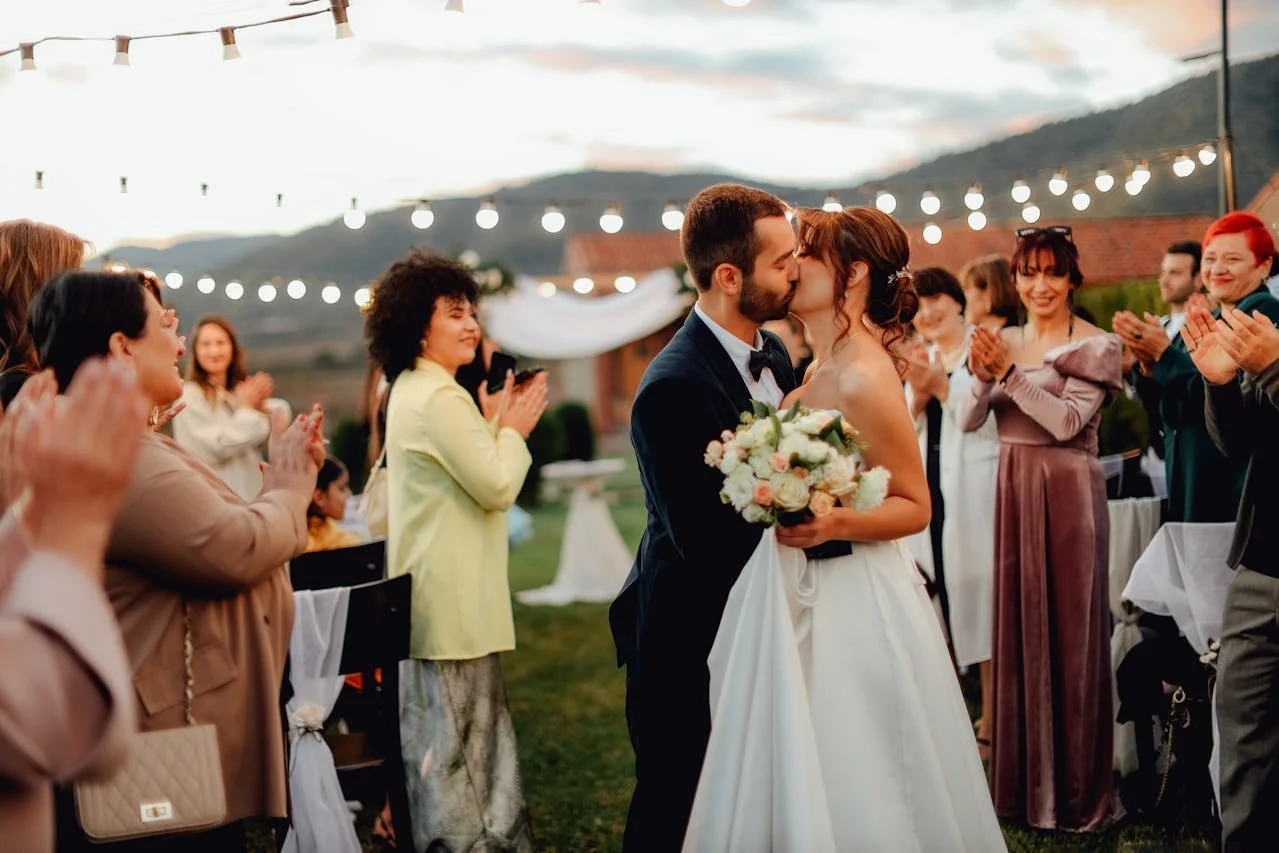
Boulder Wedding Ceremony Venues for Intimate and Scenic Weddings
Summary
Explore Boulder wedding ceremony venues for intimate and scenic weddings, including Chautauqua, Sunrise Amphitheater, downtown museums, garden venues, and planning tips from a Colorado wedding officiant.
What are the best Boulder wedding ceremony venues for intimate and scenic weddings?
The best Boulder wedding ceremony venues include Chautauqua, Sunrise Amphitheater, The Greenbriar Inn, Boulder Dushanbe Teahouse, Museum of Boulder, and Boulder Museum of Contemporary Art. Couples often choose Boulder for its Flatirons views, walkable downtown, foothill scenery, and intimate ceremony spaces.
Frequently Asked Questions (FAQ)
What are the best Boulder wedding ceremony venues for small weddings?
The best Boulder wedding ceremony venues for small weddings include Sunrise Amphitheater, Chautauqua, The Greenbriar Inn, Boulder Dushanbe Teahouse, Museum of Boulder, and Boulder Museum of Contemporary Art. Each offers a different balance of scenery, intimacy, guest comfort, and reception convenience.
Where can I get married in Boulder with mountain views?
Couples seeking mountain views should consider Sunrise Amphitheater, Chautauqua, Museum of Boulder’s rooftop, and foothills venues such as The Greenbriar Inn. Sunrise Amphitheater and Chautauqua are especially strong for couples who want the Boulder landscape to be central to the ceremony.
Do Boulder wedding ceremony venues require permits?
Some Boulder ceremony locations require reservations, permits, or facility rental approval, especially public parks, shelters, open-space areas, and amphitheaters. Couples should confirm current rules directly with the City of Boulder or the venue before announcing a location to guests.
Is Boulder a good place for an intimate wedding?
Yes. Boulder is excellent for intimate weddings because it combines dramatic scenery, walkable downtown amenities, strong restaurant options, cultural venues, and access from Denver. Couples can create a wedding day that feels scenic and personal without asking guests to travel deep into the mountains.
What is the best time of year for a Boulder wedding ceremony?
Late spring through early fall is popular for outdoor Boulder ceremonies, especially May through October for venues such as Sunrise Amphitheater. Fall can be beautiful, but couples should plan around weather changes, guest comfort, and seasonal access rules.
Should I hire a local Boulder wedding officiant?
A local Boulder wedding officiant can help with ceremony tone, outdoor logistics, pacing, guest experience, and location-specific considerations. This is especially helpful for intimate weddings where every word and moment feels more personal.
Key Topics
Boulder wedding ceremony venues
intimate wedding venues Boulder CO
scenic Boulder wedding venues
Boulder wedding officiant
Boulder elopement ceremony venues
small wedding venues Boulder
Flatirons wedding ceremony
Chautauqua wedding ceremony
Sunrise Amphitheater wedding Boulder
Boulder micro wedding venues
Colorado intimate wedding venues
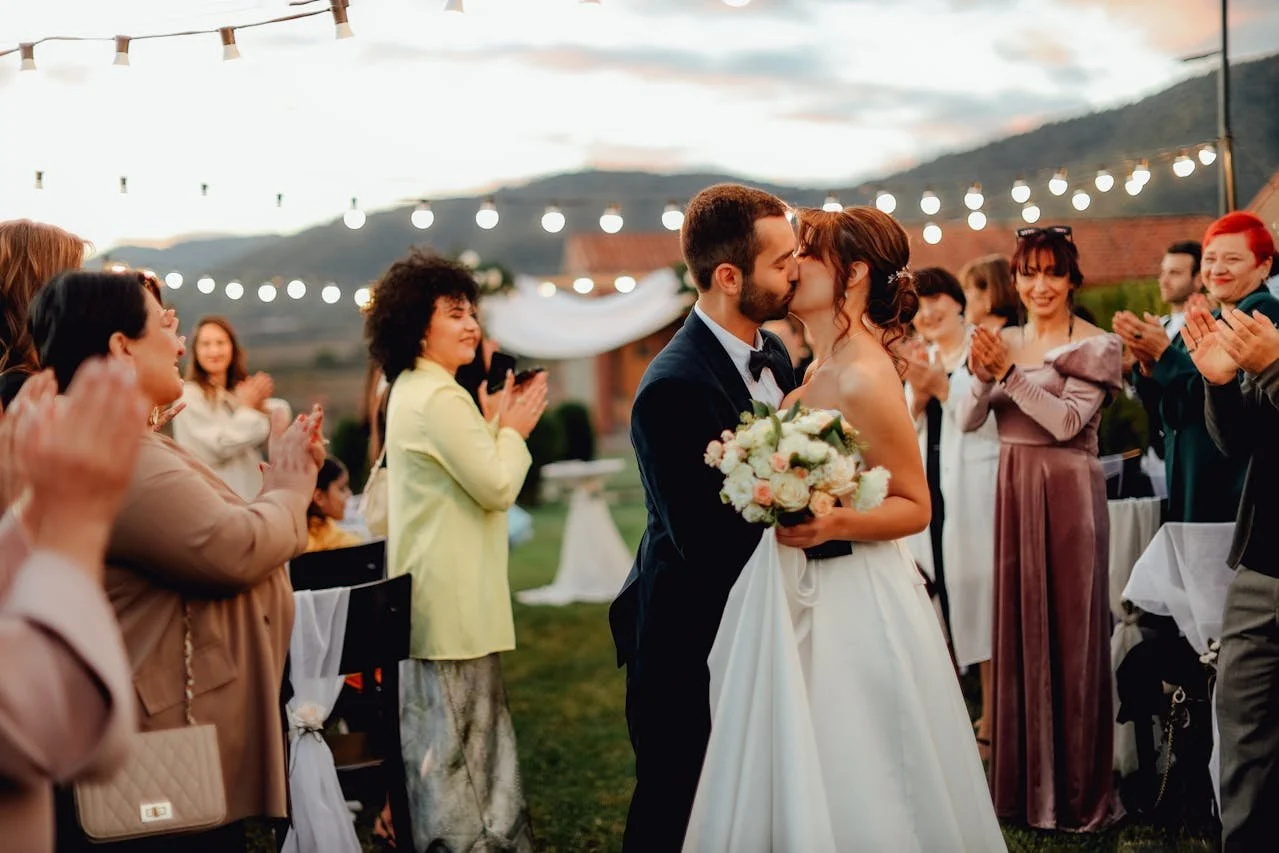
Boulder Wedding Venues / Photo: Photography Maghradze PH
Boulder Wedding Ceremony Venues for Intimate and Scenic Weddings
Boulder is one of Colorado’s most memorable places to hold a wedding ceremony because it gives couples something many destinations cannot: mountain scenery, urban convenience, and an intimate sense of place on the same day. You can exchange vows with the Flatirons behind you, gather your closest people in a refined garden setting, or choose a downtown venue where your ceremony flows naturally into dinner, cocktails, and a full wedding weekend.
For couples who want a ceremony that feels personal rather than overly produced, Boulder is especially compelling. The city’s best wedding ceremony venues are not limited to large ballrooms or traditional event halls. They include historic landmarks, stone amphitheaters, cultural institutions, restaurants, gardens, rooftops, and foothill spaces, helping the ceremony feel grounded in the landscape. That matters because the ceremony is not just a formality. It is the emotional center of the wedding day. The right venue should support the words being spoken, the guest experience, the photography, the weather plan, and the overall tone of the celebration.
Recent wedding research supports this shift toward more personal, place-based celebrations. The Knot’s 2025 Real Weddings Study analyzed responses from 16,956 U.S. couples who married in 2024, and its broader 2025 Global Wedding Report emphasized personalization and purpose as defining priorities for weddings. Zola’s 2025 First Look Report also found that couples are heavily influenced by visual inspiration, but many are balancing that inspiration with real-life budgets and meaningful choices. Boulder fits that moment well: it gives couples beauty, intimacy, and flexibility without needing to turn the day into an oversized production. For a ceremony designed around your relationship, your vows, and the feeling you want your guests to remember, consider working with a Boulder wedding officiant who understands both the emotional rhythm of the ceremony and the practical realities of Colorado venues.
Table of Contents
Why Boulder Works So Well for Intimate Wedding Ceremonies
What Makes a Boulder Ceremony Venue Feel Scenic and Personal?
Best Boulder Wedding Ceremony Venues for Intimate and Scenic Weddings
Chautauqua: Iconic Flatirons Backdrop
Sunrise Amphitheater: Mountain Views and a Built-In Ceremony Shape
The Greenbriar Inn: Foothills, Gardens, and Romantic Dining
Boulder Dushanbe Teahouse: Color, Craft, and Cultural Character
Museum of Boulder: Rooftop Views and Downtown Convenience
Boulder Museum of Contemporary Art: Artistic, Modern, and Urban
Boulder Open-Space Shelters and Small Outdoor Ceremony Sites
How to Choose the Right Boulder Venue for Your Ceremony Style
Boulder Ceremony Planning Tips: Permits, Weather, Timing, and Guest Comfort
Sample Boulder Ceremony Flow for an Intimate Wedding
When to Hire a Boulder Wedding Officiant
Related Articles
Why Boulder Works So Well for Intimate Wedding Ceremonies
Boulder is ideal for intimate weddings because the city naturally supports smaller, more intentional gatherings. The scenery does much of the design work. A simple floral arrangement, a thoughtful processional, and carefully written vows can feel complete when the backdrop is the Flatirons, Flagstaff Mountain, a garden, or a historic downtown setting.
The city also works well for guests. Boulder is close enough to Denver for easy access, but it still feels distinct. Couples can host a mountain-view ceremony without asking everyone to commit to a remote alpine destination. Guests can stay downtown, walk Pearl Street, visit local restaurants, or make a weekend of the celebration without extensive transportation logistics.
This is one reason Boulder appeals to couples planning micro weddings, elopements, and smaller guest-count celebrations. The setting feels special, but not inaccessible. The day can still feel elegant, refined, and logistically realistic. Boulder is also well-matched to current wedding-planning preferences. Vogue’s 2025 trend reporting noted that many planners are seeing renewed interest in hometown or locally meaningful weddings rather than default destination weddings. For Colorado couples, Boulder can serve that role beautifully: close to home, visually iconic, and emotionally resonant.
What Makes a Boulder Ceremony Venue Feel Scenic and Personal?
A scenic venue is not just a pretty background. For a wedding ceremony, it should also support sound, movement, seating, privacy, accessibility, weather planning, and the type of ceremony you want. Before choosing a Boulder ceremony venue, evaluate the setting through five questions:
1. Does the venue match the emotional tone of your ceremony?
A quiet vow exchange at Sunrise Amphitheater feels different from an art-filled ceremony at BMoCA or a garden ceremony at The Greenbriar Inn. None is automatically better. The right choice is the one that matches your relationship.
2. Will guests be comfortable?
Views matter, but so do shade, seating, restrooms, parking, walking distance, altitude, and weather exposure.
3. Is the ceremony site legally and logistically appropriate?
Public lands, shelters, and open space facilities may require reservations, permits, or strict rules. Always confirm directly with the venue or city office.
4. Does the space help or fight the ceremony audio?
Outdoor wind, traffic noise, and the couple's distance can affect whether people hear the ceremony. An officiant with experience in outdoor ceremonies can help adjust projection, positioning, and microphone placement.
5. Does the venue support the photos you actually want?
Some couples want dramatic mountain portraits. Others want candid downtown images, architectural interiors, gardens, or a simple documentary feel.
Best Boulder Wedding Ceremony Venues for Intimate and Scenic Weddings
1. Chautauqua: Iconic Flatirons Backdrop
Chautauqua is one of the most recognizable Boulder ceremony settings because it sits at the base of the Flatirons. The City of Boulder notes that Chautauqua Park is tied to Boulder’s early preservation history and dates back to the city’s 1898 bond purchase of 80 acres for Chautauqua use.
For couples, the appeal is obvious: natural beauty, historic context, and immediate Boulder identity. It is hard to imagine a more recognizable local backdrop for a ceremony. Chautauqua works especially well for couples who want the ceremony to feel connected to Boulder’s landscape without requiring a remote mountain drive. It can suit intimate ceremonies, elopements, and wedding weekends where guests are already staying nearby.
The Colorado Chautauqua also offers wedding spaces at a National Historic Landmark near the Flatirons, including the Community House and smaller cottage options for petite weddings. This makes the area especially flexible: couples can lean more natural and outdoorsy, more historic and architectural, or a combination of both.
Best for: Couples who want the most iconic Boulder backdrop.
Considerations: Parking, crowds, permits or venue rules, and seasonal weather should be reviewed early.
2. Sunrise Amphitheater: Mountain Views and a Built-In Ceremony Shape
Sunrise Amphitheater is one of Boulder’s strongest ceremony-specific venues because it already feels designed for the moment of exchange. The City of Boulder describes Sunrise Amphitheater as a rustic outdoor facility made of local stone, located at the summit of Flagstaff Mountain, featuring a circular area, a small stage, tiered stone seating, and magnificent views.
This is a major advantage for intimate weddings. Many outdoor locations are beautiful but awkward for ceremonies because they lack a natural focal point. Sunrise Amphitheater solves that problem. Guests understand where to sit. The couple has a defined place to stand. The setting frames the ceremony.
The City of Boulder lists Sunrise Amphitheater's capacity at 100 and notes that Summit Facilities have combined time-block attendance limits and seasonal closures. Reservations at Sunrise Amphitheater, Stone Shelter, and Wood Shelter are unavailable from October 31 through April 30, and Flagstaff Summit Road is closed to vehicles during that period. For couples planning a spring, summer, or early fall ceremony, Sunrise Amphitheater can be one of the best ceremony venues in the Boulder area.
Best for: Couples who want a structured outdoor mountain ceremony.
Considerations: Seasonal access, guest mobility, weather exposure, road limits, and reservation timing.
3. The Greenbriar Inn: Foothills, Gardens, and Romantic Dining
The Greenbriar Inn is a strong choice for couples seeking a scenic ceremony and a more traditional hospitality experience. Located just outside Boulder, the venue describes its property as 20 scenic acres surrounded by mountain ranges and foothills, with a romantic country inn atmosphere.
This venue is especially appealing for intimate weddings because it can support both the ceremony and reception in one location. Couples do not need to move guests from a remote ceremony site to a separate dinner venue. The atmosphere can feel elegant, private, and naturally Colorado without becoming rustic in a casual sense. The Greenbriar Inn also notes that its space can be arranged for events of different sizes and styles, including intimate cocktail-style gatherings and seated affairs. That flexibility is useful for couples who want a smaller wedding but still care deeply about food, service, and guest comfort.
Best for: Garden-forward ceremonies, refined dinners, and foothills scenery.
Considerations: Ask about ceremony site options, seasonal garden appearance, guest minimums, and reception flow.
4. Boulder Dushanbe Teahouse: Color, Craft, and Cultural Character
The Boulder Dushanbe Teahouse is one of Boulder’s most visually distinctive event spaces. For couples who want a ceremony venue with color, texture, and architectural personality, it offers something very different from a mountain overlook or blank event room. The Teahouse describes itself as one of Boulder’s most beautiful and unique event venues and notes that it supports private events and catering for parties of over 20 people.
This venue can be a smart option for couples who want intimacy without losing visual richness. The setting feels warm, artistic, and memorable. It can also work well for couples who want a downtown Boulder experience where the ceremony, meal, and guest gathering feel connected. Because the space has such a strong aesthetic identity, couples should let the venue guide the design. Overdecorating may not be necessary. A carefully written ceremony, thoughtful music, and a small floral plan may be enough.
Best for: Colorful, intimate, culturally rich ceremonies and private dining.
Considerations: Confirm guest count, indoor/outdoor options, privacy, catering requirements, and timing.
5. Museum of Boulder: Rooftop Views and Downtown Convenience
The Museum of Boulder is a strong fit for couples who want a downtown venue that still feels scenic. The museum describes its rentals as flexible spaces in the heart of downtown Boulder for meetings, celebrations, private events, and intimate weddings. Its rooftop terrace is especially relevant for a Boulder wedding ceremony. The museum notes that the rooftop offers expansive views of the Flatirons and surrounding foothills and is well-suited for wedding ceremonies, cocktail-style receptions, and seasonal gatherings.
This combination is valuable: downtown location, cultural setting, and mountain views. It is a good choice for couples who want the Boulder landscape present without committing to an open-space venue.
Best for: Rooftop ceremonies, downtown guest experience, and intimate receptions.
Considerations: Ask about capacity by layout, weather backup, elevator access, sound rules, and sunset timing.
6. Boulder Museum of Contemporary Art: Artistic, Modern, and Urban
Boulder Museum of Contemporary Art, often known as BMoCA, is ideal for couples who want an artful, urban ceremony rather than a purely nature-based setting. BMoCA describes its venue rental space as appropriate for weddings, mini weddings, rehearsal dinners, bridal showers, and other private events. For intimate weddings, an art museum can create a composed and memorable atmosphere. The space gives the ceremony a cultural frame. It works especially well for couples who value design, creativity, architecture, and a more editorial feel.
BMoCA is also in the heart of Boulder, which can simplify the guest experience. Couples can plan portraits, dinner, hotel blocks, and after-party options nearby rather than coordinating extensive transportation.
Best for: Art-loving couples, modern ceremonies, and downtown wedding weekends.
Considerations: Ask how current exhibitions affect layout, photography permissions, ceremony timing, and decor rules.
7. Stone Shelter, Wood Shelter, Halfway House, Green Mountain Lodge, and Bluebell Shelter
For couples who want a simpler Boulder open-space ceremony or picnic-style gathering, City of Boulder shelter rentals are worth reviewing. The City lists several facilities with different capacities, including Stone Shelter, Wood Shelter, Halfway House, Green Mountain Lodge, and Bluebell Shelter. These spaces may suit couples who want a pared-back, nature-connected ceremony rather than a full-service venue. They can be especially useful for elopements, micro weddings, and small celebrations where the priority is the vows, the setting, and a relaxed gathering afterward.
However, these venues require extra planning discipline. Couples should confirm rules around reservations, alcohol, amplified sound, setup, restrooms, parking, and accessibility. Outdoor simplicity is beautiful, but it is rarely effortless.
Best for: Simple, intimate wedding ceremonies, nature-based gatherings, and budget-conscious couples.
Considerations: Reservation rules, seasonal access, amenities, guest comfort, and weather backup.
How to Choose the Right Boulder Venue for Your Wedding Ceremony Style
The best Boulder wedding ceremony venue depends less on popularity and more on fit. Use your ceremony style as the filter.
For a private, emotional vow exchange:
Choose a space where guests can hear easily, stand or sit comfortably, and feel close to the couple. Smaller guest counts often work best at Sunrise Amphitheater, the Museum of Boulder rooftop, BMoCA, or a private room at a restaurant-style venue.
For a scenic mountain ceremony:
Prioritize views, access, and weather timing. Sunrise Amphitheater and Chautauqua are strong contenders, but they require more attention to logistics.
For a refined guest experience:
Choose a venue with built-in food, service, restrooms, parking, and reception flow. The Greenbriar Inn and Boulder Dushanbe Teahouse are useful options.
For an artful urban ceremony:
Look at BMoCA or the Museum of Boulder. These settings allow the ceremony to feel intentional without relying entirely on mountain scenery.
For a ceremony that feels unmistakably Boulder:
Choose Chautauqua, Sunrise Amphitheater, or a rooftop with Flatirons views. These settings immediately communicate a sense of place.
Couples planning across the Front Range may also compare Boulder with nearby ceremony locations in Denver and Golden. A Denver wedding officiant can be helpful for city-centered celebrations, while a Golden wedding officiant may be ideal for foothills weddings closer to Clear Creek, Lookout Mountain, or the Table Mountains.
Quick Summary List
Best mountain-view ceremony: Sunrise Amphitheater
Best iconic Boulder backdrop: Chautauqua
Best garden and foothills feel: The Greenbriar Inn
Best colorful indoor/outdoor setting: Boulder Dushanbe Teahouse
Best downtown rooftop option: Museum of Boulder
Best artistic urban ceremony: Boulder Museum of Contemporary Art
Best planning advice: Confirm guest count, access, permits, parking, weather backup, and ceremony timing before booking.
Boulder Ceremony Planning Tips: Permits, Weather, Timing, and Guest Comfort
Confirm permits before assuming a public location is available
Many scenic Boulder locations are managed public spaces, and public beauty does not automatically mean open wedding access. Before planning a ceremony in a park, shelter, open-space area, or amphitheater, confirm whether you need a reservation, permit, or special-use approval.
Plan for wind and sound
Boulder’s scenery is gorgeous, but outdoor ceremony audio can be unpredictable. Wind, distance, traffic, and guest placement all matter. For intimate ceremonies, fewer guests can make sound easier, but only if the group is positioned close enough to hear.
Build a weather backup
Even a small wedding needs a backup plan. If the ceremony is outdoors, decide in advance what happens in rain, lightning, high wind, snow, smoke, or extreme heat.
Think carefully about the time of day
Morning ceremonies can feel quiet and fresh. Late afternoon and golden-hour ceremonies can be visually beautiful. Midday ceremonies may create harsher light and hotter conditions for guests in exposed spaces.
Match the ceremony length to the setting
At a scenic outdoor venue, a 15-25-minute ceremony often works well. It gives enough time for story, vows, rings, and a meaningful pronouncement without leaving guests exposed too long.
Keep decor intentional
Boulder venues often need less decoration than couples expect. The landscape, architecture, gardens, or gallery setting may already provide the atmosphere. Let the ceremony language carry the emotional weight.
Sample Boulder Ceremony Flow for an Intimate Wedding
A Boulder ceremony does not need to be elaborate to feel profound. A simple structure can work beautifully:
Guest arrival and quiet music
Processional
Welcome and acknowledgment of out-of-town guests
Short reflection on the couple’s relationship
Personal story or shared values
Vows
Ring exchange
Optional reading, unity ritual, or family acknowledgment
Pronouncement
Kiss and recessional
Group photos or celebratory toast
For intimate weddings, the most important detail is emotional precision. The ceremony should sound like the couple, not like a generic wedding template. That is especially true in Boulder, where the venue may be visually powerful. The words should rise to meet the setting without becoming overly dramatic or impersonal.
When to Hire a Boulder Wedding Officiant
Hire your officiant once you have a date, venue details, and a general vision for the ceremony. For smaller weddings, couples sometimes leave the officiant until late in the planning process because they assume the ceremony will be simple. In reality, intimate ceremonies often require more personalization, not less. With fewer guests, every word feels closer. The tone, pacing, and presence of the officiant matter. A skilled officiant helps the ceremony feel grounded, calm, inclusive, and specific to the couple.
Michael Moody serves couples in Boulder, Denver, Golden, and throughout Colorado with personalized ceremonies designed to feel warm, intentional, and true to the relationship at the center of the day. His Boulder service page notes that he serves couples across Downtown Boulder, Chautauqua, North Boulder, Mapleton Hill, University Hill, and nearby mountain towns. For Boulder weddings, connect with Michael through his Boulder wedding officiant page. For nearby Front Range celebrations, explore his Denver wedding officiant and Golden wedding officiant services as well.
Related Articles
From the Michael Moody Officiant wedding blog directory:
How to Get Married in Colorado: Marriage License Guide for 2026
Preparing for Your Wedding Ceremony in Colorado: A Couple’s Guide
How to Personalize Your Wedding Ceremony Without Making It Awkward or Overlong
Boulder Fall Wedding Guide: Venues, Permits, License, and Tips
Denver Wedding Ceremony Venues for Personalized Weddings | Denver Wedding Officiant Guide
Colorado Front Range Elopement Guide: Hiking-In Wedding Ceremonies and Scenic Trails
The directory includes ceremony planning articles, Boulder-specific planning guidance, Front Range elopement content, and relationship-focused resources for couples planning meaningful Colorado ceremonies.
About the Author: Michael Moody, Wedding Officiant
Michael Moody is a Colorado wedding officiant serving Denver, Boulder, Golden, Larkspur, and mountain communities throughout the state. Since 2012, he has officiated more than 300 weddings, bringing a calm presence, thoughtful guidance, and emotionally grounded ceremony writing to couples seeking a meaningful experience. He also offers Colorado elopement ceremonies for couples who want something intimate, intentional, and beyond the boundaries of a traditional wedding day. His work is shaped by a lifelong interest in connection, reflection, and personal growth. Michael is the author of the self-improvement book Redefine Yourself: The Simple Guide to Happiness and host of The Elements of Being podcast. As a wedding officiant, he draws from that same foundation: the belief that our relationships, words, and everyday interactions help shape a life rooted in love, empathy, and purpose. Michael’s ceremony work has been recognized across Colorado. He is a 2023 WeddingWire Couples’ Choice Award winner in Denver, marking his eighth consecutive year receiving the honor. He was also named “Best Business of 2024, 2025, and 2026” by Three Best Rated and earned “The Best Wedding Officiant in Commerce City, Colorado for 2024” from Quality Business Awards USA.
Beyond weddings, Michael and his wife, Sammy, have sponsored an annual student scholarship for more than 10 years. They also founded Civic Growth Alliance, a 501(c)(4) nonprofit dedicated to strengthening communities through civic advocacy, resident engagement, strategic partnerships, public safety initiatives, neighborhood vitality, and community well-being.
Wedding locations: Michael officiates wedding ceremonies in the Denver neighborhoods of LoDo, River North, Washington Park, Cherry Creek, City Park, Central Park, Capitol Hill, Cheesman Park, Park Hill, Lower Highlands, and Sloan Lake. Michael also serves as an ordained minister in Larkspur, Littleton, Golden, Boulder, Breckenridge, Frisco, Aspen, Vail, Estes Park, and more. If your Denver neighborhood or Colorado town isn’t listed here, no worries! Please contact Michael to propose a wedding ceremony location in a different area!
Wedding Planning Tips
Based in Denver, Michael Moody serves couples across neighborhoods including LoDo, RiNo, Highlands/LoHi, Cherry Creek, Washington Park, and Capitol Hill, and works with couples planning ceremonies throughout Denver, Boulder, and Golden. That local range matters when choosing a ceremony venue, because neighborhood character, traffic flow, guest accessibility, and venue atmosphere can all shape how personal and seamless the ceremony feels on the day itself.
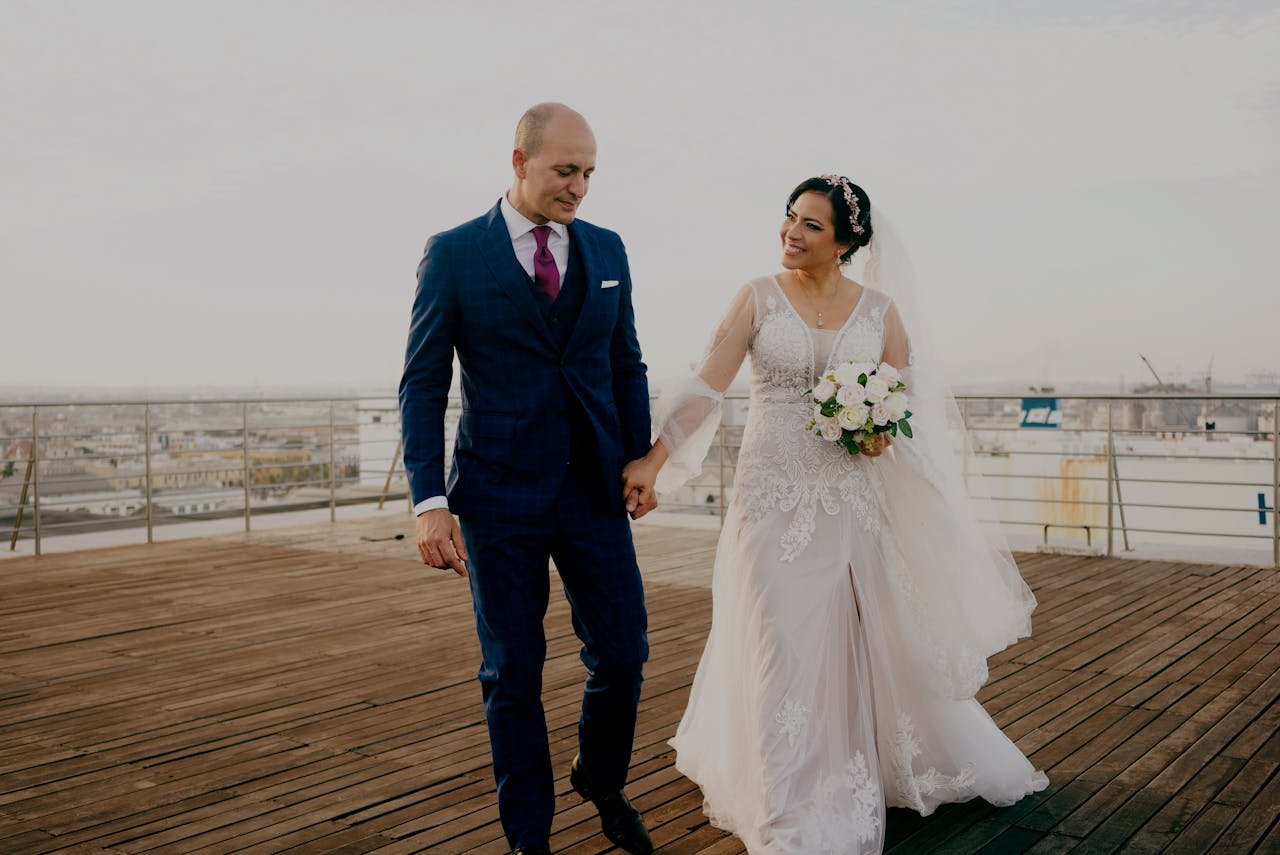
Denver Wedding Ceremony Venues for Personalized Weddings | Denver Wedding Officiant Guide
Summary
Explore Denver wedding ceremony venues for personalized weddings, including historic, modern, intimate, and unique ceremony spaces. Learn how to choose the right Denver wedding venue for custom vows, meaningful ceremonies, and a guest experience that feels true to your relationship.
What are the best Denver wedding ceremony venues for a personalized wedding?
The best Denver wedding ceremony venues for a personalized wedding are the ones that fit your story, guest count, and ceremony style. In general, couples should look for:
flexible ceremony layouts
meaningful architecture or views
privacy and sound control
strong indoor backup options
room for custom vows, readings, and rituals
Frequently Asked Questions (FAQ)
What are the best Denver wedding ceremony venues for a personalized wedding?
The best Denver wedding ceremony venues for a personalized wedding are the ones that match your tone, guest count, and ceremony goals. Historic mansions, industrial venues, boutique hotels, arts spaces, and park-adjacent venues can all work well when they offer privacy, flexible layouts, and room for custom vows or meaningful traditions.
How do I choose a Denver wedding venue for a custom ceremony?
Start by choosing the emotional tone you want: elegant, modern, intimate, relaxed, or artistic. Then evaluate venue layout, acoustics, privacy, weather backup plans, and how much freedom you have to personalize the ceremony structure.
Are Denver wedding venues good for intimate weddings?
Yes. Denver has many venues that work well for intimate weddings, especially for couples who want a meaningful ceremony without a huge ballroom feel. Smaller historic venues, art spaces, restaurant-connected venues, and outdoor-adjacent settings are often strong choices.
Why does the ceremony venue matter so much?
The ceremony venue shapes the guest experience, the sound of the vows, the pacing of the processional, and the emotional focus of the wedding day. A beautiful reception venue cannot fully compensate for a ceremony space that feels noisy, rushed, or disconnected.
What makes a wedding ceremony feel personalized?
A personalized ceremony usually includes custom-written language, personal vows, meaningful readings, cultural or family traditions, and a venue that supports the couple’s style. The goal is for the ceremony to feel specific to the relationship, not borrowed from a template.
Should I choose my officiant before my wedding venue?
Ideally, these decisions should inform each other. Your officiant helps shape the ceremony, and your venue affects how that ceremony will feel in real life. When both choices align, the result is usually more natural, memorable, and guest-centered.
Are outdoor wedding ceremony venues in Denver risky?
They can be beautiful, but couples should always confirm a weather backup plan. Even in Denver, temperature shifts, wind, and rain can affect comfort and timing. A strong backup option protects the ceremony experience without sacrificing personalization.
What neighborhoods in Denver are popular for wedding ceremonies?
Popular areas include LoDo, RiNo, Cherry Creek, Washington Park, Capitol Hill, and the Highlands. Each has a different atmosphere, so the right neighborhood depends on whether you want urban energy, historic charm, relaxed greenery, or a more refined hospitality setting.
Key Topics
Denver wedding ceremony venues
Denver wedding venues for ceremonies
personalized wedding ceremony Denver
Denver wedding officiant
personalized weddings Denver
intimate wedding ceremony venues Denver
Denver ceremony venues
wedding ceremony venues in Denver
unique wedding venues Denver
Denver wedding ceremony ideas
Denver wedding officiant personalized ceremony
best Denver wedding ceremony venues
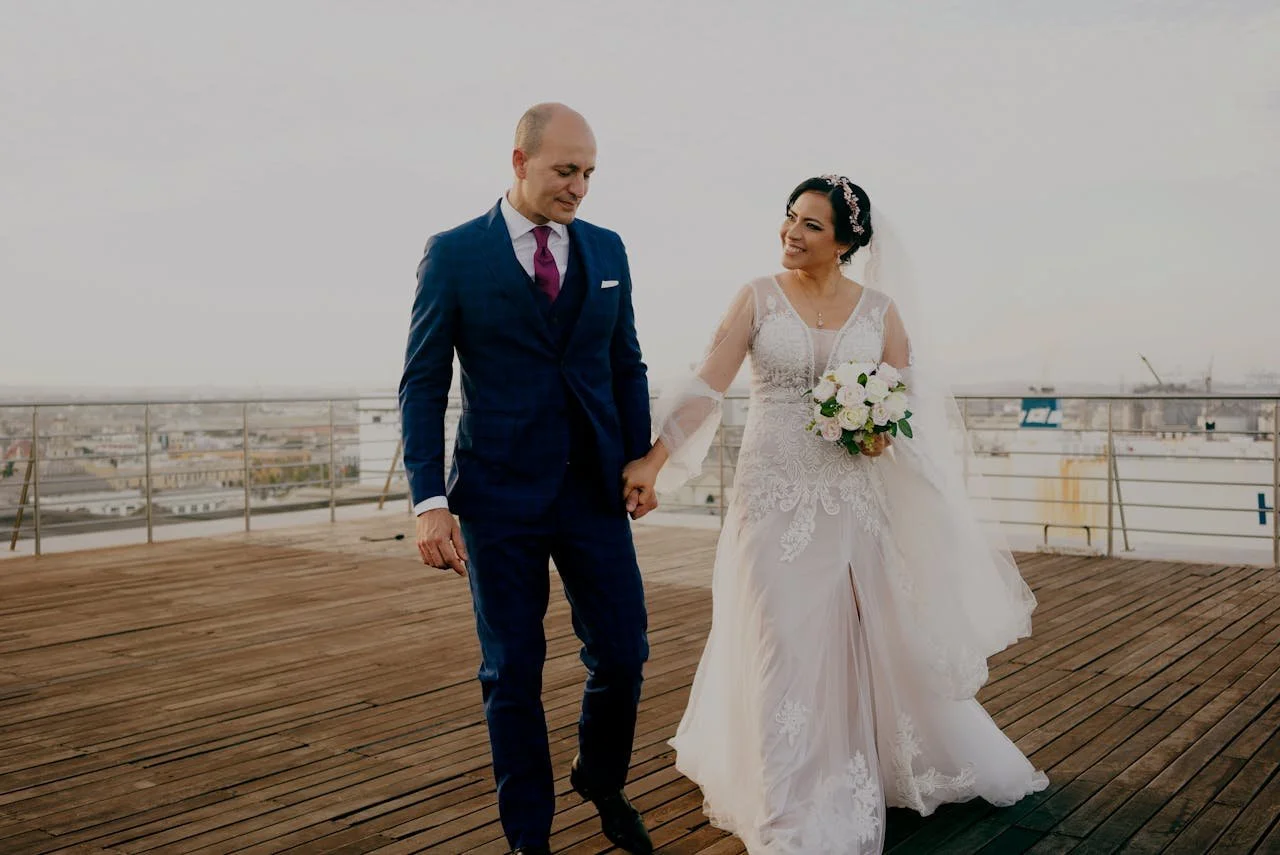
Denver Wedding Ceremonies / Photo: Isaac Hermar
How to Get Married in Colorado: Marriage License Guide for 2026
Denver offers something many wedding destinations struggle to balance: style, flexibility, and emotional range. You can host a ceremony in a historic mansion, an industrial-chic event space, a rooftop with skyline energy, a garden-adjacent setting, or a neighborhood venue that feels grounded in the city you actually live in and love. For couples who want more than a generic script in a pretty room, that matters.
It matters because the ceremony is not just the formal part before dinner. It is the emotional center of the wedding day. And increasingly, couples want weddings that feel unmistakably like their own. In The Knot Worldwide’s 2025 Global Wedding Report, 68% of respondents said they want guests to feel like they have never been to another wedding like theirs before, and personalized details ranked as the factor most likely to make a wedding memorable. Zola’s 2025 First Look Report similarly found that couples are moving away from extravagance for its own sake and toward hyper-personalized celebrations that feel uniquely theirs.
That shift is exactly why Denver is such a strong market for personalized wedding ceremonies. The city gives couples a broad menu of venue styles and neighborhood personalities, from LoDo and RiNo to Cherry Creek, Washington Park, Highland, and Capitol Hill. Michael Moody’s Denver service area explicitly spans these neighborhoods and other Denver locations, which makes the city especially workable for couples who want a ceremony that feels local rather than copy-and-paste
Table of Contents
Why Denver works so well for personalized weddings
What makes a wedding ceremony venue feel personal
Best types of Denver wedding ceremony venues for different couples
How to choose a Denver ceremony venue that fits your relationship
Questions to ask before you book
How your wedding officiant and venue should work together
Final thoughts
Why Denver works so well for personalized weddings
Denver is one of the best places in Colorado to build a ceremony around your actual relationship rather than forcing it into a prebuilt wedding formula. First, Denver offers venue diversity. On Michael’s Denver venues resource page, the city’s ceremony options range from industrial spaces like Moss Denver and Mile High Station to historic properties like Grant-Humphreys Mansion, hospitality venues like HALCYON in Cherry Creek, cultural or arts-forward spaces like Space Gallery, and outdoor-adjacent options like Washington Park Boathouse. That variety matters because personalization starts with context: the room, the architecture, the flow, the light, and the neighborhood all shape how the ceremony feels.
Second, Denver makes it easier to design a wedding that feels urban without feeling impersonal. Some couples want an elegant ceremony with a strong sense of place. Others want something intimate and relaxed. Others still want a refined but nontraditional setting that leaves room for custom vows, family stories, or a multicultural ceremony structure. Denver supports all three.
Third, Colorado wedding culture is already friendlier to customization than many states. Colorado couples can legally self-solemnize, which reflects the state’s broader openness to nontraditional wedding structures. Even when couples choose to work with an officiant, that flexibility often translates into ceremonies that feel less rigid and more intentional.
What makes a wedding ceremony venue feel personal
A venue does not become personal just because it looks beautiful online. A truly personal ceremony venue usually has five traits.
1. It matches the emotional tone of the relationship
A couple that is understated, thoughtful, and intimate often feels more at home in a historic mansion, boutique hotel, art space, or private dining-adjacent venue than in a massive ballroom. A couple that loves energy, design, and downtown movement may feel more aligned with an industrial or skyline-forward venue. The right venue should sound like you before anyone says a word.
2. It supports ceremony customization
Some venues look great in photos but create friction for personalization. The best ceremony venues allow room for:
custom processional structures
personal vows
family or friend readings
cultural traditions
live music
quiet pauses that do not feel rushed
layout changes that improve intimacy
If the venue is overly rigid, the ceremony often feels that way, too.
3. It has good acoustics, privacy, and guest focus
This is one of the most overlooked factors in ceremony planning. Personalized ceremonies rely on language. If your vows cannot be heard, if guests are distracted by noise, or if the ceremony space feels like a transitional zone rather than a focal point, even a well-written ceremony can lose its impact.
4. It fits your guest count honestly
A venue that is too large can make an intimate wedding feel sparse. A venue that is too tight can make a deeply personal ceremony feel logistically cramped. The right size helps guests stay emotionally present.
5. It offers a practical backup plan
Colorado weather is part of the beauty and part of the risk. Even for Denver weddings, couples should think carefully about sun, wind, temperature shifts, and rain contingencies. A personalized ceremony is easier to enjoy when you are not worried about last-minute chaos. Michael’s Colorado ceremony-planning guidance explicitly emphasizes backup plans because the weather can change quickly.
Best types of Denver wedding ceremony venues for different couples
Rather than chasing a single “best” venue, couples usually do better by choosing the best type of venue for their ceremony style.
Historic mansions for elegant, story-driven ceremonies
Venues such as Grant-Humphreys Mansion often appeal to couples who want warmth, architecture, and a sense of occasion without feeling too conventional. Historic venues work especially well for ceremonies that include carefully written welcome remarks, meaningful readings, and vows that deserve a quieter, more composed setting. They often photograph beautifully and help guests settle into a more reflective tone from the start.
Industrial venues for modern, design-forward weddings
Spaces like Mile High Station, Moss Denver, Ironworks, SKYLIGHT, and blanc are strong fits for couples who want a stylish city wedding with clean lines, texture, and room to build atmosphere. These venues are often ideal for modern ceremonies that still feel emotional, especially when paired with custom-written language, strong music cues, and a ceremony layout that brings guests physically closer.
Boutique hotel and hospitality venues for seamless guest experience
Venues such as HALCYON, a hotel in Cherry Creek, Moxy, and hospitality-centered spaces can be a smart choice for couples who care about flow. If guests are arriving from different parts of Colorado or from out of town, a hotel-based ceremony often reduces friction and keeps the day calm. It also makes it easier to create a more immersive wedding weekend experience instead of treating the ceremony as a separate event.
Outdoor or park-adjacent spaces for relaxed, intimate weddings
For couples who want nature without fully leaving the city, a place like Washington Park Boathouse can support a ceremony that feels simple, sincere, and local. These settings often work best when the ceremony language is heartfelt but not overly formal. The tone can feel relaxed while still being deeply meaningful.
Arts and culture venues for creative couples
Venues such as Space Gallery, Seawell Ballroom at the DCPA, or other visually expressive event spaces can be especially appealing to couples who value originality. These settings often pair well with unconventional ceremony structures, collaborative readings, or a ceremony that leans editorial, artistic, or intentionally nontraditional.
Restaurant and experience-driven venues for intimate celebrations
For smaller weddings, restaurant-connected or experience-forward venues can make the whole event feel more personal because guests stay in one setting and share a single atmosphere. Couples often feel less pressure to perform and more freedom to host. That can be a major advantage when the real priority is connection.
How to choose a Denver ceremony venue that fits your relationship
The strongest venue decisions are not made from aesthetics alone. They come from alignment. Start with these questions:
What should guests feel during the ceremony?
Do you want the ceremony to feel calm and elegant? Warm and conversational? Deeply intimate? Playful and modern? Your answer should quickly narrow the venue field.
What part of your story should the venue reinforce?
Maybe you two love city architecture. Maybe you spend weekends in Cherry Creek or Washington Park. Maybe you want a venue that feels refined but not stiff. Maybe you want a place where family traditions can be included naturally. The venue should support the emotional message of the ceremony.
How much flexibility do you want?
Some couples want a fairly classic structure with room for a few custom touches. Others want a fully bespoke ceremony with original language, personalized vows, cultural traditions, or a unique processional. The more customized the ceremony, the more important venue flexibility becomes.
How important is guest intimacy?
Many couples say they want a personal ceremony, but then choose a layout that creates distance. Personalization works best when guests can actually hear, see, and feel what is happening.
Does the venue work with your wedding officiant instead of against them?
A wedding officiant should not be adapting a meaningful ceremony to a space that is noisy, awkwardly shaped, rushed, or emotionally flat. The venue and officiant should support each other.
For couples who are still refining their ceremony vision, Michael’s service pages for Denver Wedding Officiant, Golden Wedding Officiant, and Boulder Wedding Officiant are useful internal next steps because they position the ceremony as a tailored, non-religious, highly personal experience rather than a standard add-on. The Denver page emphasizes service across Denver neighborhoods; the Golden page highlights warm, personal ceremonies and cultural inclusivity; and the Boulder page emphasizes tailored scripts, readings, and vows.
Questions to ask before you book
Before signing with any Denver wedding ceremony venue, ask:
Is the ceremony space private during our time slot?
What is the rain or weather backup plan?
How much time do we actually have for ceremony setup and transitions?
Can we arrange the seating to improve intimacy?
Are there sound restrictions or microphone limitations?
Can we include personalized vows, readings, or cultural elements without time pressure?
What does the venue require from our officiant?
Are there photo restrictions during the ceremony?
Is the ceremony area distinct enough to feel emotionally separate from the cocktail hour or dinner?
These questions are practical, but they are also strategic. Personalized weddings are rarely undone by a lack of inspiration. More often, they are weakened by avoidable logistics.
Related Articles
How to Get Married in Colorado: Marriage License Guide for 2026
Preparing for Your Wedding Ceremony in Colorado: A Couple’s Guide
How to Personalize Your Wedding Ceremony Without Making It Awkward or Overlong
Denver Rehearsal Dinner Venues: Elegant and Upscale Restaurant Options for Your Wedding Weekend
Common Wedding Ceremony Planning Challenges and How to Overcome Them (Expert Guide for Couples)
Spring Wedding Guide for Golden, Colorado: Venues, Permits, and Planning Tips
Boulder Fall Wedding Guide: Venues, Permits, License, and Tips
How your wedding officiant and venue should work together
The venue sets the frame. The wedding officiant brings the ceremony to life inside it. That is why venue and wedding officiant choices should not be made in separate silos. A personalized wedding ceremony depends on both. The right wedding officiant understands how to read the room, pace the ceremony, adjust to the space, and write language that feels appropriate to the setting. A historic venue may invite more gravitas. A modern industrial venue may support a crisp, contemporary tone. A garden-adjacent ceremony may call for something lighter and more organic.
This is also where current wedding trends matter. Zola’s 2025 report notes that couples are favoring private vow exchanges and moving away from empty extravagance toward celebrations that feel uniquely theirs. The Knot Worldwide’s 2025 report similarly found that personalized details are the biggest driver of memorability. In practice, that means the best Denver ceremony venues are not just photogenic. They are venues that give couples room to speak in their own voice.
A personalized wedding ceremony does not need to be overly long, theatrical, or unconventional to be memorable. In fact, one of the strongest outcomes of the ceremony is when guests leave saying, “That felt exactly like them.” That comes from fit: fit between the couple, the venue, the wedding officiant, and the ceremony design.
Final thoughts
There is no single best Denver wedding ceremony venue for every couple. The best one is the venue that helps your ceremony sound, feel, and unfold like your relationship. For some couples, that is a historic Denver mansion with timeless architecture. For others, it is an industrial venue with a city character. For others, it is a hotel, arts venue, park-adjacent setting, or even a private home celebration. The point is not to copy a trend. The point is to choose a Denver ceremony venue that provides the right setting for your story. If you want your ceremony to feel intentional from the first welcome to the last pronouncement, start by choosing a venue that supports personalization instead of just decoration. Then pair it with an officiant who knows how to make the space, the words, and the moment all work together.
About the Author: Michael Moody, Wedding Officiant
Michael Moody is a Colorado wedding officiant serving Denver, Boulder, Golden, Larkspur, and mountain communities throughout the state. Since 2012, he has officiated more than 300 weddings, bringing a calm presence, thoughtful guidance, and emotionally grounded ceremony writing to couples seeking a meaningful experience. He also offers Colorado elopement ceremonies for couples who want something intimate, intentional, and beyond the boundaries of a traditional wedding day. His work is shaped by a lifelong interest in connection, reflection, and personal growth. Michael is the author of the self-improvement book Redefine Yourself: The Simple Guide to Happiness and host of The Elements of Being podcast. As a wedding officiant, he draws from that same foundation: the belief that our relationships, words, and everyday interactions help shape a life rooted in love, empathy, and purpose. Michael’s ceremony work has been recognized across Colorado. He is a 2023 WeddingWire Couples’ Choice Award winner in Denver, marking his eighth consecutive year receiving the honor. He was also named “Best Business of 2024, 2025, and 2026” by Three Best Rated and earned “The Best Wedding Officiant in Commerce City, Colorado for 2024” from Quality Business Awards USA.
Beyond weddings, Michael and his wife, Sammy, have sponsored an annual student scholarship for more than 10 years. They also founded Civic Growth Alliance, a 501(c)(4) nonprofit dedicated to strengthening communities through civic advocacy, resident engagement, strategic partnerships, public safety initiatives, neighborhood vitality, and community well-being.
Wedding locations: Michael officiates wedding ceremonies in the Denver neighborhoods of LoDo, River North, Washington Park, Cherry Creek, City Park, Central Park, Capitol Hill, Cheesman Park, Park Hill, Lower Highlands, and Sloan Lake. Michael also serves as an ordained minister in Larkspur, Littleton, Golden, Boulder, Breckenridge, Frisco, Aspen, Vail, Estes Park, and more. If your Denver neighborhood or Colorado town isn’t listed here, no worries! Please contact Michael to propose a wedding ceremony location in a different area!
Wedding Planning Tips
Based in Denver, Michael Moody serves couples across neighborhoods including LoDo, RiNo, Highlands/LoHi, Cherry Creek, Washington Park, and Capitol Hill, and works with couples planning ceremonies throughout Denver, Boulder, and Golden. That local range matters when choosing a ceremony venue, because neighborhood character, traffic flow, guest accessibility, and venue atmosphere can all shape how personal and seamless the ceremony feels on the day itself.

How to Get Married in Colorado: Marriage License Guide for 2026
Summary
Learn how to get married in Colorado in 2026 with this complete marriage license guide. Find Colorado marriage license rules, self-solemnization steps, fees, deadlines, and tips for Denver, Golden, and Boulder wedding ceremonies.
Frequently Asked Questions (FAQ)
1. Can you get married in Colorado without a wedding officiant?
Yes. Colorado allows couples to self-solemnize, which means they can legally marry themselves without an officiant.
2. Do you need witnesses to get married in Colorado?
No. Witnesses are not required under Colorado’s marriage process.
3. How much does a marriage license cost in Colorado?
Most Colorado counties list the marriage license fee as $30.
4. How long is a Colorado marriage license valid?
A Colorado marriage license must be used within 35 days of issue.
5. Is there a waiting period to get married in Colorado?
No. Colorado does not require a waiting period, so the license may be used immediately.
6. Can out-of-state couples get married in Colorado?
Yes. You do not have to be a Colorado resident to obtain a marriage license and marry in the state, though county application processes vary.
7. Do you have to apply in the same county where you get married?
No. A Colorado marriage license can be used anywhere in the state.
8. What happens after the wedding ceremony?
The completed license/certificate must be returned to the issuing county clerk for recording, generally within 63 days after solemnization.
Key Topics
how to get married in Colorado
Colorado marriage license
Colorado Marriage License Guide 2026
how to get a marriage license in Colorado
Colorado self solemnization
Colorado self solemnize marriage
Colorado elopement marriage license
Colorado marriage laws 2026
Colorado wedding license requirements
Denver marriage license
Boulder marriage license
Golden Colorado wedding officiant
Denver wedding officiant
Boulder wedding officiant
Colorado wedding officiant

How to Get Married in Colorado / Photo: Alexander Mass
How to Get Married in Colorado: Marriage License Guide for 2026
Colorado remains one of the most straightforward places in the United States to get legally married, which is one reason it continues to be so popular for weddings, micro weddings, and elopements. In 2026, couples can still benefit from Colorado’s unusually flexible rules: there is no waiting period, the license can be used immediately, witnesses are not required, and couples can legally self-solemnize their own marriage. Official county guidance also confirms that applicants do not need to be Colorado residents to marry here.
That flexibility matters whether you are planning a full wedding weekend in the city, a quiet legal ceremony, or a mountain elopement. It also means couples can focus less on red tape and more on creating a meaningful ceremony. If you are still deciding where your celebration should happen, you can explore options with these internal pages for Denver wedding officiant services, Golden wedding officiant services, and Boulder wedding officiant services.
Table of Contents
Why Colorado is one of the easiest states to get married in
Who can legally marry in Colorado
What you need to get a Colorado marriage license
Where to apply for a marriage license in Colorado
How much a Colorado marriage license costs
How long the license is valid
Can you self-solemnize in Colorado?
Do you need witnesses or an officiant?
What happens after the ceremony
Common mistakes couples make
Colorado marriage license tips for out-of-state couples
Planning your ceremony in Denver, Golden, or Boulder
Final checklist for 2026 couples
Why Colorado is one of the easiest states to get married in
Colorado stands out because the state gives couples more autonomy than many other places. Under Colorado law, a marriage may be solemnized by a judge, certain public officials, religious representatives, or by the parties themselves. In practice, that means self-solemnization is legal. Couples can marry themselves without hiring an officiant and without bringing witnesses.
For many couples, that makes Colorado especially appealing for:
destination weddings
private elopements
same-day legal ceremonies
intimate ceremonies in the mountains
low-stress celebrations with minimal paperwork
Recent wedding-industry guidance has continued to emphasize the difference between a marriage license and a marriage certificate, and that distinction matters here too. The license is the document that allows you to marry; the completed and recorded certificate is what proves the marriage happened. Brides highlighted this distinction in 2025, which is helpful because couples often use the terms interchangeably and then get confused about what they need before versus after the wedding.
Who can legally marry in Colorado
Most adult couples can legally marry in Colorado, provided the marriage is not otherwise prohibited by law. Colorado law prohibits marriages involving close blood relatives such as ancestors and descendants, siblings, and certain aunt/uncle-niece/nephew relationships. The state also prohibits entering into a new marriage before a prior marriage or civil union has been legally dissolved.
Age rules are important in 2026 because Colorado lawmakers have continued to scrutinize and tighten marriage-age exceptions. County guidance still reflects that 18 is the standard legal age, while younger applicants may be subject to court-order requirements depending on the governing statute and timing of implementation. Because this area is actively changing, couples under 18 should verify the current rule directly with the county clerk before making plans.
Quick summary list:
Apply in any Colorado county
Bring valid identification
Pay the marriage license fee
Get married within 35 days
Return the completed license within 63 days
Self-solemnization is allowed in Colorado
What you need to get a Colorado marriage license
In most cases, couples should expect to provide valid identification, basic personal information, and payment. County clerk offices commonly ask for information such as names, addresses, birthplaces, parents’ names, and details of any prior divorce. Jefferson County, for example, states that Social Security numbers are required on the application, and if an applicant does not have one, an affidavit may be used.
A practical rule for 2026: check the exact county process before you go. Even though state law is broad, county workflows vary. Some offices are appointment-only; some offer online or remote appointments; some mail licenses; and some have pickup requirements for out-of-state couples. Denver and Boulder both have process details that can affect your timeline.
Zola’s Colorado marriage-license guide, updated in 2024, also reinforces a useful planning point: both partners generally need to be present, bring valid identification, and be prepared to pay the fee at the time of application.
Where to apply for a marriage license in Colorado
You may apply for a marriage license through a Colorado county clerk and recorder. The license is valid statewide, which means you do not have to marry in the same county where you obtained it. Weld County explicitly notes that a marriage or civil union license can be used anywhere in Colorado.
That statewide flexibility is extremely useful. A couple might apply in Denver because it fits their travel schedule, then use the license for a ceremony in Boulder, Golden, Rocky Mountain National Park, or another Colorado destination. For out-of-state couples flying in, this can significantly simplify logistics. Official Denver guidance also states that applicants do not need to be Colorado residents.
A few examples of 2026 county processes:
Denver: In-person services are appointment-only, and appointments can be booked up to 7 days in advance. Denver also offers online appointments, but warns that if your ceremony is within two weeks, an in-person appointment is safer because mailed licenses may not arrive in time.
Boulder County: Boulder uses a remote process for obtaining a marriage license. Both parties must be together, in Colorado, and on video for the application. Boulder also notes that it cannot mail an issued license outside Colorado, and same-day pickup is required for out-of-state applicants in certain cases.
These county-level details are exactly why couples should not assume that “Colorado is easy” means “every clerk’s office works the same way.”
How much a Colorado marriage license costs
Colorado marriage licenses are widely listed by counties at $30. Recent county guidance from multiple Colorado offices reflects this amount, and Zola’s 2024 guide says the same.
The smarter move is to also confirm accepted payment methods before your appointment. Denver accepts cash, check, or credit card for appointments. Some counties are more limited. San Miguel County, for example, states that the license fee is $30 and notes specific payment-method constraints.
How long is the Colorado marriage license valid?
Colorado does not have a waiting period, so the license may be used immediately after issuance. But it is not open-ended. Official guidance from Denver states that the certificate must be signed in Colorado within 35 days from the date the license was issued, and the completed marriage certificate and attached license must be returned for recording within 63 days after solemnization.
This is one of the most important legal deadlines to understand:
no waiting period
valid immediately
must be used within 35 days
return the completed paperwork within 63 days after the ceremony
If you are planning a destination wedding, do not apply too early. A good rule is to choose a license appointment that gives you enough buffer for travel issues, but not so much time that you risk running past the 35-day validity period.
Can you self-solemnize in Colorado?
Yes. Colorado is one of the few states where couples may legally self-solemnize, meaning they can solemnize their own marriage without an officiant. Colorado’s statute expressly allows the parties to solemnize the marriage themselves.
This is one of the most searched and most misunderstood Colorado wedding questions. Self-solemnization does not mean “skip the paperwork.” It means you still obtain the legal license, hold your ceremony in Colorado, and complete the certificate properly, but you do not need a third-party officiant to make the marriage legal.
That said, many couples still choose a professional officiant even when they could self-solemnize. The reason is rarely legal. It is usually experiential. A skilled officiant helps the ceremony feel intentional, calm, personal, and memorable. For couples who want that structure and presence, these pages are the natural internal links to include: Denver wedding officiant services, Golden wedding officiant services, and Boulder wedding officiant services.
Do you need witnesses or an officiant?
No witnesses are required in Colorado. Official county guidance and secondary wedding-law summaries both confirm that witnesses are not needed. Colorado also allows self-solemnization, so an officiant is not legally required either.
Still, “not required” and “not helpful” are not the same thing. Couples often want:
a professional to guide the ceremony flow
help with custom vows or readings
someone experienced with timing and guest management
a grounding presence during a high-emotion moment
That is especially true for larger gatherings, destination weddings, or ceremonies in public or outdoor spaces where coordinating timing, weather, and logistics matters.
What happens after the ceremony?
After the ceremony, the marriage certificate portion of the license must be completed correctly and returned to the issuing clerk for recording. This is where many couples get tripped up. They assume the marriage is complete once the ceremony ends, and then forget about the return deadline. Denver clearly states that the completed marriage certificate and attached license must be returned within 63 days of solemnization, and that late fees apply thereafter.
This is also where the distinction Brides discussed becomes useful: the license is the pre-wedding legal authorization, while the recorded certificate is the proof you will later use for name changes and legal records.
Common mistakes couples make
The most common Colorado marriage-license mistakes are avoidable:
1. Applying too early.
The 35-day validity window is generous, but not unlimited. Do not get the license months ahead.
2. Assuming all counties use the same process.
Denver’s appointment and mailing guidance differ from Boulder’s remote workflow.
3. Forgetting that online appointments can affect timing.
If your ceremony is close, Denver specifically recommends in-person rather than online because of mailing delays.
4. Confusing the license with the certificate.
This can delay name-change or administrative steps later.
5. Not checking permit or site rules for the ceremony location.
The marriage license makes the marriage legal, but parks, open spaces, venues, and mountain locations may still require permits or have guest restrictions. Your legal paperwork and your ceremony logistics are not the same thing. This is especially relevant for Boulder, Golden, and Front Range elopement areas covered elsewhere on your site.
Colorado marriage license tips for out-of-state couples
Colorado is very welcoming to destination couples, but a little planning can prevent stress.
First, verify the county process before you travel. Denver says applicants need not be Colorado residents, while Boulder requires both parties to be in Colorado for the remote application process and notes special pickup requirements for out-of-state applicants.
Second, do not schedule your legal appointment at the last possible minute. Recent wedding-industry guidance continues to recommend building margin into all legal paperwork tasks, and Colorado county processes support that advice. If you are using Denver’s online process and your ceremony is less than two weeks away, Denver itself advises booking an in-person appointment instead.
Third, remember that the ceremony itself must occur in Colorado if you are using a Colorado marriage license. County guidance consistently states that the license is for marriages performed within the state.
Planning your ceremony in Denver, Golden, or Boulder
Once the legal side is handled, the next question is usually where and how to hold the ceremony.
Denver works well for couples who want urban convenience, easier lodging, restaurants, transportation, and a straightforward courthouse or city-centered celebration. If your guests are flying in, Denver is often the simplest home base. See the internal page for Denver wedding officiant services.
Golden is ideal for couples who want a scenic foothills feel without going too far from the city. It is a strong option for intimate weddings, outdoor celebrations, and couples who want mountain-adjacent views with accessible logistics. See Golden wedding officiant services.
Boulder appeals to couples who want a polished-meets-natural setting, often with iconic Flatirons views, trail access, and elegant small-event potential. See Boulder wedding officiant services.
Final checklist for 2026 couples
Before your wedding day, make sure you have done all of the following:
chosen a Colorado county clerk process that fits your timeline
confirmed appointment requirements
gathered valid identification and required information
confirmed the marriage-license fee and payment method
applied close enough to the ceremony date to stay inside the 35-day window
decided whether you will self-solemnize or work with an officiant
checked venue or permit rules for your ceremony location
made a plan to return the completed license within 63 days after the ceremony
Colorado makes the legal side of marriage unusually accessible. The real key for 2026 is not complexity. It is precision. Follow the county process carefully, meet the deadlines, and give yourselves enough margin so the paperwork supports the day rather than distracting from it.
Related Articles
Preparing for Your Wedding Ceremony in Colorado: A Couple’s Guide
Boulder Fall Wedding Guide: Venues, Permits, License, and Tips
Spring Wedding Guide for Golden, Colorado: Venues, Permits, and Tips
Colorado Front Range Elopement Guide: Hiking-In Wedding Ceremonies and Logistics
Colorado Elopement Hikes Near Denver: North Table Mountain West Loop (Golden)
About the Author: Michael Moody, Wedding Officiant
Michael Moody is a Colorado wedding officiant serving Denver, Boulder, Golden, Larkspur, and mountain communities throughout the state. Since 2012, he has officiated more than 300 weddings, bringing a calm presence, thoughtful guidance, and emotionally grounded ceremony writing to couples seeking a meaningful experience. He also offers Colorado elopement ceremonies for couples who want something intimate, intentional, and beyond the boundaries of a traditional wedding day. His work is shaped by a lifelong interest in connection, reflection, and personal growth. Michael is the author of the self-improvement book Redefine Yourself: The Simple Guide to Happiness and host of The Elements of Being podcast. As a wedding officiant, he draws from that same foundation: the belief that our relationships, words, and everyday interactions help shape a life rooted in love, empathy, and purpose. Michael’s ceremony work has been recognized across Colorado. He is a 2023 WeddingWire Couples’ Choice Award winner in Denver, marking his eighth consecutive year receiving the honor. He was also named “Best Business of 2024, 2025, and 2026” by Three Best Rated and earned “The Best Wedding Officiant in Commerce City, Colorado for 2024” from Quality Business Awards USA.
Beyond weddings, Michael and his wife, Sammy, have sponsored an annual student scholarship for more than 10 years. They also founded Civic Growth Alliance, a 501(c)(4) nonprofit dedicated to strengthening communities through civic advocacy, resident engagement, strategic partnerships, public safety initiatives, neighborhood vitality, and community well-being.
Wedding locations: Michael officiates wedding ceremonies in the Denver neighborhoods of LoDo, River North, Washington Park, Cherry Creek, City Park, Central Park, Capitol Hill, Cheesman Park, Park Hill, Lower Highlands, and Sloan Lake. Michael also serves as an ordained minister in Larkspur, Littleton, Golden, Boulder, Breckenridge, Frisco, Aspen, Vail, Estes Park, and more. If your Denver neighborhood or Colorado town isn’t listed here, no worries! Please contact Michael to propose a wedding ceremony location in a different area!
Wedding Planning Tips
Michael Moody serves couples across Colorado, including those in Denver, and understands both the legal and practical aspects of planning a ceremony here. With Denver as a central hub for county access, guest travel, restaurants, hotels, and nearby mountain wedding routes, couples can handle license logistics efficiently while still creating a personalized ceremony experience in the city, foothills, or Front Range.
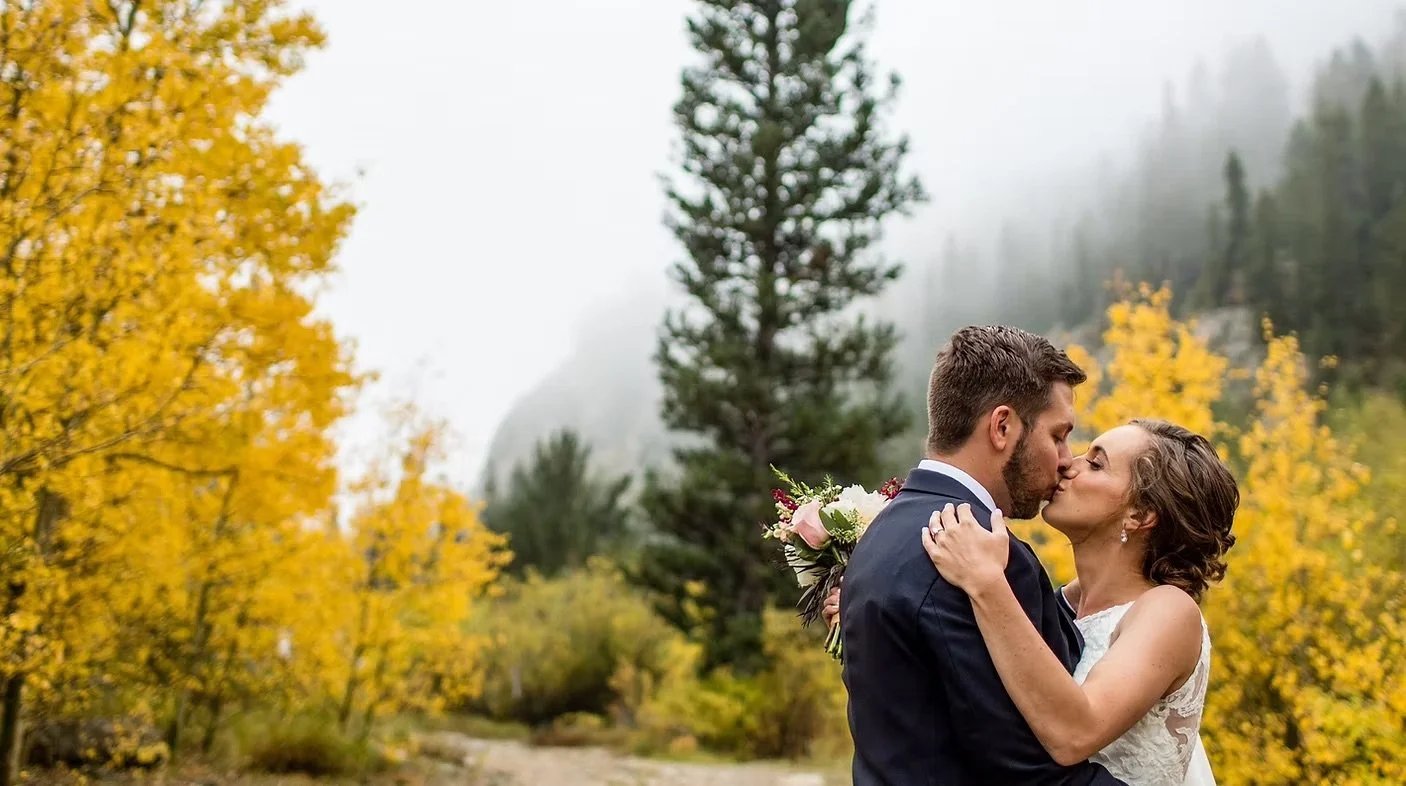
Summer Wedding Guide for Evergreen, Colorado: Venues, Travel, and Planning Tips
Summary
Planning a summer wedding in Evergreen, Colorado? This guide covers some of the most popular Evergreen-area venues, travel and lodging tips for guests, marriage-license basics through Jefferson County, and practical day-of ideas for mountain weather, timing, and guest comfort. Evergreen combines lake views, pine forests, and easy access from Denver, making it a strong fit for couples who want a Colorado mountain feel without sending everyone deep into the high country.
Frequently Asked Questions About Getting Married in Evergreen, Colorado
What is the best time for a summer wedding in Evergreen, Colorado?
For most couples, the best window is late June through early September. That stretch usually offers the most greenery, long daylight, and the easiest conditions for outdoor ceremonies and portraits. Evergreen’s wedding and visitor resources also position the area as a sunny mountain destination with strong summer appeal.
What are the best wedding venues in Evergreen, Colorado?
Some of the most recognizable options in and around Evergreen include Evergreen Lake House, The Barn at Evergreen Memorial Park, Evergreen Red Barn, and nearby foothills venues couples often compare alongside Evergreen properties. Evergreen Lake House is one of the best-known local choices because it overlooks the lake and offers a rustic mountain setting with year-round event hosting.
How far is Evergreen from Denver International Airport?
A practical planning estimate is about an hour or a little more by car, depending on traffic, arrival time, and where guests are staying in Evergreen. Evergreen is commonly described as about 30 minutes from Denver, which makes it one of the more accessible mountain-style wedding destinations near the city.
How do you get a marriage license for an Evergreen wedding?
Most couples getting married in Evergreen use Jefferson County. Jefferson County says the marriage license costs $30, can be used immediately in Colorado, and remains valid for 35 days from the date of issue. The county also explains that both parties should typically appear in person, although one party may appear with a completed, notarized absentee affidavit and the absent party’s original identification, if needed.
Do you need an officiant to get married in Colorado?
Not strictly. Colorado allows self-solemnization, meaning a couple can legally marry without a traditional officiant and without witnesses. Even so, many couples still hire a wedding officiant because it provides a more personal ceremony, better structure, and smoother guidance through the processional, vows, and the overall flow of the ceremony.
What should out-of-town guests know before attending a wedding in Evergreen?
Guests should know that Evergreen is easier to reach than many mountain towns, yet it still feels like a Colorado destination wedding location. It also sits at about 7,074 feet, so hydration, sunscreen, layers, and pacing alcohol are all smart recommendations for visitors arriving from lower elevations. Lodging options in the area include cabins, cottages, and other mountain-style stays that work well for full wedding weekends.
What time should a summer wedding ceremony start in Evergreen?
A strong planning range is late afternoon to early evening, often around 5:00 to 6:00 p.m., for outdoor weddings. That timing usually gives you softer light for photos, cooler temperatures for guests, and a more comfortable ceremony experience than a mid-afternoon start. This is a best-practice recommendation based on the mountain setting, not a legal requirement. Evergreen’s outdoor wedding appeal and scenic venues make light and weather timing especially important.
Is Evergreen a good location for a destination wedding in Colorado?
Yes — Evergreen is a strong option for couples who want a mountain wedding feel without sending guests too far from Denver. It combines foothills scenery, local lodging, outdoor recreation, and recognizable wedding venues, while still being much easier for guests to access than many deeper resort-town destinations.
How do you plan an outdoor wedding ceremony in Evergreen?
Start with the basics: confirm your venue’s weather backup plan, think through guest shade and hydration, and schedule the ceremony for a time with better light and comfort. Because Evergreen is a mountain setting at over 7,000 feet, outdoor weddings benefit from practical details like water stations, layers, microphone wind protection, and a backup plan for afternoon weather changes.
What does a wedding officiant in Evergreen, Colorado do?
A wedding officiant helps create and lead the ceremony itself. That usually includes creating a personalized script, helping with vows, guiding the processional and recessional, running the rehearsal, and ensuring the ceremony feels clear, calm, and meaningful on the day of the wedding. In a place like Evergreen, where couples often want a personal mountain ceremony rather than a generic one, the officiant also helps connect the setting to the couple’s story. This final point is a professional planning judgment rather than a county rule.
Key Topics
Evergreen wedding officiant
wedding officiant Evergreen, CO
Evergreen Colorado wedding
summer wedding, Evergreen, Colorado
Evergreen wedding venues
Evergreen Lake House wedding
The Barn at Evergreen Memorial Park wedding
Evergreen Red Barn wedding
mountain wedding Evergreen, CO
Evergreen, Colorado wedding ceremony
Colorado mountain wedding officiant
Jefferson County marriage license wedding
destination wedding, Evergreen, Colorado
personalized wedding ceremony Evergreen
Denver and Evergreen wedding officiant
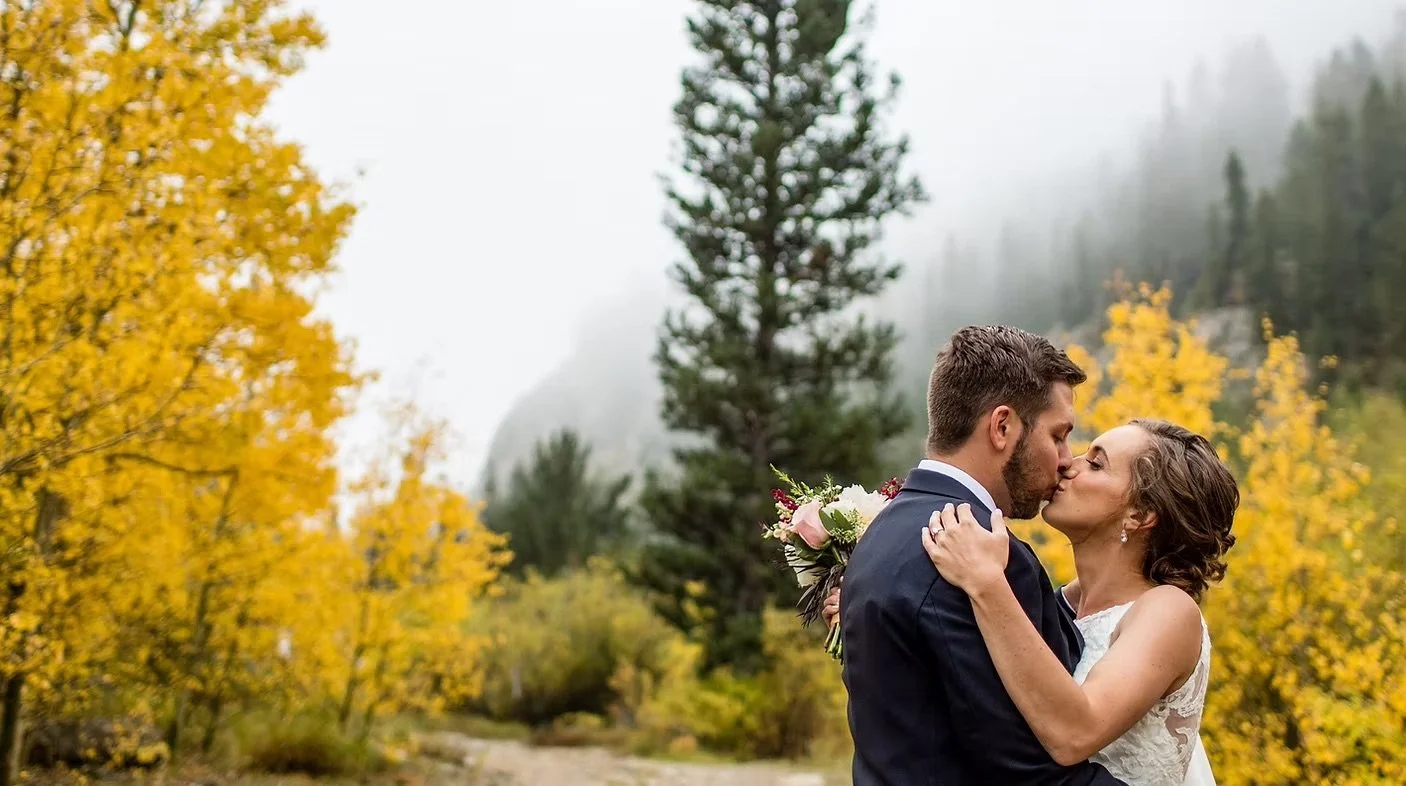
Photo: Blackstone Rivers Ranch
Summer Wedding Guide for Evergreen, Colorado: Venues, Travel, and Planning Tips
Planning a summer wedding in Evergreen, Colorado? This guide covers some of the most popular Evergreen-area venues, travel and lodging tips for guests, marriage-license basics through Jefferson County, and practical day-of ideas for mountain weather, timing, and guest comfort. Evergreen combines lake views, pine forests, and easy access from Denver, making it a strong fit for couples who want a Colorado mountain feel without sending everyone deep into the high country.
Why Evergreen Works for Summer “I Do’s”
A mountain-town setting without requiring guests to travel all the way into a resort market.
A strong mix of venue styles, from lakefront and rustic log architecture to barn and canyon-view settings.
Quick access from Denver for local couples and easier logistics for out-of-town guests.
A summer season that is ideal for outdoor ceremonies, with enough mountain variability that a thoughtful rain and temperature backup plan still matters.
Best Months and Day-Of Timing
For an Evergreen summer wedding, late June through early September is usually the sweet spot for green scenery, longer daylight, and a strong balance between comfort and mountain atmosphere. The best ceremony window is often later in the day, when direct sun softens and temperatures become more comfortable for guests in formalwear. Because mountain weather can still turn quickly, ask your venue about covered ceremony options, wind exposure, and storm procedures before finalizing your timeline. This timing advice is a planning judgment based on the local setting and venue style rather than a government rule
Ceremony and Reception Ideas for an Evergreen Wedding
Lakefront elegance: A ceremony with water views, wood tones, and soft neutral florals works especially well in Evergreen. Evergreen Lake House is known for lake views and rustic log-cabin character.
Classic mountain barn style: Evergreen Red Barn and The Barn at Evergreen Memorial Park both lean rustic and scenic, with forested or meadow-style surroundings.
Foothills panorama: Mount Vernon Canyon Club is a good fit for couples who want dramatic views while staying close to Denver.
River-and-pines atmosphere: Blackstone Rivers Ranch, though not in Evergreen proper, is close enough to fit many foothills wedding searches and offers a strong indoor-outdoor mountain event feel.
Venues In and Near Evergreen to Consider
These are the kinds of venues couples often compare when planning an Evergreen-area wedding weekend:
Evergreen Lake House — A year-round event venue overlooking Evergreen Lake, known for mountain views, deck access, and rustic log-cabin character.
The Barn at Evergreen Memorial Park — A mountain venue surrounded by evergreens and wildlife, with a historic, rustic feel.
Evergreen Red Barn — A venue set among pines with mountain views and an outdoor arbor option.
Mount Vernon Canyon Club — A foothills venue about 20 minutes west of Denver with canyon and city-light views.
Blackstone Rivers Ranch — A nearby foothills option with riverfront, forest, and mountain ambiance, located about 35 minutes west of Denver.
Wedding Officiant Tip: Ask every venue about parking flow, shade at the ceremony site, wind on microphones, and what happens if thunderstorms build in the afternoon.
Out-of-Town Couples: Practical Guide
Getting here
Evergreen is marketed as a mountain destination that is still close to Denver, which is one of its biggest wedding-planning advantages. Downtown Evergreen is typically around 30 to 40 minutes from downtown Denver, while airport pickups usually need a larger time buffer.
Where to stay
The Evergreen chamber’s visitor resources emphasize a range of lodging styles, including cabins, cottages, and local stays that fit a full wedding weekend. This works well for couples who want a rehearsal dinner, welcome drinks, ceremony, and day-after brunch all within the same foothills area.
Getting around
Evergreen is easier than many mountain markets, but it is still smart to coordinate transportation if guests are unfamiliar with foothills roads, especially after dark. For weddings with hotel blocks, consider a shuttle or rideshare plan instead of assuming everyone will drive themselves back late at night. This is a best-practice recommendation based on the mountain location.
Guest comfort
Because Evergreen sits around 7,000-plus feet, couples should think through hydration, sunscreen, layered clothing, and pacing for guests coming from lower elevation. Small details like water stations, parasols, fans, or blankets can make the ceremony feel much more hospitable.
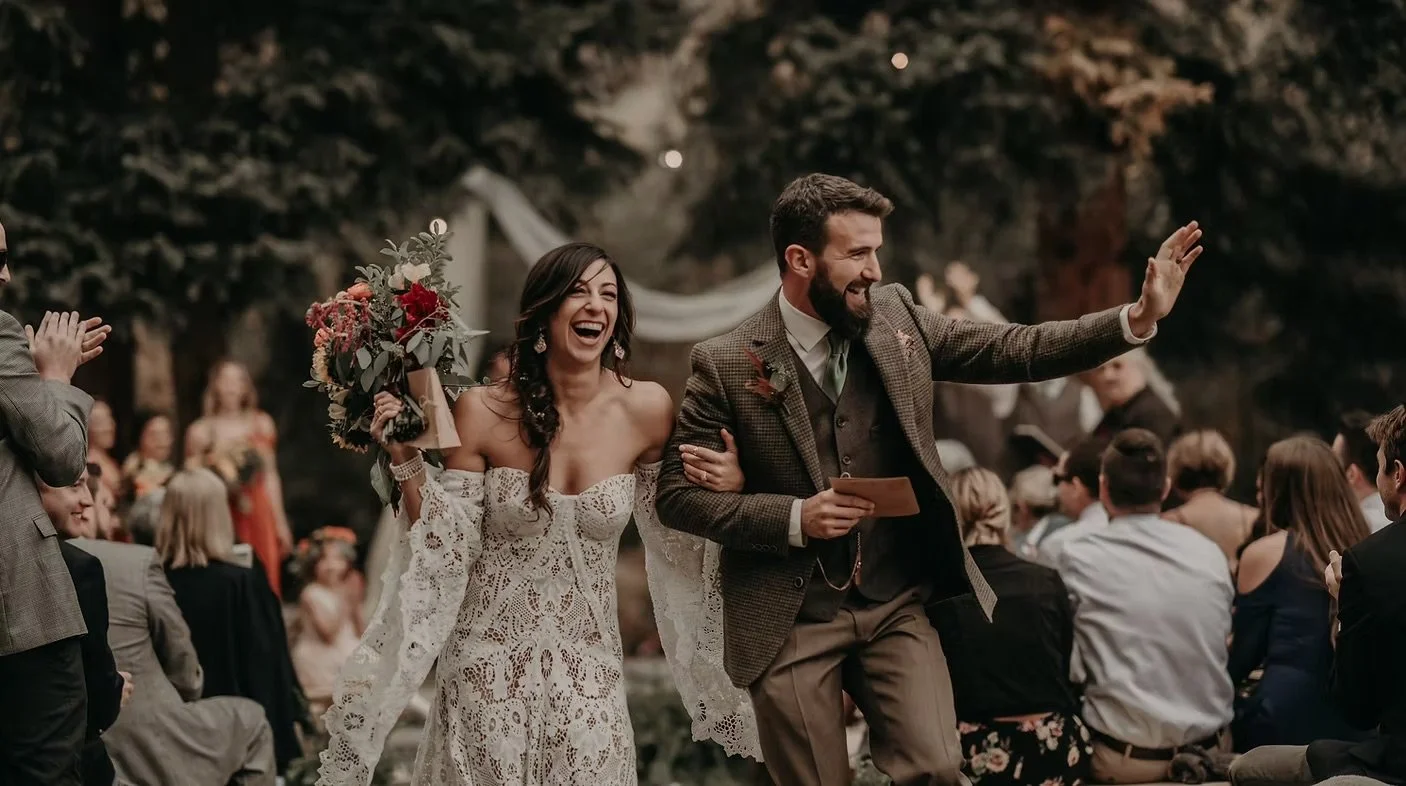
Evergreen Wedding Ceremonies / Photo: Blackstone Rivers Ranch
Marriage License for an Evergreen Wedding
For most Evergreen weddings, Jefferson County is the most relevant county office. Jefferson County says couples must gather the required information, complete the application, and come into the Records and Licensing office to purchase the license. The county also states that both people should be present to apply. The license fee is currently $30, and the license is valid for 35 days.
Colorado is also one of the few states that allows self-solemnization, and Jefferson County notes that witnesses are not required. Even if you choose to hire a professional wedding officiant for a more personal, polished, and guided ceremony experience, this flexibility is one reason Colorado weddings are so appealing for both traditional weddings and intimate celebrations.
Sample Summer Wedding Timeline (5:00 p.m. to 10:00 p.m.)
2:00 p.m. Getting ready, detail photos, and final touchpoints with planner and officiant
4:00 p.m. First look and wedding party portraits
5:30 p.m. Ceremony
6:00 p.m. Family photos and cocktail hour
6:45 p.m. Golden-hour portraits
7:30 p.m. Dinner and toasts
8:45 p.m. First dances and open dance floor
10:00 p.m. Grand exit or final private moment together
This kind of timeline usually fits Evergreen well because it protects guests from peak afternoon sun and tends to produce more flattering ceremony light in outdoor or deck-facing settings. That is a planning recommendation based on venue style and foothills conditions.
Preferred Vendor Shortlist: What to Ask For
Planner or coordinator: Ask how they handle ceremony transitions, guest arrival flow, and weather pivots for mountain venues.
Photography and video: Ask about sunset timing, shade, and the travel time needed between portrait spots.
Catering: Ask about hydration stations, seasonal menus, and any service constraints outdoors.
Music: Ask whether the ceremony site needs battery-powered amplification and wind protection for microphones.
Wedding officiant: Ask whether your officiant helps customize the script, guides rehearsal, times the processional well, and coordinates with your planner, photographer, and DJ.
How Michael Can Help Personalize Your Evergreen Wedding Ceremony
As a Colorado wedding officiant, Michael can help turn an Evergreen wedding from “beautiful setting” into a ceremony that actually feels like you. That includes learning your story, shaping a ceremony tone that fits your relationship, helping with vows, guiding rehearsal, and coordinating with your vendor team so the ceremony feels calm, clear, and meaningful. Evergreen is especially well-suited for couples who want something personal and mountain-forward without losing convenience for guests. Your existing site already positions Michael as serving Evergreen and other Colorado locations, which makes an Evergreen-specific planning post a strong fit for local service visibility.
About the Author: Michael Moody, Wedding Officiant
Michael Moody is a Colorado wedding officiant serving Denver, Boulder, Golden, Larkspur, and mountain communities throughout the state. Since 2012, he has officiated more than 300 weddings, bringing a calm presence, thoughtful guidance, and emotionally grounded ceremony writing to couples seeking a meaningful experience. He also offers Colorado elopement ceremonies for couples who want something intimate, intentional, and beyond the boundaries of a traditional wedding day. His work is shaped by a lifelong interest in connection, reflection, and personal growth. Michael is the author of the self-improvement book Redefine Yourself: The Simple Guide to Happiness and host of The Elements of Being podcast. As a wedding officiant, he draws from that same foundation: the belief that our relationships, words, and everyday interactions help shape a life rooted in love, empathy, and purpose. Michael’s ceremony work has been recognized across Colorado. He is a 2023 WeddingWire Couples’ Choice Award winner in Denver, marking his eighth consecutive year receiving the honor. He was also named “Best Business of 2024, 2025, and 2026” by Three Best Rated and earned “The Best Wedding Officiant in Commerce City, Colorado for 2024” from Quality Business Awards USA.
Beyond weddings, Michael and his wife, Sammy, have sponsored an annual student scholarship for more than 10 years. They also founded Civic Growth Alliance, a 501(c)(4) nonprofit dedicated to strengthening communities through civic advocacy, resident engagement, strategic partnerships, public safety initiatives, neighborhood vitality, and community well-being.
Wedding locations: Michael officiates wedding ceremonies in the Denver neighborhoods of LoDo, River North, Washington Park, Cherry Creek, City Park, Central Park, Capitol Hill, Cheesman Park, Park Hill, Lower Highlands, and Sloan Lake. Michael also serves as an ordained minister in Larkspur, Littleton, Golden, Boulder, Breckenridge, Frisco, Aspen, Vail, Estes Park, and more. If your Denver neighborhood or Colorado town isn’t listed here, no worries! Please contact Michael to propose a wedding ceremony location in a different area!
Wedding Planning Tips
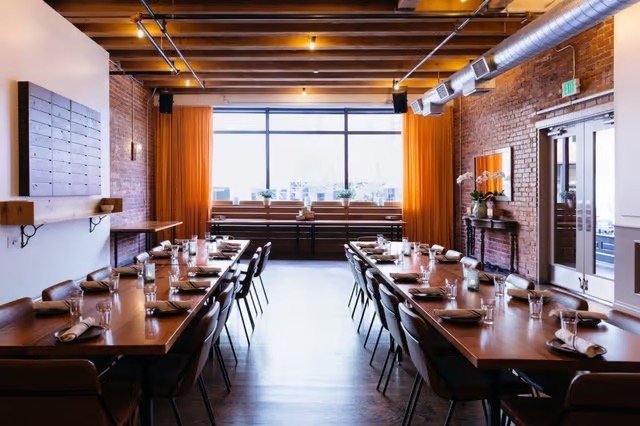
Denver Rehearsal Dinner Venues: Elegant and Upscale Restaurant Options for Your Wedding Weekend
Summary
Planning a rehearsal dinner in Denver? Explore upscale restaurants such as The Kitchen, Tavernetta, and Guard & Grace. Learn about ambiance, private dining spaces, guest capacity, and standout menu items to choose the perfect rehearsal dinner setting for your wedding weekend.
Frequently Asked Questions
What is the best rehearsal dinner venue in Denver?
The best venue depends on your guest count and style, but The Kitchen, Tavernetta, and Guard and Grace are among the most popular upscale options.
How many people typically attend a rehearsal dinner?
Most rehearsal dinners include 15–50 guests, though larger gatherings are becoming more common.
Do Denver restaurants offer private dining for rehearsal dinners?
Yes, many higher-end Denver restaurants offer private or semi-private dining rooms specifically for rehearsal dinners.
How far in advance should we book a rehearsal dinner venue in Denver?
Six to nine months in advance is recommended, especially for popular wedding weekends.
Key Topics
Denver rehearsal dinner venues
Rehearsal dinner Denver restaurants
Upscale rehearsal dinner Denver
The Kitchen Denver rehearsal dinner
Denver wedding rehearsal dinner ideas
Private dining Denver wedding events
Denver wedding weekend planning
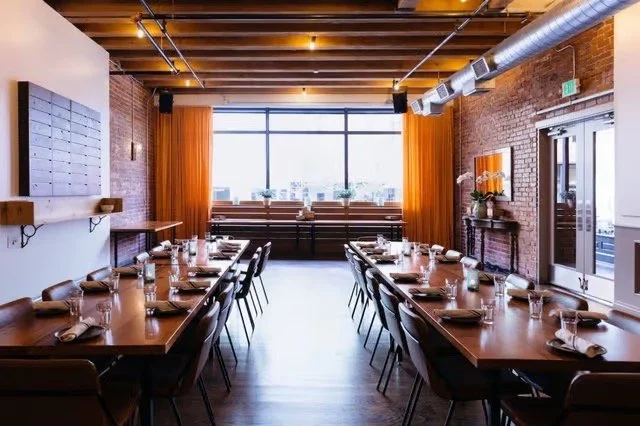
The Kitchen American Bistro in Denver
Denver Rehearsal Dinner Venues: Upscale Restaurant Options for Your Wedding Weekend
As a Denver wedding officiant, I often work with couples who want their rehearsal dinner to feel intentional, elevated, and reflective of the overall wedding experience. The rehearsal dinner sets the tone for the weekend, bringing together close family and friends in a relaxed yet meaningful way before the ceremony.
Denver offers an impressive range of high-end restaurants with private dining spaces, exceptional cuisine, and polished ambiance—ideal for hosting a memorable rehearsal dinner. Below are some of the most popular upscale rehearsal dinner venues in Denver, along with details on décor, space size, and signature dishes to help you find the right fit.
The Kitchen – Downtown Denver
Best for: Couples who value seasonal cuisine, warm design, and an intimate yet refined atmosphere.
The Kitchen is one of Denver’s most sought-after rehearsal dinner venues, especially for couples planning a downtown wedding. The space blends modern farmhouse design with thoughtful craftsmanship—exposed wood beams, soft lighting, and an open, welcoming layout. Email Sammy at sammy@thekitchen.com to schedule a visit!
Private Dining and Space
Multiple private and semi-private dining options
Ideal for rehearsal dinners ranging from 20 to 60 guests
Can accommodate cocktail and hors d’oeuvres receptions and seated family-style dinners
Cuisine Highlights
Seasonal, ingredient-driven menus
Popular dishes include handmade pastas, wood-roasted meats, and farm-fresh vegetable plates
Wine and cocktail program focused on quality and sustainability
Overall Feel
Elevated but comfortable—perfect for couples who want sophistication without formality.
Tavernetta – Union Station Area
Best for: A stylish, European-inspired rehearsal dinner with culinary flair.
Located next to Denver Union Station, Tavernetta offers a refined Italian dining experience that feels celebratory and polished. The décor is contemporary with subtle European influences—clean lines, soft textures, and an energetic yet intimate vibe.
Private Dining and Space
Dedicated private dining rooms
Best suited for 15–50 guests
Works well for seated, multi-course dinners
Cuisine Highlights
Handmade pastas and regional Italian specialties
Standout dishes often include agnolotti, crudo selections, and expertly prepared seafood
Strong wine list emphasizing Italian varietals
Overall Feel
Ideal for couples looking to impress out-of-town guests with a refined culinary experience
Guard and Grace – Downtown Denver
Best for: A bold, modern rehearsal dinner with a steakhouse experience.
Guard and Grace is a contemporary steakhouse with dramatic architectural elements—soaring ceilings, floor-to-ceiling windows, and sleek, modern finishes. It’s an excellent choice for larger rehearsal dinners that still feel upscale and intimate.
Private Dining and Space
Several private dining rooms of varying sizes
Can host 20–80+ guests, depending on configuration
Well-suited for formal seated dinners
Cuisine Highlights
Premium steaks, including dry-aged and Wagyu cuts
Seasonal seafood and inventive sides
Craft cocktails and an extensive wine list
Overall Feel
Modern luxury with a lively atmosphere—great for couples who want a high-energy evening.
Choosing the Right Denver Rehearsal Dinner Venue
When selecting your rehearsal dinner location, consider:
Guest count and private dining capacity
Proximity to your ceremony or wedding venue
Level of formality you want for the evening
Dietary flexibility for your guests
As your wedding officiant, I’ve seen how a well-chosen rehearsal dinner venue can foster meaningful connections and ease pre-wedding nerves—setting the stage for a smooth, joyful ceremony.
About the Author: Michael Moody, Wedding Officiant
Michael Moody is a Colorado wedding officiant serving Denver, Boulder, Golden, Larkspur, and mountain communities throughout the state. Since 2012, he has officiated more than 300 weddings, bringing a calm presence, thoughtful guidance, and emotionally grounded ceremony writing to couples seeking a meaningful experience. He also offers Colorado elopement ceremonies for couples who want something intimate, intentional, and beyond the boundaries of a traditional wedding day. His work is shaped by a lifelong interest in connection, reflection, and personal growth. Michael is the author of the self-improvement book Redefine Yourself: The Simple Guide to Happiness and host of The Elements of Being podcast. As a wedding officiant, he draws from that same foundation: the belief that our relationships, words, and everyday interactions help shape a life rooted in love, empathy, and purpose. Michael’s ceremony work has been recognized across Colorado. He is a 2023 WeddingWire Couples’ Choice Award winner in Denver, marking his eighth consecutive year receiving the honor. He was also named “Best Business of 2024, 2025, and 2026” by Three Best Rated and earned “The Best Wedding Officiant in Commerce City, Colorado for 2024” from Quality Business Awards USA.
Beyond weddings, Michael and his wife, Sammy, have sponsored an annual student scholarship for more than 10 years. They also founded Civic Growth Alliance, a 501(c)(4) nonprofit dedicated to strengthening communities through civic advocacy, resident engagement, strategic partnerships, public safety initiatives, neighborhood vitality, and community well-being.
Wedding locations: Michael officiates wedding ceremonies in the Denver neighborhoods of LoDo, River North, Washington Park, Cherry Creek, City Park, Central Park, Capitol Hill, Cheesman Park, Park Hill, Lower Highlands, and Sloan Lake. Michael also serves as an ordained minister in Larkspur, Littleton, Golden, Boulder, Breckenridge, Frisco, Aspen, Vail, Estes Park, and more. If your Denver neighborhood or Colorado town isn’t listed here, no worries! Please contact Michael to propose a wedding ceremony location in a different area!
Wedding Planning Tips
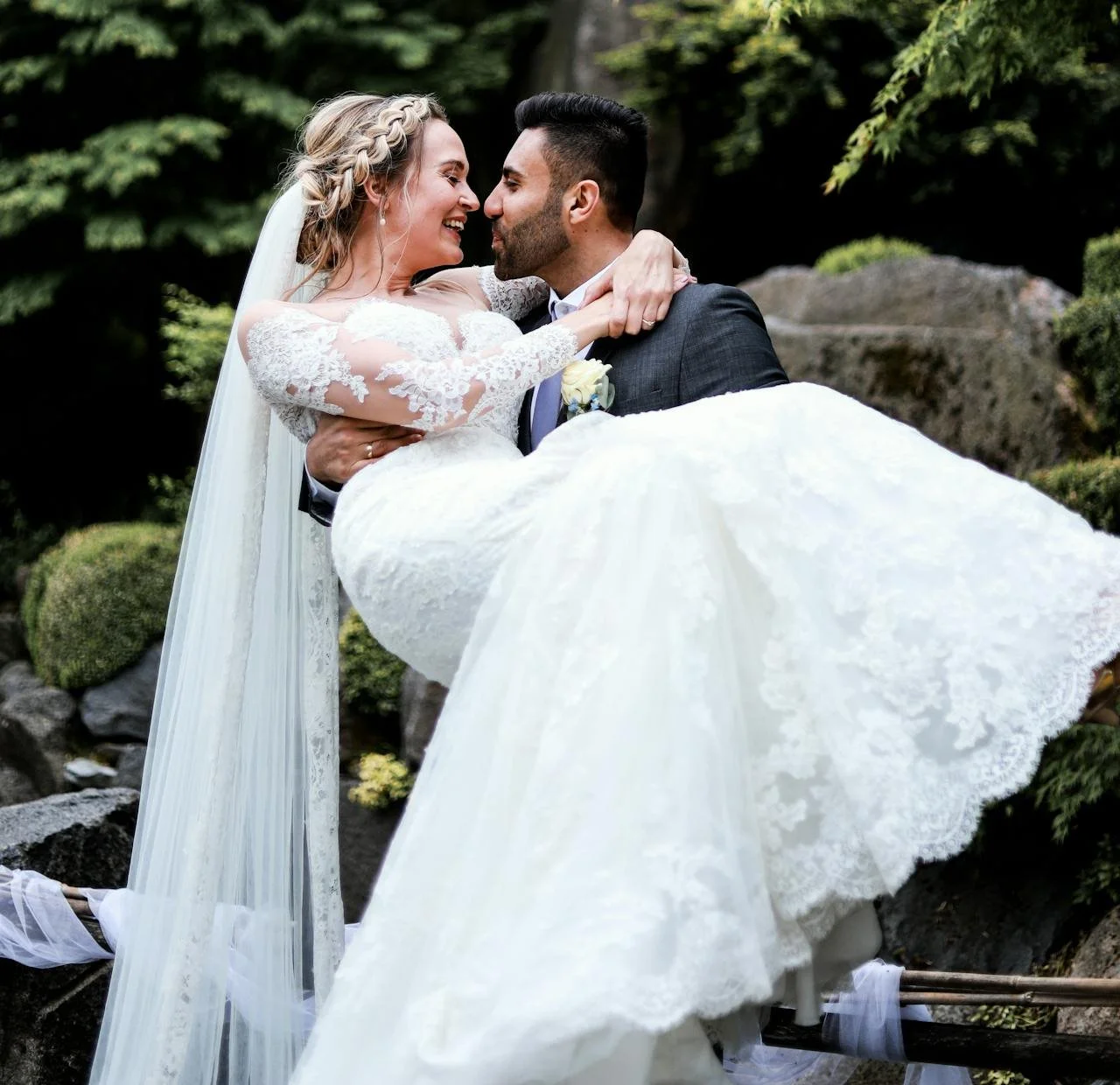
How to Personalize Your Wedding Ceremony Without Making It Awkward or Overlong
Summary
Wondering how to personalize your wedding ceremony without it feeling awkward, too long, or overly scripted? Learn what actually works—from meaningful wedding vows and readings to wedding ceremony flow and tone—plus expert tips from a professional wedding officiant on creating a ceremony that feels authentic and memorable.
Frequently Asked Questions
How do you personalize a wedding ceremony?
A wedding ceremony is personalized through custom wording, intentional wedding vows, meaningful readings or rituals, and a tone that reflects the couple’s relationship—all within a clear, well-paced structure.
Are personal wedding vows required for a personalized wedding ceremony?
No. Personalization can come from wedding ceremony language, readings, or symbolic elements. Many couples choose traditional wedding vows with customized introductions or reflections.
How long should personal wedding vows be?
Personal wedding vows are most effective when kept to 60–90 seconds per person, allowing emotion and meaning without losing momentum.
Can a wedding ceremony be personalized without being religious?
Yes. Many couples opt for secular or non-religious wedding ceremonies that still feel deeply meaningful through intentional language and personal storytelling.
Does personalization make a wedding ceremony feel less formal?
Not when done correctly. Personalization enhances formality when it is thoughtfully integrated and professionally delivered by a wedding officiant.
Key Topics
personalized wedding ceremony
wedding ceremony personalization ideas
custom wedding ceremony wording
personal wedding vows length
non-religious wedding ceremony ideas
modern wedding ceremony structure
wedding officiant ceremony customization
how to personalize a wedding ceremony
meaningful wedding ceremony ideas
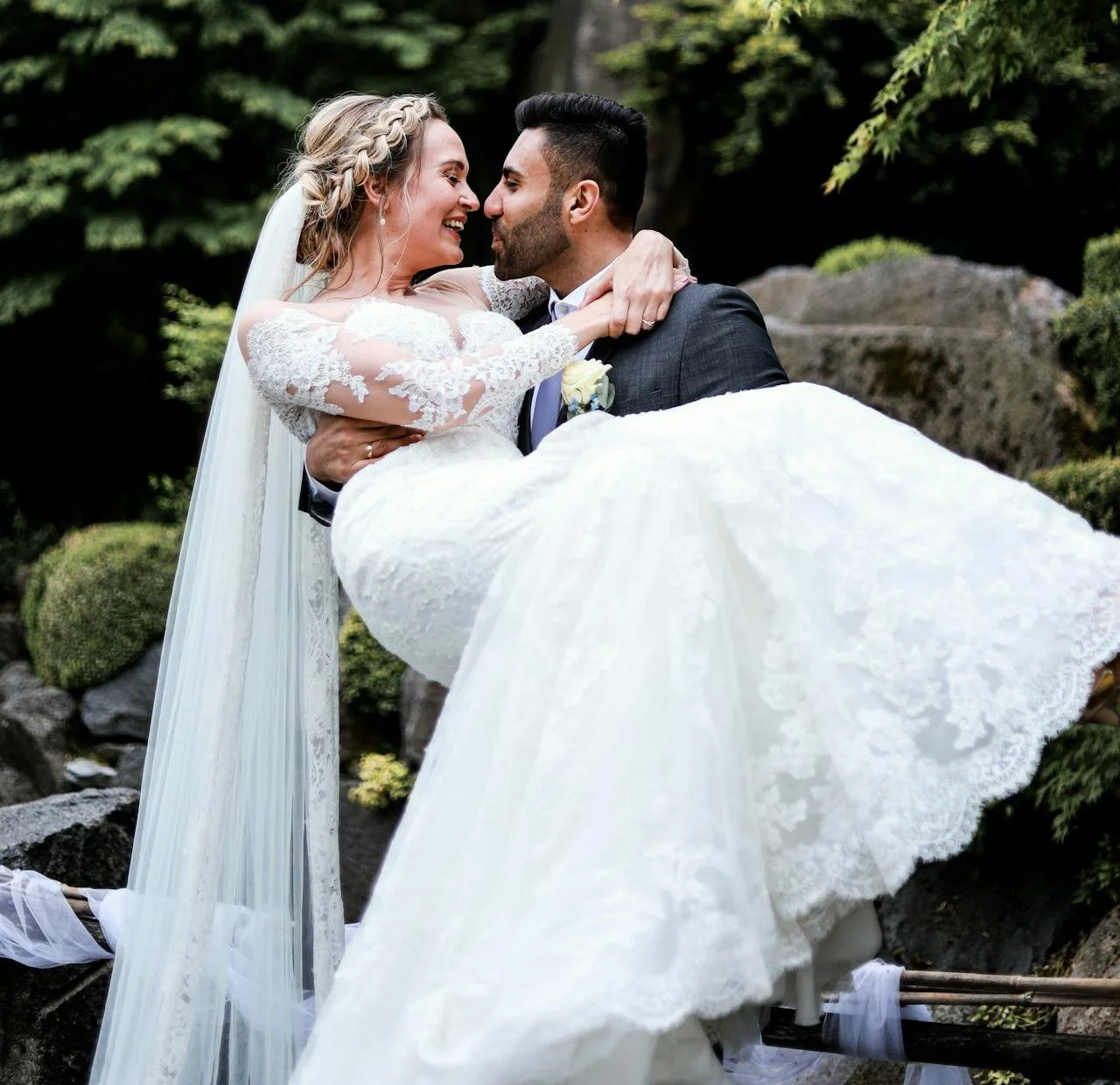
Wedding Planning Colorado / Photo: Filip Rankovic Grobgaard
How to Personalize Your Wedding Ceremony (Without Overthinking It)
One of the most common questions couples ask during the ceremony-planning process is:
“How do we make our wedding ceremony feel personal without making it uncomfortable, cheesy, or too long?”
The good news is that personalization does not require elaborate rituals, inside jokes, or writing a novel-length script. In fact, the most meaningful wedding ceremonies tend to be thoughtfully simple—structured, intentional, and grounded in the couple’s real story.
As a professional wedding officiant, Michael works closely with couples to strike that balance. Below is a breakdown of the most effective ways to personalize a wedding ceremony while keeping it elegant, engaging, and genuinely enjoyable for everyone present.
What “Personalized” Actually Means in a Wedding Ceremony
Personalization is not about reinventing the wedding ceremony format. Instead, it’s about infusing familiar structure with intentional details that reflect who you are as a couple.
A personalized wedding ceremony typically includes:
Language that sounds like you, not a generic template
A tone that matches your relationship (romantic, lighthearted, modern, or traditional)
Select moments of emphasis—rather than constant customization from start to finish
When done well, personalization feels natural and cohesive, not performative.
The Most Effective Ways to Personalize a Wedding Ceremony
1. Thoughtful, Concise Personal Wedding Vows
Personal wedding vows are often the emotional centerpiece of a wedding ceremony—but they don’t need to be long to be meaningful.
Best practices include:
Aiming for 60–90 seconds per person
Focusing on shared values and commitments, not a full relationship recap
Reading wedding vows aloud beforehand to ensure tone and pacing feel right
A good wedding officiant will help ensure both sets of wedding vows complement each other in length and tone.
2. Wedding Ceremony Language That Reflects Your Relationship
Small wording changes can dramatically shift how a wedding ceremony feels. This includes:
How the welcome is framed
How commitment is described
Whether the language is spiritual, secular, or neutral
Rather than writing everything from scratch, couples benefit most from custom-tailored wedding ceremony language within a proven structure.
3. One or Two Meaningful Readings (Not Five)
Readings can add depth—but too many slow the wedding ceremony down.
If you choose to include one or two:
Select a passage that reflects your values or outlook on partnership
Keep it under one minute
Assign it to someone who feels comfortable speaking in front of others
Poetry, modern essays, and short literary excerpts often resonate more than lengthy traditional readings.
4. Symbolic Rituals That Serve a Purpose
Unity rituals can be powerful—but only when they align with your story.
Examples that work well include:
Handfasting with a brief explanation
Wine or coffee rituals for couples who value shared traditions
Cultural or family-specific customs
The key is intentionality, not novelty.
What to Avoid When Personalizing Your Wedding Ceremony
Even well-intentioned personalization can backfire if overdone. Common pitfalls include:
Inside jokes that exclude guests
Overly casual language that undermines the moment
Excessive storytelling that disrupts pacing
Too many speakers or transitions
A polished wedding ceremony feels effortless because the personalization is curated—not layered on indiscriminately.
How Long Should a Personalized Wedding Ceremony Be?
For most weddings, the ideal wedding ceremony length is:
15–25 minutes total
Long enough to feel meaningful
Short enough to maintain guest engagement
Personalization should enhance the wedding ceremony—not extend it unnecessarily.
Why Your Choice of Wedding Officiant Matters
A professional wedding officiant acts as:
A guide through wedding ceremony options
An editor for tone, pacing, and clarity
A neutral voice ensuring balance between both partners
Michael’s goal is not just a personal wedding ceremony—but one that flows well, sounds natural aloud, and feels right in the moment.
About the Author: Michael Moody, Wedding Officiant
Michael Moody is a Colorado wedding officiant serving Denver, Boulder, Golden, Larkspur, and mountain communities throughout the state. Since 2012, he has officiated more than 300 weddings, bringing a calm presence, thoughtful guidance, and emotionally grounded ceremony writing to couples seeking a meaningful experience. He also offers Colorado elopement ceremonies for couples who want something intimate, intentional, and beyond the boundaries of a traditional wedding day. His work is shaped by a lifelong interest in connection, reflection, and personal growth. Michael is the author of the self-improvement book Redefine Yourself: The Simple Guide to Happiness and host of The Elements of Being podcast. As a wedding officiant, he draws from that same foundation: the belief that our relationships, words, and everyday interactions help shape a life rooted in love, empathy, and purpose. Michael’s ceremony work has been recognized across Colorado. He is a 2023 WeddingWire Couples’ Choice Award winner in Denver, marking his eighth consecutive year receiving the honor. He was also named “Best Business of 2024, 2025, and 2026” by Three Best Rated and earned “The Best Wedding Officiant in Commerce City, Colorado for 2024” from Quality Business Awards USA.
Beyond weddings, Michael and his wife, Sammy, have sponsored an annual student scholarship for more than 10 years. They also founded Civic Growth Alliance, a 501(c)(4) nonprofit dedicated to strengthening communities through civic advocacy, resident engagement, strategic partnerships, public safety initiatives, neighborhood vitality, and community well-being.
Wedding locations: Michael officiates wedding ceremonies in the Denver neighborhoods of LoDo, River North, Washington Park, Cherry Creek, City Park, Central Park, Capitol Hill, Cheesman Park, Park Hill, Lower Highlands, and Sloan Lake. Michael also serves as an ordained minister in Larkspur, Littleton, Golden, Boulder, Breckenridge, Frisco, Aspen, Vail, Estes Park, and more. If your Denver neighborhood or Colorado town isn’t listed here, no worries! Please contact Michael to propose a wedding ceremony location in a different area!