

Find your best self before the wedding ceremony and read marriage, relationship, and wellness tips from Denver wedding officiant, Michael Moody.
"Best and Worst Meals for Diabetes-Savvy Dining" Review
Introduction
Are you prediabetic or diabetic and attempting to lose weight? Here are three examples that you can keep in mind while dining out (from the Webmd article "Best and Worst Meals for Diabetes-Savvy Dining”).
Worse Bet #1: Farm Breakfast
The count: 2,060 calories, 276 g carbs
3 pancakes, 2 sausage links, 1 hash brown patty, and 2 scrambled eggs
No food is off-limits with diabetes, but this brunch will blow your carb and calorie budget in a hurry. Experts suggest that meals for people with diabetes should have 45-75 grams of carbohydrates, depending on individual goals. Your body weight, activity, and medications all matter. This meal packs enough carbs for four to five meals.Better Bet #1: New American Breakfast
The count: 294 calories, 40 g carbs
Oatmeal with blueberries and scrambled eggs with spinach and light cheese
This quick meal delivers protein in a scrambled egg, and just 40 carbs, mostly from fiber-rich oatmeal and blueberries. Fiber slows digestion to help prevent blood sugar spikes. People with diabetes need to watch all types of carbs: cereal, bread, rice, pasta, starchy veggies, sweets, fruit, milk, and yogurt. Spread your total carbs across the day.
Personal Trainer Wisdom: While I think your philosophy should be figuring out what you can get away with when it comes to eating, you have to be careful if you’re prediabetic or diabetic. In many cases, a meal overloaded with carbs can send you into a coma (a concern that shouldn’t be taken lightly….something I learned firsthand when a loved one passed several years ago). That said, you need to be mindful of your choices. If a meal is made on the farm, it must be healthy, right? I wish (although I love my visits to the Ray Farm in southern Indiana every summer). Although the farm breakfast is a favorite go-to, a whopping 276 g of carbs will send your blood sugar levels to the moon. Pancakes, potatoes, and syrup, oh my! Settle for WebMD's better combination of complex carbs and protein. Don’t kid yourself, though: There are carbs in most dairy products. Choose unsweetened almond or coconut milk with your oatmeal to please your favorite Denver personal trainer. Annnnnnnd, by the way, WebMD: some foods SHOULD be off-limits… but that’s another conversation.
Worse Bet #2: Chips, Salsa, Burrito
The count: 1,760 calories, 183 g carbs
Chips, salsa, and everything you imagine on the burrito
Before one bite of burrito, you can get 98 grams of carbs and 810 calories in a basket of chips and salsa. If you're trying to slim down and eat less sodium, like many people with diabetes, the burrito adds 950 calories. You also get way more than a whole day's worth of sodium.Better Bet #2: Beef and Bean Enchilada
The count: 443 calories, 48 g carbs
Beef and beans, and veggies in a corn tortilla shell topped with salsa and light sour cream (with a side of guacamole and chips)
Lean beef and black beans make this Mexican dish a good option for a diabetic diet. The fiber in the beans can help lower blood cholesterol and control blood sugar. Go heavy on the veggies and light on cheese. Enjoy 10 small corn chips (1 ounce) with a little guacamole.
Personal Trainer Wisdom: I love Mexican food. Please believe me when I say that it can be healthy. Of course, this isn’t true when you have something with the name “basket” in it (as well as “burrito as big as your head”). We want carbs… but the good ones (think: veggies, beans, legumes, etc.). Anything with corn or flour will push you beyond your limits. If you need a tortilla shell, choose a non-GMO corn tortilla shell and cut it down in size. An enchilada may be a smaller option right up your alley. Still be mindful of your calorie/fat intake, and increase your cheese consumption.
Worse Bet #3: Southern Rib Plate
The count: 2,510 calories, 83 g carbs
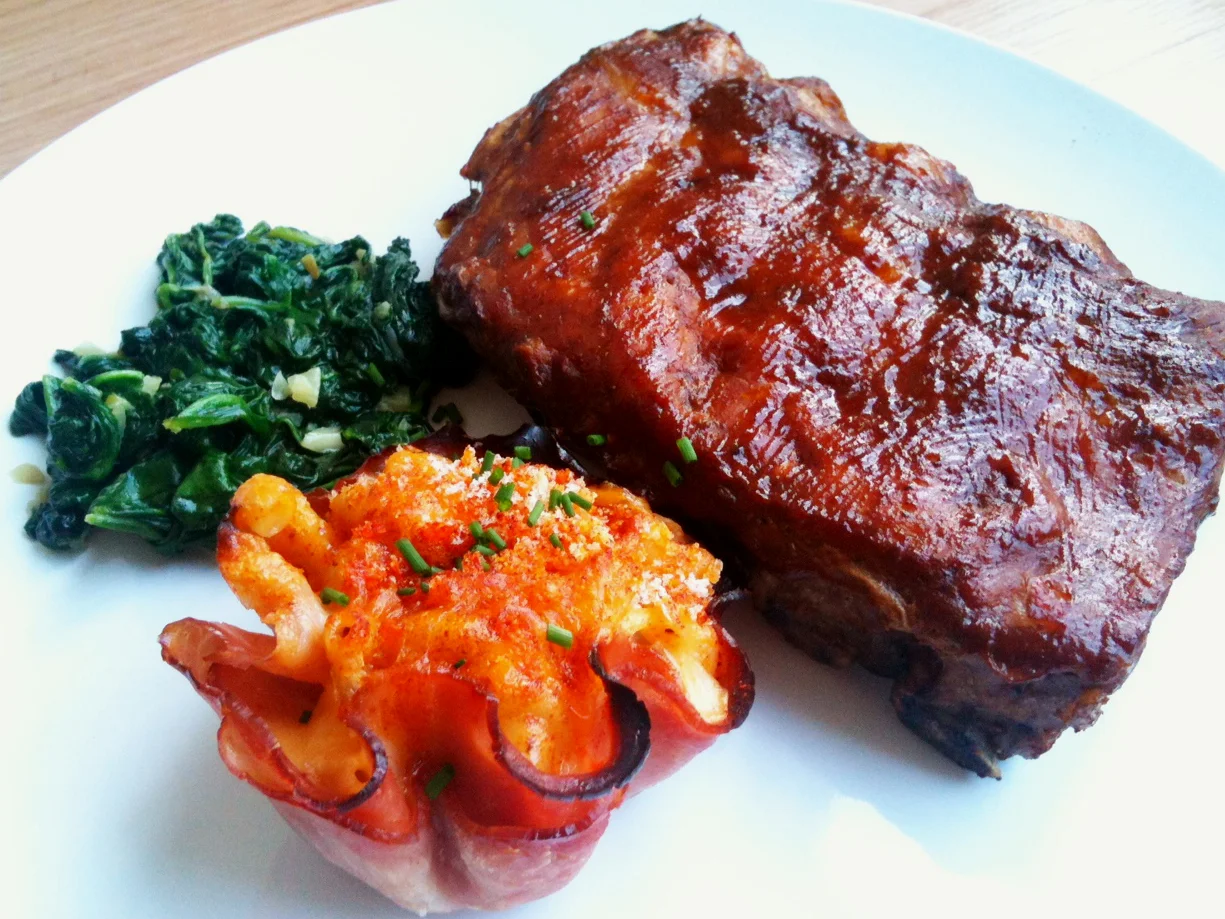
Ribs, macaroni and cheese, and corn on the cob
This classic Southern meal loads too many splurge foods onto one plate. Fatty pork ribs are dripping in sugary barbecue sauce and flanked by macaroni and cheese and corn on the cob. Corn is a high-carb vegetable, with about 19 grams of carbs in one medium ear. It's just too much, all around.Better Bet #3: Pork Tenderloin Meal
The count: 360 calories, 42 g carbs
Pork tenderloin, broccoli, and pureed cauliflower
Pork tenderloin is one of the leanest and most versatile cuts of meat. Here it's prepared in a Dijon mustard glaze, and served with steamed broccoli and mock mashed potatoes. Pureed cauliflower stands in beautifully for carb-heavy white potatoes. Round out the meal with a whole wheat dinner roll.
Personal Trainer Wisdom: Even I will admit that this isn’t a fair tradeoff, WebMD. Most people won’t say, “I really, really, really want ribs with the mac and cheese, but I guess I’ll have the alternative: Pork tenderloin.” Since you’re in the mood for a treat, I recommend the following instead: A well-done portion of ribs without the BBQ sauce (cook off the fat and remove the carbs from the sauce), collard greens with minimal oil and no bacon, and corn on the cob. Less fat, calories, and carbs! Sorry, no mac and cheese, gang.
About the Author: Michael Moody, Wedding Officiant
Michael Moody—author of the self-improvement book Redefine Yourself: The Simple Guide to Happiness and host of the “The Elements of Being” podcast—is an ordained minister serving Denver and other towns across Colorado. He is a 2023 WeddingWire Couples’ Choice Award winner in both Denver and Chicago (his eighth consecutive year), was named “Best Business of 2024 and 2025” by Three Best Rated, and earned “The Best Wedding Officiant in Commerce City, Colorado for 2024” from Quality Business Awards USA. Since 2012, he has officiated more than 300 weddings.
Specifically, Michael officiates wedding ceremonies in the Denver neighborhoods of LoDo, River North, Washington Park, Cherry Creek, City Park, Central Park, Capitol Hill, Cheesman Park, Park Hill, Highland, Platt Park, Lower Highlands, Sloan Lake as well as the zip codes 80215, 80214, 80204, 80203, 80205, 80207, 80218, 80219, 80222, 80223, 80224, 80246, 80238, 80221, 80022, 80230, 80231, 80202, 80209, 80247, and 80210. Michael also serves as an ordained minister in Golden, Boulder, Breckenridge, Frisco, Aspen, Vail, Estes Park, and more.
If your Denver neighborhood or Colorado town isn’t listed here, no worries! Please contact Michael to propose a wedding ceremony location in a different area!

"40 Habits Making You Hungry" Review
Introduction
Instead of looking at why you’re not losing weight, you may want to look at what causes your endless hunger. Here are the top reasons why, from the Zerobelly article "40 Habits Making You Hungry”.
1. SKIPPING BREAKFAST
All that talk of breakfast being the most important meal of the day rings truer than you might think. In the morning, your body’s concentration of hunger hormone ghrelin tends to be higher than during the rest of the day. However, when you skip breakfast, you’re putting off the uptick in satiety hormone leptin, keeping you famished and more prone to grabbing something unhealthy when you finally do eat. In fact, research presented at the Endocrine Society’s 92nd Annual Meeting reveals that average weight individuals who skipped breakfast and then looked at photos of food chose high-calorie treats more often than those who had eaten a morning meal.
Personal Trainer Wisdom: I think the most essential point regarding skipping breakfast is the one that’s missing: You create a deficit in your body when you deprive it of the fuel it needs. The body hacker will argue that fasting will cause the body to activate its backup system to assist a person with weight loss. Let’s consider this for a moment as truth. Maybe you will lose weight because your metabolism has “lit up” (not just because of your calorie reduction). Is this a long-term result? Wouldn’t your body return to its set metabolism once your habits stabilize? Wouldn’t the risk of malnutrition, fatigue, and additional internal organ work be enough to encourage you to do what you’re simply avoiding: Eating a balanced diet when your body demands it? Your body is an efficient machine. Let it work the way it should.
2. GRAZING ALL DAY
Eating snacks to tide you over between meals can help prevent binges later on, but if you’re grazing all day long, you might be making yourself hungrier. Research published in the January 2016 edition of the Journal of Nutrition reveals that grazing didn’t actually curb the appetite of study participants. Grazing all day may also make you more likely to forget what you’ve eaten, contributing to a higher total caloric intake.
Personal Trainer Wisdom: If you’re eating with intent, grazing doesn’t exist…and your appetite will be satisfied. Again, this is another theory related to the speed of your metabolism. Ironically, this failed attempt can lead to a deficiency and mindless calorie consumption.
3. NEGLECTING SLEEP
Catching some Zs may not be the most calorie-burning activity you do all day, but it can make a major difference in terms of your hunger. Research published in the December 2004 edition of PLoS Medicine reveals that inadequate sleep triggers the body’s production of ghrelin, a hunger hormone, while suppressing the production of leptin, the hormone that signals satiety. Couple that with the increased stomach acid production — a feeling often mistaken for hunger — that many people experience after a sleepless night and you’ve got a recipe for some serious munchies.
Personal Trainer Wisdom: If you’re going to keep running the machine without rest, it will keep demanding fuel. Are you willing to wear down the parts without maintenance? If you sacrifice sleep, you’re sacrificing your body—time to ease off the coffee, relax a bit, and hit the hay.
4. CHOOSING CANNED FOODS
Canned foods may be convenient and economical, but turning to them on a regular basis might be the reason behind your persistent hunger. Not only can salty canned foods increase thirst, which is often mistaken for hunger, research conducted at Carleton University in Ottawa reveals that the BPA in certain food packaging can decrease the body’s leptin receptivity, making it harder to determine when you’re satisfied.
Personal Trainer Wisdom: Sodium is a hidden killer, and it's in many of your packaged goods. Be especially mindful of most pasta sauces (500-800 mg per serving) and canned fish (300 mg per serving) if you are trying to stay in the recommended range of 500 mg of sodium per meal.
5. ENDING THE DAY WITH A NIGHTCAP
If you think that end-of-the-day drink is helping you wind down, think again — it might just be making you hungrier. Not only does alcohol have an inhibition-lowering effect, making you eager to eat, even when you’re not particularly hungry, it can also disrupt your REM sleep, leaving you poorly rested and more prone to grabbing convenience snacks to tame your rumbling tummy.
Personal Trainer Wisdom: Most important, you achieve the most physical recovery during REM sleep...something you shouldn’t take lightly. Try to minimize anything that will affect this critical time of night.
6. WEANING OFF MEDICATION
Whether you’re tapering off your antidepressants or have finished a prescription for painkillers after surgery, finishing a medication can have a serious effect on your hunger level. Many medications, from those that treat chronic pain to those designed for individuals with ADHD, can have appetite-suppressing effects. Unfortunately, when you finish your course of treatment, your old appetite can come back in full force, so it’s important to pay particular attention to your food choices if you’re weaning off your meds.
Personal Trainer Wisdom: No matter the medication, always be mindful of your physical self while starting or weaning off a regimen. Essentially, you are changing your chemical balance—a shift that could lead to a range of effects, including fatigue and weight gain.
About the Author: Michael Moody, Wedding Officiant
Michael Moody—author of the self-improvement book Redefine Yourself: The Simple Guide to Happiness and host of the “The Elements of Being” podcast—is an ordained minister serving Denver and other towns across Colorado. He is a 2023 WeddingWire Couples’ Choice Award winner in both Denver and Chicago (his eighth consecutive year), was named “Best Business of 2024 and 2025” by Three Best Rated, and earned “The Best Wedding Officiant in Commerce City, Colorado for 2024” from Quality Business Awards USA. Since 2012, he has officiated more than 300 weddings.
Specifically, Michael officiates wedding ceremonies in the Denver neighborhoods of LoDo, River North, Washington Park, Cherry Creek, City Park, Central Park, Capitol Hill, Cheesman Park, Park Hill, Highland, Platt Park, Lower Highlands, Sloan Lake as well as the zip codes 80215, 80214, 80204, 80203, 80205, 80207, 80218, 80219, 80222, 80223, 80224, 80246, 80238, 80221, 80022, 80230, 80231, 80202, 80209, 80247, and 80210. Michael also serves as an ordained minister in Golden, Boulder, Breckenridge, Frisco, Aspen, Vail, Estes Park, and more.
If your Denver neighborhood or Colorado town isn’t listed here, no worries! Please contact Michael to propose a wedding ceremony location in a different area!

"Is pizza healthy?" Review
Introduction
Finally…the most critical question of our times will be answered: Is pizza healthy? Find out here (from the CNN.com article "Is pizza healthy?" Review).
FAQ: Is Pizza Healthy?
Pizza is healthy. And it isn't healthy.
Depending on the type of crust, the amount of cheese and the toppings used, pizza can rank anywhere from nutritionally decent to a diet disaster.
Even healthy pizzas deliver a good amount of sodium from tomato sauce and cheese, so if you are watching your salt intake, you should eat with caution. Of course, the size of the slice and the number of slices you eat count, too.
Personal Trainer Wisdom: “To be or not to be….that is the question” is what I thought of when reading the first line of this article. Let’s be honest, you, like I, have been lured in by CNN with its Shakespearean introduction. Without any further banter, the author dives right in to answer this question. Without further ado, let’s evaluate:
While I also think there is a spectrum of “healthiness” when it comes to a slice of pizza, I want to assure you of one thing right away: Pizza isn’t healthy. It fails miserably to reach your nutritional ratio of need, and the main ingredients (cheese and crust) will most likely send you to the ER with heart disease or diabetes (If you don’t believe it, check out published lists of the number one killers of Americans).
That said, I absolutely love pizza. I worked in a pizza kitchen for three years in high school and often dream about dancing slices. If you do the same, be honest with yourself: It is a treat, not a nutritional meal. We can call it a filler as well (and you may feel filled up while you sleep on the floor after eating it). What if you plan to eat it anyway? Then, this is what you should know. Putting aside the ingredients, the sodium is usually a big problem. You shouldn’t consume more than 1000-1500 mg of sodium per day, and a personal pan pizza will give you at least that. Definitely be mindful of your portions.
Pizza pros include the fact that it offers calcium from cheese and disease-fighting lycopene from tomatoes. And pizza crust made with whole-wheat flour (including whole white wheat flour) is healthier than regular white crust, as it offers whole grains and fiber and is digested more slowly than refined grains.
But what you put on your pizza can significantly impact its nutritional value. Toppings such pepperoni, sausage and extra cheese can boost saturated fat, sodium, and calories, while slices made with thinner crusts and topped with veggies tend to have lower calorie, saturated fat and sodium counts.
For example, a large slice of Pizza Hut's Thin 'N Crispy Veggie Lovers pizza has 240 calories, 4 grams of saturated fat and 710 milligrams of sodium. But a large slice of the chain's Meat Lovers pan pizza with pepperoni, sausage, ham, bacon, pork, and beef has 480 calories, 10 grams of saturated fat and 1,180 milligrams of sodium.
Personal Trainer Wisdom: First, dairy can cause inflammation in the body. If you’re seeking calcium, choose more nutrient-dense sources like dark leafy greens (yes, I know…not as exciting). Second, whole grains can also cause inflammation because they are highly processed and low in nutritional density, and they spike your blood sugar levels (though not as much as white flour). Unless whole grains are in their entire form, don’t convince yourself that you’re making a healthy choice here. Translation: If you crave this treat, go all in with the white-flour crust, but use less of it.
The second part of this section regarding the ingredients is dead on. You control whether this garbage can fire turns into a 5-alarm fire. Calories, fat, and sodium are the main culprits….your toppings will determine how far off the cliff you fall (especially if you’re already dancing on the line with the other choices you’ve made that day).
Frozen pizzas can be a convenient dinner, but they too can vary regarding ingredients and nutritional value, especially with sodium counts, so it's important to read labels carefully (some contain small amounts of trans fats, too). Dairy-free and gluten-free pizzas are available, but as with their traditional counterparts, their healthfulness varies.
Personal Trainer Wisdom: Short and sweet: Avoid the frozen pizzas. More processed, less fresh, and the taste rarely compares to the real experience. Keep in mind that I ate one frozen pizza quite often to support my misguided, immature attempts to gain weight and muscle in college.
When it comes to kids and pizza, one recent study concluded that pizza consumption among children and adolescents was associated with a higher daily calorie intake and higher intakes of saturated fat and sodium. The study also found that pizza eaten as a snack or from fast-food restaurants had the greatest negative impact on calorie intake.
Pizza consumed in schools did not significantly affect children's calorie intake, probably because it may not be that nutritionally different from other school entrees, according to study authors.
Personal Trainer Wisdom: Repeat after me: “Kids cannot eat whatever they want.” I know…you don’t believe me because they’re not overweight and they can “burn it off”. Don’t kid yourself, though (pun intended). The biggest phase of a child’s physical development occurs between the ages of newborn and 8/9 (and I can argue to 18-21).
Consider this: Would you give your car watered-down fuel or oil? Probably not because you know that it won’t run efficiently (and may break down during your busy life). The same applies to your child when he or she needs the best fuel for a pivotal point in his or her life. You don’t need to remove it from your child’s life completely… view it again as a treat, not a weekly meal (and make sure your child understands why).
If you enjoy pizza on a regular basis, try making it at home using healthier ingredients, such as whole-wheat English muffins, part-skim mozzarella cheese and tomato sauce without added salt. And don't forget to top it with lots of vegetables; the more colorful your pizza, the better!
Personal Trainer Wisdom: Please don’t eat pizza regularly. Despite the efforts to make it healthy, it isn’t a great source of nutritional fuel. I often order a cheeseless pizza with extra vegetables. I attempt to lessen the effects while still enjoying one of my favorite indulgences. Ultimately, though, life isn’t about living perfectly. Whatever you indulge in, be sure to realistically assess its value and think about its relationship to the other choices for that day. With that being said, who wants to grab 1-2 small slices of pizza?
About the Author: Michael Moody, Wedding Officiant
Michael Moody—author of the self-improvement book Redefine Yourself: The Simple Guide to Happiness and host of the “The Elements of Being” podcast—is an ordained minister serving Denver and other towns across Colorado. He is a 2023 WeddingWire Couples’ Choice Award winner in both Denver and Chicago (his eighth consecutive year), was named “Best Business of 2024 and 2025” by Three Best Rated, and earned “The Best Wedding Officiant in Commerce City, Colorado for 2024” from Quality Business Awards USA. Since 2012, he has officiated more than 300 weddings.
Specifically, Michael officiates wedding ceremonies in the Denver neighborhoods of LoDo, River North, Washington Park, Cherry Creek, City Park, Central Park, Capitol Hill, Cheesman Park, Park Hill, Highland, Platt Park, Lower Highlands, Sloan Lake as well as the zip codes 80215, 80214, 80204, 80203, 80205, 80207, 80218, 80219, 80222, 80223, 80224, 80246, 80238, 80221, 80022, 80230, 80231, 80202, 80209, 80247, and 80210. Michael also serves as an ordained minister in Golden, Boulder, Breckenridge, Frisco, Aspen, Vail, Estes Park, and more.
If your Denver neighborhood or Colorado town isn’t listed here, no worries! Please contact Michael to propose a wedding ceremony location in a different area!

"Is Taking a Multivitamin Worth the Risks?" Review
Introduction
You’re probably not alone. You’re one of the millions of people taking multivitamins. Do you really need it? Is it safe for you? Read this article to find out (from the Livestrong.com article "Is Taking a Multivitamin Worth the Risks?").
FAQ: Is Taking a Multivitamin Worth the Risks?
Multivitamins are the most popular dietary supplement sold today. People of all demographics and age groups use multivitamins, and they're often people's first supplement. Since there are so many different multivitamin formulas, this supplement makes up an entire subsection of the supplement industry.
Multivitamins are often discussed in the media and online, though their use is rarely recommended against. Many articles and experts recommend a multivitamin as a general health supplement. However, multivitamins are made up of many different compounds, and it's never a good idea to take a variety of supplements without a good and well-researched reason to do so.
Not everyone needs to supplement with a multivitamin. People with a nutrient deficiency that cannot be alleviated through dietary changes may experience benefits from supplementing with a multivitamin, but that also depends on the kind of multivitamin formulation they buy.
Personal Trainer Wisdom: In 2005, I found out from my doctor that my level of triglycerides was very high (300…and anything above 150 is considered high). What was his first response? A statin, of course. Considering that I didn’t want a lifetime dependency on a drug nor the extra work for my kidneys, I refused the doctor’s prescription. Within 3 years, my triglyceride levels returned to normal due to a change in my diet. Moral of the story: Taking a pill can be easy, but not always necessary (or safe) to achieve your health goals. Why do you take supplements or medications? Do you have a deficiency? Are you taking the easy way out? Are you only taking a multivitamin to counter your unhealthy diet? While not all deficiencies, diseases, or disorders can be remedied entirely by our food intake, shouldn’t you take the safest, most nutrient-dense approach when you can, though?
The Standard Multivitamin
The most commonly used and researched multivitamin formula contains 100 percent of the recommended daily intake (RDI) of nutrients the body needs. Some compounds, like magnesium and calcium, are physically too large to include in these capsules. Iron is also usually omitted.
Standard multivitamins are an effective and recommended supplement for people who do not get enough nutrients through their diet. Keep in mind, making dietary changes is both more effective and tastier than supplementing to alleviate a nutrition deficiency.
Though standard multivitamins are beneficial supplements for people living in low-income areas or food deserts without easy access to nutritional food, they are more often used as preventative supplements by people eating a varied diet. Though studies show there are no side effects from standard multivitamin supplements, they also don't provide any benefits when taken by already-healthy people.
Personal Trainer Wisdom: Point 1: You’re missing the other essential nutrients that aid in the digestion and absorption of the multivitamin nutrients. Point 2: Unless you live in Guatemala or another impoverished region, I can argue that most Americans living in low-income areas and food deserts still have access to whole foods (that is, if they’re interested in a plant-based diet — which is usually not the case). Don’t believe me? Cut out all animal products, candy, soda, and liquor during your next grocery trip. What’s the new cost of your bill?
The Surplus Multivitamin
Even experimental multivitamin formulas tend to toe the line when it comes to the RDI of various nutrients. The third category of multivitamins, however, contains formulas that disregard serving sizes and established dosages.
Surplus multivitamins are marketed as general health supplements, whether they contain vitamin C, garlic or another herb. These multivitamins are not vitamins; they are combinations of other supplements and compounds.
Multivitamins and supplements that contain a variety of compounds but hide the doses behind proprietary blends should be avoided. There is no research done on these specific combinations. Existing research on individual supplements does not apply because supplements can act differently when taken together. When doses and ingredients are not available, it isn't possible to determine the effects and health risks of the supplement.
Multivitamin supplements that list the amount of each ingredient can be supplemented safely, but should only be used if the included ingredients are effective supplements for your specific health goal.
Personal Trainer Wisdom: The supplement market is flooded with non-regulated FDA products. Do you really know what you are ingesting? Does it contain a harmful combination? Do you know how your combination of pills interacts with each other?br>
I Need a Multivitamin?
Multivitamins, like all supplements, should never be used without a good reason. Before purchasing a new supplement, read the label and ask yourself:
FAQS
1. What ingredients in this supplement are useful for my health goal?
2. What ingredients in this supplement are not useful for my health goal?
3. Will the ingredients hurt me or be counterproductive?
4. If I buy the ingredients individually, will it be more expensive than this supplement?
If the multivitamin isn't harmful and isn't more expensive than the sum of its parts, it may be worth considering for supplementation.
Personal Trainer Wisdom: You should absolutely ask yourself these questions about every medication or supplement in your cabinet. Other questions: Why am I considering a supplement? Am I avoiding what I really need to do for my body? Do I need to take this supplement, or does effective marketing make me believe so?
About the Author: Michael Moody, Wedding Officiant
Michael Moody—author of the self-improvement book Redefine Yourself: The Simple Guide to Happiness and host of the “The Elements of Being” podcast—is an ordained minister serving Denver and other towns across Colorado. He is a 2023 WeddingWire Couples’ Choice Award winner in both Denver and Chicago (his eighth consecutive year), was named “Best Business of 2024 and 2025” by Three Best Rated, and earned “The Best Wedding Officiant in Commerce City, Colorado for 2024” from Quality Business Awards USA. Since 2012, he has officiated more than 300 weddings.
Specifically, Michael officiates wedding ceremonies in the Denver neighborhoods of LoDo, River North, Washington Park, Cherry Creek, City Park, Central Park, Capitol Hill, Cheesman Park, Park Hill, Highland, Platt Park, Lower Highlands, Sloan Lake as well as the zip codes 80215, 80214, 80204, 80203, 80205, 80207, 80218, 80219, 80222, 80223, 80224, 80246, 80238, 80221, 80022, 80230, 80231, 80202, 80209, 80247, and 80210. Michael also serves as an ordained minister in Golden, Boulder, Breckenridge, Frisco, Aspen, Vail, Estes Park, and more.
If your Denver neighborhood or Colorado town isn’t listed here, no worries! Please contact Michael to propose a wedding ceremony location in a different area!
"65% Of Dieters Lose Weight When They Eat This For Breakfast" Review
Introduction
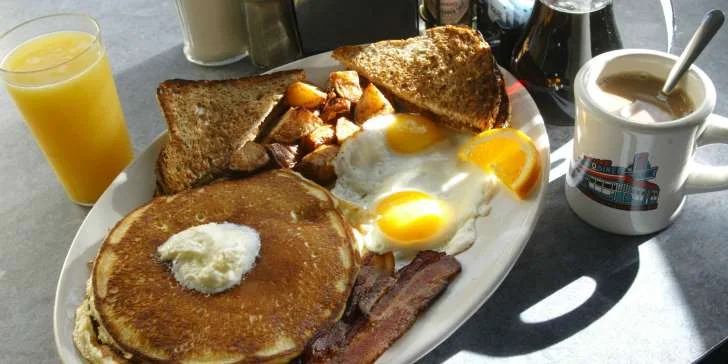
I nearly spit out my coffee when I saw the image for this article this morning. Are they implying that this breakfast will lead to weight loss? Read to learn their reasons why they think so (from the article " 65% Of Dieters Lose Weight When They Eat This For Breakfast ").
What's missing?
When you're wanting to lose weight, breakfast always feels like the best place to start reexamining your diet. After all, if you adequately fill up in the morning, you're way less likely to feel peckish at your desk by 11 a.m. and start reaching for whatever's within arm's reach.
The single food countless nutritionists recommend eating? Eggs. With six grams of protein a pop, eggs will fill you up - and keep you satisfied, which is key - without weighing you down. One study published in the International Journey of Obesity shows that men and women who ate two eggs for breakfast (as part of a reduced-calorie plan) lost a whopping 65 percent more weight than those who ate a bagel breakfast of equal calories. What's more, the egg eaters also felt more energetic.
Personal Trainer Wisdom: Alright, readers…what are the questions that you need to ask before accepting eggs as the weight loss miracle? Here you go: Where was the study conducted? Were the participants people or animals? How many participants? How do you define this population (i.e., age, gender, region, medical history, etc.)? Were they reflective of the general population? How were the participants’ general diets controlled? Could other changes in the participants’ diets skew these results? Does this study indicate that the participants had a protein deficiency? Did participants lack energy before this study because of this nutritional deficiency? Will consuming eggs increase energy? Would the participants experience the same results with a plant-based alternative (with the same number of protein grams)? How were the eggs prepared? Participants ate the eggs as part of a reduced-calorie plan. No matter the change in food, would the same participants lose weight due to this calorie reduction?
The Yolk
And if you're one of those people who still thinks it's necessary to order an egg white omelette to stay on track, nutritionists are urging you to eat the yolks: They can, in fact, contribute to weight loss and help increase good HDL cholesterol levels, while being a solid source of nutrients like vitamin B12 and choline (essential for your cells to function properly). So skip the bowl of multigrain cereal and get yolked.
Personal Trainer Wisdom: If you eat animals, you should definitely choose the most nutrient-dense options. Outside of fish, I would recommend eggs... with the yolks. If you're worried about cholesterol, maybe it's time to cut back on the shrimp, steaks, and dairy you eat at other meals. I'd like to know why the article's nutritionists claim that egg yolks will help you lose weight, though. Based on our questions above, what do you think? The author cited nutritionists to lend credibility to this claim, but failed to provide a clear, scientific rationale. Continue your research before accepting these results.
About the Author: Michael Moody, Wedding Officiant
Michael Moody—author of the self-improvement book Redefine Yourself: The Simple Guide to Happiness and host of the “The Elements of Being” podcast—is an ordained minister serving Denver and other towns across Colorado. He is a 2023 WeddingWire Couples’ Choice Award winner in both Denver and Chicago (his eighth consecutive year), was named “Best Business of 2024 and 2025” by Three Best Rated, and earned “The Best Wedding Officiant in Commerce City, Colorado for 2024” from Quality Business Awards USA. Since 2012, he has officiated more than 300 weddings.
Specifically, Michael officiates wedding ceremonies in the Denver neighborhoods of LoDo, River North, Washington Park, Cherry Creek, City Park, Central Park, Capitol Hill, Cheesman Park, Park Hill, Highland, Platt Park, Lower Highlands, Sloan Lake as well as the zip codes 80215, 80214, 80204, 80203, 80205, 80207, 80218, 80219, 80222, 80223, 80224, 80246, 80238, 80221, 80022, 80230, 80231, 80202, 80209, 80247, and 80210. Michael also serves as an ordained minister in Golden, Boulder, Breckenridge, Frisco, Aspen, Vail, Estes Park, and more.
If your Denver neighborhood or Colorado town isn’t listed here, no worries! Please contact Michael to propose a wedding ceremony location in a different area!