Episode #20 - Implicit Biases: The Undercurrent of Social Injustices with Dr. Madva
Introduction
Welcome to “The Elements of Being” podcast, where I dissect and explore the minds and habits of psychologists, filmmakers, writers, and industry icons. Essentially, we learn what makes them flip the switch to achieve incredible feats, goals, and milestones — and a chance to geek out on the psychology behind human behavior.
Specifically, I examine the mental and emotional narratives and processes that have steered intriguing professionals and people from all walks of life. Each episode is also a glimpse into the trends and patterns of human behavior and the underlying influences that guide us in different directions. Whether we focus primarily on the environment or the unconscious, guests share insights, thought-provoking lessons, the nuances of creativity, and the elements of being… us (and the very factors that make us who we are).
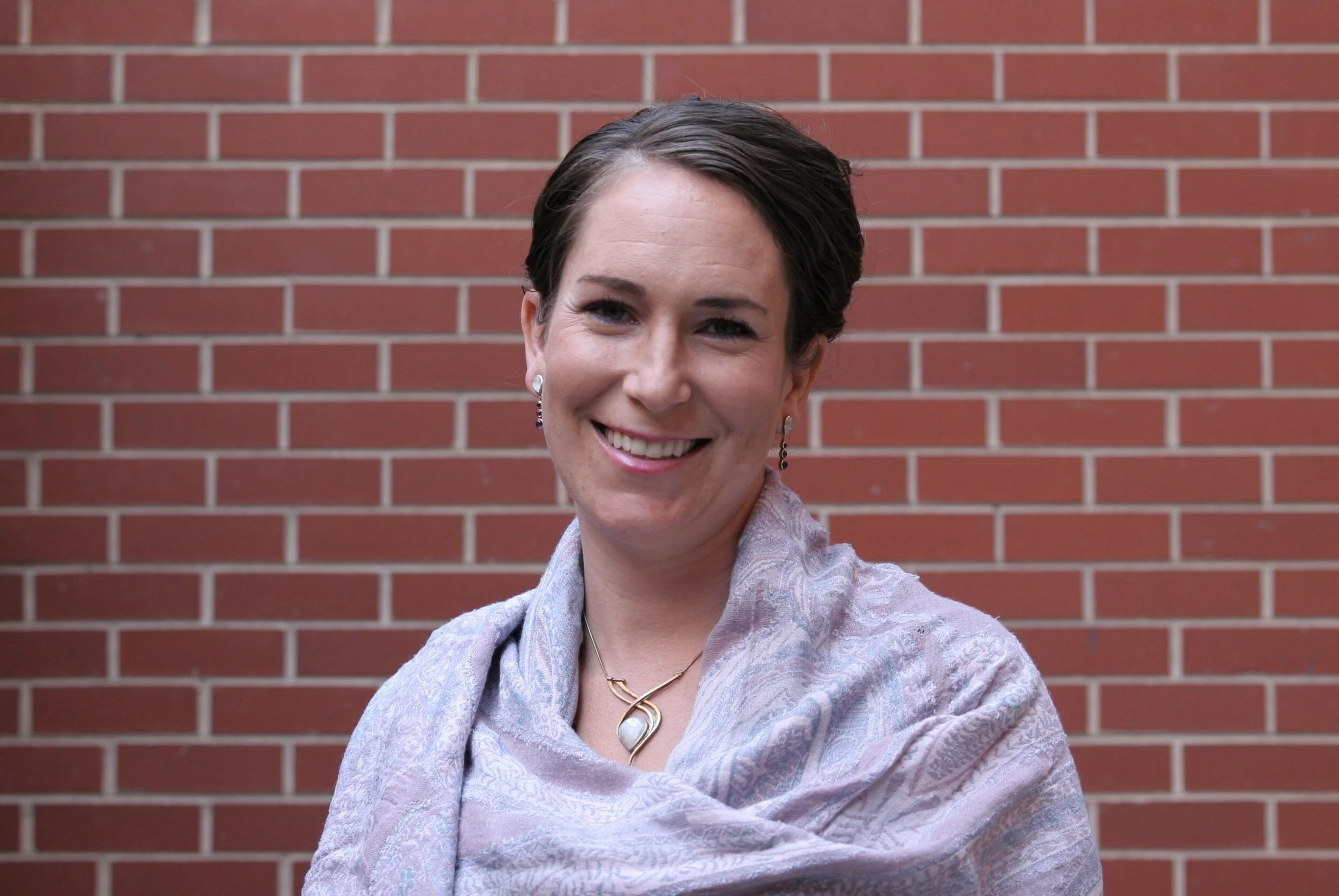
Today, I explore the relationship between racism and implicit biases with Dr. Alex Madva, an Associate Professor of Philosophy and Director of the California Center for Ethics & Policy at Cal Poly Pomona. He recently co-edited the volume, An Introduction to Implicit Bias: Knowledge, Justice, and the Social Mind, with his colleague Erin Beeghly, and took the time to break down systemic racism and the implicit biases that not only pervade the recent cases involving George Floyd and Kyle Rittenhouse but also steer our perception of such matters. Essentially, we are digging into the unconscious and examining how simple labels of racism may not account for the underlying complexity of these situations.
Dr. Madva’s research and teaching explore how developments in social psychology inform the philosophy of mind, philosophy of race and feminism, and applied ethics, especially prejudice and discrimination. He has written on these topics for journals including Ethics, The Journal of Applied Philosophy, Wiley Interdisciplinary Reviews (WIREs): Cognitive Science, Pacific Philosophical Quarterly, Ergo, Mind and Language, and several more. Dr. Madva is currently co-editing another book, The Movement for Black Lives: Philosophical Perspectives.
Dr. Madva has taught numerous classes on Race and Racism, Social and Political Philosophy, Cognitive Science, Feminist Philosophy of Science, Contemporary Moral Problems, Ancient Greek and Roman Philosophy, and upper-division undergraduate and graduate seminars on social psychology and philosophy, including a new course he developed at CPP, The Philosophy & Science of Implicit Bias.
Dr. Madva is also actively engaged in collaborative empirical research. One ongoing NSF-funded project is testing interventions to reduce achievement gaps and increase belonging among underrepresented groups at Cal Poly Pomona across disciplines such as physics, economics, mathematics, biology, and philosophy.

The Elements of Being Podcast with Michael Moody: Discussing the Drawdown Framework for Climate Solutions with Crystal Chissell
His published empirical research has appeared in journals, including Ratio and the International Journal of STEM Education. He is also collaborating with computer scientists, engineers, and social scientists to study the spread of misinformation and prejudice across social media, ultimately to counteract these trends. Folks, Dr. Madva, has literally written the textbook on implicit bias.
In our interview, here’s what we specifically discussed:
-The intersection of Dr. Madva’s philosophy, psychology, and sociology studies and the evolution of his interest in implicit biases.
-Epistemic humility and the connection to the recent cases regarding police officers in the media.
-The evolutionary function of implicit biases.
-The reasons why unconscious prejudices still exist despite conscious commitments to be fair and unprejudiced.
-How to determine when implicit biases are serving our personal needs and honoring individuals outside of us appropriately.
-How to test our hidden biases.
-How to use debiasing tools, like “If-Then” Plans and the “Common-Ground Mindsets” Tool, to bridge the gap between intention and action.
-The relationship between “trusting our gut” and implicit biases.
-How ingroup-outgroup distinctions and status preferences contribute to our sets of unconscious beliefs.
-How to create structural reform with a cross-experiential approach.
******
To learn more about Dr. Alex Madva and implicit biases, visit http://www.alexmadva.com/.

The Elements of Being Podcast with Michael Moody: Discussing the Drawdown Framework for Climate Solutions with Crystal Chissell
About the Author: Michael Moody, Wedding Officiant
Michael Moody—author of the self-improvement book Redefine Yourself: The Simple Guide to Happiness and host of the “The Elements of Being” podcast—is a wedding officiant serving Denver, Boulder, Golden, and other towns across Colorado. He is a 2023 WeddingWire Couples’ Choice Award winner in Denver (his eighth consecutive year), was named “Best Business of 2024 and 2025” by Three Best Rated, and earned “The Best Wedding Officiant in Commerce City, Colorado for 2024” from Quality Business Awards USA. Since 2012, he has officiated more than 300 weddings and now offers Colorado elopement ceremonies for couples looking for an intimate experience beyond the boundaries.
Wedding locations: Michael officiates wedding ceremonies in the Denver neighborhoods of LoDo, River North, Washington Park, Cherry Creek, City Park, Central Park, Capitol Hill, Cheesman Park, Park Hill, Lower Highlands, and Sloan Lake. Michael also serves as an ordained minister in Golden, Boulder, Breckenridge, Frisco, Aspen, Vail, Estes Park, and more. If your Denver neighborhood or Colorado town isn’t listed here, no worries! Please contact Michael to propose a wedding ceremony location in a different area!