How to Elope in Colorado: Ceremony Guide for Intimate Mountain Weddings
Summary
Plan a Colorado elopement ceremony with confidence. Learn about marriage licenses, self-solemnization, permits, locations, weather, guests, vows, and wedding officiant support in Denver, Golden, Boulder, and across Colorado.
What do couples need to know before planning a Colorado elopement ceremony?
Couples planning a Colorado elopement need to confirm marriage license timing, ceremony location rules, permits, weather, access, guest count, photography logistics, and Leave No Trace expectations. Colorado also allows self-solemnization, but many couples still hire an officiant to create a personal, polished ceremony.
Frequently Asked Questions (FAQ)
Can you legally elope in Colorado?
Yes. Couples can legally elope in Colorado after obtaining a Colorado marriage license, signing it within the valid 35-day window, and returning it for recording. Colorado also allows self-solemnization, meaning couples may solemnize their own marriage.
Do we need witnesses for a Colorado elopement?
Colorado does not require witnesses as many other states do. Couples can self-solemnize or have an authorized wedding officiant perform the ceremony. Always follow the instructions from the county clerk who issues your license.
Do we need a wedding officiant if Colorado allows self-solemnization?
Not legally in every case, but many couples still hire a wedding officiant because they want a guided, meaningful, well-paced ceremony. Self-solemnization handles the legal side. A thoughtful officiant helps create the emotional architecture of the moment.
Do Colorado elopements require permits?
Sometimes. It depends on the location, land manager, guest count, setup, and whether professional vendors are involved. Rocky Mountain National Park requires a Special Use Permit for ceremonies, while Colorado state parks may require a special activity agreement or photography permit, depending on the park.
Where are the best places to elope near Denver?
Strong options near Denver include foothill overlooks, Golden-area trails, Boulder open space, private venues, gardens, and mountain towns within a one- to two-hour drive. The best location depends on privacy, access, season, guest count, and permit rules.
Is Boulder good for an elopement ceremony?
Yes. Boulder is one of Colorado’s strongest elopement areas for couples who want mountain views, trails, and easy access to restaurants and lodging. Couples should check open space rules, parking, trail conditions, and ceremony restrictions before choosing a specific site.
Is Golden good for an elopement ceremony?
Yes. Golden works well for couples who want foothill scenery, Clear Creek, Lookout Mountain, mesa views, and a town setting that feels rural but is still close to Denver. It is especially useful for couples hosting a small dinner afterward.
What should we include in our elopement ceremony?
Include a welcome, a brief reflection on your relationship, vows, rings, any reading or ritual that genuinely fits, and a closing pronouncement or self-solemnization. Keep the structure simple, but make the language personal.
What is the best season for a Colorado elopement?
Late spring through fall is popular, but each season has its own trade-offs. Summer offers access to higher elevations but can bring crowds and storms. Fall brings color and cooler weather. Winter can be quiet and beautiful, but requires serious planning for snow, wind, road conditions, and warmth.
How many guests should we invite to a Colorado elopement?
Many Colorado elopements work best with no guests or a very small group of 2–10 loved ones. Larger groups may require more formal planning, safer access, more parking, and additional permits.
Key Topics
Colorado elopement ceremony guide
Colorado elopement ceremony
Colorado elopement officiant
Colorado elopement wedding
how to elope in Colorado
Colorado elopement packages
Denver elopement officiant
Boulder elopement officiant
Golden Colorado elopement
Colorado mountain elopement ceremony
Colorado self solemnization
Colorado marriage license elopement
Colorado elopement permits
Rocky Mountain National Park elopement permit
intimate Colorado wedding ceremony
Colorado micro wedding officiant
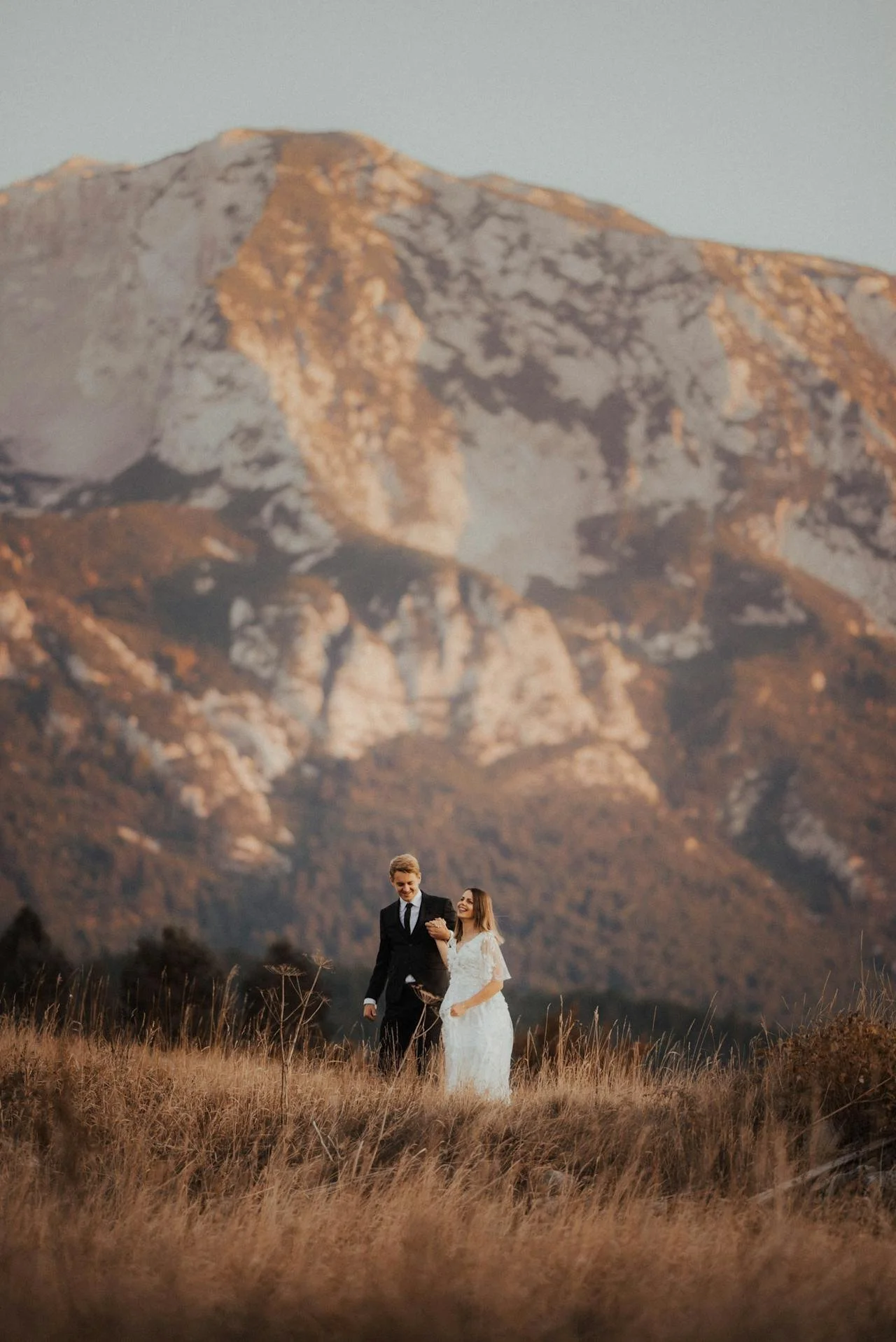
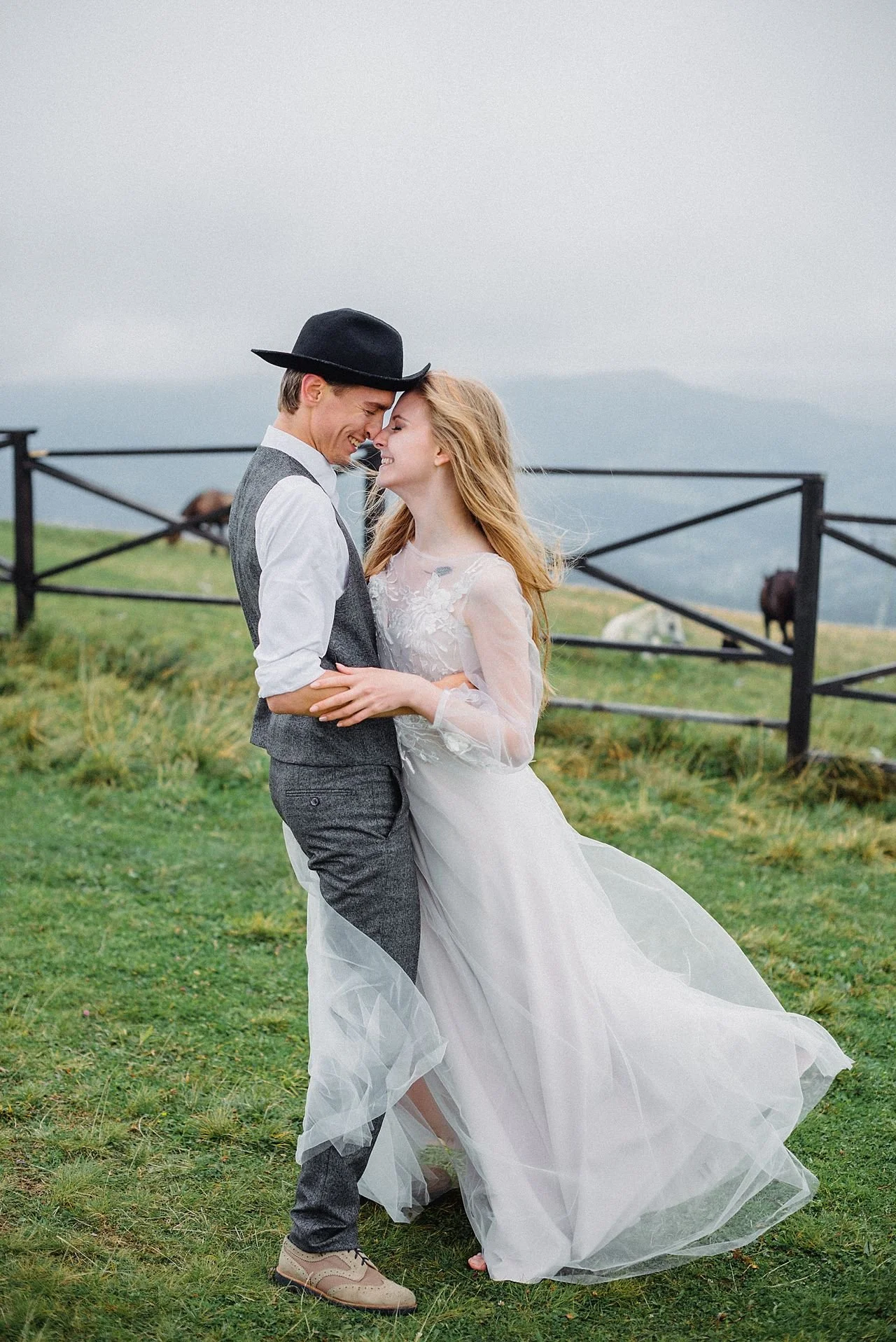
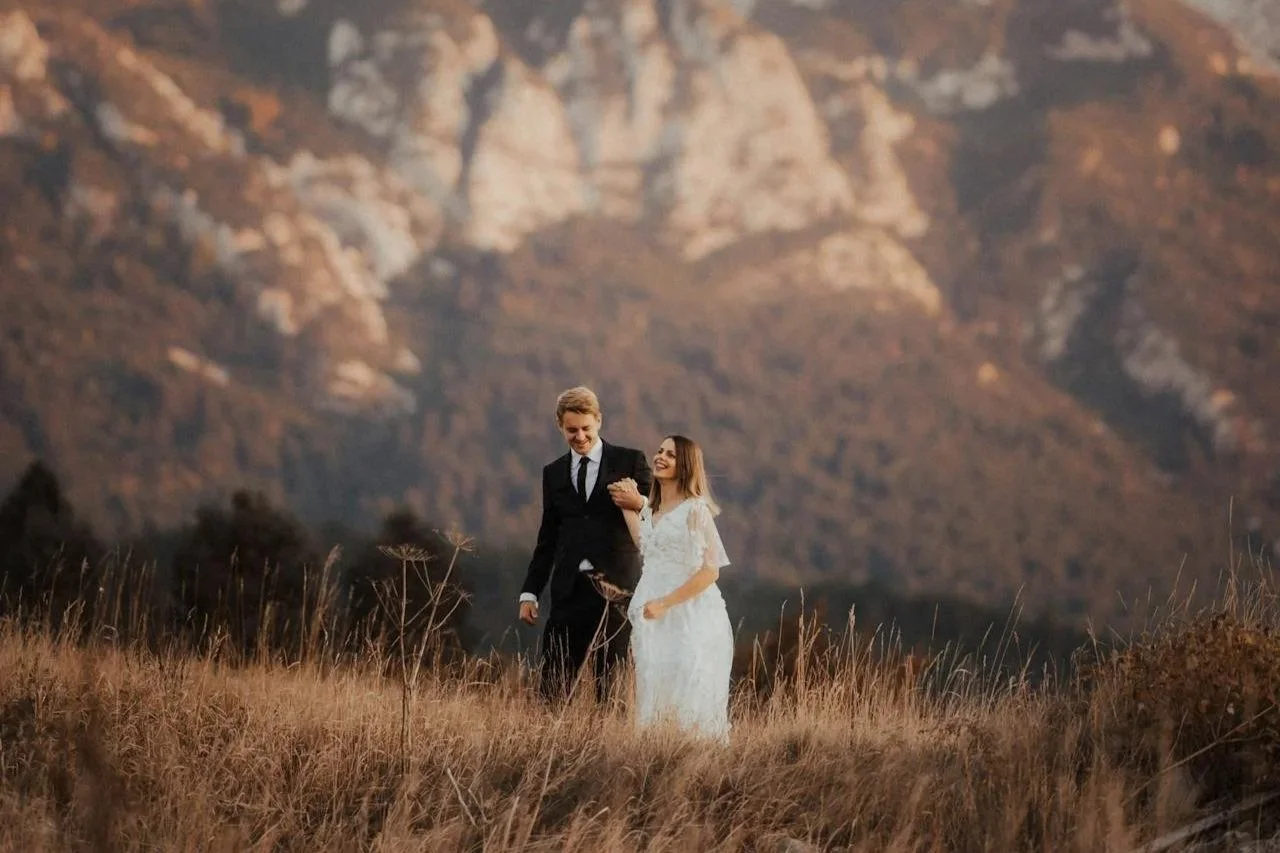
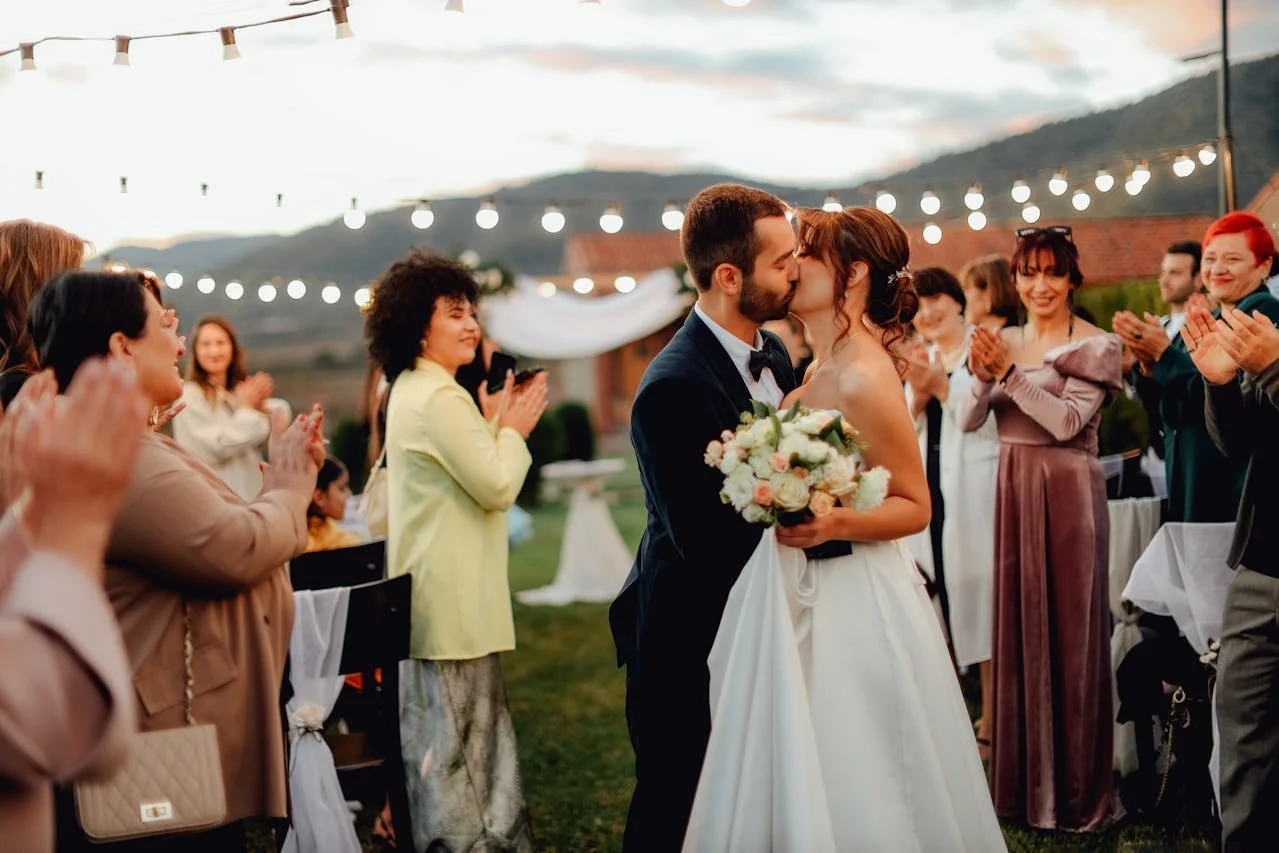
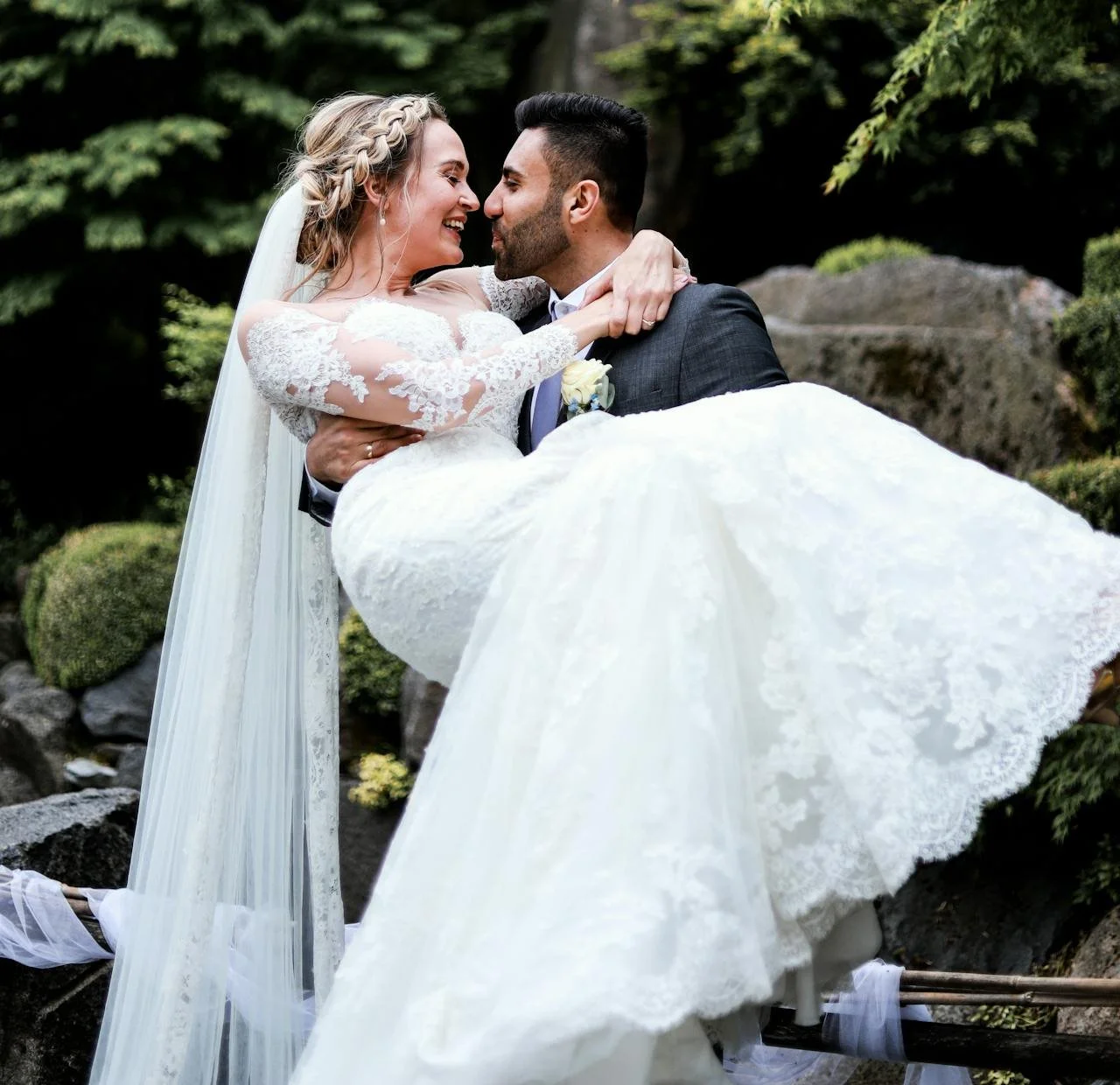
Elopement Ceremonies in Colorado / Photo: Sandro Crepulja
Why Colorado Elopements Feel Different
A Colorado elopement is not simply a smaller wedding. At its best, it is a ceremony with fewer distractions, more intention, and a setting that does part of the emotional work before a single word is spoken. That is why couples are drawn to the state’s mountain passes, red rock parks, alpine lakes, foothill trails, historic towns, and quiet overlooks. Colorado gives couples permission to strip away the parts of a wedding that never felt like them in the first place. There may be no aisle. There may be no seating chart. There may be no reception timeline built around other people’s expectations.
Instead, there is a place, a promise, and enough space to actually feel the moment.
Recent wedding research supports the shift toward more intentional celebrations. The Knot Worldwide’s 2025 Global Wedding Report found that couples are prioritizing personalization, purpose, and guest experience, based on insights from more than 33,000 couples married in 2024. Zola’s 2025 First Look Report, based on data from nearly 6,000 couples planning 2025 weddings, also points to wedding choices shaped by personal priorities rather than rigid tradition. For Colorado couples, that often means choosing a ceremony that feels intimate without feeling casual, scenic without feeling staged, and personal without becoming overly sentimental. That balance matters. A luxury elopement is not defined by how much you spend.
It is defined by how carefully the day is composed.
Table of Contents
Why Colorado Elopements Feel Different
What Counts as an Elopement in Colorado?
Colorado Marriage License Basics
Do You Need an Officiant for a Colorado Elopement?
How to Choose the Right Elopement Location
Permits, Public Lands, and Ceremony Rules
Best Colorado Elopement Ceremony Styles
What to Include in the Ceremony
Weather, Altitude, and Seasonal Planning
Guest Count: Just Us or a Few Loved Ones?
Photography, Timing, and the Feel of the Day
A Practical Colorado Elopement Planning Checklist
Local Ceremony Support in Denver, Golden, Boulder, and Beyond
Related Articles
What Counts as an Elopement in Colorado?
An elopement used to mean running away in secret. That definition is too narrow now. Today, a Colorado elopement can be:
A private vow exchange on a trail near Boulder.
A two-person ceremony at sunrise in Rocky Mountain National Park.
A small family gathering in Golden before dinner downtown.
A mountain ceremony near Breckenridge, Vail, Aspen, or Telluride.
A legal signing with meaningful vows and portraits afterward.
A planned micro-wedding with 6–20 guests and no formal reception.
The common thread is not secrecy. It is intimacy.
A Colorado elopement usually works best when the ceremony is the center of the day, not a formality squeezed between photography and dinner. That is especially important for couples hiring a professional officiant. The words spoken in that setting should feel worthy of the landscape, but still sound like the couple. For couples who want a ceremony crafted with that kind of attention, Michael Moody offers Colorado elopement ceremonies for those drawn to intimate, personal, outdoor celebrations across the state.
Colorado Marriage License Basics
Colorado is one of the most flexible states for getting legally married, which makes it especially attractive for elopements. A marriage license can be purchased through a Colorado county clerk and recorder. Jefferson County states that marriage and civil union licenses cost $30, may be used immediately within Colorado, and are valid for 35 days from the date of issue. Denver also notes that a license must be signed in Colorado within 35 days and returned for recording within 63 days of the marriage to avoid extra fees.
That timing matters for elopements because many couples travel to Colorado from another state. Do not get the license too early. Do not leave the return step as an afterthought. Build the legal paperwork into your itinerary with the same seriousness you give the ceremony location. Colorado law also allows couples to solemnize their own marriage. The statute states that a marriage may be solemnized by several authorized parties, including “the parties to the marriage.” In plain terms: you can marry yourselves in Colorado. That does not mean every couple should skip a wedding officiant. It only means Colorado gives you options.
Do You Need a Wedding Officiant for a Colorado Elopement?
Legally, not always. Emotionally and ceremonially, many couples still want one. Colorado self-solemnization is useful for couples who want a private vow exchange without anyone else present. It can be beautiful. It can also feel surprisingly abrupt if you are standing in an extraordinary place with no one to hold the moment's structure. A strong elopement wedding officiant does more than pronounce you married. The wedding officiant can:
Shape the ceremony around your relationship.
Give the moment a calm beginning, middle, and ending.
Help vows feel integrated rather than awkwardly inserted.
Create breathing room so the ceremony does not feel rushed.
Bring a polished presence to an outdoor setting.
Guide family or guests if a few people are attending.
Honor the tone you want: romantic, grounded, spiritual, secular, humorous, reflective, or understated.
Create an unforgettable, unique experience that takes all of the planning out of your hands.
This is especially important for couples who want an intimate ceremony but not an improvised one. A private ceremony can still feel refined. A mountain ceremony can still have elegance. A simple elopement can still carry emotional weight. Couples planning a Front Range ceremony can explore Denver wedding officiant services, Golden wedding officiant services, and Boulder wedding officiant services, depending on where the day begins.
Quick Summary List: What Couples Should Remember
Colorado allows self-solemnization, but an officiant can make the ceremony feel more personal and complete.
Marriage licenses are valid for 35 days and must be signed in Colorado.
Many public outdoor locations require permits or special activity agreements.
Rocky Mountain National Park requires a Special Use Permit for wedding and elopement ceremonies.
State park rules vary by park; check the specific location.
Guest count affects permits, parking, access, and privacy.
Weather, altitude, and road conditions should shape the timeline.
Keep the ceremony simple, specific, and emotionally grounded.
Follow Leave No Trace principles at every outdoor site.
Build the day around how it should feel, not just how it should photograph.
How to Choose the Right Elopement Location
Location is the decision that shapes almost every other decision. Do not start with the most photographed place on Instagram. Start with the experience you want to have. Ask these questions first:
Do we want mountains, red rocks, forest, water, city views, or foothills?
Are we comfortable hiking in wedding clothes?
Do we want privacy, or are we comfortable with people nearby?
Will guests attend?
Does anyone have mobility limitations?
Are we planning sunrise, sunset, midday, or winter conditions?
Do we need a backup location?
Is the location legal for a ceremony?
Will professional photography require a separate permit?
A scenic place is not always a good ceremony place. Some trails are too narrow. Some overlooks are too crowded. Some alpine spots are fragile. Some locations look peaceful in photos but feel chaotic in person because of parking, wind, road closures, tourists, or timed-entry rules. For couples who want beauty without unnecessary complications, the Front Range can be an excellent place to begin. Denver offers urban gardens, historic architecture, and nearby foothill access. Golden brings Clear Creek, Lookout Mountain, tablelands, and a warm small-town feel. Boulder offers iconic Flatirons views, Chautauqua access, and trail-based ceremony possibilities.
Permits, Public Lands, and Ceremony Rules
Permits are one of the easiest parts of elopement planning to underestimate. Public lands are not interchangeable. A city open space, state park, national park, county park, and national forest may all have different rules. Guest count, chairs, arches, amplified sound, photography, parking, flowers, pets, and commercial vendor activity may be regulated. Rocky Mountain National Park, for example, requires a Special Use Permit for weddings, elopements, vow renewals, and other ceremonies. The National Park Service states that permits are issued for designated ceremony locations, with limits on groups and vehicles. Colorado Parks and Wildlife also notes that weddings or events in state parks may require a special activity agreement and/or permit, and professional portrait photography may require a photography permit, depending on the specific park.
The safest approach is simple: decide who manages permit research before you fall in love with a location. That person may be your planner, photographer, officiant, or you as a couple. What matters is that someone checks the current rules directly with the managing agency. Do not rely on old blog posts, social media captions, or assumptions from another couple’s wedding. Permit rules change.
Best Colorado Elopement Ceremony Styles
The best ceremony style depends on the couple, the setting, and the emotional tone of the day.
The private vow ceremony
This is the most intimate option. It may be just the couple, an officiant, and a photographer. It works well for sunrise mountain settings, quiet overlooks, and couples who want the ceremony to feel protected from outside attention.
The family micro-ceremony
This format includes a small number of parents, siblings, or close friends. It works best when the location has easy access, predictable parking, and enough physical space for guests to stand comfortably.
The hiking elopement
A hiking elopement can be extraordinary, but it requires honesty. Wedding clothes, altitude, trail conditions, mud, wind, snow, and changing light can all affect the experience. Choose a trail because it matches your actual comfort level, not because it looks dramatic in a gallery.
The two-part ceremony day
Some couples exchange private vows in nature, then hold a short legal or family ceremony later. This works well when couples want privacy and family inclusion without forcing one moment to do everything.The city-to-mountain elopement
This is a strong option for couples in Denver, Golden, or Boulder. You can begin with getting ready photos at a boutique hotel, hold a ceremony near the foothills, and finish with dinner at a favorite restaurant. The day feels elevated without becoming overproduced.
What to Include in the Elopement Ceremony
An elopement ceremony should not feel like a shortened version of a traditional wedding script. It needs its own rhythm. A strong structure might include:
A brief welcome that names the place and the purpose of the day.
A few words about why this ceremony fits the couple.
A personal story or reflection.
A reading, if it genuinely belongs.
Private or public vows.
Ring exchange.
A closing reflection.
Pronouncement or self-solemnization language.
A quiet pause before portraits begin.
That pause is underrated.
Many couples move too quickly from the ceremony into the photography session. Give yourselves one minute after the final words. Stand there. Breathe. Look around. Let the place become part of the memory. For vows, keep them specific. “You are my best friend” is fine, but it will not carry the same force as naming the ordinary life you have built together: the Sunday coffee, the long drives, the way one of you steadies the other before hard conversations, the private jokes no one else will understand. Colorado elopements reward specificity. The landscape is already grand. The words do not need to compete with it.
Weather, Altitude, and Seasonal Planning
Colorado weather is not background detail. It is part of the plan. A bluebird morning can become a windy afternoon. Mountain storms can build quickly. Snow can linger on shaded trails long after Denver feels like spring. High-elevation roads may have seasonal closures. Wildfire smoke can affect views. Summer weekends can bring crowds. Winter can bring privacy, but also ice, road delays, and temperature swings.
Build a ceremony plan around the least glamorous details:
Where will you park?
Is there cell service?
Is there a restroom?
What happens if the trailhead is full?
What if it is too windy to hear vows?
Can older guests safely reach the location?
Is there a backup indoor or sheltered option?
Are dogs allowed?
Are flowers, confetti, rugs, arches, or chairs permitted?
Altitude deserves special attention for out-of-state couples. A ceremony at 9,000 or 10,000 feet can feel different from a ceremony in Denver. Drink water, eat real food, allow extra time, and avoid packing too many location changes into the day. The goal is not to control the outdoors. The goal is to plan with enough care that the outdoors does not control the entire experience.
Guest Count: Just Us or a Few Loved Ones?
Guest count is one of the most important elopement decisions. A “just us” ceremony gives you privacy and flexibility. You can move more easily, choose more remote locations, and keep the emotional focus completely on the two of you. A small guest ceremony gives you a shared memory. Parents, children, siblings, or closest friends can witness the moment. That can be deeply meaningful, especially if the ceremony is followed by dinner, champagne, cake, or a relaxed gathering nearby.
The tradeoff is logistics. Guests change the location requirements. You need more parking, clearer directions, safer terrain, and more predictable timing. You also need to consider whether the ceremony will feel intimate with people watching and determine if they have the fitness to complete the trek on a trail. For many couples, the sweet spot is 0–10 guests. That number keeps the day flexible while allowing the people closest to you to be present.
Photography, Timing, and the Feel of the Day
The best elopement days are planned around feeling first and photography second. That does not mean photography is unimportant. It means the images should document a day that actually felt good to live. Sunrise can offer privacy, softer light, and calmer public spaces. Sunset can feel romantic, but it may be busier in popular locations. Midday can work beautifully in winter or shaded areas, though summer sun may be harsh at exposed sites.
Talk with your photographer and wedding officiant about the ceremony timing together. A five-minute timing mismatch can matter if you are working around alpenglow, trail access, weather, or park rules. Also consider what happens after the ceremony. Many couples plan portraits, then dinner. Others include a picnic, private chef, first dance, letters from family, a short hike, or a toast back at their lodging. Luxury is often found in pacing. Do not cram the day so tightly that there is no room to feel it.
A Practical Colorado Elopement Planning Checklist
Use this as a working checklist, not a rigid template.
Three to nine months before
Choose your general Colorado region.
Decide whether guests will attend.
Hire your wedding officiant, photographer, and planner if using one.
Research permit requirements.
Choose lodging close to the ceremony area.
Build a weather-aware Plan B.
One to three months before
Confirm the ceremony location and access rules.
Apply for permits if required.
Finalize ceremony style and tone.
Begin writing vows.
Confirm travel, hair and makeup, attire, florals, and dinner plans.
Check whether professional photography permits are needed.
One to four weeks before
Get your Colorado marriage license within the valid timing window.
Confirm driving times and parking.
Review weather and trail conditions.
Print or save offline maps.
Pack layers, water, snacks, vow books, rings, marriage license, and comfortable shoes.
The day of
Leave earlier than you think you need to.
Keep the ceremony site simple.
Follow all permit and Leave No Trace rules.
Take a quiet moment after the ceremony.
Sign the license correctly.
Return the completed license within the required window.
Leave No Trace principles should guide every outdoor ceremony. The Colorado Leave No Trace state page highlights ongoing training, hot spots, and stewardship efforts in Colorado, serving as a reminder that popular outdoor places need care from everyone who uses them. For elopements, that means staying on durable surfaces, packing out everything, avoiding confetti, respecting wildlife, keeping guest counts appropriate, and choosing locations that can handle the impact of a ceremony.
Local Ceremony Support in Denver, Golden, Boulder, and Beyond
A Colorado elopement can happen almost anywhere, but local knowledge makes the day smoother. For couples beginning in the city, Denver wedding officiant services work well for ceremonies that blend refined urban settings with foothill access. Denver can be ideal for couples who want strong lodging, dining, transportation, and vendor options without giving up mountain views. For couples drawn to foothills, creeks, mesas, and small-town character, Golden wedding officiant services offer a natural fit. Golden can feel close to Denver while still giving couples a strong sense of place. For couples who want Flatirons views, open space, trails, and a relaxed but elevated ceremony atmosphere, Boulder wedding officiant services are a strong match.
For couples planning beyond the Front Range, Colorado elopement ceremonies can support intimate ceremonies in mountain towns and scenic destinations across the state. Michael Moody offers personal wedding ceremonies and Colorado elopement ceremonies for couples in Denver, Boulder, Golden, and throughout Colorado, with ceremonies shaped around warmth, composure, language, and genuine connection. That matters for elopements because the ceremony cannot hide behind a large production. The words, pacing, tone, and presence carry the moment.
Related Articles
From the Michael Moody Officiant wedding blog directory:
How to Get Married in Colorado: Marriage License Guide for 2026
Colorado Front Range Elopement Guide: Hiking-In Wedding Ceremonies and Scenic Trails
Colorado Elopement Hikes Near Denver: North Table Mountain West Loop
Spring Wedding Guide for Golden, Colorado: Venues, Permits, and Planning Tips
Boulder Wedding Ceremony Venues for Intimate and Scenic Weddings
The directory includes ceremony planning articles, wedding-specific planning guidance, Front Range elopement content, and relationship-focused resources for couples planning meaningful Colorado ceremonies.
About the Author: Michael Moody, Wedding Officiant
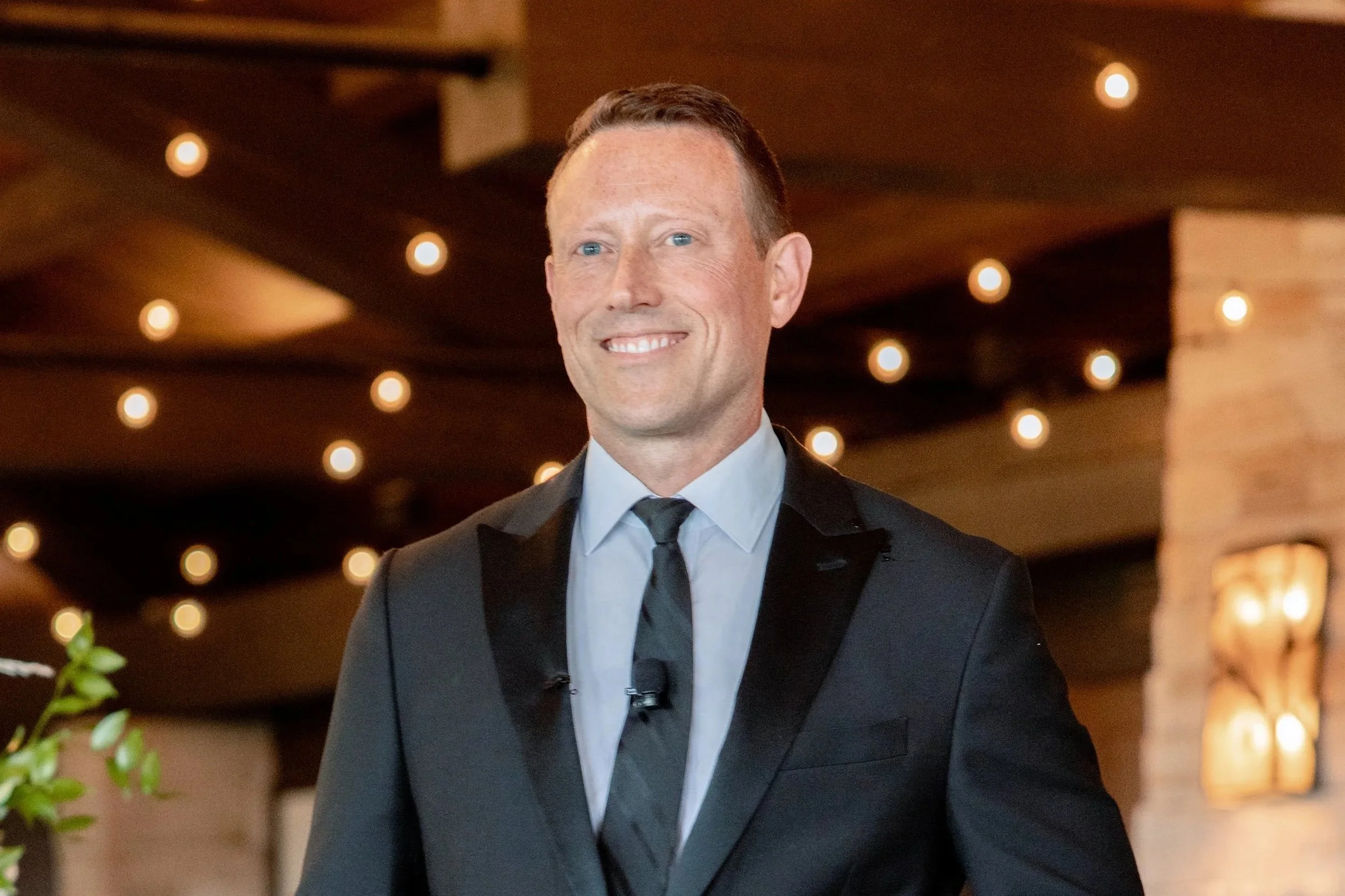
Michael Moody is a Colorado wedding officiant serving Denver, Boulder, Golden, Larkspur, and mountain communities throughout the state. Since 2012, he has officiated more than 300 weddings, bringing a calm presence, thoughtful guidance, and emotionally grounded ceremony writing to couples seeking a meaningful experience. He also offers Colorado elopement ceremonies for couples who want something intimate, intentional, and beyond the boundaries of a traditional wedding day. His work is shaped by a lifelong interest in connection, reflection, and personal growth. Michael is the author of the self-improvement book Redefine Yourself: The Simple Guide to Happiness and host of The Elements of Being podcast. As a wedding officiant, he draws from that same foundation: the belief that our relationships, words, and everyday interactions help shape a life rooted in love, empathy, and purpose. Michael’s ceremony work has been recognized across Colorado. He is a 2023 WeddingWire Couples’ Choice Award winner in Denver, marking his eighth consecutive year receiving the honor. He was also named “Best Business of 2024, 2025, and 2026” by Three Best Rated and earned “The Best Wedding Officiant in Commerce City, Colorado for 2024” from Quality Business Awards USA.
Beyond weddings, Michael and his wife, Sammy, have sponsored an annual student scholarship for more than 10 years. They also founded Civic Growth Alliance, a 501(c)(4) nonprofit dedicated to strengthening communities through civic advocacy, resident engagement, strategic partnerships, public safety initiatives, neighborhood vitality, and community well-being.
Wedding locations: Michael officiates wedding ceremonies in the Denver neighborhoods of LoDo, River North, Washington Park, Cherry Creek, City Park, Central Park, Capitol Hill, Cheesman Park, Park Hill, Lower Highlands, and Sloan Lake. Michael also serves as an ordained minister in Larkspur, Littleton, Golden, Boulder, Breckenridge, Frisco, Aspen, Vail, Estes Park, and more. If your Denver neighborhood or Colorado town isn’t listed here, no worries! Please contact Michael to propose a wedding ceremony location in a different area!
Wedding Planning Tips
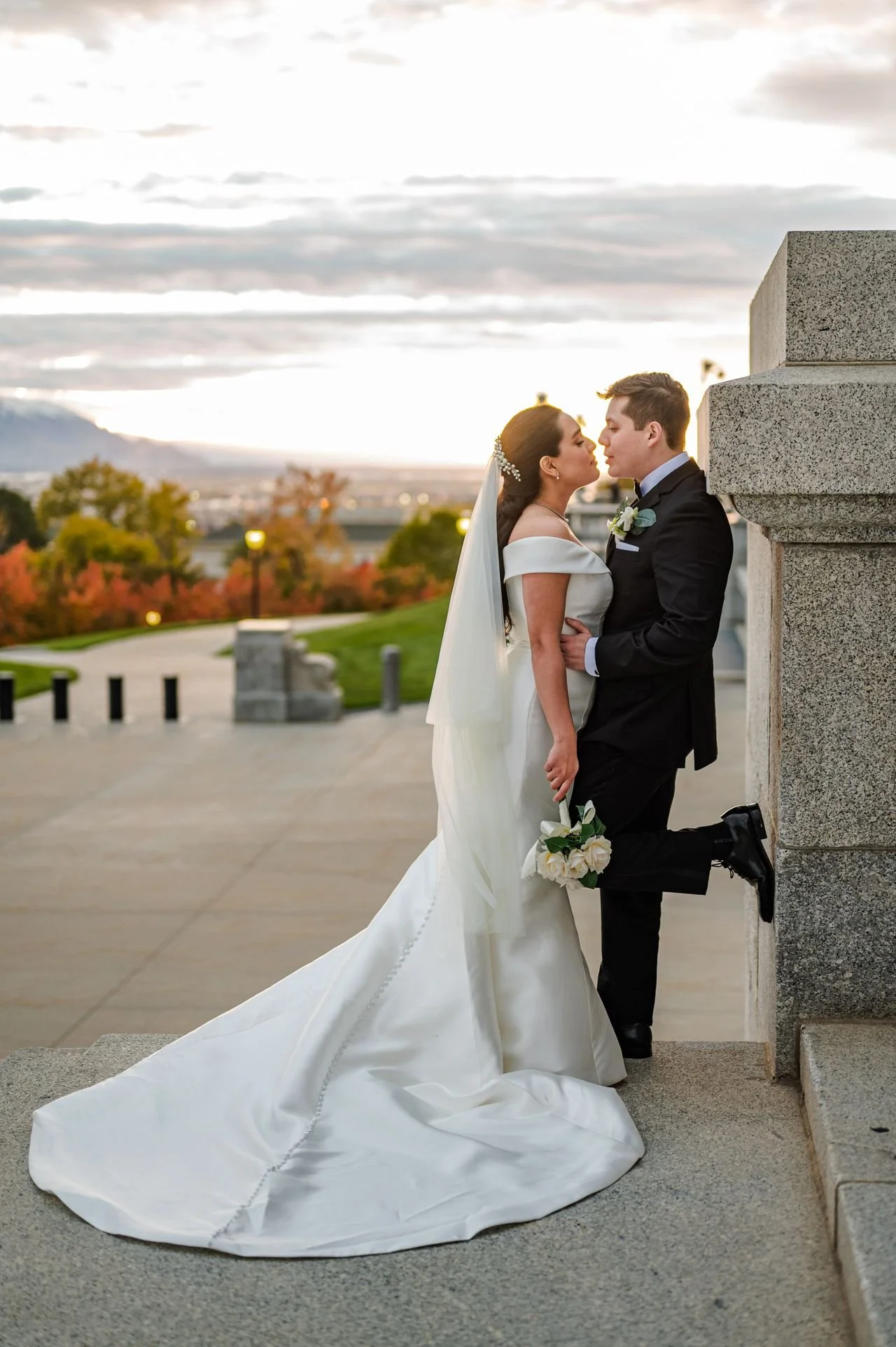
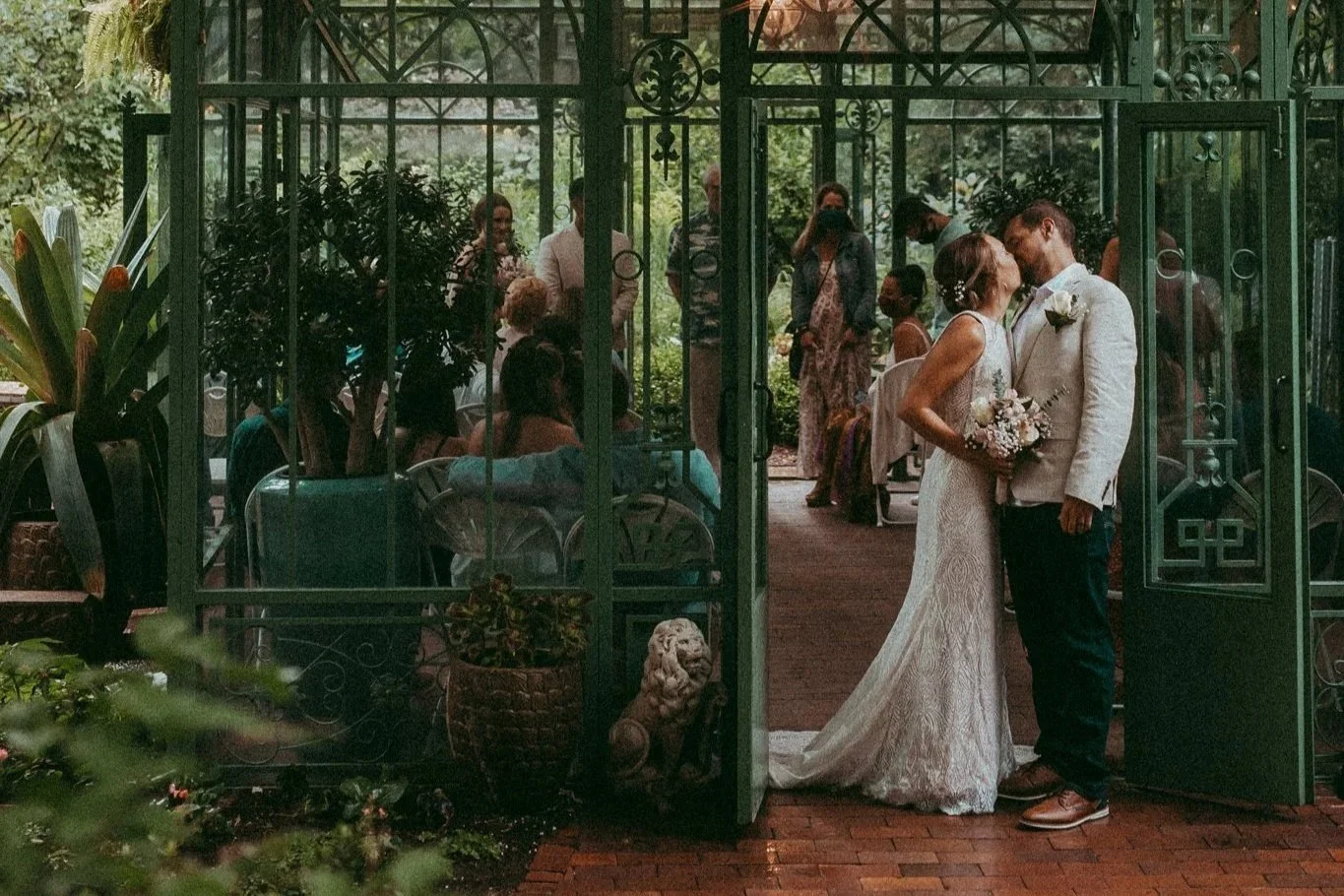
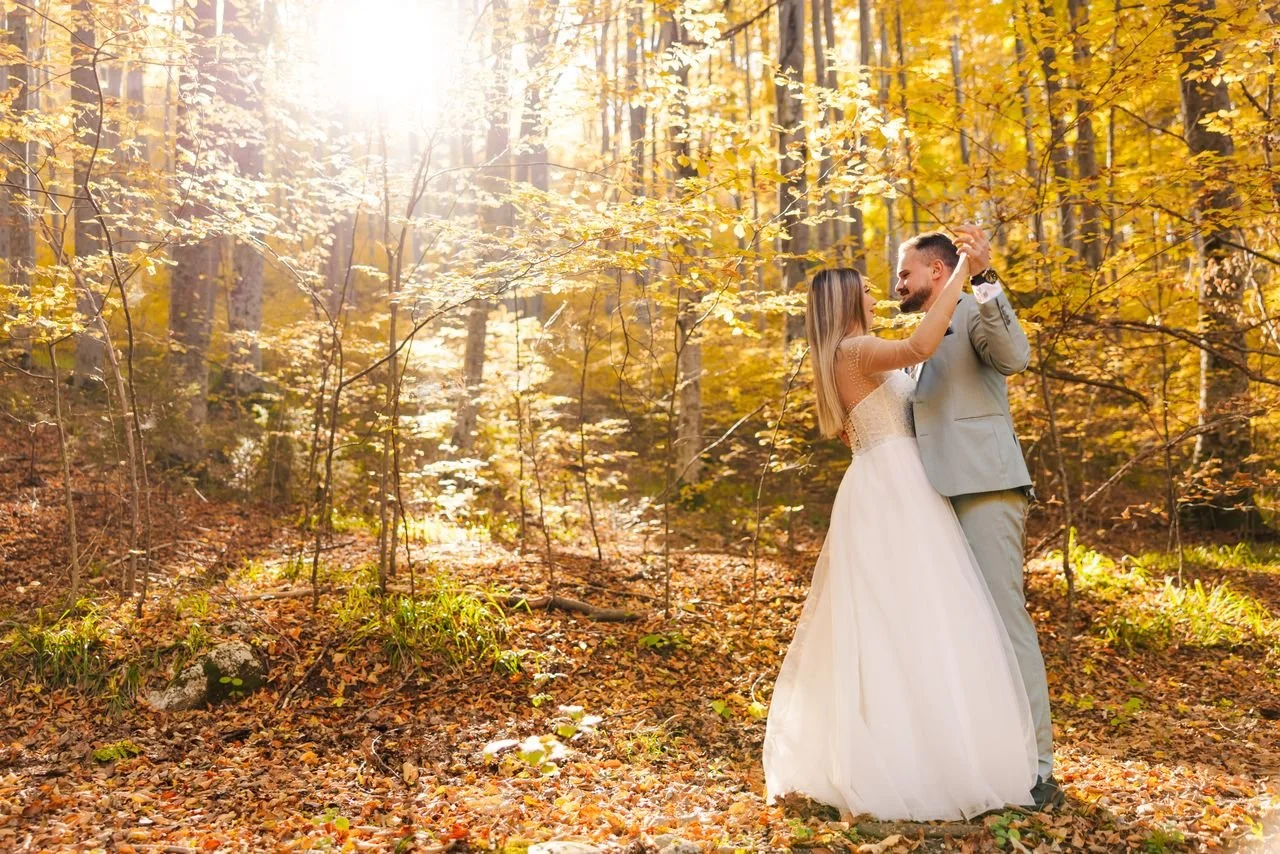






Michael Moody creates personal wedding ceremonies and Colorado elopement ceremonies for couples in Denver, Boulder, Golden, Larkspur, and throughout the Front Range. His ceremony work is built around thoughtful language, calm presence, and a genuine understanding of how wedding vows, setting, and story shape the emotional center of the day. Whether a couple is exchanging wedding vows in a Denver venue, near the Flatirons in Boulder, in the foothills around Golden, or during an intimate Colorado elopement, the ceremony is designed to feel personal, grounded, and unmistakably their own.